The Trump administration harshly criticized the United Kingdom over its handling of mass immigration and the long-running rape gang scandal that has victimized white girls across the country.
In a statement posted to X, the U.S. State Department called on its Europe-based diplomats to track the effects of rampant immigration. While the statement zeroed in on the U.K., it also highlighted similar problems in Germany and Sweden.
‘The State Department instructed U.S. embassies to report on the human rights implications and public safety impacts of mass migration,’ the statement read. ‘Officials will also report policies that punish citizens who object to continued mass migration and document crimes and human rights abuses committed by people of a migration background.’
The statement referenced the so-called ‘grooming gangs’ made up of mostly Pakistani men who have victimized young girls for decades, with little action taken by the government.
‘In the United Kingdom, thousands of girls have been victimized in Rotherham, Oxford, and Newcastle by grooming gangs involving migrant men,’ the State Department said. ‘Many girls were left to suffer unspeakable abuse for years before authorities stepped in.’
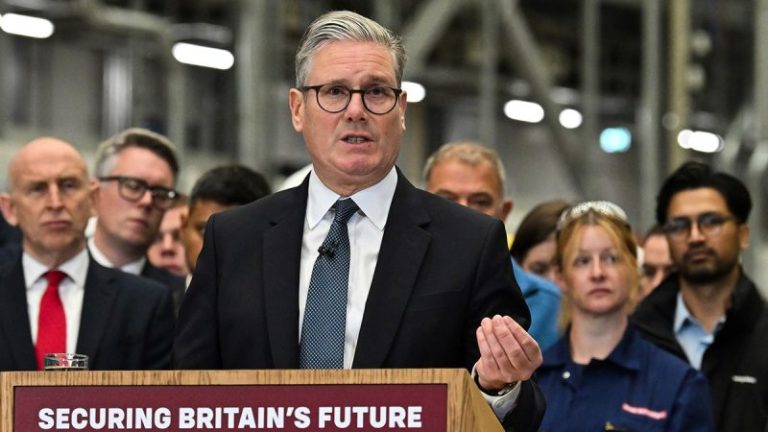
A day after the statement, GB News reported that U.K. Prime Minister Keir Starmer told reporters at the G20 in South Africa that the national inquiry would ‘leave no stone unturned.’
The State Department’s warning comes weeks after several victims — who were members of the independent inquiry — resigned over what they claimed was a continuation of a cover-up.
One abuse survivor, Ellie Reynolds, told cable channel GMB that the existence of grooming gangs has been ‘brushed under the carpet’ and that ‘our voices have been silenced.’
She was supported by fellow survivor Fiona Goddard, who was groomed from the age of 14, and said that when she spoke out for help she was dismissed as a ‘child prostitute’ by authorities.
Goddard resigned to protest the cover-up, saying members of the grooming gangs near Bradford were in the ‘vast majority … Pakistani men.’
Successive governments — both Conservative and Labour — have been dealing with the revelations for years that a number of grooming gangs, often consisting mostly of men of South Asian or Pakistani heritage, have sexually exploited girls for decades across the north of England.
Prior to the inquiry, Starmer had commissioned a national audit led by Baroness Louise Casey earlier this year.
On the hot-button issue of the backgrounds of the criminals, the Casey report stated in part, ‘We found that the ethnicity of perpetrators is shied away from and is still not recorded for two-thirds of perpetrators, so we are unable to provide any accurate assessment from the nationally collected data.’
It continued: ‘Despite the lack of a full picture in the national data sets, there is enough evidence available in local police data in three police force areas which we examined which show disproportionate numbers of men from Asian ethnic backgrounds amongst suspects for group-based child sexual exploitation, as well as in the significant number of perpetrators of Asian ethnicity identified in local reviews and high-profile child sexual exploitation prosecutions across the country, to at least warrant further examination.’
Her audit also identified other perpetrators, including White British, European, African or Middle Eastern individuals.
The results of the audit produced 12 recommendations to the government, which have been implemented, including a national inquiry to ‘direct local investigations and hold institutions to account for past failures.’
But the Starmer government has been set back by a failure to appoint a chair for the inquiry, and it has faced resignations as critics have accused the Labour government of covering it up for political reasons.
Alan Mendoza, founder of the Henry Jackson Society, told Fox News Digital that ‘successive governments’ have allowed ‘gangs of largely South Asian Muslims to target white British girls, claiming, ‘the Labour government doesn’t want to be seen as stigmatizing demographics or potentially losing votes.’
‘I hope that the inquiry will focus more specifically on the real issue plaguing the U.K. over the last 20 years,’ Mendoza added.
The point person for the government’s inquiry is Labour member of Parliament Jess Phillips, who has served as the parliamentary undersecretary of state for Safeguarding and Violence Against Women and Girls since July 2024.
However, Phillips is facing heavy scrutiny over how she’s handling the set-up of the inquiry.
Asked in Parliament about the nature of the inquiry and whether it will address the perpetrators’ ethnicity, she vowed to be transparent.
‘There is absolutely no sense that ethnicity will be buried away,’ Phillips said. ‘Every single time that there is an apparently needless delay — even though it took seven months to put in place chairs for both the COVID inquiry and the blood inquiry, and nobody moaned about that — it gets used to say that we want to cover something up. That is the misinformation I am talking about. It will not cover things up. We are taking time to ensure that that can never happen.’
Elon Musk weighed in on the matter in a series of X statements earlier this year, stating that Phillips, was a ‘rape genocide apologist’ and the world was witnessing ‘the worst mass crime against the people of Britain ever.’
Philips told the BBC that his comments were ‘disinformation’ and ‘endangering’ her, but said it was nothing compared to what the victims of the abuse had faced.
Commentators say the challenge for the government now is to find those credible and willing to bring justice and lasting change so it won’t happen again.
Fox News Digital reached out to Phillips’ office but received no response.