Archive

December 14, 2025

Browsing

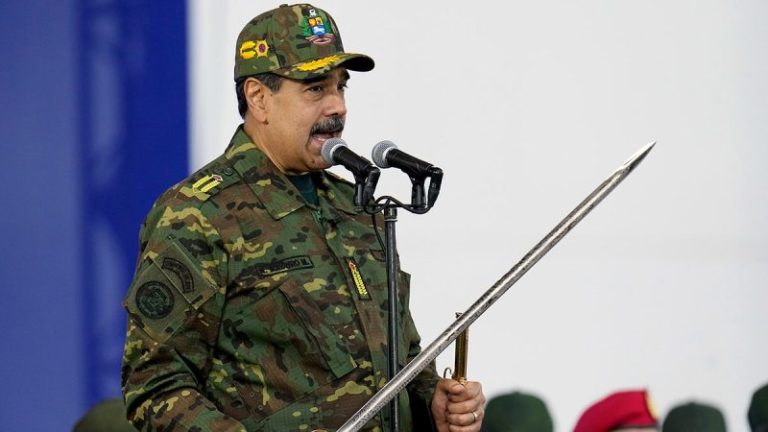
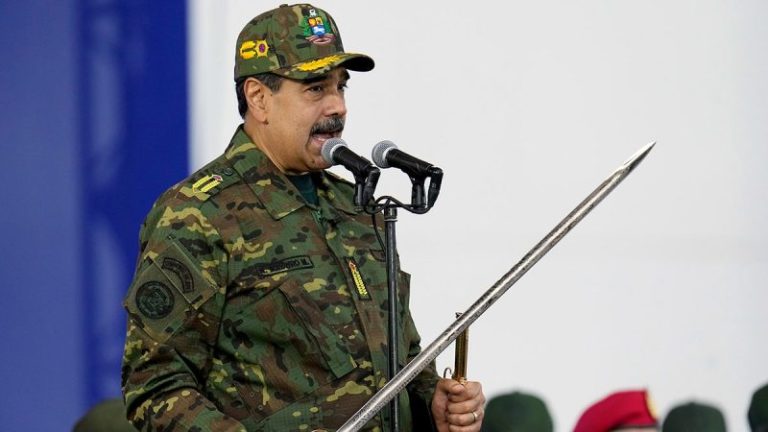
The Trump administration’s latest offensive move against Venezuela, the seizure of a tanker carrying U.S.-sanctioned oil, has triggered predictable outrage from Venezuelan President Nicolás Maduro’s government. 

But behind the rhetorical fire, analysts say the regime has few practical ways to hit back without doing even more damage to itself.

Experts say that Maduro could target U.S. oil interests in Venezuela, but doing so would almost certainly inflict more pain on his own cash-starved regime than on the United States.

Maduro could also halt U.S.-chartered deportation flights, but again, would be harming his own interests, experts say. 

‘Venezuelans are just leaving the country because of the terrible conditions the regime has created,’ said Connor Pfeiffer, a Western Hemisphere analyst at FDD Action. ‘By having people come back, even if they’re on U.S. charter deportation flights, it kind of counters that narrative.’

Western oil firms have significantly decreased their presence in Venezuela, home to world’s largest proven oil reserves, in recent years due to sanctions. 

But U.S.-owned Chevron does still maintain a license to operate there, on the condition that the Maduro regime does not financially benefit from its operations. Instead, Chevron hands over to Maduro half of its oil production as payment, according to multiple reports.

‘Chevron’s operations in Venezuela continue in full compliance with laws and regulations applicable to its business, as well as the sanctions frameworks provided for by the U.S. government,’ a Chevron spokesperson told Fox News Digital.  

Imports of Venezuelan crude have declined to roughly 130,000 barrels per day (bpd) to 150,000 bpd in recent months, below the nearly 300,000 bpd seen under the prior petroleum licensing regime under the Biden administration. Most of Venezuela’s exports are now routed to Asia, with the bulk ultimately landing in China through intermediaries, according to data from Kplr. 

Despite that flow of crude, analysts say the idea of Caracas striking back at Chevron is more potent as a talking point than as a viable policy option.

Shutting down or seizing the company’s operations would instantly cut off one of the few lifelines still feeding Venezuela’s collapsing oil sector. It also would risk triggering a swift and politically difficult American response, including a full reinstatement of the sanctions relief the regime has quietly relied on.

Pfeiffer noted that the Maduro government has been ‘very supportive of Chevron continuing to operate’ because the arrangement provides tens of thousands of barrels a day of oil with minimal investment from Venezuelan-owned Petróleos de Venezuela, S.A. Other analysts say that reality sharply limits Maduro’s room to maneuver: any attack on Chevron would strike at his own revenue stream first.

Another theoretical lever — military or maritime escalation — is widely viewed as even less credible. Venezuela has taken delivery of small Iranian-built fast attack craft equipped with anti-ship missiles, a fact that has fueled speculation Maduro could threaten U.S. or allied vessels.

But Venezuela’s navy suffers from years of maintenance failures and lacks the ability to sustain operations against American forces deployed in the Caribbean. Any aggressive move at sea would almost certainly invite a U.S. military response the regime is in no position to absorb.

Diplomatically, Caracas could suspend remaining channels with Washington, or file legal challenges in U.S. courts or international forums. Yet previous efforts to contest sanctions-related seizures have gone nowhere, and Venezuela’s relationships in the hemisphere offer limited leverage. 

Regional bodies have little sway over U.S. sanctions law, and even supportive governments in Russia, China, or Iran are unlikely to intervene beyond issuing critical statements. Beijing, now the primary destination for Venezuelan crude, has economic interests at stake but few practical avenues to challenge U.S. enforcement actions.

Absent direct military strikes, cracking down on sanctioned oil exports is one of the most potent ways the U.S. can weaken the regime, according to Pfeiffer. 

‘This is one of his main sources of revenue keeping the regime afloat.’
This post appeared first on FOX NEWS

The State Department is so far refusing to comment on a growing corruption crisis engulfing the Balkan nation of Albania, a vital U.S. ally in the region. 

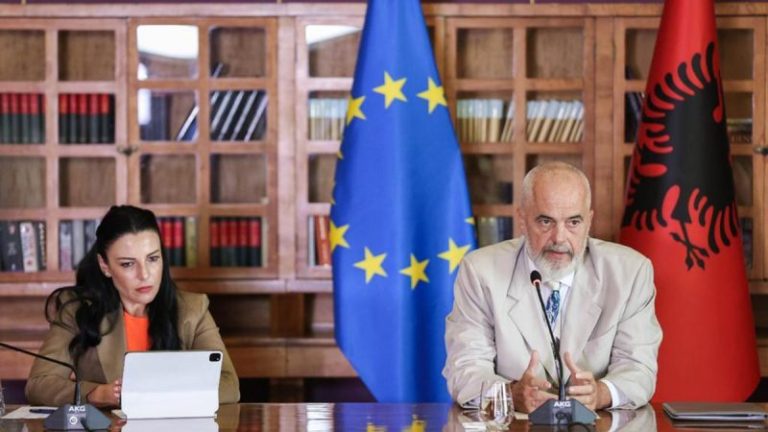
Following an Albanian court’s decision to remove Deputy Prime Minister Belinda Balluku from her position on allegations she interfered in two construction bids, socialist Prime Minister Edi Rama took the issue to the country’s Constitutional Court, which on Friday reinstated Balluku until a ‘final decision’ could be made, according to media reports.

The Special Anti-Corruption and Organized Crime Structure (SPAK) issued a criminal indictment against Balluku on Oct. 31, alleging she had been improperly influenced in her decision to favor one company in a tender for the construction of a 3.7-mile tunnel in southern Albania, Reuters reported. SPAK delivered an additional charge for violating rules in a Tirana road construction project on Nov. 21, the date when Balluku was removed from office.

The day before her November court appearance, Balluku told the country’s parliament the accusations against her amounted to ‘mudslinging, insinuations, half-truths and lies.’

As the second member of Rama’s cabinet to face corruption accusations since 2023, her charges have drawn the ire of Rama opponents.

Agim Nesho, former Albanian ambassador to the U.S. and the United Nations, told Fox News Digital that Balluku’s case demonstrates ‘the Rama government shows no sign of assuming moral responsibility or allowing justice the space to act independently. Instead, it appears intent on shielding Ms. Balluku, portraying the judiciary’s actions as an attack on the executive.’

Tirana’s ex-ambassador to Washington argued that ‘influencing the Constitutional Court may be an attempt to set a protective precedent — one that could prove useful if investigators ever seek to involve Mr. Rama himself in their investigations.’

‘It’s becoming increasingly clear that the emperor has no clothes,’ Nesho said, adding that Rama’s rule has amounted to ‘state capture’ as the ‘lack of checks and balances has enabled a recurring system of corruption across multiple of his terms.’

Nesho also claimed that Balluku had pointed to broader involvement of the Rama government in decision-making. Former Deputy Prime Minister Arben Ahmetaj, allegedly on the run after coming under SPAK investigation, has likewise alleged that Rama ‘directed all key decisions on tenders, finances and public assets,’ according to Nesho’s claims.

Ahmetaj’s accusations included allegations that Rama is involved with mafia bosses. Rama responded to these insinuations by saying Ahmetaj ‘should not be taken seriously. Albanian politics is not tainted by the mafia,’ Balkanweb reported.

The U.S. has funded efforts for judicial reforms in Albania to aid its efforts toward accession into the European Union by cutting down on corruption. However, those reforms have led to legal backlogs that have drawn frustration and violence from the public.

Nesho said ‘it is hard to see how a government that behaves like a banana republic gains accession to the EU.’ He said, ‘Albania is a living contradiction in terms of law and order.’ 

While Nesho says Rama’s opposition has been ‘decimated by ‘lawfare’ and the compromising of legal institutions,’ Rama remains in office despite ‘documented multibillion-dollar corruption scandals, documented electoral thefts across multiple voting cycles, and, most concerning, documented links to international drug cartels like the Sinaloa Cartel.’

Allegations that Rama is linked to the Sinaloa Cartel emerged after the prime minister met with Sinaloa-connected Luftar Hysa, who is sanctioned by the U.S. Department of Treasury. Rama told an Albanian news outlet he met with Hysa just once.

With Balluku’s removal, Nesho says ‘public anger is directed not only at [her] but also at the irresponsible conduct of a regime that rules without accountability, abuses public property and finances, and faces no consequences despite society’s reaction.’ 

Nesho said many in the country have given the prime minister the nickname ‘Ramaduro,’ saying it’s ‘a direct comparison to the Venezuelan dictator Nicolás Maduro.’

Rama’s press office told Fox News Digital it declined to comment on Nesho’s allegations against him.

In May 2021, the State Department sanctioned former Prime Minister Sali Berisha over corruption allegations, which forbade him from traveling to the U.S. Fox News Digital asked the State Department whether it had plans to issue similar sanctions against Balluku.

A State Department spokesperson told Fox News Digital, ‘We have no comment on ongoing legal matters.’

The U.S. Embassy in Tirana issued the same response to Fox News Digital when asked whether it would suspend Balluku’s visa as a result of her removal from office.

This post appeared first on FOX NEWS

The Trump administration’s latest offensive move against Venezuela, the seizure of a tanker carrying U.S.-sanctioned oil, has triggered predictable outrage from Venezuelan President Nicolás Maduro’s government. 

But behind the rhetorical fire, analysts say the regime has few practical ways to hit back without doing even more damage to itself.

Experts say that Maduro could target U.S. oil interests in Venezuela, but doing so would almost certainly inflict more pain on his own cash-starved regime than on the United States.

Maduro could also halt U.S.-chartered deportation flights but again would be harming his own interests, experts say. 

‘Venezuelans are just leaving the country because of the terrible conditions the regime has created,’ said Connor Pfeiffer, a Western Hemisphere analyst at FDD Action. ‘By having people come back, even if they’re on U.S. charter deportation flights, it kind of counters that narrative.’

Western oil firms have significantly decreased their presence in Venezuela, home to world’s largest proven oil reserves, in recent years due to sanctions. 

But U.S.-owned Chevron does still maintain a license to operate there, on the condition that the Maduro regime does not financially benefit from its operations. Instead, Chevron hands over to Maduro half of its oil production as payment, according to multiple reports.

‘Chevron’s operations in Venezuela continue in full compliance with laws and regulations applicable to its business, as well as the sanctions frameworks provided for by the U.S. government,’ a Chevron spokesperson told Fox News Digital.  

Imports of Venezuelan crude have declined to roughly 130,000 barrels per day (bpd) to 150,000 bpd in recent months, below the nearly 300,000 bpd imported under the prior petroleum licensing regime under the Biden administration. Most of Venezuela’s exports are now routed to Asia, with the bulk landing in China through intermediaries, according to data from Kpler. 

Despite that flow of crude, analysts say the idea of Caracas striking back at Chevron is more potent as a talking point than as a viable policy option.

Shutting down or seizing the company’s operations would instantly cut off one of the few lifelines still feeding Venezuela’s collapsing oil sector. It also would risk triggering a swift and politically difficult American response, including a full reinstatement of the sanctions relief the regime has quietly relied on.

Pfeiffer noted that the Maduro government has been ‘very supportive of Chevron continuing to operate’ because the arrangement provides tens of thousands of barrels a day of oil with minimal investment from Venezuelan-owned Petróleos de Venezuela, S.A. Other analysts say that reality sharply limits Maduro’s room to maneuver, and that any attack on Chevron would strike at his own revenue stream first.

Another theoretical lever — military or maritime escalation — is widely viewed as even less credible. Venezuela has taken delivery of small Iranian-built fast attack craft equipped with anti-ship missiles, a fact that has fueled speculation Maduro could threaten U.S. or allied vessels.

But Venezuela’s navy suffers from years of maintenance failures and lacks the ability to sustain operations against American forces deployed in the Caribbean. Any aggressive move at sea would almost certainly invite a U.S. military response the regime is in no position to absorb.

Diplomatically, Caracas could suspend remaining channels with Washington or file legal challenges in U.S. courts or international forums. Yet previous efforts to contest sanctions-related seizures have gone nowhere, and Venezuela’s relationships in the hemisphere offer limited leverage. 

Regional bodies have little sway over U.S. sanctions law, and even supportive governments in Russia, China or Iran are unlikely to intervene beyond issuing critical statements. Beijing, now the primary destination for Venezuelan crude, has economic interests at stake but few practical avenues to challenge U.S. enforcement actions.

Absent direct military strikes, cracking down on sanctioned oil exports is one of the most potent ways the U.S. can weaken the regime, according to Pfeiffer. 

‘This is one of his main sources of revenue keeping the regime afloat,’ he said. 

This post appeared first on FOX NEWS