Archive

December 23, 2025

Browsing

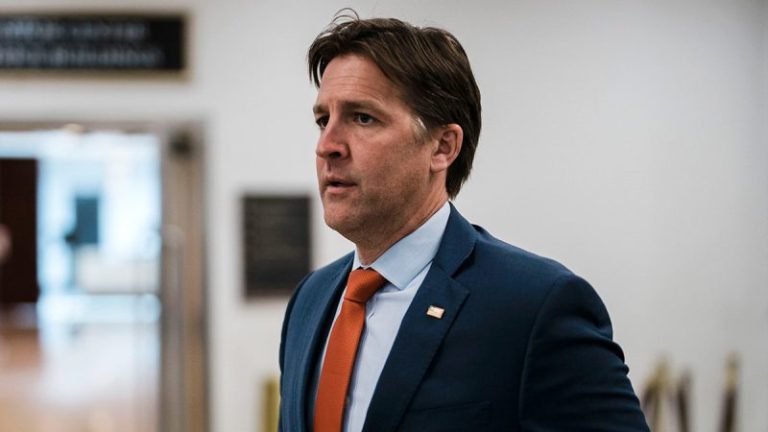
Former U.S. Sen. Ben Sasse of Nebraska announced on Tuesday that he has been diagnosed with metastatic stage-four pancreatic cancer, candidly calling it ‘a death sentence.’

‘This is a tough note to write, but since a bunch of you have started to suspect something, I’ll cut to the chase: Last week I was diagnosed with metastasized, stage-four pancreatic cancer, and am gonna die,’ Sasse wrote in a post on X.

‘Advanced pancreatic is nasty stuff; it’s a death sentence. But I already had a death sentence before last week too — we all do,’ he continued.

Sasse, who is just 53 years old, noted, ‘I’ve got less time than I’d prefer.’ 

But he also expressed his eternal hope, noting that he is a Christian.

‘As a Christian, the weeks running up to Christmas are a time to orient our hearts toward the hope of what’s to come,’ he wrote. 

‘Not an abstract hope in fanciful human goodness; not hope in vague hallmark-sappy spirituality; not a bootstrapped hope in our own strength (what foolishness is the evaporating-muscle I once prided myself in). Nope — often we lazily say ‘hope’ when what we mean is ‘optimism.’ To be clear, optimism is great, and it’s absolutely necessary, but it’s insufficient. It’s not the kinda thing that holds up when you tell your daughters you’re not going to walk them down the aisle. Nor telling your mom and pops they’re gonna bury their son,’ he noted.

‘Those who know ourselves to need a Physician should dang well look forward to enduring beauty and eventual fulfillment. That is, we hope in a real Deliverer — a rescuing God, born at a real time, in a real place. But the eternal city — with foundations and without cancer — is not yet,’ he wrote.

Sasse served in the Senate from early 2015 through early 2023, then went on to serve as president of the University of Florida.

Last year he stepped down from the helm of the university, pointing to his wife’s epilepsy diagnosis.

‘My wife Melissa’s recent epilepsy diagnosis and a new batch of memory issues have been hard, but we’re facing it together,’ he noted in explaining his move last year. ‘Our two wonderful daughters are in college, but our youngest is just turning 13. Gator Nation needs a president who can keep charging hard, Melissa deserves a husband who can pull his weight, and my kids need a dad who can be home many more nights. I need to step back and rebuild more stable household systems for a time.’

Vice President JD Vance was among those who responded to Sasse’s grim cancer announcement on Tuesday.

‘I’m very sorry to hear this Ben. May God bless you and your family,’ Vance wrote.

Sasse noted in his message, ‘I’ll have more to say. I’m not going down without a fight. One sub-part of God’s grace is found in the jawdropping advances science has made the past few years in immunotherapy and more. Death and dying aren’t the same — the process of dying is still something to be lived. We’re zealously embracing a lot of gallows humor in our house, and I’ve pledged to do my part to run through the irreverent tape.

‘But for now, as our family faces the reality of treatments, but more importantly as we celebrate Christmas, we wish you peace: ‘The people walking in darkness have seen a great light; on those living in the land of deep darkness a light has dawned….For to us a son is given’ (Isaiah 9),’ he wrote.

This post appeared first on FOX NEWS

For years, Washington has spoken about reducing its Middle East footprint, yet analysts told Fox News Digital that 2025 proved the opposite: American force — not retreat — reshaped the region.

Blaise Misztal, vice president for policy at the Jewish Institute for National Security of America (JINSA), said the past year confirmed a long-standing strategic lesson. ‘2025 underscored what Middle East watchers have long known, and U.S. policymakers never seemed to want to admit: that strength is the currency of the realm and there is no substitute for U.S. leadership,’ he said.

Israeli political analyst Nadav Eyal said the shift was unmistakable. ‘What we have seen in 2025 is an increased role of the United States, rather than a withdrawal,’ Eyal said. ‘It delivered a hostage deal and a ceasefire in Gaza. It brought a certain level of stability in Syria. We see increased cooperation with Saudi Arabia, Qatar and the UAE.’

‘The idea that the U.S. is out of the Middle East is just out the window,’ he added.

Gaza: The ceasefire and the hostages

During 2025, the Trump administration brokered a ceasefire that ended the two-year war in Gaza and returned all Israeli hostages except for the body of Ran Gvili, which still remains in Hamas’ hands. The deal was initially met with deep skepticism inside Israel. 

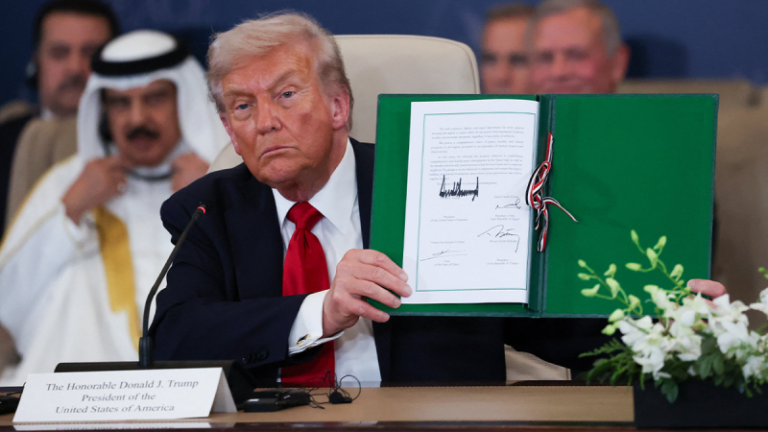
President Donald Trump traveled to both Israel, where he addressed the Knesset, and Cairo to finalize the agreement, coordinating with Arab leaders and mediators in a complex process that included an exchange of Palestinian terrorists held in Israeli prisons for hostages.

‘There is absolutely no doubt that without President Trump’s intervention, this could have lasted much longer, or maybe not have ended at all, or ended in tragedy,’ Eyal said, adding that the administration fundamentally changed what had been considered possible.

‘He expanded the realm of possibilities,’ Eyal said. ‘If someone had told us six months earlier that this would be the framework of the deal, and that all the living hostages would be back home within 72 hours, we would have said it’s a great idea, but Hamas would never agree.’

According to Eyal, the breakthrough came from Israeli military pressure combined with U.S. insistence and regional coordination. ‘The military pressure put by Israel, enabled by the White House, together with the White House’s insistence and the enlistment of Qatar and Turkey, is what made the breakthrough,’ he said.

Misztal also argued that the outcome was not the result of diplomacy alone. ‘The relative calm that the region is now enjoying, after two years of war, is not the result of diplomacy, which failed on its own to stop Iran’s nuclear advance or convince Hamas to return Israeli hostages,’ Misztal said. ‘It is the result of Israeli and U.S. willingness to use force, and do so together in pursuit of common objectives.’

‘Operations Rising Lion and Midnight Hammer, coupled with the Israeli strike in Doha, unlocked the path to peace,’ he added.

The ceasefire remains fragile but intact, with the U.S. now deeply involved in shaping the postwar phase in Gaza.

Regional shockwaves

On Dec. 8 last year, after Israel defeated Hezbollah, the Assad regime in Syria collapsed, signaling a dramatic shift in the regional balance of power.

That momentum carried into 2025. Operation Rising Lion known as the 12-day war, underscored Israel’s air superiority, with Israeli aircraft striking Iranian military infrastructure and eliminating senior IRGC commanders.

The campaign also highlighted the depth of U.S.-Israel coordination, culminating in a U.S. strike that targeted Iran’s nuclear program and curtailed Tehran’s ability to support its proxies.

Eyal said Iran now faces a period of profound uncertainty. ‘Iran will, without doubt, try to rebuild its influence after its proxy system was shattered,’ he said. ‘It was defeated in war with Israel and lost most of its nuclear program.’

Two questions now dominate. ‘Can Iran rebuild its alliances, its prestige and its sources of power, like the nuclear program or air defenses, and stabilize itself again as a regional power?’ Eyal asked. ‘The deeper question,’ he added, ‘is what happens to the regime.’

He described Iran as increasingly unstable, with a devastated economy and growing public discontent. ‘It seems like almost everything is ripe for a substantial change in Iran,’ he said. ‘Whether the Islamic Republic can survive without significant reform, or whether there will be a coup or counterrevolution, will take us well into 2026.’

‘The sands of the Middle East are always shifting’: What to expect in 2026

Eyal said the past year forced a reckoning about Hamas’ future. ‘In 2025, Israelis, and to a certain extent countries in the Middle East, woke up from a fantasy that Hamas would cease to exist completely as a functioning body,’ he said.

‘Everybody understands there will be some sort of presence of Hamas, and unfortunately, they will hold some sort of armed power,’ Eyal added. ‘The question is, to what level can you reduce it?’

At the same time, he stressed the scale of Hamas’ losses. ‘In 2025 they suffered tremendous defeats and were wiped out as a functioning military body,’ Eyal said. ‘This is the year in which it happened.’

‘Even after losing half of Gaza, with Gaza devastated, and the hostages returned, they are still functioning as a military organization,’ he added. ‘That means they are incredibly resistant or flexible.’

Misztal warned that the calm will not hold without sustained U.S. engagement. ‘The sands of the Middle East are always shifting,’ he said. ‘Today’s calm will not last without consistent effort applied to uphold it.’

He warned that 2026 could see renewed pressure from multiple fronts. ‘Adversaries will seek to reassert themselves and find new advantages,’ Misztal said. ‘Iran will test the boundaries of U.S. and Israeli patience and ISIS or other Sunni extremists may seek a spectacular attack to mark their comeback.’

‘These will all be tests for the U.S. appetite to continue applying the ‘peace through strength’ approach,’ Misztal said. ‘If Washington takes its eyes off the region, the progress of the last year might quickly be lost.’

This post appeared first on FOX NEWS

The Trump administration is dropping the hammer on cheap imports of disposable food containers from China and Vietnam, announcing massive trade penalties that experts say will lead to safer products while simultaneously protecting U.S. companies from unfair competition. 

‘America continues to thrive when fair competition occurs,’ attorney Yohai Baisburd of Cassidy Levy Kent, counsel to the American Molded Fiber Coalition, told Fox News Digital Tuesday. ‘The Trump Administration is using every tool in the toolbox to enforce U.S. trade laws and cheaters beware because they are coming after you.’ 

Baisburd, whose legal background focuses on trade litigation, was reacting to the U.S. International Trade Commission (ITC) announcing recently that its board voted to rule that U.S. industry is materially injured by importing ‘thermoformed molded fiber products from China and Vietnam.’ Baisburd argued on behalf of U.S. companies as the International Trade Commission considered the case. 

Thermoformed molded fiber products are common food containers — including disposable bowls, plates, cups and containers for ready to make meals or take-out containers — made from natural fibers and recycled products, such as wood pulp. The fibers are turned to pulp before they’re molded, and then shaped using heat and pressure. 

The U.S. market has been flooded with such products from China and Vietnam, with the nations ‘dumping’ the containers at unfairly low prices that affect American businesses, according to the ITC. 

Following the vote from the ITC, the Commerce Department will issue final antidumping (AD) and countervailing (CVD) duty orders on those imports from China and Vietnam. Antidumping and countervailing duties are special trade penalties — in addition to typical tariffs — that the U.S. imposes on imports found to be unfairly underpriced in order to level the playing field for American companies.

The new orders are expected in the coming weeks, with ITC expected to release its report by Jan. 23. 

The duties will include an upward of 540% tax on certain Chinese producers — including a 477%-plus tax for ‘dumping’ alone — and a 260%-plus tax on Vietnamese producers of the thermoformed molded fiber packaging products, ITC data shows.

‘The ITC vote will give the U.S. industry at least five years of duties on unfairly traded products from China and Vietnam,’ Baisburd said. ‘The ITC confirmed that the U.S. industry is severely injured by the corrosive impact of Chinese and Vietnamese imports. The ITC also authorized retroactive duties on Vietnamese imports.  This is only one of a handful of times they have done so in the past 25 years, sending a message to importers that they cannot surge into the U.S. market to try to get ahead of potential duties.’ 

Baisburd said the upcoming duties will ‘level the playing field’ for U.S. industry against cheap imports. 

‘U.S. workers/companies can compete against anyone, anywhere. What they can’t do is outcompete Chinese and Vietnamese government subsidies that violate U.S. trade laws. The duties allow U.S. manufacturers to reinvest in their workers, operations, technology, because they can now compete on a level playing field,’ he said. 

The duty orders are separate from the Trump administration’s tariffs on foreign nations, Fox News Digital learned. The tariffs are subject to change and negotiation, while the duties are legally binding trade enforcement mechanisms based on investigative findings by the U.S. Department of Commerce and International Trade Commission, and enforced by Border Patrol. The duties are applicable for the next five years minimum and are not subject to presidential discretion, Fox News Digital learned. 

Other presidential administrations have used antidumping and countervailing duties to level the playing field for U.S. companies, including the Biden administration touting in 2024 that it leveled more than 30 new antidumping and countervailing duties on steel-related products alone. 

Baisburd argued that the Trump administration broadened its tool chest for an all-encompassing approach to protecting U.S. manufacturing. 

‘The Trump administration is taking advantage of all the enforcement tools available across the federal government to support U.S. manufacturing.  We are seeing increased customs enforcement (both civil and criminal), a new DOJ Trade Fraud Taskforce, and greater scrutiny of supply chain shifts that circumvent duties,’ the attorney said. 

In addition to business concerns about the Asian nations boxing out the U.S. market for food service containers, health concerns also have simmered. China and Vietnam have been identified as nations that produce containers with ‘forever chemicals,’ or per- and polyfluoroalkyl substances (PFAs). An ITC report published in 2024 found that while some foreign nations claim products are PFAs-free, studies indicate that it is not always true, while the U.S. ‘generally produces PFA-free products.’

The vote marks the third recent trade ruling that affects disposable food service containers. The U.S. Department of Commerce ITC issued antidumping and countervailing duties on disposable aluminum containers, pans, trays and lids imported from China and elsewhere, as well as leveling antidumping and countervailing duties on low-cost white paper plates from China, Thailand and Vietnam in March. 

This post appeared first on FOX NEWS

The Department of Justice warned Tuesday that some documents in the latest batch of files it published related to Jeffrey Epstein included false and unverified information about President Donald Trump.

The DOJ wrote in a statement that the material included ‘untrue and sensationalist claims’ about the president that the FBI received ahead of the 2020 election.

‘To be clear: the claims are unfounded and false, and if they had a shred of credibility, they certainly would have been weaponized against President Trump already,’ the DOJ wrote on social media, adding that it published the documents because of its ‘commitment to the law and transparency.’

The documents included an email sent by an unnamed federal prosecutor with the U.S. attorney’s office in the Southern District of New York on Jan. 7, 2020, saying Trump flew on Epstein’s private jet at least eight times in the 1990s. Epstein and his associate Ghislaine Maxwell accompanied Trump on some of the flights, and two of the flights included passengers who were ‘possible witnesses in a Maxwell case,’ the prosecutor wrote.

The U.S. attorney’s office ‘didn’t want any of this to be a surprise down the road,’ the prosecutor wrote. 

The documents also indicated a number of tips that were provided to the FBI about Trump’s alleged involvement with Epstein in the early 2000s. Trump has said he ended his friendship with Epstein before Epstein faced charges. It is unclear what was done with the information provided in the documents, or whether any of it was corroborated or used in the prosecutions of Epstein and Maxwell.

The DOJ has been sharing on a public website since Friday tens of thousands of pages of files related to Epstein’s and Maxwell’s sex-trafficking cases. Maxwell was found guilty in 2021 of trafficking minors, while Epstein died in 2019 in prison by suicide, authorities say.

Among the files was also a letter Epstein appeared to have written to former physician Larry Nassar, a convicted child molester, that was postmarked three days after Epstein died and referenced Trump.

‘Our president also shares our love of young, nubile girls,’ the letter read. The document’s authenticity is unknown. Accompanying it was an FBI request to conduct a handwriting analysis of it.

The latest trove of documents came as part of the DOJ’s response to the Epstein Files Transparency Act, a law passed last month that imposed a 30-day deadline on the department to release all unclassified material related to the cases.

The last batch of documents included several photos of former President Bill Clinton, who was pictured in a pool and hot tub. A woman whose face was redacted was featured in the latter. A Clinton spokesperson responded by demanding the DOJ release all the files and that refusal to do so would confirm the DOJ was ‘not about transparency, but about insinuation.’ The spokesperson noted that Clinton’s name has ‘repeatedly’ been cleared by prosecutors.

The transparency bill allowed the DOJ to withhold information about potential victims and material that could jeopardize open investigations or litigation. Officials could also leave out information ‘in the interest of national defense or foreign policy,’ the bill said. But the bill explicitly directed the DOJ not to redact any details that could be damaging to high-profile and politically connected people.

The file rollout has stirred controversy as critics have aired grievances about over-redactions and the law’s lapsed deadline. Trump signed the bill into law on Nov. 19, meaning the statutory deadline for all the files to be released was Dec. 19. The DOJ has said more files are forthcoming by the new year.

Deputy Attorney General Todd Blanche said on ‘Meet the Press’ on Sunday there was ‘well-settled law’ that supported the DOJ missing the bill’s deadline because of a need to meet other legal requirements, like redacting victim-identifying information.

Bill Mears contributed to this report.

This post appeared first on FOX NEWS

The House Small Business Committee sent a letter this week to the Small Business Administration demanding answers on federal pandemic relief funds that flowed from the Biden administration to entities in Minnesota possibly connected to the massive unfolding fraud scandal.

In a letter sent Monday to SBA Administrator Kelly Loeffler, the committee said it is conducting oversight into reports of fraud and concealment involving the Paycheck Protection Program (PPP) and the COVID-19 Economic Injury Disaster Loan (EIDL) program, both of which were created to help small businesses survive the COVID-19 pandemic.

The letter cited public reporting and federal prosecutions tying Minnesota-based nonprofits and individuals to massive fraud schemes that drained hundreds of millions of dollars from federal programs under Democratic Gov. Tim Walz’s watch.

The letter also points out that the Minnesota nonprofit Feeding Our Future was at the center of what the Justice Department has called the largest pandemic relief fraud scheme charged in U.S. history, with 78 individuals charged as of late November in a case involving roughly $250 million in fraudulent claims as part of an overall system of fraud that prosecutors said last week could total up to $9 billion or more.

‘The SBA’s COVID lending programs were created to keep small businesses afloat during an unprecedented crisis, not to subsidize fraud,’ Small Business Committee Chairman Roger Williams, R-Texas, told Fox News Digital in a statement. 

‘Under the Biden-Harris administration, weak oversight and reckless decision-making allowed bad actors to exploit these programs and steal hundreds of millions in taxpayer dollars. The Feeding Our Future case highlights the severity of these failures, and the Committee on Small Business is determined to hold those responsible accountable.’

The committee’s letter requests detailed records on PPP and EIDL loans issued to dozens of individuals and businesses tied to Minnesota-based fraud investigations, including loan amounts, disbursement dates, forgiveness decisions and internal SBA communications.

Lawmakers are also seeking all documents and communications between the SBA and Walz’s office or Minnesota state agencies during the Biden-Harris administration, arguing such records are necessary to determine whether warning signs were ignored or oversight failed.

In a statement to Fox News Digital, Loeffler says she is looking forward to working with Congress to get to the bottom of the situation. 

‘Earlier this month, SBA determined that numerous Somali nonprofits indicted as part of the $1 billion pandemic fraud scandal in Minnesota received PPP and EIDL Loans totaling at least $2.5 million, including Feeding Our Future,’ Loeffler said. 

‘SBA has since broadened its investigation to uncover pandemic-era fraud across the entire state of Minnesota and looks forward to working in partnership with Congressional leaders to uncover the full depth of the abuse and deliver accountability on behalf of American taxpayers.’

The letter asks for the documents to be provided by Jan. 12, 2026.

On Tuesday, Fox News Digital first reported that Loeffler sent a letter to Walz alerting him that her agency will ‘halt’ more than $5.5 million in annual support to resource partners in the state ‘until further notice.’

This post appeared first on FOX NEWS

The global lithium market endured a bruising 2025, with persistent oversupply and softer-than-expected electric vehicle (EV) demand driving prices for the battery metal to multi-year lows.

Lithium carbonate prices in North Asia slipped below US$9,550 per metric ton in February — their weakest level since 2021 — triggering production cuts and project delays, particularly in Australia and China. Despite brief rallies later in the year, prices remained under pressure, reflecting a market struggling to absorb rapid supply growth.

That imbalance has been years in the making. Global lithium carbonate output surged 192 percent between 2020 and 2024 while demand lagged, leaving the market with a large surplus.

Analysts estimate that supply exceeded demand by more than 150,000 metric tons in both 2023 and 2024, with inventories continuing to cap price recovery in 2025. Although the surplus is shrinking, high stockpiles have kept prices rangebound, with lithium carbonate largely hovering near US$10,000 for much of the year.

Volatility punctuated the lithium industry in the second half of 2025.

Prices rebounded sharply in July on supply cut speculation, briefly pushing lithium carbonate to an 11 month high above US$12,000 before retreating as producers denied meaningful reductions and inventories remained ample.

Policy uncertainty in the US, including threats to EV incentives, and regulatory signals from China further weighed on sentiment, underscoring the market’s sensitivity to both geopolitics and headlines.

Despite the prolonged downturn, analysts increasingly view 2025 as a potential inflection point. With roughly a third of global production estimated to be unprofitable at current prices, further supply rationalization appears likely.

Forecasts point to a sharply narrower surplus in 2025 and a possible deficit emerging in 2026, suggesting that while lithium’s near-term outlook remains constrained, the sector’s long-term fundamentals — driven by electrification, the energy transition and data-intensive technologies — remain intact.

Lithium in 2025: A tale of two markets

In contrast, the second half of 2025 saw a boost in prices across the lithium space as market fundamentals improved due to Contemporary Amperex Technology (SZSE:300750,HKEX:3750) curtailing operations at the Jianxiawo lepidolite mine in early August. Despite reports that Jianxiawo would restart operations in December, it is unclear if the mine, which is one of the world’s largest, is back in operation.

Concern over the removed supply pushed carbonate prices higher from mid-October through the end of the year, when they rose from US$10,417.37 to US$14,131.44, a 34 percent increase.

Battery energy storage demand key to lithium growth

Another trend Klein pointed to was the rapid growth in the battery energy storage system (BESS) market, which is expected to grow by 44 percent in 2025, representing a quarter of all battery demand.

“We’ve been talking about BESS being a very fast, growing and big part of the market, but it’s now become the consensus opinion that it’s very strong not only in China, but elsewhere,” said Klein.

Although BESS is one of the fastest-growing segments of the battery market, Klein believes its growth potential is not fully understood. “The market’s probably still underestimating that narrative about battery energy storage,” he said, adding that it is only now starting to be understood by people who are in the industry.

“But for the broader, generalist investor who still equates lithium with EVs, they don’t fully understand the battery energy storage angle, so I think they’re still underestimating that,” said Klein. The market is projected to balloon from US$13.7 billion in 2024 to US$43.4 billion by 2030, growing at a compound annual growth rate of 21.3 percent.

Industry analysts expect BESS installations could expand from roughly 205 gigawatt-hours in 2024 to between 520 and 700 gigawatt-hours by 2030, driven by renewable integration, grid stability needs and declining costs.

While EVs have dominated the lithium narrative, Del Real said the real opportunity was “never just a play on EVs or hybrids — it was a play on grid storage, energy storage,” with cheaper battery cells unlocking faster adoption.

That mispricing has created a contrarian opportunity, he added, noting that lithium’s neglect over the past six months has rewarded patient investors. “It’s lonely in the forest sometimes,” Del Real said. But when sentiment turns, “the re-rating can be spectacularly profitable if you know how to play it.”

Lithium exploration budgets evaporate

Lithium exploration budgets were sharply reduced in 2025 as miners retrenched amid prolonged price weakness.

S&P Global’s 2025 corporate exploration strategies study shows that spending on lithium and other critical minerals exploration fell significantly, even as overall non-ferrous exploration dipped only slightly.

Lithium, which had previously broken the US$1 billion mark for exploration spending, saw its allocation cut as junior companies tightened their belts and delayed programs. Cuts were most pronounced in traditional exploration hubs such as Canada, Australia and the US, where weakened junior sectors hit budgets hardest; meanwhile, regions like Chile, Peru and Saudi Arabia recorded relative gains in broader exploration funding.

Lithium remains a structurally important exploration commodity despite a sharp pullback in spending, Kevin Murphy, director of metals and mining research at S&P Global, said during a December webinar.

Murphy described the metal’s rise over the past decade as a “lithium renaissance.”

Once “completely inconsequential for exploration,” lithium has become the third most explored commodity globally over the past five years, underscoring how central it has become to future-facing supply chains.

However, that momentum stalled in 2025 as ongoing price weakness forced a reset. Murphy said lithium exploration budgets were “absolutely gutted,” falling to roughly half of 2024 levels, a decline he described as expected given depressed prices and the completion of several late-stage programs that wrapped up in late 2024 and early 2025.

“The lithium price has been depressed for too long for the budgets to be resilient,” he said, framing the downturn as cyclical rather than structural.

Lithium stocks stage H2 rally

Speaking at this year’s Benchmark Week event in November, Sean Gilmartin, senior equity analyst at Bloomberg, explained that lithium equities staged a sharp rebound in H2 after years of underperformance.

After lagging broader materials and chemical indexes for much of the first half of the year, lithium stocks surged in the second half of the year, closely tracking rising spot prices.

“Over a three year window, lithium names were still very much lagging,” Gilmartin said, “but we’ve flipped the script in a few months. Year-to-date, we’re seeing on average 47 percent gains, closely aligned with spot markets.”

He attributed the turnaround to stronger-than-expected lithium demand, particularly from BESS, as well as supply curtailments in China, which have tightened the market.

Despite the rebound, he cautioned that volatility remains a defining feature of the lithium equities space.

“You need to have a long-term view, and you have to be very adherent to your thesis,” Gilmartin said, noting that the demand story remains intact and that fundamentals continue to support growth through 2026 and beyond.

Securities Disclosure: I, Georgia Williams, hold no direct investment interest in any company mentioned in this article.

This post appeared first on investingnews.com

Nickel prices were stagnant in 2025, trading around US$15,000 per metric ton (MT) for much of the year.

The metal’s primary price motivation stemmed from persistent oversupply from Indonesian operations.

Overall, sentiment remained weak amid soft demand growth from the construction and manufacturing sectors, and declining interest in nickel as electric vehicle (EV) battery makers began to eye cheaper chemistries.

Nickel supply in 2026

The big question going into the new year is if nickel supply and demand will come into balance.

The most significant contributing factor over the last several years has been an abundance of supply from Indonesia, which has become the world’s top nickel producer.

The US Geological Survey estimates that full-year 2024 nickel production came in at 2.2 million MT, a staggering increase over the 800,000 MT it believes the nation produced in 2019.

In February 2025, the Indonesian government changed its quota system, effectively increasing nickel ore output to 298.5 million wet metric tons (WMT) from 271 million WMT in 2024. At the time, it said the increased production capacity was being limited to major production areas and was designed to reduce supply pressures.

The increase helped drive the amount of nickel sitting in exchange warehouses. Stockpiles at the London Metal Exchange (LME) had risen to 254,364 MT by the end of November, up from 164,028 MT at the start of 2025.

Meanwhile, the nickel price sank to US$14,295, toward the lower end of profitability for low-cost Indonesian miners.

The profitability question has raised the possibility of cuts — according to Shanghai Metal Market, the Indonesian government is proposing to cut nickel ore output to around 250 million MT in 2026. If the reduction comes to pass, it would mark a significant decline from the 379 million WMT laid out by Indonesia in 2025. Discussions on the final amount are ongoing, and the outlet states that it will be some time before the target is finalized.

“The global market is still forecast to remain in surplus — around 261,000 MT in 2026 — so further cuts would need to be significant to alter fundamentals,” she explained.

Additionally, there could be a wait-and-see approach as other new policies adopted by the Indonesian government in 2025 begin to take hold. The first, introduced in April, saw a shift from a flat 10 percent royalty to a more dynamic rate of 14 to 18 percent, depending on nickel prices. The second came in October, when the government cut the validity period of mining licenses from three years to one, providing the government greater oversight of production levels.

These prices, however, aren’t supportive of western producers, which began curtailing operations in 2024 when the LME average price was US$16,812 and reached US$21,000 in May of that year.

For her part, Manthy suggested that to get back to that range, there needs to be a more coordinated approach to constraining supply, and it may not make an immediate difference.

“To push prices to that range, cuts would need to be deep enough to erase most of the projected surplus. Given the scale — hundreds of thousands of MT — this seems unlikely without coordinated action. Even then, investor sentiment would probably require sustained prices above US$20,000 to materially improve producer attractiveness,” she said.

Nickel demand in 2026

The challenges faced by nickel go beyond oversupply; demand growth for the base metal is also soft.

Nickel’s primary use case is in the production of stainless steel, much of it destined for the Chinese housing market, which has yet to recover from its collapse in 2020.

While the Chinese government tried to stabilize the market in 2024 and earlier in 2025, it has done little to reverse the downward trend. According to a CNBC report on December 2, November sales were down 36 percent from the same period in 2024, and declined 19 percent through the first 11 months of the year.

“China’s property sector weakness has weighed on stainless steel demand, which accounts for over 60 percent of global nickel consumption. Even with broader economic growth, this stagnation has kept nickel prices subdued. A property turnaround would help, but given the surplus outlook, price upside would likely be limited,” Manthey said.

Adding to nickel’s woes is soft growth from the EV market.

Much of the increase in nickel production over the last five years was to fuel the need for EV batteries, but more recently producers like Contemporary Amperex Technology (SZSE:300750,HKEX:3750), one of the world’s largest battery makers, have shifted chemistry to lithium-iron-phosphate (LFP).

Nickel-manganese-cobalt batteries had been seen as superior due to their higher energy density and longer range. But recent advances in LFP technology have erased that gap, with vehicles using the chemistry achieving ranges of over 750 kilometers. Additionally, LFP batteries are cheaper to produce and less volatile, making them safer.

According to a December 1 Reuters article, nickel battery demand rose 1 percent year-on-year in September, while LFP battery demand increased 7 percent. However, the news outlet notes that most of the nickel demand was likely driven more by a rapidly growing EV market than by the benefits of its chemistry.

Although Reuters also notes that nickel chemistry remains the dominant battery technology in western EV markets, that too comes with a caveat, especially in the US, where the elimination of the EV tax credit in September has cratered EV demand. While US EV sales reached a record 1.2 million through the first nine months of 2025, much of that was driven by consumers seeking to take advantage of the US$7,500 credit before it expired.

Early data from Cox Automotive analysis indicates that American EV sales are down 46 percent in Q4 from the third quarter, and 37 percent from the same period last year.

Against that backdrop, Ford Motor (NASDAQ:F) has scaled back its EV plans, taking a US$19.5 billion writedown, and will pivot to extended-range EVs — which use gas-powered engines to augment range — and hybrid cars. Similarly, in mid-December, the EU dropped its plans to ban the sale of all internal combustion engine light vehicles by 2035.

These policy changes likely aren’t good news for nickel watchers.

“Any slowdown in energy transition policies adds to bearish sentiment for battery metals, including nickel,” Manthey said.

Nickel price forecast for 2026

Manthey suggested that nickel prices will remain under pressure throughout 2026.

“We expect prices to struggle to hold above US$16,000 given the surplus. Upside risks hinge on unexpected supply disruptions or stronger-than-forecast stainless and battery demand, but sustained levels above US$19,000 look unlikely under current fundamentals. We see prices averaging US$15,250 in 2026,” she said.

That’s in line with the World Bank’s 2026 nickel price outlook of US$15,500, rising to US$16,000 in 2027.

The primary reason for these projections is the ongoing nickel market surplus.

While it didn’t make a price prediction, Russia’s Nornickel, one of the world’s largest nickel producers, suggests that the market will see a surplus of 275,000 MT of refined nickel in 2026.

Low prices will be a challenge for nickel producers and investors alike. Until there is a shift in market fundamentals, a rebound for nickel doesn’t appear to be in the cards in the short or even medium term.

Securities Disclosure: I, Dean Belder, hold no direct investment interest in any company mentioned in this article.

This post appeared first on investingnews.com

CEO Investment Is a continuing sign of commitment and alignment with shareholders as he already is the largest shareholder and owns 32mill shares

TORONTO, ON / ACCESS Newswire / December 23, 2025 / Nextech3D.ai (CSE:NTAR,OTC:NEXCF)(OTCQX:NEXCF)(FSE:1SS), an AI-first event technology and digital engagement company, is pleased to provide shareholders with an update on its previously announced acquisition of Krafty Labs, a revenue generating AI-driven event engagement and experiential technology company serving global enterprise customers.

Krafty Labs Acquisition Update

The Company is pleased to confirm that the due diligence process has been successfully completed, and the acquisition of Krafty Labs is scheduled to close on January 2, 2026, subject to customary closing conditions including CSE approval.

Krafty Labs brings a highly attractive blue-chip customer base, along with approximately $1.2 million in year-to-date 2025 revenue and gross margins of 72%. Management believes this acquisition meaningfully enhances Nextech3D.ai’s AI-first event platform and expands its reach into higher-value enterprise and association customers.

CEO Convertible Note Investment Demonstrates Strong Alignment

In connection with the Company’s continued execution and growth strategy, Evan Gappelberg, Chief Executive Officer of Nextech3D.ai, has committed to invest $321,917 directly into the Company through an 18-month convertible note bearing 12% annual interest.

Key terms of the CEO investment include:

  • Term: 18 months

  • Conversion Option: At the CEO’s sole discretion, the note may be converted into 2,299,412 common shares at a fixed conversion price of $0.14 per share

  • Warrants Issued: As compensation, the CEO will receive 2,299,412 common share purchase warrants

  • Warrant Terms:

    • Exercise Price: $0.165 per share

    • Term: 3 years

Mr. Gappelberg will continue to be the Company’s largest shareholder, currently owning 32,757,017 common shares, further reinforcing strong alignment between management and shareholders.

The transaction constitutes a related party transaction under Multilateral Instrument 61-101 – Protection of Minority Security Holders in Special Transactions. The Company is relying on exemptions from the formal valuation and minority shareholder approval requirements of MI 61-101 on the basis that the transaction does not exceed 25% of the Company’s market capitalization. The transaction is subject to approval of the Canadian Securities Exchange (CSE).

Management believes this insider investment reflects confidence in Nextech3D.ai’s strategy, execution, and long-term growth prospects.

Strengthening an AI-First Event Platform

The combination of Krafty Labs’ enterprise-grade engagement capabilities with Nextech3D.ai’s existing event technology stack is expected to drive increased average contract values, deeper customer relationships, and enhanced monetization opportunities across in-person, virtual, and hybrid events.

Evan Gappelberg, CEO of Nextech3D.ai comments ‘We believe the acquisition of Krafty Labs, combined with my personal investment in the Company, represents a strong vote of confidence in Nextech3D.ai’s direction and execution,’ He continues ‘With due diligence complete and a closing date set, we are focused on integrating Krafty Labs and accelerating growth while continuing to build long-term shareholder value.’

Looking Ahead

With the Krafty Labs acquisition set to close on January 2, 2026, Nextech3D.ai continues to advance its strategy of building a comprehensive, AI-powered event technology platform through disciplined acquisitions, organic growth, and aligned insider investment.

About Nextech3D.ai

Nextech3D.ai is an AI-powered technology company specializing in 3D asset generation, spatial computing, and comprehensive AI Event Solutions for virtual, hybrid, and in-person experiences. Through Map Dynamics, Eventdex, and Krafty Labs, Nextech3D.ai delivers a unified global platform for Google, Microsoft, Netflix, Oracle, Yelp, ZoomInfo, Spotify, Meta conferences, expos, corporate activations, learning programs, and enterprise engagement.

Website: www.Nextech3D.ai
Investor Relations: investors@nextechar.com

For further information, please visit: www.Nextech3D.ai.
Investor Relations: investors@nextechar.com

For more information, visit Nextech3D.ai.

Sign up for Investor News and Info – Click Here

Evan Gappelberg /CEO and Director
866-ARITIZE (274-8493)

Forward-Looking Statements

This news release contains ‘forward-looking statements’ within the meaning of applicable securities laws, including statements regarding the proposed acquisition of Krafty Labs, the anticipated timing and consideration, expected benefits and synergies, product integrations, and growth opportunities. Forward-looking statements are based on assumptions and are subject to risks and uncertainties that could cause actual results to differ materially. There can be no assurance that the proposed transaction will be completed as anticipated or at all. Nextech3D.ai disclaims any obligation to update forward-looking statements except as required by law.

Forward-looking Statements The CSE has not reviewed and does not accept responsibility for the adequacy or accuracy of this release. Certain information contained herein may constitute ‘forward-looking information’ under Canadian securities legislation. Generally, forward-looking information can be identified by the use of forward-looking terminology such as, ‘will be’ or variations of such words and phrases or statements that certain actions, events or results ‘will’ occur. Forward-looking statements regarding the completion of the transaction are subject to known and unknown risks, uncertainties and other factors. There can be no assurance that such statements will prove to be accurate, as future events could differ materially from those anticipated in such statements. Accordingly, readers should not place undue reliance on forward-looking statements and forward-looking information. Nextech will not update any forward-looking statements or forward-looking information that are incorporated by reference herein, except as required by applicable securities laws.

SOURCE: Nextech3D.ai

View the original press release on ACCESS Newswire

News Provided by ACCESS Newswire via QuoteMedia

This post appeared first on investingnews.com

NOT FOR DISTRIBUTION TO UNITED STATES NEWSWIRE SERVICES OR FOR DISSEMINATION IN THE UNITED STATES

Brunswick Exploration Inc. (‘BRW’ or the ‘Corporation’) is pleased to announce the closing of its previously announced non-brokered private placement (the ‘Offering’) with aggregate gross proceeds of approximately $2,121,542 from the sale of 12,123,097 common shares of the Corporation sold as ‘flow-through shares’ within the meaning of the Income Tax Act (Canada) (the ‘Tax Act’) and the Taxation Act (Québec) (the ‘Québec Tax Act’) (each, a ‘FT Share’) at an updated price of $0.175 per FT Share.

Killian Charles, President & CEO, commented: ‘With the Mirage maiden resource estimate expected in the first two weeks of January and the closing of this financing, BRW will have an aggressive start to 2026. Following the release of the MRE, we will be returning to drill the recent discovery at Anatacau with a significantly expanded drill program before continuing with prospecting in Saudi Arabia and drilling at Mirage, both expected to begin in the second quarter. We wish happy holidays to BRW shareholders and invite them to pay close attention to BRW press releases in the new year.’

In connection with the Offering, the Corporation paid finder’s fees to arm’s length third parties in an amount of $62,726.24.

Insiders of the Corporation participated in the Offering and were issued an aggregate of 314,200 FT Shares. Such participation in the Offering is a ‘related party transaction’ as defined in Regulation 61-101 respecting Protection of Minority Security Holders in Special Transactions (‘Regulation 61-101‘). The Offering is exempt from the formal valuation and minority shareholder approval requirements of Regulation 61-101 as neither the fair market value of the securities issued to insiders nor the consideration for such securities by insiders exceed 25% of the Corporation’s market capitalization.

The Offering remains subject to the final approval of the TSX Venture Exchange (‘TSX-V‘).

The FT Shares are subject to a statutory four month and one day hold period. The FT Shares have not been, and will not be, registered under the United States Securities Act, or any state securities laws, and accordingly may not be offered or sold within the United States except in compliance with the registration requirements of the U.S. Securities Act and applicable state securities requirements or pursuant to exemptions therefrom. This press release does not constitute an offer to sell or a solicitation to buy any securities in any jurisdiction.

About Brunswick Exploration

Brunswick Exploration is a Montréal-based mineral exploration company focused on grassroots exploration for lithium, a critical metal necessary to global decarbonization and energy transition. The Corporation is rapidly advancing its extensive portfolio of grassroots lithium properties and projects in Quebec (Mirage and Anatacau), Greenland (Nuuk Lithium) and the Kingdom of Saudi Arabia.

Investor Relations/information

Mr. Killian Charles, President and CEO (info@BRWexplo.ca)

Cautionary Statement on Forward-Looking Information

This news release contains ‘forward-looking information’ within the meaning of applicable Canadian securities legislation based on expectations, estimates and projections as at the date of this news release. Such forward-looking information includes, but is not limited to, statements concerning the Corporation’s expectations with respect to the use of proceeds and the use of the available funds following completion of the Offering. Forward-looking information involves risks, uncertainties and other factors that could cause actual events, results, performance, prospects and opportunities to differ materially from those expressed or implied by such forward-looking information. Factors that could cause actual results to differ materially from such forward-looking information include, but are not limited to, delays in obtaining or failures to obtain required governmental, environmental or other project approvals; uncertainties relating to the availability and costs of financing needed in the future; changes in equity markets; inflation; fluctuations in commodity prices; delays in the development of projects; the other risks involved in the mineral exploration and development industry; and those risks set out in the Corporation’s public documents filed on SEDAR+ at www.sedarplus.ca. Although the Corporation believes that the assumptions and factors used in preparing the forward-looking information in this news release are reasonable, undue reliance should not be placed on such information, which only applies as of the date of this news release, and no assurance can be given that such events will occur in the disclosed time frames or at all. The Corporation disclaims any intention or obligation to update or revise any forward-looking information, whether as a result of new information, future events or otherwise, other than as required by law.

Neither the TSX-V nor its Regulation Services Provider (as that term is defined in the policies of the TSX-V) accepts responsibility for the adequacy or accuracy of this news release.

News Provided by GlobeNewswire via QuoteMedia

This post appeared first on investingnews.com