Archive

January 3, 2026

Browsing

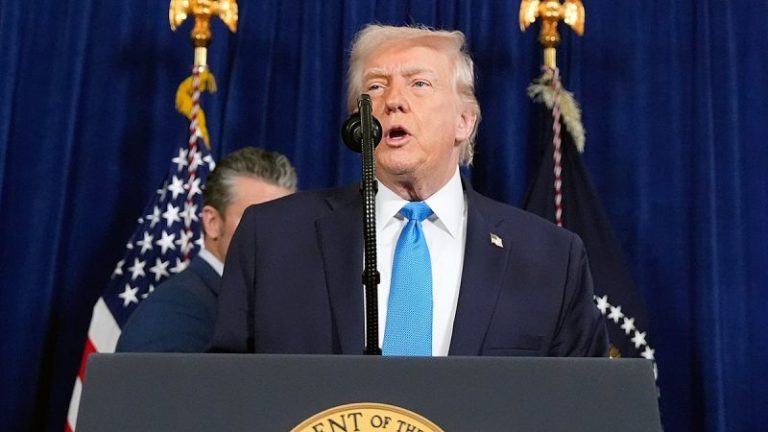
A super PAC aligned with President Donald Trump has nearly $300 million in its war chest heading into the 2026 midterms, according to records filed with the Federal Election Commission (FEC) on Thursday.

MAGA Inc. reported $294 million in cash on hand in its latest campaign finance disclosure, which the super PAC said will be used to support candidates aligned with the president’s agenda.

‘Thanks to President Trump’s leadership, MAGA Inc will have the resources to help candidates who support President Trump’s America First agenda of securing our border, keeping our streets safe, supercharging our economy, and making life more affordable for all Americans,’ a MAGA Inc. spokesperson said in a statement, according to the New York Post.

The super PAC raised $102 million in the second half of 2025, including 25 donations of at least $1 million.

The largest contribution came from OpenAI president and co-founder Greg Brockman, who donated $25 million in September.

Brockman said in a post on X this week that he had become more politically active in 2025, including through political contributions that reflect ‘support for policies that advance American innovation and constructive dialogue between government and the technology sector.’

The fundraising haul came even though Trump is not on the ballot this year, underscoring the super PAC’s focus on supporting Republicans in upcoming races.

MAGA Inc. did not play a significant role in the 2022 midterms, opting instead to save its money for Trump’s 2024 campaign.

The super PAC spent $456 million supporting Trump’s bid to return to the White House, according to OpenSecrets, a nonprofit organization that tracks campaign finance data.

MAGA Inc. launched ads in November backing Republican candidate Matt Van Epps, who was endorsed by Trump and went on to defeat Democrat Aftyn Behn in a Tennessee congressional race.

Elon Musk, the billionaire technology entrepreneur and chief executive of SpaceX and Tesla, has signaled an openness to supporting Republican candidates in the midterms.

‘America is toast if the radical left wins,’ he posted on X on Thursday. ‘They will open the floodgates to illegal immigration and fraud.’

Fox News Digital’s Paul Steinhauser contributed to this report.

This post appeared first on FOX NEWS

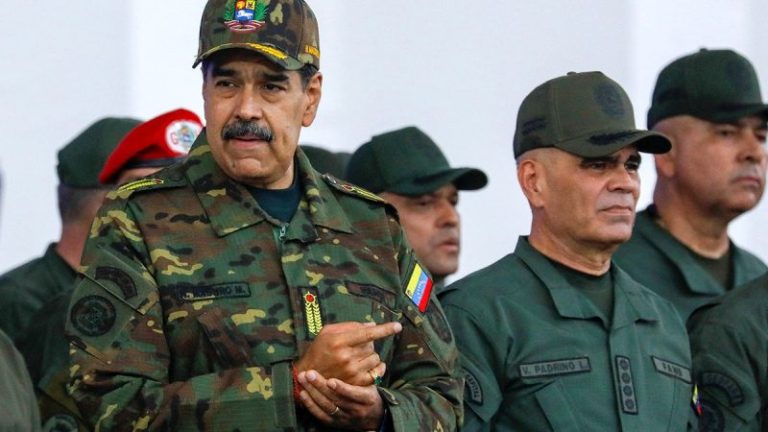
The Venezuelan dictator captured by the Trump administration worked as a bus driver and union organizer before his ascent through the South American country’s political system, where he ultimately became a wanted man by the U.S. with a $50 million reward for information leading to his arrest. 

Nicolás Maduro was ‘captured and flown out of the country’ early Saturday following a ‘large-scale strike’ by the U.S. military, according to President Donald Trump

The actions mark a stunning fall for Maduro, who was serving his third term as president of Venezuela. He led an administration that grappled with economic challenges, mass protests, disputed election results and allegations of narco-trafficking. 

Maduro was born in Venezuela’s capital of Caracas on Nov. 23, 1962. As a young man, he was sent to communist Cuba in 1986 for a year of ideological instruction — his only studies after high school.

Upon returning home, Maduro found work as a bus driver and union organizer. He embraced the late Venezuelan President Hugo Chávez after the then-army paratrooper in 1992 staged a failed coup against an unpopular austerity government. Around the same time, he met his longtime partner, Cilia Flores, a lawyer for the jailed leader. 

After Chávez was freed and elected president in 1998, Maduro, a young lawmaker, helped push his agenda of redistributing the OPEC nation’s oil wealth and political power. 

In 2000, Maduro was elected to Venezuela’s National Assembly. He later became the president of the National Assembly in 2005.

Then in 2006, Chávez appointed Maduro as Venezuela’s foreign minister. Six years later, Maduro was appointed as Venezuela’s vice president. 

When Maduro took power in 2013 following his mentor’s death from cancer, he struggled to bring order to the grief-stricken nation. Without ‘El Comandante’ in charge, the economy entered a death spiral — shrinking 71% from 2012 to 2020, with inflation topping 130,000% — and opponents and rivals inside the government saw an opportunity. 

Less than a year into Maduro’s presidency, hardliner opponents launched demonstrations demanding his exit.

Leaning heavily on Venezuela’s security forces, Maduro crushed the protests. However, with supermarket shelves empty amid widespread shortages, they resumed with more intensity three years later, leaving more than 100 people dead. In 2018, the International Criminal Court initiated a criminal investigation into possible crimes against humanity. 

The crackdown continued into the 2018 presidential race, which the opposition boycotted when several of its leaders were barred from running. Dozens of countries led by the U.S. condemned Maduro’s first re-election as illegitimate and recognized Juan Guaidó, the head of the National Assembly, as Venezuela’s elected leader. 

‘Since 2019, more than 50 countries, including the United States, have refused to recognize Maduro as Venezuela’s head of state,’ the State Department said in a profile of Maduro on its website.

‘Maduro helped manage and ultimately lead the Cartel of the Suns, a Venezuelan drug-trafficking organization comprised of high-ranking Venezuelan officials. As he gained power in Venezuela, Maduro participated in a corrupt and violent narco-terrorism conspiracy with the Revolutionary Armed Forces of Colombia (FARC), a designated Foreign Terrorist Organization,’ it added.  

‘Maduro negotiated multi-ton shipments of FARC-produced cocaine; directed the Cartel of the Suns to provide military-grade weapons to the FARC; coordinated with narcotics traffickers in Honduras and other countries to facilitate large-scale drug trafficking; and solicited assistance from FARC leadership in training an unsanctioned militia group that functioned, in essence, as an armed forces unit for the Cartel of the Suns,’ the State Department continued. 

‘In March 2020, Maduro was charged in the Southern District of New York for narco-terrorism, conspiracy to import cocaine, possession of machine guns and destructive devices, and conspiracy to possess machine guns and destructive devices,’ it also said.

Maduro was re-elected again in 2024 in another disputed election. 

‘Given the overwhelming evidence, it is clear to the United States and, most importantly, to the Venezuelan people that Edmundo González Urrutia won the most votes in Venezuela’s July 28 presidential election,’ then-Secretary of State Antony Blinken said at the time. 

Maduro then delivered a fiery inauguration speech in January 2025, likening himself to a biblical David fighting Goliath and accusing his opponents and their supporters in the U.S. of trying to turn his inauguration into a ‘world war.’ 

He said his enemies’ failure to block his inauguration to a third six-year term was ‘a great victory’ for Venezuela’s peace and national sovereignty. 

‘I have not been made president by the government of the United States, nor by the pro-imperialist governments of Latin America,’ he said, after being draped with a sash in the red, yellow and blue of Venezuela’s flag. ‘I come from the people, I am of the people, and my power emanates from history and from the people. And to the people, I owe my whole life, body and soul.’ 

Months later, Attorney General Pam Bondi announced a $50 million reward for information leading to Maduro’s arrest.

‘Maduro uses foreign terrorist organizations like TdA (Tren de Aragua), Sinaloa and Cartel of the Suns (Cartel de Soles) to bring deadly violence to our country,’ Bondi said in a video message in August 2025. ‘He is one of the largest narco-traffickers in the world and a threat to our national security.’ 

Fox News’ Michael Sinkewicz, Lucas Y. Tomlinson, Louis Casiano and The Associated Press contributed to this report. 

This post appeared first on FOX NEWS

President Donald Trump said the United States is ‘going to run the country’ in Venezuela until what he described as a safe, proper and judicious transition can take place.

Trump framed the role as temporary but necessary, saying the U.S. does not want to allow ‘somebody else get in’ before conditions are stable. He said the goal is peace, liberty and justice for Venezuelans, including those who have fled to the United States and hope to return home.

‘We’re going to run the country until such time as we can do a safe, proper and judicious transition,’ Trump said. 

He also warned the U.S. is prepared to escalate further if needed, saying, ‘We are ready to stage a second and much larger attack,’ and that American forces remain in position. ‘We’re there now, and we’re going to stay until such time as the proper transition can take place,’ Trump said.

Trump spoke during a news conference Saturday hours after U.S. special forces bombed Caracas and captured dictator Nicolas Maduro and his wife Cilia Flores, taking them to New York to face drug trafficking charges. 

Trump said the U.S. plans to directly manage Venezuela alongside partners while rebuilding the country’s oil sector. ‘We’re going to be running it with a group, and we’re going to make sure it’s run properly,’ Trump said. ‘We’re going to rebuild the oil infrastructure, which will cost billions of dollars. It’ll be paid for by the oil companies directly… and we’re going to get the oil flowing the way it should be.’ He said the U.S. would ensure Venezuelans are ‘taken care of,’ including those ‘forced out of Venezuela by this thug.’

Pressed on whether U.S. forces would remain inside the country, Trump did not rule out a sustained troop presence. ‘They always say boots on the ground — so we’re not afraid of boots on the ground if we have to,’ he said, confirming U.S. troops were already involved ‘at a very high level’ during the operation. 

Trump repeated that the U.S. intends to stay and retain control, saying, ‘We’re there now. We’re ready to go again if we have to. We’re going to run the country… very judiciously, very fairly.’ He added that the U.S. was prepared to launch another attack if necessary and accused Venezuela’s former leadership of stealing American-built oil infrastructure, saying, ‘We’re late, but we did something about it.’

Asked whether the U.S. would back opposition leader María Corina Machado or work with Venezuela’s newly sworn-in vice president, Trump signaled flexibility. He noted the vice president had been ‘picked by Maduro,’ but said U.S. officials were already engaging with her. ‘She’s essentially willing to do what we think is necessary to make Venezuela great,’ Trump said, adding that the issue was being handled directly by his team.

Trump continued, ‘She was quite gracious, but she really doesn’t have a choice. We’re going to have this done right. We’re not going to just do this when they leave like everybody else, leave and say, you know, let it go to hell. If we just left, it has zero chance of ever coming back. We’ll run it properly. We’ll run it professionally. We’ll have the greatest oil companies in the world go in and invest billions and billions of dollars and take out money. Use that money in Venezuela. And the biggest beneficiary are going to be the people of Venezuela.’

Trump was asked by another reporter, ‘Why is running a country in South America ‘America first’?’

Trump replied: ‘We want to surround ourselves with good neighbors. We want to surround ourselves with stability. We want to surround ourselves with energy. We have tremendous energy in that country. It’s very important that we protect it.’

U.S. efforts to run or oversee political transitions in foreign countries have frequently encountered setbacks in recent years, highlighting the uncertainty surrounding Trump’s approach to Venezuela.

The last time the U.S. intervened militarily to remove a leader in Latin America was Panama in 1989, when American forces ousted dictator Manuel Noriega. While the operation succeeded quickly, it was followed by long-term challenges in stabilizing governance.

While the invasion quickly removed Manuel Noriega, it resulted in significant civilian harm. Estimates of civilian deaths vary widely, and entire neighborhoods — most notably El Chorrillo in Panama City — were heavily damaged, leaving thousands homeless. This complicated post-invasion stabilization and fueled lingering resentment among parts of the population.

But after years of soaring hyperinflation that wiped out savings, hollowed out wages and fueled mass migration, some U.S. officials — and many Venezuelans — believe virtually anyone who comes to power would be better than Nicolás Maduro. Venezuelans inside the country and those who fled to the United States were seen celebrating in the streets during moments of heightened U.S. pressure, according to videos that circulated widely on social media.

Venezuelan opposition leaders Edmundo González Urrutia and his running mate Machado have positioned themselves as the alternative to President Nicolás Maduro, insisting they won last year’s presidential election despite the government’s declaration of Maduro as the victor.

Machado, who was barred from holding office by the Maduro-appointed high court, threw her support behind González as a unity candidate, while the opposition and several international observers rejected the official results as fraudulent.

González has since left Venezuela amid pressure from the Maduro government, while Machado’s present whereabouts is unknown, urging continued domestic and international pressure to force a political transition.

After the capture, Machado called on Venezuela’s armed forces to recognize opposition candidate Edmundo González Urrutia as the country’s ‘legitimate president’ and commander-in-chief, while declaring the opposition is prepared to ‘assert our mandate and take power.’ In a defiant statement, she said ‘the hour of freedom has arrived,’ argued President Nicolás Maduro now faces international justice, and urged Venezuelans at home and abroad to mobilize as what she described as the final phase of a democratic transition.

Asked about the U.S.’s track record of ousting dictators, Trump replied: ‘That’s when we had different presidents … That’s not with me. We’ve had a perfect track record of winning. We win a lot and we win. If you look at Soleimani, you look at al-Baghdadi, you look at the Midnight Hammer, Midnight Hammer was incredible … So, with me, you’ve had a lot of a lot of victory. You’ve had only victories, you’ve had no losses yet.’

This post appeared first on FOX NEWS

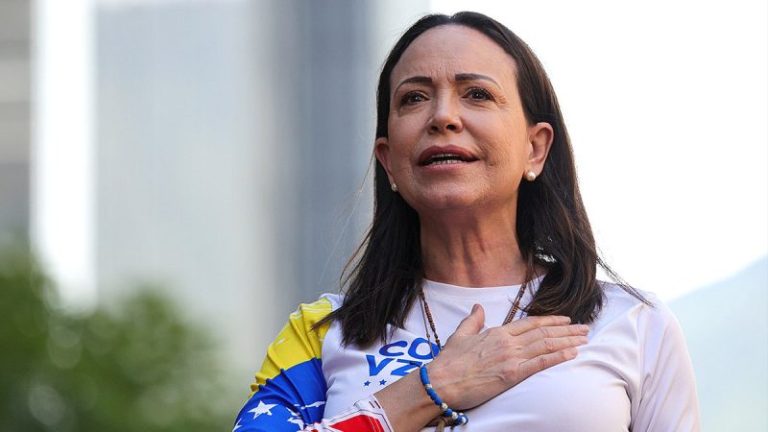
Venezuelan opposition leader María Corina Machado issued an open call for a transfer of power Saturday, urging the military to abandon Nicolás Maduro’s government and recognize opposition-backed candidate Edmundo González as president after the U.S. said Maduro had been captured.

Machado’s statement came hours after President Donald Trump announced that U.S. forces had captured Maduro following what he described as ‘large-scale’ military strikes targeting the Venezuelan government. Trump said Maduro and his wife were flown out of the country, a move that would mark the most direct U.S. military action against a Latin American head of state in decades.

‘The hour of freedom has arrived,’ wrote in a post on X. ‘This is the hour of the citizens. Those of us who risked everything for democracy on July 28th. Those of us who elected Edmundo González Urrutia as the legitimate President of Venezuela, who must immediately assume his constitutional mandate and be recognized as Commander-in-Chief of the National Armed Forces by all the officers and soldiers who comprise it.’

It remained unclear Saturday whether senior commanders have shifted allegiance or whether the opposition has secured control of state institutions.

Machado also called on Venezuelans inside the country to remain ‘vigilant, active and organized,’ signaling that further instructions would be communicated through official opposition channels. To Venezuelans abroad, she urged immediate mobilization to pressure foreign governments to recognize a new leadership in Caracas.

The U.S. conducted strikes on Caracas early Saturday morning and took Maduro and his wife into custody and flew them to New York to face drug trafficking charges.

Machado and González have repeatedly argued that the July 28 presidential election was stolen, pointing to an opposition-run parallel vote count that they say shows González won by a wide margin.

Venezuela’s electoral authorities, which are controlled by Maduro allies, declared him the winner with just under 52% of the vote, compared with roughly 43% for González. The government has rejected allegations of fraud.

The opposition, however, says it collected and published tally sheets from polling stations nationwide showing González received about two-thirds of the vote, compared with roughly 30% for Maduro — a claim cited by several foreign governments that declined to recognize the official results.

Maduro’s government has refused to release detailed precinct-level data to independently verify the outcome, further fueling accusations that the election did not reflect the will of voters.

While González is the opposition-backed presidential candidate, Machado has remained the dominant figure in Venezuela’s opposition movement. Machado won the opposition’s primary by a landslide before being barred from running by Maduro’s government, forcing the coalition to rally behind González as a substitute candidate.

Throughout the campaign, González publicly acknowledged Machado as the movement’s leader, with Machado continuing to direct strategy, messaging and voter mobilization efforts. Machado has remained the public face of the opposition, while González has largely played a formal, constitutional role tied to the presidency.

This post appeared first on FOX NEWS
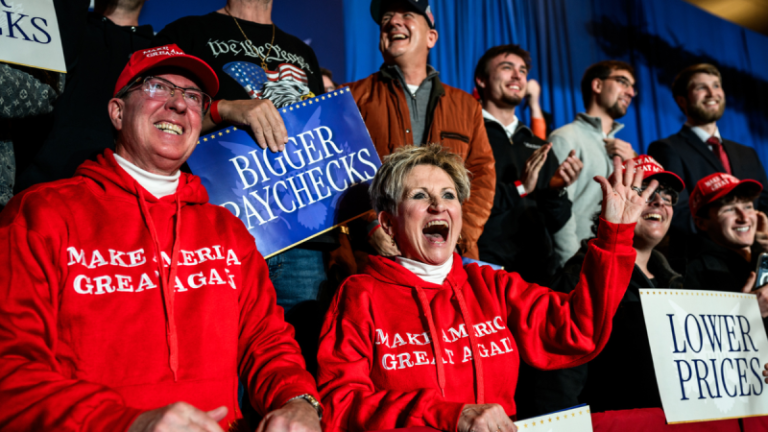
President Donald Trump’s House GOP critics are ripping the administration’s operation in Venezuela that resulted in the capture of the country’s president, Nicolás Maduro.

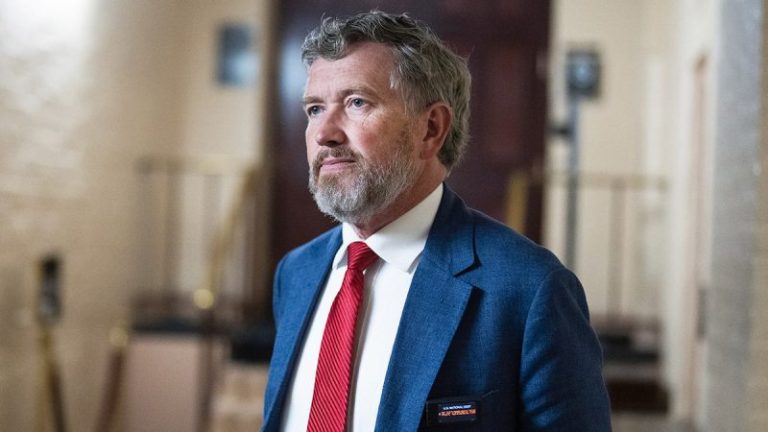
Rep. Thomas Massie, R-Ky., was the first to criticize the Trump administration’s operation in Venezuela, again breaking from the majority of his party and butting heads with the commander-in-chief.

Massie, a longtime critic of U.S. foreign intervention, appeared to question the legality of the federal government’s Venezuela strikes.

‘If this action were constitutionally sound, the Attorney General wouldn’t be tweeting that they’ve arrested the President of a sovereign country and his wife for possessing guns in violation of a 1934 U.S. firearm law,’ Massie posted to X on Saturday morning.

The Department of Justice (DOJ) unsealed a four-count indictment against Maduro after Trump confirmed the U.S. took custody of the Venezuelan leader and his wife following strikes in the capital of Caracas.

Attorney General Pam Bondi said in a statement those charges were ‘Narco-Terrorism Conspiracy, Cocaine Importation Conspiracy, Possession of Machineguns and Destructive Devices, and Conspiracy to Possess Machineguns and Destructive Devices against the United States.’

It’s not immediately clear what Maduro’s wife, Celia Flores, has been charged with.

In a follow-up posted on the charges, Massie said, ’25-page indictment but no mention of fentanyl or stolen oil. Search it for yourself.’

Trump said on Fox News that Maduro and Flores were being flown to the U.S.S. Iwo Jima, which will bring them to the U.S. where they will face criminal proceedings led by the Southern District of New York.

Massie’s criticism was followed by scathing comments by Rep. Marjorie Taylor Greene, R-Ga., another Trump critic who is retiring from Congress early next week before finishing her term.

‘If U.S. military action and regime change in Venezuela was really about saving American lives from deadly drugs, then why hasn’t the Trump admin taken action against Mexican cartels? And if prosecuting narco terrorists is a high priority, then why did President Trump pardon the former Honduran President Juan Orlando Hernández, who was convicted and sentenced for 45 years for trafficking hundreds of tons of cocaine into America?’ part of Greene’s statement read.

‘The next obvious observation is that by removing Maduro this is a clear move for control over Venezuelan oil supplies that will ensure stability for the next obvious regime change war in Iran. And of course, why is it ok for America to militarily invade, bomb, and arrest a foreign leader, but Russia is evil for invading Ukraine and China is bad for aggression against Taiwan? Is it only ok if we do it? (I’m not endorsing Russia or China).’

Meanwhile, Rep. Don Bacon, R-Neb., praised the operation itself but expressed concerns about what precedent is being set.

‘My main concern now is that Russia will use this to justify their illegal and barbaric military actions against Ukraine, or China to justify an invasion of Taiwan,’ Bacon said in a statement. ‘Freedom and rule of law were defended last night, but dictators will try to exploit this to rationalize their selfish objectives.’

Bacon is also retiring from Congress, but unlike Greene, he is serving out his full term.

The vast majority of Republican lawmakers unequivocally backed the operation, as expected. 

Senate Majority Leader John Thune, R-S.D., and House Speaker Mike Johnson, R-La., both said they expected congressional briefings from the Trump administration in the coming days when lawmakers return from a two-week recess. 

This post appeared first on FOX NEWS
Westport Fuel Systems Inc. (‘Westport’) (TSX:WPRT Nasdaq: WPRT), a supplier of alternative fuel systems and components for the global transportation industry, today announces changes to its Board of Directors. Chair Dan Hancock, appointed to the Board in July 2017, retired from the Board, effective December 31, 2025, with current director Tony Guglielmin assuming the role of Chair. Joining Westport’s Board of Directors, effective January 1, 2026, is Brad Kotush, who brings over 20 years of experience in early-stage transformation, investment banking, and capital markets, both in Canada and globally. This addition further enhances the Board’s expertise and supports the Company’s long-term strategic objectives.

Mr. Hancock’s extensive automotive experience, particularly in technology commercialization and European manufacturing leadership, proved essential as Westport navigated the rapidly shifting dynamics of today’s automotive industry,’ said Tony Guglielmin, appointed Chair of Westport’s Board of Directors. ‘During the integration process following the 2016 merger and the commercialization of the HPDI fuel system, Mr. Hancock provided the stability and insight necessary for success. We are grateful for his dedication and the legacy he leaves with the Board.’

‘Brad Kotush’s appointment adds exceptional strength to our Board,’ added Guglielmin. ‘Mr. Kotush’s background in executive-level finance, risk management, and strategy spanning clean technology, investment banking, and global capital markets aligns directly with Westport’s strategic direction. His experience overseeing regulated entities, major financing programs, and cross-border transactions will bring meaningful insight and discipline to our governance and decision-making processes.’

Mr. Kotush is currently the CFO of a clean tech company listed on the TSXV and previously held the positions of Executive Vice President and Chief Financial Officer at Home Capital Group Inc. and Executive Vice President, Chief Financial and Risk Officer at Canaccord Genuity Group Inc.

About Westport Fuel Systems

Westport is a technology and innovation company connecting synergistic technologies to power a cleaner tomorrow. As a leading supplier of affordable, alternative fuel, low-emissions transportation technologies, we design, manufacture, and supply advanced components and systems that enable the transition from traditional fuels to cleaner energy solutions.

Our proven technologies support a wide range of clean fuels – including natural gas, renewable natural gas, and hydrogen – empowering OEMs and commercial transportation industries to meet performance demands, regulatory requirements, and climate targets in a cost-effective way. With decades of expertise and a commitment to engineering excellence, Westport is helping our partners achieve sustainability goals—without compromising performance or cost-efficiency – making clean, scalable transport solutions a reality.

Westport is headquartered in Vancouver, Canada. For more information, visit Westport.com.

Contact Information

Investor Relations
Westport Fuel Systems
T: +1 604-718-2046     

News Provided by GlobeNewswire via QuoteMedia

This post appeared first on investingnews.com