Archive

January 16, 2026

Browsing

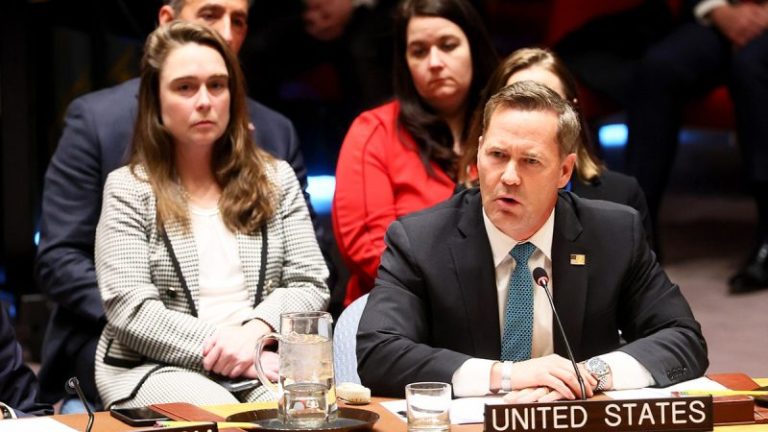
U.S. Ambassador to the United Nations Mike Waltz warned Iran during an emergency meeting of the Security Council that President Donald Trump ‘is a man of action’ who has ‘made it clear all options are on the table to stop the slaughter.’ 

Waltz said Thursday that, ‘We all have a responsibility to support the Iranian people and to put an end to the regime’s neglect and oppression of the Iranian nation.’ 

Iran has been plunged into turmoil amid recent anti-government protests, with the death toll from those being at least 2,677, the U.S.-based Human Rights Activists News Agency told The Associated Press. 

‘Colleagues, let me be clear. President Trump is a man of action, not endless talk like we see at the United Nations. He has made it clear all options are on the table to stop the slaughter. And no one should know that better than the leadership of the Iranian regime,’ Waltz added. 

Waltz’s remarks came as Gholam Hossein Darzi, the deputy Iranian ambassador to the U.N., accused the U.S. of trying to destabilize the Islamic Republic.

‘Under the hollow pretext of concern for the Iranian people and claims of support for human rights, the United States regime is attempting to portray itself as a friend of the Iranian people, while simultaneously laying the groundwork for political destabilization and military intervention under a so-called humanitarian narrative,’ Darzi said. 

Waltz dismissed the claim, telling diplomats at U.N. headquarters on Thursday that Iran’s leaders are ‘afraid of their own people.’ 

‘I would like to address the allegation put forward by the regime that these inspired protests are somehow a foreign plot to give a precursor to military action. Everyone in the world needs to know that the regime is weaker than ever before, and therefore is putting forward this lie because of the power of the Iranian people in the streets,’ Waltz said.

‘They are afraid. They’re afraid of their own people. Iran says it’s ready for dialogue, but its actions say otherwise. This is a regime that rules through oppression, through violence, and through intimidation, and has destabilized the Middle East for decades. Well, enough is enough,’ he added. 

‘The regime’s dereliction of duty to its own citizens is what has put the ayatollahs in the positions they are in today with hundreds of thousands, if not millions, protesting in the streets after decades of neglect and abuse. So everyone should ask themselves, everyone sitting here today, how many people are dead?’ Waltz also said.

White House press secretary Karoline Leavitt told reporters on Thursday that Trump and his team ‘have communicated to the Iranian regime that if the killing continues, there will be grave consequences.’ 

‘And the president received a message as he revealed to all of you and the whole world yesterday, that the killing and the executions will stop. And the president understands today that 800 executions that were scheduled and supposed to take place yesterday were halted. And so the president and his team are closely monitoring this situation, and all options remain on the table for the president,’ she added. 

This post appeared first on FOX NEWS

An Iranian cleric has called for the death penalty for protesters detained during a nationwide crackdown amid ongoing unrest against the Islamic regime. 

The cleric’s calls follow President Donald Trump’s threats of U.S. intervention if protesters were met with violence.

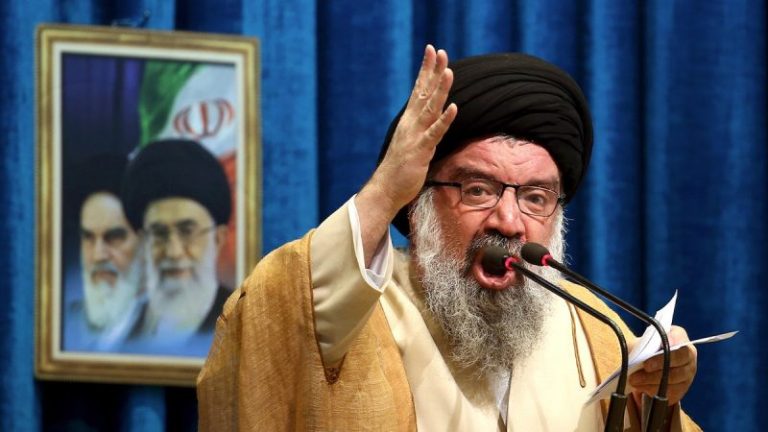
Ayatollah Ahmad Khatami’s sermon, which was broadcast by Iranian state radio, reportedly sparked chants from those gathered for prayers. The Associated Press reported that the chants included, ‘Armed hypocrites should be put to death!’

During his sermon, Khatami gave the first overall statistics of the damage from the protests, which began in late December, according to the AP. This information provides a look at the scale of the protests after the regime instituted a nationwide internet blackout on Jan. 8.

The cleric claimed 350 mosques, 126 prayer halls and 20 other holy places had sustained damage, the AP reported. Khatami also claimed that 400 hospitals, 106 ambulances, 71 fire department vehicles and another 50 emergency vehicles sustained damage.

Another 80 homes of Friday prayer leaders had also reportedly been damaged, the AP reported, adding that it could be a sign of demonstrators taking out their frustrations against the government as the leaders hold an important position within Iran’s theocracy.

‘They want you to withdraw from religion,’ Khatami said, according to the AP. ‘They planned these crimes from a long time ago.’

Khatami, who was appointed by Iran’s Supreme Leader Ayatollah Ali Khamenei and serves on the country’s Assembly of Experts and Guardian Council, had previously spoken out against protesters. He described them as being ‘butlers’ of Israeli Prime Minister Benjamin Netanyahu and ‘Trump’s soldiers.’

Khamenei made similar remarks, saying that the protesters were ‘ruining their own streets to make the president of another country happy,’ referring to Trump.

Trump has been vocal in his support for the Iranian people and said early on that the U.S. was ‘locked and loaded’ and ready to intervene if the regime used violence against protesters. It is unclear if and when the U.S. will take concrete action in Iran, but speculation has circulated following the bombing of the country’s nuclear sites in 2025 and the U.S. capture of Venezuelan dictator Nicolás Maduro.

Fox News Digital reached out to the White House and the State Department for comment.

The Associated Press contributed to this report.

This post appeared first on FOX NEWS

President Donald Trump’s administration formally launched the second phase of its plan to end the war between Israel and Hamas this week, shifting from a ceasefire framework toward a post-ceasefire political and security phase for Gaza. The announcement immediately raised a central question that now dominates expert analysis: who will actually disarm Hamas.

U.S. Special Envoy to the Middle East Steve Witkoff announced Wednesday that phase two is underway, describing it as a transition ‘from ceasefire to demilitarization, technocratic governance and reconstruction.’ He warned that Hamas must fully comply with its obligations under the deal, including the immediate return of the final deceased Israeli hostage.

‘The U.S. expects Hamas to comply fully with its obligations, including the immediate return of the final deceased hostage,’ Witkoff wrote on X. ‘Failure to do so will bring serious consequences.’

President Donald Trump reinforced the administration’s announcement on Thursday, writing on Truth Social that the United States had ‘OFFICIALLY entered the next phase of Gaza’s 20-Point Peace Plan,’ following Witkoff’s remarks. Trump said that since the ceasefire, his team had helped deliver ‘RECORD LEVELS of Humanitarian Aid to Gaza, reaching Civilians at HISTORIC speed and scale,’ adding that ‘even the United Nations has acknowledged this achievement as UNPRECEDENTED.’ 

Trump wrote that these developments had ‘set the stage for this next phase,’ which he said would include backing a newly appointed Palestinian technocratic government, the National Committee for the Administration of Gaza, to govern the territory during a transitional period. Trump described himself as chairman of the Board of Peace and said the committee would be supported by the board’s high representative. 

Trump again warned that Hamas must ‘IMMEDIATELY honor its commitments, including the return of the final body to Israel, and proceed without delay to full Demilitarization,’ adding, ‘They can do this the easy way, or the hard way.’ Trump concluded the post by saying, ‘The people of Gaza have suffered long enough. The time is NOW. PEACE THROUGH STRENGTH.’

The new phase envisions the establishment of a transitional technocratic Palestinian administration in Gaza, while the United States works with Egypt and other regional partners to ensure compliance and stability. Yet the announcement offered few operational details, particularly regarding how Hamas would be disarmed after more than two decades of military control in the enclave.

France backs ceasefire, aid and long-term demilitarization

In an exclusive interview with Fox News Digital, Jérôme Bonnafont, France’s ambassador to the United Nations, called the ceasefire an ‘incredible achievement’ and said phase two could help lay the groundwork for peace without Hamas.

‘The Trump plan is establishing a ceasefire, which is an incredible achievement,’ Bonnafont said. ‘It has to go to a massive reopening of humanitarian aid, and it is going to be announced within a couple of days.’

He said the next stage includes an international stabilization force that would support reconstruction and contribute to Hamas’s disarmament.

‘That would help disarm Hamas, and that will help the Palestinian Authority return and democratically restart the management of Gaza as part of the Palestinian territory,’ he said.

Bonnafont emphasized that France views Israel’s security as a priority, particularly in the face of regional threats. ‘We have always been on the side of Israel when it comes, for example, to the threats by Iran to the existence of Israel,’ he said.

At the same time, he said France believes long-term security depends on the creation of a demilitarized Palestinian state living in peace with Israel. ‘We believe that security for Israel in the long term comes with the creation of Palestine,’ Bonnafont said. ‘A Palestine that has to be independent but demilitarized and in peace with Israel.’

The United Nations also welcomed the announcement of phase two, calling it ‘an important step’ while emphasizing adherence to international law and existing U.N. resolutions.

A plan advances, but the hardest problem remains

Israeli and U.S. security analysts broadly agree that phase two cannot succeed without addressing Hamas’s weapons and coercive power.

Dr. Avner Golov, vice president of the Israeli policy institute Mind Israel, told Fox News Digital that, ‘The central challenge is Hamas’s demilitarization,’ Golov said. ‘The only actors truly willing to dismantle Hamas’s military capabilities are the Israelis, and as long as Hamas remains armed, there should be no rebuilding and no IDF withdrawal from the current defensive line.’

‘In the end, there must be a credible military threat from the IDF against Hamas,’ he said. ‘Without such a threat, I see no chance that Hamas will voluntarily disarm.’

Golov also pointed to what he described as a gap between diplomatic commitments and action by regional actors. ‘The key test is Turkey and Qatar,’ he said. ‘They signed a document committing to Hamas’s disarmament, but since then they have not demonstrated real commitment to implementing it.’

Reconstruction without security seen as unrealistic

Jonathan Ruhe, a fellow for American Strategy at the Jewish Institute for National Security of America (JINSA), argued that phase two presents a detailed reconstruction framework but avoids the most politically difficult decision.

‘The peace plan offers a detailed framework for rebuilding Gaza and promoting better governance,’ Ruhe said. ‘But it’s silent on the ‘who’ and ‘how’ of disarming Hamas.’

‘As long as Hamas can interrupt aid distribution, intimidate and kill Gazans who want a better future, and threaten renewed war with Israel, international investment in reconstruction and reform will be near zero,’ he said.

While Trump’s plan calls for Hamas to disarm voluntarily, Ruhe also said Hamas has little reason to do so. ‘Hamas refuses because it thinks it won the war,’ he said. ‘Now there is an urgent need to decide who will disarm Hamas forcefully.’

Ruhe noted that a U.N. Security Council resolution authorizes an International Stabilization Force to disarm Hamas, but he said no country has been willing to put troops in that role. Instead, he said the Trump plan outlines a more limited mission for international forces, focused on guarding aid sites and preventing Hamas resupply.

‘Trump and Netanyahu both said Israel might have to disarm Hamas,’ Ruhe said. ‘But the IDF ground forces need to rest and refit after two years of grueling combat, and a major offensive risks blowing up the international coalition needed for phase two.’

He suggested that well-vetted private military contractors, overseen by U.S. security officials rather than U.S. Central Command, could play a role, though he acknowledged such a move would involve ‘hard fighting.’

A narrowing window

Despite diplomatic momentum, analysts interviewed by Fox News Digital cautioned that time may be working against the plan. ‘The status quo favors Hamas as it continues tightening its grip over its half of Gaza,’ Ruhe said. ‘Announcing the Board of Peace serves important diplomatic purposes, but it won’t mean much on the ground unless and until Hamas is disarmed.’

Golov echoed that assessment. ‘As long as Hamas remains armed, there should be no rebuilding and no IDF withdrawal from the current defensive line,’ he said.

This post appeared first on FOX NEWS

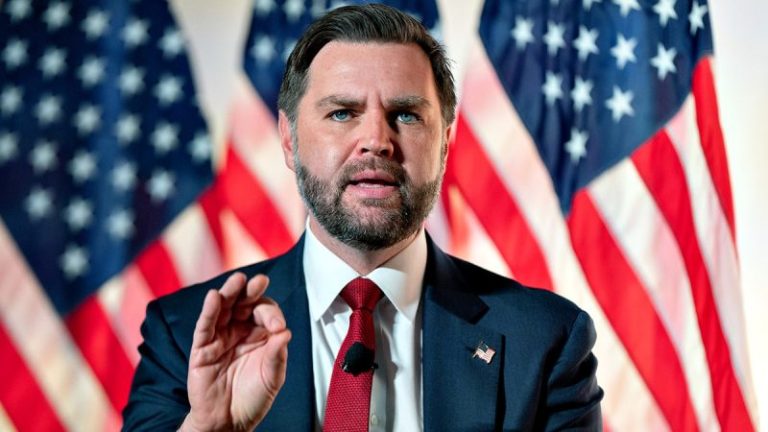
Vice President JD Vance will not attend the Munich Security Conference in 2026, Fox News Digital has learned. 

The move comes after Vance attended the conference in 2025 and issued some harsh words for European leaders — prompting some backlash from allies on the other side of the pond. 

A source familiar with Vance’s plans confirmed to Fox News Digital that Vance would not participate in the conference in 2026, but no reason was provided for his absence. Bloomberg first reported that Vance would not attend the conference. 

The 2026 conference will be held in February in Munich. 

Vance’s absence comes as he’s publicly been more focused on domestic issues like fraud cases in Minnesota recently, while President Donald Trump and Secretary of State Marco Rubio appear to be spearheading the administration’s foreign policy agenda. 

Meanwhile, Vance in 2025 cautioned that Russia and China don’t pose as great a threat to European nations as the ‘threat from within,’ in regard to issues like censorship and illegal immigration. Likewise, Vance claimed that European voters didn’t endorse opening the ‘floodgates to millions of unvetted immigrants.’

‘To many of us on the other side of the Atlantic, it looks more and more like old entrenched interests hiding behind ugly Soviet-era words like misinformation and disinformation, who simply don’t like the idea that somebody with an alternative viewpoint might express a different opinion or, God forbid, vote a different way, or even worse, win an election,’ Vance said at the 2025 conference, which was held in February. 

European leaders challenged the remarks, and German Defense Minister Boris Pistorius said shortly after Vance delivered the statement that he perceived the statements as a comparison to ‘conditions in parts of Europe with those in authoritarian regimes.’

‘That is unacceptable, and it is not the Europe and not the democracy in which I live and am currently campaigning,’ Pistorius said. 

Meanwhile, Norwegian Prime Minister Jonas Gahr Støre claimed that Vance was off base on his comments about immigration in Europe.

‘He speaks as though we are not focused on immigration in Europe,’ Gahr Støre said. ‘I mean, this is the big theme in every country, that we want to have control of our borders.’

Fox News Digital reached out to conference officials for comment on Vance’s absence and has not yet received a reply. 

The Associated Press contributed to this report. 

This post appeared first on FOX NEWS
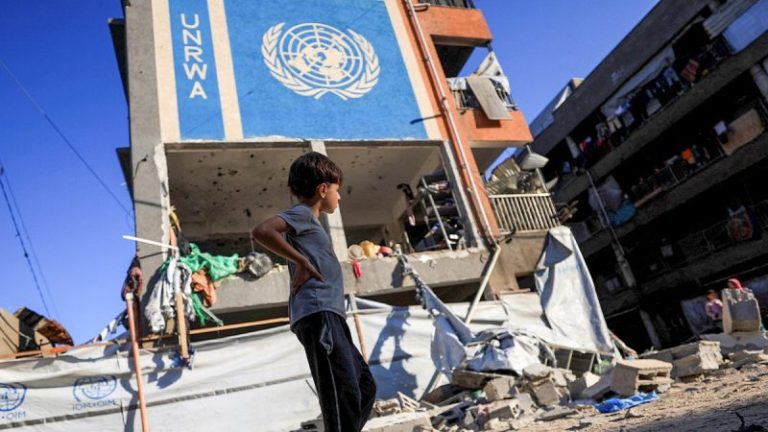
UNRWA officials urged congressional staffers to oppose a potential Trump administration move to designate the U.N. agency as a foreign terrorist organization, and discussed UNRWA’s ongoing operations in Gaza and the West Bank, including cash-based assistance, during a Dec. 17 briefing, Fox News Digital has learned.

The video conference was organized by UNRWA USA, the American nonprofit that supports the agency through advocacy and fundraising. UNRWA USA Executive Director Mara Kronenfeld opened the briefing by saying the goal was to make clear that UNRWA ‘is still on the ground’ in Gaza and the West Bank despite what she described as ‘the Netanyahu government’s insidious efforts to systematically prevent UNRWA from continuing its life-saving humanitarian work.’

During the meeting, briefers also raised reports that the U.S. government was considering designating UNRWA as a foreign terrorist organization and discussed with congressional offices what steps could be taken to ‘help prevent that and support UNRWA in its critical work,’ according to meeting details reviewed by Fox News Digital.

Bill Deere, UNRWA’s director in Washington, said ‘press reports appear to be true’ that the administration was considering a foreign terrorist organization designation for the agency.

‘This would be unprecedented for a U.N. agency to consider this. It is certainly unwarranted,’ Deere said, asserting that ‘four separate independent investigations’ dispute Israel’s allegations regarding UNRWA’s workforce. 

Deere urged congressional offices to respond forcefully.

‘You can loudly express your displeasure,’ Deere said, arguing that the ramifications would extend beyond UNRWA and set a precedent affecting the broader U.N. system.

‘If they go ahead and do this, our recourse with regard to this is limited,’ he said, adding that one step that could be taken is that ‘Congress can override the designation.’

The meeting featured UNRWA field leadership describing conditions and operations in Gaza and the West Bank.

Sam Rose, director of UNRWA affairs in Gaza, told participants that international staff were not entering Gaza because of the Israeli Knesset legislation, and that operations were being managed remotely.

Rose said that despite claims that UNRWA has been blocked, the agency’s services in Gaza haven’t stopped for a single day, pointing to primary healthcare, education, water and sanitation work, shelter operations and the use of UNRWA facilities as emergency shelters.

Rose also described the agency’s ability to operate programs that do not rely on immediate supply deliveries.

‘Cash assistance and job creation programs are also able to continue,’ he said and added, ‘we’re able to operate at scale.’

Roland Friedrich, introduced as director of UNRWA affairs in the West Bank, described UNRWA’s scale in the territory, including education, healthcare and assistance programs. He said UNRWA provides support to hundreds of thousands of Palestinian refugees, including aid that ‘can be cash assistance,’ along with other forms such as food vouchers and social protection payments.

Friedrich also described ‘cash for rent’ assistance for displaced people, and argued that UNRWA’s presence plays a stabilizing role across multiple countries in the region.

The officials also discussed workarounds that allow UNRWA to keep operating under restrictions.

Rose said UNRWA was still able to receive fuel and that certain coordination occurred through third parties, describing indirect engagement involving U.N. channels. He said fuel could run power generators and water pumps and emphasized the importance of keeping basic services running.

On aid flows, Rose said Israel was reporting truck numbers that reached 600 per day, and he said he did not have reason to doubt the overall count. At the same time, he argued that the mix of goods entering had shifted, with commercial supplies playing a larger role while certain humanitarian items remained restricted for U.N. agencies. He described what he called a two-tier system, where some items blocked from U.N. use could enter through private channels.

Beyond the operational discussion, the briefing included explicit advocacy aimed at congressional offices.

Kronenfeld urged participants to support legislation described in the meeting as the UNRWA Funding Emergency Restoration Act of 2025, and she thanked offices already backing efforts to restore U.S. funding, describing the United States as historically UNRWA’s largest donor before the funding halt in 2024.

UNRWA USA did not respond to multiple requests for comment from Fox News Digital. UNRWA also did not respond.

William Deere, director of the UNRWA Representative Office in Washington, D.C., provided the following statement in response to a request for comment from Fox News Digital:

‘UNRWA participates in briefings hosted by the UNRWA USA National Committee and attended by bicameral groups of Republican and Democratic staff from Capitol Hill, as well as think tanks and nongovernmental organizations. Briefings like these are important opportunities for the Agency to respond to the government of Israel’s ongoing disinformation campaign suggesting that UNRWA is no longer actively working in Gaza. Quite the opposite is true. Every day, UNRWA staff are delivering critical services in Gaza and the West Bank, including East Jerusalem. In fact, in a recent letter to the U.S. Government Accountability Office, UNRWA thanked President Trump for negotiating the ceasefire, which allows the world to turn to Gaza’s future.’

Deere added: ‘In Gaza, UNRWA medical personnel deliver 40 percent of primary healthcare and play a critical role in distributing water, promoting public health through immunization campaigns, pest control, nutrition screenings, and the disposal of solid waste. UNRWA is also leading the way in Gaza education, stepping up its ‘back to learning’ program, with almost 70,000 children now accessing the Agency’s in-person learning activities. The West Bank, including East Jerusalem, is also a challenging area in which to work, especially given the various laws approved by the Israeli Knesset, and policymakers are always interested to hear the impacts of these laws firsthand from our experts.’

This post appeared first on FOX NEWS
BlackRock (NYSE:BLK) has raised US$12.5 billion for its artificial intelligence–focused infrastructure venture backed by Microsoft (NASDAQ:MSFT), as the world’s largest asset manager deepens its push to support surging AI demand.

The capital raise advances a long-term fundraising target of US$30 billion set when the partnership was unveiled in 2024. This positions the venture as one of the largest private efforts aimed at financing AI-related infrastructure globally.

With the use of leverage, BlackRock has said the platform could ultimately support as much as US$100 billion in total investment.

The partnership also brings together BlackRock and its infrastructure unit Global Infrastructure Partners alongside Microsoft, Abu Dhabi–based investment vehicle MGX, NVIDIA (NASDAQ:NVDA), and xAI.

The group is focused on funding new and expanded data centers as well as the energy infrastructure required to power them, with the bulk of initial investments expected to be made in the US.

BlackRock’s recent assessment finds that energy and power infrastructure will become a primary beneficiary of AI-driven growth over the coming years.

In its latest Investment Directions report, which surveyed 732 Europe, Middle East, and Africa–based clients, BlackRock found that while AI remains central to investment thinking, enthusiasm for large US technology firms has cooled.

Only about one-fifth of respondents identified big tech as a compelling opportunity for 2026, signaling a shift after the strong rally in AI-related equities in 2025.

Instead, investors increasingly see power generation, grid upgrades, and related infrastructure as offering more durable returns as data center demand accelerates.

The AI infrastructure partnership was launched last year amid growing concern that constraints in electricity supply and grid capacity could slow the rollout of next-generation computing facilities.

By combining private equity capital with debt financing, the venture aims to scale investment quickly while spreading risk across a broad group of institutional backers.

Securities Disclosure: I, Giann Liguid, hold no direct investment interest in any company mentioned in this article.

This post appeared first on investingnews.com

Here’s a quick recap of the crypto landscape for Friday (January 16) as of 9:00 a.m. UTC.

Get the latest insights on Bitcoin, Ether and altcoins, along with a round-up of key cryptocurrency market news.

Bitcoin and Ether price update

Bitcoin (BTC) was priced at US$95,649.68, down by 1.5 percent over 24 hours.

Bitcoin price performance, January 16, 2025.

Chart via TradingView

Ether (ETH) was priced at US$3,311.49, down by 2.0 percent over the last 24 hours.

Altcoin price update

  • XRP (XRP) was priced at US$2.07, down by 3.3 percent over 24 hours.
  • Solana (SOL) was trading at US$143.12, down by 1.5 percent over 24 hours.

Today’s crypto news to know

Trump pushes emergency power auction, shifts AI energy costs

US President Donald Trump and several state governors are pressing the operator of the largest US power grid to hold an emergency auction that would force major data center operators to finance new electricity generation needed for AI growth.

According to the Financial Times, the proposal would require tech companies to bid for long-term power contracts, potentially underwriting roughly US$15 billion in new power plants whether or not the electricity is ultimately used.

The push targets PJM Interconnection, which supplies power across the US Northeast and Midwest and sits at the center of the country’s fastest-growing data center corridor.

The administration is framing the move as a response to rising household electricity bills, which have climbed 13 percent since early 2025 amid surging demand from AI infrastructure.

Belgium’s KBC becomes first bank to offer Bitcoin, Ether trading under MiCA

Belgium’s KBC Bank is set to let retail customers buy and sell Bitcoin and Ether directly through its Bolero investment platform starting mid-February, marking a first for the country’s traditional banking sector.

The launch follows the full implementation of the EU’s Markets in Crypto-Assets Regulation (MiCA), which gives banks a clear legal pathway to offer crypto services.

Until now, Belgian investors largely relied on foreign exchanges or fintech apps to access digital assets.

The bank has completed the required Crypto-Asset Service Provider notification under MiCA, with oversight shared between Belgium’s market and central banking authorities. Under the framework, Bitcoin and Ether fall into a general category of crypto-assets rather than stablecoins.

ETH founder says blockchain is nearing its 2014 vision

Ethereum founder Vitalik Buterin says the network is finally delivering on its original 2014 vision, as a series of technical upgrades push the blockchain closer to scalable, decentralized application infrastructure.

Ethereum is now scaling, it is now cheap, and it is on track to get more scalable and cheaper thanks to the power of ZK-EVMs,’ Buterin posted on X.

His comments come as Ether climbed above US$3,300, reflecting renewed market confidence in the network’s long-term roadmap. Buterin also pointed to Ethereum’s shift to proof-of-stake, lower transaction fees, and advances in zero-knowledge scaling and sharding as foundational progress.

He acknowledged that competing narratives over the past several years distracted from the core mission, but argued the underlying technology has continued to strengthen. Improvements in decentralized messaging and privacy-focused tools were also cited as signs of ecosystem maturity.

Securities Disclosure: I, Meagen Seatter, hold no direct investment interest in any company mentioned in this article.

Securities Disclosure: I, Giann Liguid, hold no direct investment interest in any company mentioned in this article.

This post appeared first on investingnews.com

Global sustainability strategies are entering a more politically complex phase in 2026 as governments and companies balance immediate economic pressures against long-term climate risks.

In a report published on Wednesday (January 14), S&P Global says that sustainability decision making in 2026 will be shaped by a growing tension between near-term priorities (energy security, affordability, geopolitical risk) and longer-term realities (climate adaptation, decarbonization, resource constraints).

The result is a move away from multilateral coordination toward a patchwork of national and regional responses.

Regulatory fatigue reshapes supply chains, critical minerals take center stage

Trade tensions, protectionist policies and political fatigue around sustainability regulation are pushing climate and human rights risks in supply chains out of the spotlight.

S&P Global notes that as regulatory momentum slows in some jurisdictions, companies may increasingly need to treat climate exposure as a core risk management issue rather than a compliance exercise.

The EU remains a key exception, though its policy direction is evolving. While the bloc has introduced far-reaching disclosure and due diligence rules, it is also simplifying parts of its regulatory framework.

Meanwhile, the EU’s carbon border adjustment mechanism, which took full effect on January 1, is expected to add at least US$15 billion in costs to imports from carbon-intensive producers, potentially reshaping global trade flows.

Furthermore, the firm said critical minerals will sit at the center of these dynamics in 2026.

Materials such as copper, lithium and rare earths underpin electrification, clean energy deployment and AI infrastructure, making access to them a central feature of trade diplomacy and investment.

China is expected to retain its lead in cleantech manufacturing, reinforcing its role as both a key supplier and a strategic risk for countries pursuing energy transitions.

Energy policy diverges as fossil fuels rebound, renewables expand

Another aspect of fragmentation is most visible in energy policy, where global fossil fuel demand rebounded faster than many policymakers expected after the pandemic and is projected to continue growing modestly.

In contrast, renewable energy remains the fastest-growing segment, though from a smaller base. S&P Global Energy estimates that fossil fuel demand will rise by less than 1 percent in 2026 compared with 2025, while solar and wind generation are expected to grow by more than 17 percent.

Similarly, the divergence between the world’s two largest economies is particularly stark.

The US has prioritized expanding fossil fuel exports, while China continues to invest heavily across clean energy supply chains such as solar manufacturing and electric vehicles.

The report said that this same divergence leaves many countries navigating trade offs between supply security and dependence. China continues to maintain a dominant position in clean energy technologies and has demonstrated its willingness to use export controls on strategic materials such as rare earths.

Despite continued growth in renewables, S&P Global expects 2026 to mark the first year-on-year decline in global solar capacity additions, driven largely by a slowdown in China.

While overall renewable capacity will still expand, analysts said the period of uninterrupted growth is ending.

At the same time, increasing renewable penetration is pushing wholesale power prices lower in some markets while accelerating demand for battery storage and more flexible power purchase agreements.

AI adds new strain to power systems

Artificial intelligence (AI) is adding further strain to energy systems.

The rapid expansion of AI-driven data centers is driving electricity demand sharply higher, complicating sustainability targets for both governments and corporations.

S&P Global estimates that data center power consumption could exceed 2,200 terawatt-hours by 2030, roughly equivalent to India’s current electricity use. Grid constraints, rising power prices in some regions and growing water stress are emerging as political and social flashpoints, particularly in parts of the US.

While major technology companies have made high-profile net-zero commitments, the report’s data shows that sustainability ambition across the data center sector remains uneven.

According to the firm’s 2024 Corporate Sustainability Assessment, 38 percent of assessed companies with data center operations do not have a net-zero target.

Analysts warned that rising AI-related energy demand may lead to increased fossil fuel use in the near term, with some regions delaying planned coal and gas plant retirements to maintain grid reliability.

Climate adaptation gains priority

The implications of rapid energy shifts also mean that climate adaptation and resilience are gaining prominence.

S&P Global said governments and investors increasingly recognize that the world is likely to overshoot the Paris Agreement’s 1.5 degree Celsius warming goal, making adaptation unavoidable.

Global economic losses from natural disasters reached US$320 billion in 2024, according to Munich Re, while UN data suggests the number of natural disasters could rise by 40 percent by 2030 without stronger mitigation.

Therefore, investment in adaptation is emerging as a major opportunity as well as a necessity. Singapore sovereign wealth fund GIC, for instance, estimates that adaptation and resilience investments could total US$9 trillion by 2050.

That theme featured prominently at Climate Week NYC in 2025 and at COP30, where governments agreed to triple public adaptation finance by 2035 from 2025 levels.

Taken altogether, S&P Global’s outlook points to a sustainability landscape that is less coordinated but no less consequential. While global consensus is weakening, pressures from various sectors are forcing governments and companies to make increasingly difficult trade offs as they chart their paths through 2026.

Securities Disclosure: I, Giann Liguid, hold no direct investment interest in any company mentioned in this article.

This post appeared first on investingnews.com

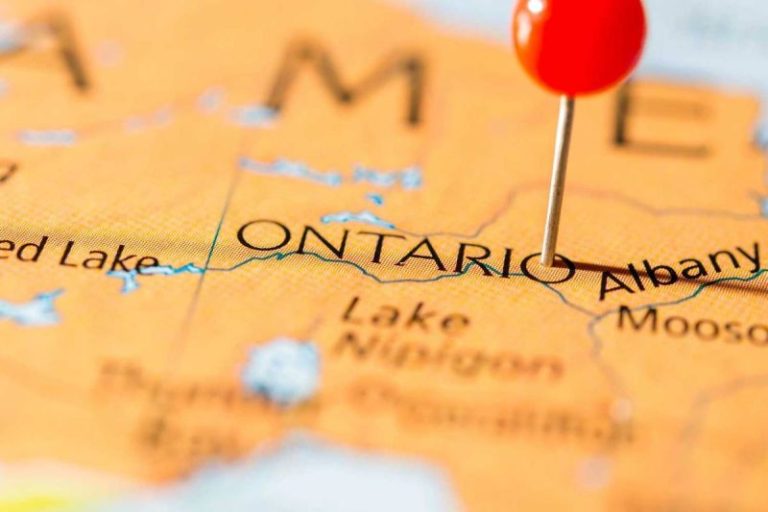
Ontario moved this week to fast track Canada Nickel Company’s (TSXV:CNC,OTCQX:CNIKF) Crawford nickel project, positioning what’s being billed as the western world’s largest nickel development as a cornerstone of the province’s push to secure domestic critical minerals supply chains.

Crawford is expected to attract roughly C$5 billion in investment and unlock what Ontario describes as the world’s second largest nickel reserves, located within the Timmins Nickel District.

The project includes plans for a large open-pit mine, two ore processing plants, associated mining infrastructure and downstream facilities to produce nickel for the stainless steel and electric vehicle markets.

“As President Trump takes aim at our economy, Ontario is moving at lightning speed to open this 100 per cent Canadian owned mine to create 4,000 jobs for Canadian workers,” said Stephen Lecce, Ontario’s minister of energy and mines.

“In 2026, our government is going full tilt to unlock one of the world’s largest nickel deposits that will supercharge our economy and help end China’s critical mineral dominance,’ he added.

Canada Nickel estimates the project will generate up to 2,000 jobs during construction and support about 1,300 direct jobs and 3,000 indirect jobs once in operation. The company also projects the development could contribute more than C$70 billion to Canada’s gross domestic product over its lifetime, with C$67 billion attributed to Ontario.

The Ontario government said Crawford will advance under its newly launched “One Project, One Process” framework, making it only the second mining development to receive the designation since the program was introduced in October.

The streamlined approach is designed to consolidate permitting, reduce regulatory timelines and provide greater certainty for large-scale projects deemed strategically important.

The provincial government said the new framework aims to cut mine permitting timelines by up to 50 percent, addressing a system that has historically taken more than a decade to approve major developments. Now the Ministry of Energy and Mines will serve as a single one-stop-shop for provincial approvals and Indigenous consultation.

Local officials have welcomed the move.

“Fast-tracking the Crawford Nickel Project through the ‘One Project, One Process’ framework sends a strong message that Northern Ontario is open for business,” said George Pirie, the member of provincial parliament for Timmins.

Securities Disclosure: I, Giann Liguid, hold no direct investment interest in any company mentioned in this article.

This post appeared first on investingnews.com

BHP (ASX:BHP,NYSE:BHP,LSE:BHP) and Rio Tinto (ASX:RIO,NYSE:RIO,LSE:RIO) are collaborating to extract up to 200 million tonnes of iron ore under two non-binding memorandums of understanding.

The companies said on Wednesday (January 14) that mining and extraction will be performed at BHP’s Yandi and Rio Tinto’s Yandicoogina operations, which sit approximately 80 kilometres away from each other.

“This is a clear example of productivity in action — unlocking new opportunities by making the most of our existing resources,” said Tim Day, BHP Western Australia’s iron ore asset president.

“Together we will extend the life of these operations, create additional value, and further support Western Australian jobs and local communities,” added Matthew Holcz, Rio Tinto’s iron ore chief executive.

Under the agreement, BHP will also supply its Yandi Lower Channel deposit wet iron ore to Rio Tinto for processing at existing wet plants under agreed-upon commercial terms.

BHP’s Yandi is a part of an 85/15 joint venture between BHP, Mitsui & Co. (TSE:8031,OTCPL:MITSF) and Itochu (TSE:8001,OTCPL:ITOCF). It produced 257 million tonnes of iron ore in 2023, which BHP says is “enough to make steel for approximately 2,980 Sydney Harbour Bridges.”

The companies will also collaborate on the development of Rio Tinto’s Wunbye deposit, located at the Yandicoogina operation. Yandicoogina is one of Rio Tinto’s highest-producing iron ore mines, and according to the company was among the first to operate a fleet of autonomous haul trucks and drills.

“The operation produces Hamersley Iron Yandi fines — a product with low impurities that delivers a high-iron sinter — used by customers across East Asia and Southern China in their steelmaking process,” Rio Tinto states on its website.

For this partnership, BHP and Rio Tinto will progress a conceptual study, then an order of magnitude study.

Regulatory and joint venture approvals, along with engagement with traditional owners, will be required for any implementation. Subject to a final investment decision, first ore from both deposits is anticipated early next decade.

Securities Disclosure: I, Gabrielle de la Cruz, hold no direct investment interest in any company mentioned in this article.

This post appeared first on investingnews.com