Archive

January 26, 2026

Browsing

The daughter of a senior Iranian official who publicly criticized U.S. involvement against President Donald Trump regarding intervening in Iran’s protests has reportedly been fired from her teaching post at a top U.S. college.

The Emory Wheel, Emory University’s news outlet, reported the School of Medicine Dean announced in an email Jan. 24 that Fatemeh Ardeshir-Larijani was no longer a university employee.  

Ardeshir-Larijani was an assistant professor in the department of hematology and medical oncology at Emory’s medical school.

‘The announcement follows a Jan. 19 protest where Iranian-American demonstrators gathered outside Emory’s Winship Cancer Institute to oppose the employment of Fatemeh Ardeshir-Larijani by the University,’ the outlet said.

Ardeshir-Larijani’s Emory faculty page and her Emory Healthcare pages were also no longer visible online.

The nonprofit Alliance Against Islamic Regime of Iran Apologists (AAIRIA) claimed that Ardeshir-Larijani had lived and worked in the U.S. for several years.

The group also cited the professional profile on Emory Healthcare’s official website as showing a listing for a woman called Ardeshir-Larijani who is a U.S.-trained hematologist-oncologist and practicing in Atlanta.

The claims had first drawn attention amid escalating tensions between the U.S. and Iran following the outbreak of protests and reports of deaths during an intense crackdown from Dec. 28.

Trump warned of potential U.S. action in response.

In a Jan. 2 Truth Social post, the president warned that if Iran ‘violently kills peaceful protesters’ the U.S. ‘will come to their rescue,’ saying ‘we are locked and loaded and ready to go.’ 

Trump’s remarks prompted warnings from senior Iranian officials, who said any American interference would cross a ‘red line.’

Ali Larijani had posted on X that U.S. interference in Iran’s internal affairs would ‘[destabilize] the entire region’ and ‘[destroy] American interests.’

‘The American people must know that Trump is the one who started this adventure,’ he wrote, ‘and they should pay attention to the safety of their soldiers.’

AAIRIA responded by urging U.S. authorities to review the immigration and visa status of Ardeshir-Larijani and her husband.

The group urged officials to determine whether continued residence in the U.S. aligns with U.S. law, national security considerations and principles of accountability and human rights, in a statement shared online.

Rep. Buddy Carter, R-Ga., also called on Emory to dismiss Ardeshir-Larijani and the state’s medical board to revoke her medical license.

Ardeshir-Larijani’s dismissal also arrived two weeks after sanctions had been placed on her father by the Treasury Department, who said that he ‘is responsible for coordinating the response to the protests on behalf of the Supreme Leader of Iran and has publicly called for Iranian security forces to use force to repress peaceful protesters,’ and has publicly defended the regime’s actions.

Ali Larijani has portrayed the U.S. as a hostile power in the past.

A 2018 report by The Washington Times highlighted what critics described as a double standard among Iranian officials whose relatives live or work in Western countries.

Fox News Digital has reached out to the White House and the Department of Homeland Security for comment and Emory University for comment.

This post appeared first on FOX NEWS

The World Health Organization on Saturday warned that America’s withdrawal from the agency will make the country and the world ‘less safe.’

The globalist body said in part of a January 24 statement that it ‘regrets the United States’ notification of withdrawal from WHO – a decision that makes both the United States and the world less safe.’ 

‘We hope that in the future, the United States will return to active participation in WHO,’ the statement noted.

The U.S. announced its withdrawal from the WHO last week, after President Donald Trump got the ball rolling on his first day back in office last year.

‘Today, the United States withdrew from the World Health Organization (WHO), freeing itself from its constraints, as President Trump promised on his first day in office by signing E.O. 14155,’ U.S. Secretary of State Marco Rubio and Secretary of Health and Human Services Secretary Robert F. Kennedy Jr. said in part of a January 22, 2026, joint statement.

‘Going forward, U.S. engagement with the WHO will be limited strictly to effectuate our withdrawal and to safeguard the health and safety of the American people. All U.S. funding for, and staffing of, WHO initiatives has ceased,’ their statement said.

They claimed the WHO ‘pursued a politicized, bureaucratic agenda driven by nations hostile to American interests.’ But the WHO pushed back.

‘This is untrue. As a specialized agency of the United Nations, governed by 194 Member States, WHO has always been and remains impartial and exists to serve all countries, with respect for their sovereignty, and without fear or favor,’ the WHO said in its statement.

This post appeared first on FOX NEWS

Speaking to global leaders in Davos, Switzerland, Ukrainian President Volodymyr Zelenskyy delivered a blunt warning to Europe about its self-defense.  

‘Europe needs to know how to defend itself,’ he said, arguing that the continent still isn’t ready to stand on its own without U.S. backing.

Zelensky’s remarks reflected a growing anxiety across Europe — that decades of reliance on American protection left the continent ill-prepared for a more dangerous era. While European countries have contributed troops, weapons and money to conflicts from Afghanistan to Ukraine, the ultimate backstop for NATO’s security has remained Washington.

President Donald Trump has openly challenged that assumption, repeatedly warning NATO allies that U.S. protection should not be taken for granted, and insisting the U.S. needed to take Greenland from Denmark

Before he ruled out the use of force to wrest control of the island, European officials had worried about a military dust-up between Western powers would mean the end of NATO.

‘Maybe we should have put NATO to the test: Invoked Article 5, and forced NATO to come here and protect our Southern Border from further Invasions of Illegal Immigrants, thus freeing up large numbers of Border Patrol Agents for other tasks,’ Trump mused on Truth Social Thursday.

Trump’s suggestion that the U.S. may not defend allies that fail to invest in their own security rattled the alliance and pushed European governments to pledge sharp increases in defense spending.

Even so, European leaders continue to acknowledge how central U.S. power remains to NATO’s defense. NATO Secretary General Mark Rutte has pointed to the American nuclear umbrella as the alliance’s ‘ultimate guarantor,’ alongside a strong U.S. conventional presence in Europe.

‘We are still having a strong, conventional U.S. presence in Europe,’ Rutte said, ‘and, of course, the nuclear umbrella as our ultimate guarantor.’

Security analysts say that long-standing guarantee shaped Europe’s choices over time.

‘For much of the post–Cold War period, it is fair to say that Europeans underinvested in defense, partly because threats were low, and partly because a series of U.S. presidents did everything they could to convince Europeans that we would stay there forever,’ Barry Posen, a professor of political science at MIT, told Fox News Digital.

‘Trump was right to argue that Europeans have been slow to fix up their forces as the situation changed — as Russia pulled itself back together and became more demanding and threatening, and as China also grew its power,’ Posen said.

But Posen warned that driving a wedge inside NATO carries risks. ‘The problem Trump faces is that ‘conditional commitments’ make challenges more likely,’ he said. ‘And then we would still have to decide what to do. As a great power, in the event of an actual challenge, we might not wish to look weak.’

Over time, those choices carried political consequences. With American power serving as the backstop, defense spending was easier to restrain than politically popular domestic subsidies such as healthcare, pensions and education, which became entrenched in European politics.

As defense demands rise, governments are running into those constraints. In Italy, officials have warned that boosting military spending to meet NATO commitments would strain an already tight budget, where pensions and social benefits account for a large share of public spending.

Germany found a way to buy time. After Russia’s invasion of Ukraine, Berlin created a €100 billion special defense fund — financed through new borrowing and kept outside the regular budget — to rebuild its military without immediately cutting other spending. The move jump-started rearmament while shielding popular social programs from near-term cuts. But the fund is temporary. Once it runs out, sustaining higher defense spending will require permanent budget decisions inside a system built around strict fiscal rules and expansive social commitments.

John Byrne of Concerned Veterans for America said Europe’s dependence on the United States runs deeper than defense budgets. Even as European governments pledge more spending, Byrne said they still lack the senior-level experience needed to run NATO operations without U.S. leadership.

‘They don’t have the experience,’ Byrne said, pointing to the fact that large, multinational military commands have overwhelmingly been led by American generals for decades. ‘That institutional knowledge still sits almost entirely with the United States.’

Byrne said that gap matters in a crisis. Running complex, coalition military operations requires years of practice at the highest levels, he said — something that cannot be fixed quickly, even with higher spending.

‘You can buy equipment,’ Byrne said. ‘You can’t instantly buy command experience.’

During his address at Davos on Thursday, Zelenskyy questioned whether Europe has the power  or the will  to act independently if assumptions about U.S. protection change.

‘Europe still feels more like geography, history, tradition, not a real political force, not a great power,’ Zelenskyy said.

He warned that European leaders continue to plan around expectations that may no longer hold. ‘To believe that the United States will act, that it will not stand aside and will help,’ Zelenskyy said. ‘But what if it doesn’t? This question is everywhere in the minds of European leaders.’

This post appeared first on FOX NEWS

A battleground district House Republican is wading into the redistricting war that has seized the U.S. with his own new proposal to crack down on ‘partisan gamesmanship.’

Rep. Mike Lawler, R-N.Y., has introduced a bill called the Fair Apportionment and Independent Redistricting for Maps that Avoid Partisanship (FAIR MAP) Act, which would impose new guardrails on the process of changing congressional districts across all 50 states.

The bill would bar states from drawing districts for or against a specific political party or candidate and ban the creation of new congressional maps more than once a decade following the U.S. census.

It comes as election watchers eye Virginia and Maryland as the latest states whose Democrat-led legislatures could move to redraw their congressional boundaries ahead of the 2026 midterm elections.

Earlier this month, a state Supreme Court judge in Lawler’s own home turf of New York ruled that New York City’s lone Republican-held district is unconstitutional and must be redrawn — handing potentially a consequential win to Democrats.

Lawler said of Democrats’ push in his state, ‘[Gov. Kathy Hochul] and [House Minority Leader Hakeem Jeffries’] scheme to redraw New York’s congressional districts months before an election is a blatant power grab and misuse of public office.’

The growing redistricting war was kicked off last year when Texas’ GOP-led legislature approved a new congressional map that could give Republicans as many as five new seats in the House of Representatives come the November elections.

Redistricting normally occurs every 10 years after the U.S. census is taken to ensure that seats in the House are reflective of each state’s population. And while there’s a patchwork of state laws aimed at blocking those districts from being redrawn along partisan lines, there is no current federal standard.

In addition to banning mid-decade redistricting in most cases and creating a federal gerrymandering standard, Lawler’s bill would also create a host of new provisions dictating how those populations are ultimately counted and how disputes can be resolved.

The bill would block state and local courts from legal redistricting fights, for example, leaving it to federal judges to weigh in on those fights.

It would also mandate that just U.S. citizens are counted toward state populations when creating new maps — something that could take a significant amount of power away from sanctuary jurisdictions that can currently factor numbers of illegal immigrants who cannot vote when apportioning districts.

The legislation also includes new electoral provisions like barring ranked-choice voting in federal elections, requiring photo ID for voting in those elections, and banning same-day registration in federal elections.

Lawler was among the House Republicans who forcefully came out against the growing redistricting war last summer, when leaders in Texas and California were going toe-to-toe with threats to redraw their maps.

But it does not appear likely as of now that his bill will get taken up for a House-wide vote, given House GOP leaders’ prior insistence that redistricting is a states’ issue.

‘Voting rights and equal representation only work if the system itself is fair, transparent, and trusted. My FAIR MAP Act puts clear guardrails around congressional redistricting, ends mid-decade political map rigging, and ensures that federal elections reflect the voices of lawful voters, not partisan gamesmanship,’ Lawler told Fox News Digital. ‘Every voter deserves confidence that the system is fair and that their vote counts the same as anyone else’s.’

This post appeared first on FOX NEWS

A cohort of Senate Republicans plans to launch a targeted task force aimed at tackling fraudsters in the wake of the Minnesota fraud scandal.

Republican members of the Senate Health, Education, Labor and Pensions (HELP) Committee announced that they would form a task force dedicated to rooting out fraudsters abusing federal funding.

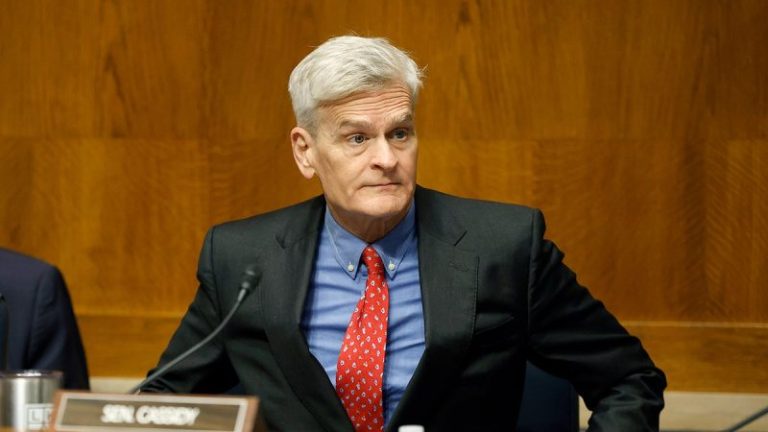
The seven-member panel will be led by HELP Committee Chair Bill Cassidy, R-La., who has cranked up efforts in recent weeks to crack down on fraud, particularly in Minnesota.

‘Our tax dollars are supposed to help American families, not line the pockets of fraudsters,’ Cassidy said in a statement to Fox News Digital. ‘HELP Committee Republicans are committed to rooting out this fraud and ensuring Americans’ tax dollars are used responsibly.’

The long-running, nearly six-year-long investigation into alleged fraud in Minnesota gained new attention and traction among Republicans and the White House earlier this year.

The scandal, in which federal prosecutors estimate that up to $9 billion was stolen through a network of fraudulent fronts posing as daycare centers, food programs and health clinics, has dominated the bandwidth of many in the GOP and spurred the Trump administration’s deployment of Immigration and Customs Enforcement (ICE) agents into Minneapolis.

The majority of those charged, so far, in the ongoing investigation are part of Minnesota’s Somali population. The Trump administration has taken steps outside the deploying of ICE agents to target Somalis in the area, too, including ending protected status for the population and launching investigations into whether the fraudulent activity is connected to al-Shabab, a terrorist organization based in Somalia.

The task force will delineate its focus into three prongs: health, education and labor and pensions.

Those three subgroups will be led by Sens. Ashley Moody, R-Fla., Roger Marshall, R-Kan., who will lead the health-focused section, Tommy Tuberville, R-Ala., Jon Husted, who will lead the education-focused group, and R-Ohio, Markwayne Mullin, R-Okla., and Tim Scott, R-S.C., who will chair the labor-and-pensions-focused section.

But the task force’s announcement comes at a precarious time, as lawmakers hurtle toward what could be another government shutdown fueled in large part by the Department of Homeland Security’s (DHS) actions in Minnesota. 

That situation comes after Senate Democrats, led by Senate Minority Leader Chuck Schumer, D-N.Y., signaled their plan to reject the DHS funding bill following the fatal shooting of 37-year-old Alex Pretti on Saturday by a border patrol agent. Cassidy, along with a handful of other congressional Republicans, demanded that the incident receive a fulsome and thorough investigation. 

Still, Cassidy’s effort is not the first time he’s forayed into the Minnesota fraud scandal.

Earlier this month, the lawmaker led the entire Senate GOP in a letter to Minnesota Gov. Tim Walz, demanding that he provide receipts on several issues, and warned that failure to do so could lead to several streams of federal money flowing to Minnesota drying up.

That effort was centered on several requests, like how often the state conducted on-site monitoring, inspections or investigative visits to childcare facilities that received federal dollars.

Senate Republicans specifically wanted examples of any information uncovered on fake children, false attendance records, over-billing, ineligible enrollments, and shell or fake business structures, among other demands from Walz.

This post appeared first on FOX NEWS

American Eagle Gold Corp. (TSXV: AE) (‘American Eagle’ or the ‘Company’) is pleased to report one of the strongest drill results to date at its 100% owned NAK Project, highlighting a very wide, near-surface, high-grade interval that demonstrates continuous mineralization from surface to depth and materially expands the scale and coherence of the South Zone.

Drill hole NAK25-78 intersected 802 metres of 0.71% Copper Equivalent (‘CuEq’) from surface, including 375 metres of 1.01% CuEq beginning 211 metres downhole, confirming a broad, high-grade mineralized system with strong continuity across previously untested areas. The results increase the overall size of the South Zone and successfully connect multiple high-grade discoveries made earlier in the 2025 drill season, while demonstrating a significant expansion of the known highest-grade part of the system.

Highlights of NAK25-78

  • 802 metres of 0.71% CuEq from surface, including:
    • 375 metres of 1.01% CuEq, beginning 211 metres downhole and within
    • 645 metres of 0.82% CuEq
  • Demonstrates continuous, high-grade mineralization from surface to depth with minimal internal dilution
  • Expands and links the highest-grade parts of the South Zone through previously untested gaps between drill fences
  • With these results, the South Zone now extends approximately 700 metres east-west, 500 metres north-south and over 800 metres vertically

About NAK25-78

Drill hole NAK25-78 was designed to test the continuity and growth of its current northwesterly limits, along with the width and vertical extent of high-grade mineralization within the South Zone. The hole was collared approximately 125 metres north of the highest-grade mineralization encountered in NAK23-17, drilled at a shallower angle toward the southeast. NAK25-78 traversed across the South Zone and demonstrates that high-grade mineralization extends from near surface to depth. The results confirm broad, continuous mineralization and expand the South Zone both to the northwest and southeast. Importantly, this hole provides critical geological information, significantly improving the Company’s understanding of the South Zone geometry, which now appears to host a significant high-grade core with mineralization extending in multiple directions.

    Hole NAK25-78 was planned in conjunction with NAK25-80, which aimed to demonstrate continuity from the gold-rich, near-surface mineralization delineated 450 m to the east of NAK25-78, with the now better-defined deeper, high-grade zone to the west. Holes NAK26-78 and -80 will provide additional confidence in modeling the high-grade mineralization geometry and better inform the Company’s understanding of the various mineralization phases that comprise the broader South Zone. The results from Hole NAK25-80 will inform the design of an aggressive follow-up drill program and advance the South Zone toward an initial resource assessment. The Company believes the South Zone could represent an initial area of development, with the potential to support the advancement of the broader, large-scale mineralized system.

    Strategic Importance of the South Zone:

    The South Zone is characterized by strong grades, shallow mineralization, and minimal overburden, making it a logical focus for continued step-out and infill drilling. This area has the potential to support early-stage development scenarios while providing optionality for bulk mining approaches in adjacent, yet-to-be-defined zones across the NAK project.

    With these latest results, the South Zone’s dimensions extend over 700 m in the east-west direction, 500 m in the north-south direction, and over 800 m in depth, with the system’s bounds still unknown. The holes drilled in the 2025 season have contributed to a high-confidence, substantial increase in the zone compared with previous drilling seasons. Strong potential for expansion remains, specifically along the southern margin of the Babine Porphyry stock, where the Company has completed additional widely spaced step-out drilling, within a 1 km trend of open, highly prospective ground, extending eastward from the currently modeled bounds of the zone.

    ‘These results should significantly improve investor understanding of the scale, continuity, and significance of the South Zone. The strength and consistency of mineralization observed to date reinforces our view that the South Zone represents a high-grade core within a much larger project,’ said CEO Anthony Moreau.

    Watch: Webinar with Anthony Moreau and Neil Prowse Discussing the Significance of These Results

    NAK25-78 Assay Results (Table 1) and Details*

    Hole From To Length Cu % Au g/t Ag g/t Mo ppm CuEq %
    NAK25-78 54 856 802 0.31 0.27 1.2 132 0.71
    Including
    NAK25-78 298 586 288 0.42 0.49 1.7 186 1.10
    Within
    NAK25-78 211 586 375 0.37 0.45 1.4 200 1.01
    Within
    NAK25-78 211 856 645 0.36 0.31 1.4 155 0.82
    And
    NAK25-78 738 856 118 0.60 0.19 2.5 120 0.93

    * Copper Equivalent (CuEq) shown in Tables for drill intercepts are calculated on the basis of US$ 4.50/lb for Cu, US$ 3,375/oz for Au, US$ 60/oz for Ag and US$ 25/lb for Mo, with 80% metallurgical recoveries assumed for all metals (since it’s unclear what metals will be the principal products, assuming different recoveries is premature at this stage). The formula is: CuEq. = Cu % + (Au grade in g/t x (Au recovery / Cu recovery) x [Au price ÷ 31] / [Cu price x 2200 x 1%]) + (Ag grade in g/t x (Ag recovery / Cu recovery) x [Ag price ÷ 31] / [Cu price x 2200 x 1%] + (Mo grade in % x (Mo recovery / Cu recovery) x [Mo price] / [Cu price]). The assays have not been capped. The reported intervals represent drill intercepts, and insufficient data are available at this time to state the true thickness of the mineralized intervals.

    NAK25-78 was drilled at a moderate inclination to the southeast, from the same collar as NAK24-18, and approximately 125m north of the strongest previously encountered mineralization at the South Zone. NAK25-78 collared into a package of interbedded sandstone, siltstone, and conglomerate to a depth of 211 m, encountering sporadic copper/gold mineralization taking the form of local zones of dense chalcopyrite veining and enveloping disseminations.

    From 211 m to 525 m, an increase in grade coincides with the presence of the middle conglomerate at NAK as host, characterized by a sharp increase in the density and consistency of both vein-hosted and disseminated chalcopyrite, bornite, and local molybdenite. The conglomerate is intruded by meter-scale variably and locally strongly mineralized porphyry dikes, including a bornite-mineralized sparsely plagioclase porphyritic monzonite between 422 and 427 m.

    Below 525 m, medium- to coarse-grained sandstone interbedded with thin layers of fine-grained sandstone and siltstone is the predominant host to the end of the hole. Strongly disseminated and vein-hosted bornite and chalcopyrite mineralization are remarkably consistent down to a depth of 586 m, and are associated with dark, magnetite-biotite alteration. Local zones of overprinting clay alteration also occur and are commonly associated with semi-massive chalcopyrite-molybdenite veining.

    Mineralization decreases between 586 and 738 m, but picks up again sharply thereafter, down to approximately 850m, with chalcopyrite and bornite matrix- and clast-replacement occurring within the lower concretion-bearing sandstone, and with the mineralization being both closely associated with, and occurring within, fine-grained diorite dikes and(or) sills. Below 856 m, sulfide speciation transitions sharply to pyrite-dominant, and copper grades decrease.

    Collar details for holes in this release (table 2):

    Hole UTM_Grid UTM_East UTM_North Azimuth Inclination TD (m)
    NAK25-78 NAD83_Z9 674961 6129472 125 -58 924

    QA/QC and Sampling Protocol

    Sampling at NAK follows a rigorous methodology and internal QA/QC protocol. Drill core is halved on site, and samples are submitted to ALS Geochemistry in Langley, British Columbia for preparation and analysis. ALS is accredited to the ISO/IEC 17025 standard for assays. All analytical methods include quality control standards inserted at set frequencies. The entire sample interval is crushed and homogenized, and 250 g of the homogenized sample is pulped. All samples were analyzed for gold, silver, copper, molybdenum and a suite of 45 other major and trace elements. Analysis for gold is by fire assay fusion followed by Inductively Coupled Plasma Atomic Emission Spectroscopy (ICP-AES) on 30 g of pulp. Analysis for silver, copper, and molybdenum and all other major and trace elements are analyzed by four-acid digestion followed by Inductively Coupled Plasma Mass Spectroscopy (ICP-MS).

    Internal QA/QC protocols dictate that individual core samples are no less than 70 cm and no greater than 3 m in length. To control standard, blank, and duplicate sample frequency, and to better constrain pass/fail re-analysis intervals, samples are submitted to the lab in 50 sample batches. Within each 50-sample batch, there is one gold-copper standard and two coarse reject duplicates, inserted at regular intervals, and two blank samples, inserted sequentially following well-mineralized samples where possible, for a total of 10% QA/QC samples. All gold and copper standard analyses from the 2024 program passed within 3 standard deviations of expected values. Where duplicate values differed significantly, the lower values from the resulting re-analyses were used.

    About American Eagle‘s NAK Project

    The NAK Project lies within the Babine copper-gold porphyry district of central British Columbia. It has excellent infrastructure through all-season roads and is close to the towns of Smithers, Houston, and Burns Lake, B.C., which lie along a major rail line and Provincial Highway 16. Historical drilling and geophysical, geological, and geochemical work at NAK, which began in the 1960’s, tested only to shallow depths. Still, the work revealed a very large near-surface copper-gold system that measures over 1.5 km x 1.5 km. Drilling completed by American Eagle in 2022, 2023, and 2024 returned significant intervals of high-grade copper-gold mineralization that reached beyond and much deeper than the historical drilling, indicating that zones of near-surface and deeper mineralization, locally with considerably higher grades, exist within the broader NAK property mineralizing system. American Eagle Gold completed an aggressive 31,500 metre drill program in 2025 designed to expand and improve the mineral footprint; assays are currently being received.

    For the latest videos from American Eagle, Ore Group, and all things mining, subscribe to our YouTube Channel: youtube.com/@theoregroup

    About American Eagle Gold Corp.

    American Eagle is dedicated to advancing its NAK copper-gold porphyry project in west-central British Columbia, Canada. The Company benefits from over $25 million in cash, bolstered by two strategic investors formed in the past two years with Teck Resources and South32. With substantial financial and technical resources, American Eagle Gold is well-positioned to drill, de-risk, and define the full potential of the NAK Copper-Gold porphyry project.

    Anthony Moreau, Chief Executive Officer

    416.644.1567
    amoreau@oregroup.ca
    www.americaneaglegold.ca

    Q.P. Statement

    Mark Bradley, B.Sc., M.Sc., P.Geo., a Certified Professional Geologist and independent ‘qualified person’ for the purposes of Canada’s National Instrument 43-101 Standards of Disclosure for Mineral Properties, has verified and approved the information contained in this news release.

    Forward-Looking Statements

    Certain information in this press release may contain forward-looking statements. Forward-looking statements in this press release include, but are not limited to: including statements relating to the use of proceeds of the Offering, the tax treatment of the Charity FT Shares, the receipt of all necessary regulatory approvals in connection with the Offering, the 2025 drill program or its anticipated results at the Company’s NAK project, the ability of the Company to make the Qualifying Expenditures as anticipated by management, and other matters ancillary or incidental to the foregoing. This information is based on current expectations that are subject to significant risks and uncertainties that are difficult to predict. Therefore, actual results might differ materially from those suggested in forward-looking statements. American Eagle Gold Corp. assumes no obligation to update the forward-looking statements or to update the reasons why actual results could differ from those reflected in the forward looking-statements unless and until required by securities laws applicable to American Eagle Gold Corp. Additional information identifying risks and uncertainties is contained in filings by American Eagle Gold Corp. with Canadian securities regulators, which filings are available under American Eagle Gold Corp. profile at www.sedarplus.ca.

    Neither TSX Venture Exchange nor its Regulation Services Provider (as that term is defined in the TSX Venture Exchange policies) accept responsibility for the adequacy or accuracy of this release.

    Source

    This post appeared first on investingnews.com

    West High Yield (W.H.Y.) Resources Ltd. (TSXV: WHY,OTC:WHYRF) (FSE: W0H) (the ‘Company’ or ‘West High Yield’) is pleased to announce: (i) the initiation of its proprietary processing pilot program at its magnesiumsilica Record Ridge industrial minerals project (the ‘Project’); (ii) significant advancement in permitting and post-permit compliance activities of the Project; and (iii) the closing of a single tranche (the ‘Closing’) of a conditionally approved non-brokered private placement offering (the ‘Offering’) of units (the ‘Units’).

    Processing Pilot Program Update

    The Company is pleased to report that it has initiated a pilot test of its proprietary metallurgical processing technology. A contract has been signed with Process Research Ortech Inc. (‘PRO‘) of Mississauga, Ontario, to conduct the pilot test at PRO’s laboratory facility.

    Preparatory work is already underway, with pilot operations scheduled to begin in early February 2026 and completion, including delivery of a final report, expected in April 2026. This pilot program represents a significant step between the successful laboratory-scale research previously conducted at Kingston Process Metallurgy (‘KPM‘) in Kingston, Ontario, and future full-scale industrial implementation, providing critical data to validate process performance, operating parameters, and scalability.

    The results from the pilot program are expected to provide essential data to support the initiation of a feasibility study for the Company’s first commercial processing plant, which is planned to commence in mid-Q2 2026.

    Permitting and Post-Permit Compliance Update

    Since receiving its Mines Act Permit from the British Columbia Ministry of Mining and Critical Minerals in October 2025 (the ‘Permit‘), the Company has been working closely with its consultants and government authorities to advance the remaining permitting requirements under the Project. These include the Environmental Management Act (British Columbia) permit, a ‘Water Licence’ under the British Columbia Water Sustainability Act, a ‘Licence to Cut’ from the British Columbia Ministry of Forests, and a Mine Access Permit from the British Columbia Ministry of Transportation and Transit. Significant progress has been made toward securing these approvals, and the Company anticipates receiving the remaining permits in the near future. Further updates will be provided as each approval is obtained.

    The Company and its consultants are actively engaged in the post-permit compliance phase, working to complete and submit all required studies and reports in advance of construction. Final designs for the Project’s mine and access road have been completed, providing the technical foundation for the remaining compliance work.

    The Company is confident that this phase will be finalized on schedule, positioning it to commence Project construction activities in Q2 2026.

    Grant of Multi-Year Area-Based Exploration Permit

    The Company is also pleased to report that British Columbia Ministry of Mining and Critical Minerals has granted it a multi-year area-based exploration permit valid for a five-year period. This permit authorizes the Company to carry out additional exploration activities, including drilling, on its mineral claims located outside the designated Record Ridge mining area, which is now fully covered under the existing Permit.

    Closing of Non-Brokered Private Placement

    The Closing under the Offering consisted of the issuance of 1,000,000 Units for gross proceeds of $500,000. The Units were issued at a price of $0.50 per Unit, with each Unit consisting of one (1) Common share of the Company (each, a ‘Common Share‘) and one-half (1/2) of one (1) Common Share purchase warrant (each, a ‘Warrant‘). Each Warrant, together with CAD$0.65, entitles the holder thereof to acquire one (1) additional Common Share for twelve (12) months from the date of the Closing.

    All securities comprising the Units issued on the Closing are subject to a trading hold period expiring four months plus one day from the date of issuance. The proceeds from the Closing have been and will be used by the Company to cover essential operations and for general working capital purposes and expenses.

    After completion of the Closing, the Company confirms that the Offering has been completed in full. The Company received conditional approval for the Offering from the TSX Venture Exchange (the ‘TSXV‘) on January 20, 2026 by way of filing a price reservation form. Final approval of the Offering remains subject to approval by the TSXV, which the Company has submitted for as of the date of this news release.

    About West High Yield

    West High Yield is a publicly traded junior mining exploration and development company, established in 2003, and focused on acquiring, exploring, and developing mineral resource properties in Canada. Its primary objective is to develop its Record Ridge critical mineral (magnesium, silica, and nickel) deposit using green processing techniques to minimize waste and CO2 emissions.

    The Company’s Record Ridge critical mineral deposit located 10 kilometers southwest of Rossland, British Columbia has approximately 10.6 million tonnes of contained magnesium based on an independently produced National Instrument 43-101 – Standards of Disclosure for Mineral Projects (‘NI 43-101‘) Preliminary Economic Assessment technical report (titled ‘Revised NI 43-101 Technical Report Preliminary Economic Assessment Record Ridge Project, British Columbia, Canada’) prepared by SRK Consulting (Canada) Inc. on April 18, 2013 in accordance with NI 43-101 and which can be found on the Company’s profile at https://www.sedarplus.ca.

    Qualified Person

    Rick Walker, B.Sc., M.Sc., P.Geo., the Company Geologist is a Qualified Person as defined in NI 43-101 and has reviewed and approved the technical information in this press release.

    Contact Information:

    West High Yield (W.H.Y.) RESOURCES LTD.

    Frank Marasco Jr., President and Chief Executive Officer
    Telephone: (403) 660-3488
    Email: frank@whyresources.com

    Barry Baim, Corporate Secretary
    Telephone: (403) 829-2246
    Email: barry@whyresources.com

    Cautionary Note Regarding Forward-looking Information

    This press release contains forward-looking statements and forward-looking information within the meaning of Canadian securities legislation. The forward-looking statements and information are based on certain key expectations and assumptions made by the Company. Although the Company believes that the expectations and assumptions on which such forward-looking statements and information are based are reasonable, undue reliance should not be placed on the forward-looking statements and information because the Company can give no assurance that they will prove to be correct.

    Forward-looking information is based on the opinions and estimates of management at the date the statements are made and are subject to a variety of risks and uncertainties and other factors that could cause actual events or results to differ materially from those anticipated in the forward-looking information. Some of the risks and other factors that could cause the results to differ materially from those expressed in the forward-looking information include, but are not limited to: general economic conditions in Canada and globally; industry conditions, including governmental regulation; failure to obtain industry partner and other third party consents and approvals, if and when required; the availability of capital on acceptable terms; the need to obtain required approvals from regulatory authorities; and other factors. Readers are cautioned that this list of risk factors should not be construed as exhaustive.

    Readers are cautioned not to place undue reliance on this forward-looking information, which is given as of the date hereof, and to not use such forward-looking information for anything other than its intended purpose. The Company undertakes no obligation to update publicly or revise any forward-looking information, whether as a result of new information, future events or otherwise, except as required by applicable law.

    This press release does not constitute an offer to sell or a solicitation of an offer to buy any securities in the United States. The securities of the Company will not be registered under the United States Securities Act of 1933, as amended (the ‘U.S. Securities Act‘) and may not be offered or sold within the United States or to, or for the account or benefit of U.S. persons except in certain transactions exempt from the registration requirements of the U.S. Securities Act.

    NEITHER THE TSXV NOR ITS REGULATION SERVICES PROVIDER (AS THAT TERM IS DEFINED IN THE POLICIES OF THE TSXV) ACCEPTS RESPONSIBILITY FOR THE ADEQUACY OR ACCURACY OF THIS RELEASE.

    To view the source version of this press release, please visit https://www.newsfilecorp.com/release/281636

    News Provided by TMX Newsfile via QuoteMedia

    This post appeared first on investingnews.com

    Silver Dollar Resources Inc. (CSE: SLV) (OTCQX: SLVDF) (FSE: 4YW) (‘Silver Dollar’ or the ‘Company’) is pleased to provide an overview of the 2026 exploration plans for advancing its flagship La Joya Silver (Cu-Au) Project in the state of Durango, Mexico.

    To view an enhanced version of this graphic, please visit:
    https://silverdollarresources.com/images/LaJoya/LaJoya-2b.jpg

    Silver Dollar remains focused on its exploration strategy shift from potential open pit to underground development at the 100%-owned La Joya property (the ‘Property’). The Company is continuing to reinterpret historical data, targeting higher-grade underground mineralization within the 2 x 3 kilometer (km) La Joya mineralized complex.

    Priority has been given to enhanced modeling of known high-grade mineralization, detailed underground and surface mapping and sampling, and the re-logging and sampling of select historical drill core. Through these efforts, Silver Dollar is gaining a better understanding of the mineralization and its controls, to guide and plan the next phase of drilling.

    The current areas of focus are outside the historic resource areas, proximal to the sides of the intrusive bodies, and share similarities with the style of mineralization found at the nearby San Martin mine, located approximately 25 km southeast of La Joya (Figure 1).

    The discovery of San Martin-type mineralization at La Joya (specifically at the Coloradito Intrusive, ‘El Brazo’) provides evidence supporting the concept of deeper mineralization around main intrusions at La Joya (Figure 2).

    Figure 2: La Joya and San Martin Cross-Section Comparison.

    To view an enhanced version of this graphic, please visit:
    https://silverdollarresources.com/images/LaJoya/El-Brazo_San-Martin_X-Section-Comparsion.jpg

    Both La Joya and San Martin are situated within the Cuesta del Cura Limestone and the overlying Indidura Formation, along the broadly defined San Luis-Tepehuanes fault system-commonly referred to as the Mexican Silver Belt. These intrusions are of the same age, similar in size and composition, and in both cases, mineralization is concentrated along the contact near the outer limit of skarn alteration surrounding the intrusion. Historically, the San Martin mine reportedly contained more than 300 million ounces of silver, with mineralization extending vertically over 850 meters. Drilling has indicated that mineralization remains open for an additional 400 meters below known intercepts, suggesting depths well beyond 1,200 meters (approximately 4,000 feet). This makes San Martin an ideal exploration model for targeting deeper mineralization at La Joya.

    Five targets are being developed at La Joya (Figure 3) to drill test for deep San Martin-type mineralization below known (previously reported) mineralization or magnetic anomalies just off the sides of the intrusives:

    Central Dyke: Delineated over a strike length of 770 meters (m) with 134 of 170 samples (156 channel and 14 rock grab samples) returning assays >100 grams per tonne (g/t) silver equivalent (AgEq) including sample #161, taken in altered carbonate sediments proximal to the intrusive, that returned 3,823 g/t AgEq.

    El Brazo: Situated approximately 1 km west of La Joya’s Main Mineralized Trend (MMT), is a carbonate-hosted mineralized system exhibiting characteristics consistent with the San Martin carbonate replacement deposit (CRD) model. Drill hole NOR-22-013 intersected 232 g/t AgEq over 19.35m, including a higher-grade interval of 535 g/t AgEq (420 g/t Ag, 0.41 g/t Au, 0.05% Cu, 1.97% Pb, and 3.9 % Zn) over 5.0m. Silver Dollar’s El Brazo discovery not only confirms the presence of high-grade CRD mineralization but also highlights the potential to expand future mineral resource estimates at La Joya by including lead and zinc credits, which were notably absent from the historical calculations.

    North Side: With historic hole LB96-04 intersecting results of 694 g/t AgEq over 8.6m at a depth of 401m, this deep high-grade mineralization identifies a ‘San Martin’ type target, along strike and to the north of the MMT. This target is below and beyond the depth of previous drilling and remains open in all directions.

    Road Zone: Located just to the northwest of the MMT, is a blind gold-rich target, originally intersected at 126m in hole NOR-21-004 (that deviated while testing a deeper North Side target). This structure is identified by the presence of rhodonite with fine grained pyrite-chalcopyrite that assayed 1,099 g/t AgEq over 3m. Subsequently, similar mineralization was cut in holes NOR-22-010 (204 g/t AgEq over 2.09 m) and NOR-22-017 (700 g/t AgEq over 1.87m) over a strike length of 190m.

    El Puerto Mag Anomaly: A ground magnetic anomaly that coincides with a topographic low between Coloradito and the MMT and just west of the Road Zone. This is a blind target in a potential prospective structural corridor.

    To view an enhanced version of this graphic, please visit:

    https://silverdollarresources.com/images/LaJoya/LaJoya-Deep-Targets.jpg

    Silver equivalent is calculated using the following metal prices in USD: Au $1,750/oz, Ag $22/oz, Pb $1.25/lb, Zn $1.50/lb, Cu $4.30/lb. Recoveries of Au 66%, Ag 93%, Cu 70%, Pb 87%, Zn 84%, historically reported from Pan American Silver’s La Colorada mine and Southern Silver’s Cerro Minitas mine (Cu only), have been used in the AgEq calculation, and are assumed to be comparable to anticipated recoveries at La Joya. Reported assay results are factored according to the historic recoveries reported above.

    ‘We are well-funded and ready for an active year at La Joya, capitalizing on favorable market conditions and record-high prices for gold, silver, and copper,’ said Gregory Lytle, President of Silver Dollar. ‘Our exploration team is systematically advancing five priority areas that have been identified for deep San Martin-type mineralization, and we look forward to initiating drill testing as soon as the targeting work is finalized.’

    About the La Joya Property:

    La Joya is an advanced exploration stage property consisting of 15 mineral concessions totaling 4,646 hectares and hosts the Main Mineralized Trend (MMT), Santo Nino, and Coloradito deposits.

    The previous operator, Silvercrest Mines, released a Preliminary Economic Assessment (PEA) NI 43-101 Technical Report on the La Joya Property in December 2013. The PEA included a mineral resource estimate (MRE) on only the MMT and Santo Nino deposits (See Historical MRE Table) that was primarily based on Silvercrest’s drilling between 2010 and 2012. The MRE was reported to conform to CIM definitions for resource estimation; however, a qualified person of Silver Dollar has not done sufficient work to classify the historical resource, and the Company is not treating it as a current mineral resource. Independent data verification and an assessment of the mineral resource estimation methods are required to verify the historical mineral resource.

    To view an enhanced version of this graphic, please visit:

    https://silverdollarresources.com/images/LaJoya/Historical-Resource-Model.jpg

    The Property is situated approximately 75 kilometres southeast of the Durango state capital city of Durango in a high-grade silver region with past-producing and operating mines, including Silver Storm’s La Parrilla Mine, Industrias Penoles’ Sabinas Mine, Grupo Mexico’s San Martin Mine, Sabinas Mine, First Majestic’s Del Toro Mine, and Pan American Silver’s La Colorada Mine (Figure 1).

    Dale Moore, P.Geo., the ‘Qualified Person’ as defined by National Instrument (NI) 43-101 has reviewed and approved the scientific and technical information contained in this news release. Dale Moore, P.Geo. is not independent of the Company in accordance with NI 43-101.

    About Silver Dollar Resources Inc.

    Silver Dollar is a dynamic mineral exploration company focused on North America’s premier mining regions. Our portfolio includes the advanced-stage La Joya Silver (Cu-Au) Project and the early-stage Nora Silver-Gold Project, both located in the prolific Durango-Zacatecas silver-gold belt. The Company is fully funded for 2026, having recently closed a financing with continued support from financial backers that include renowned mining investor Eric Sprott, our largest shareholder. Silver Dollar’s management team is committed to an aggressive growth strategy and is actively reviewing potential acquisitions with a focus on drill-ready projects in mining-friendly jurisdictions.

    For additional information, you can visit our website at silverdollarresources.com, download our investor presentation, and follow us on X at x.com/SilverDollarRes.

    ON BEHALF OF THE BOARD

    Signed ‘Gregory Lytle’

    Gregory Lytle,
    President, CEO & Director
    Silver Dollar Resources Inc.
    Direct line: (604) 839-6946
    Email: greg@silverdollarresources.com
    179 – 2945 Jacklin Road, Suite 416
    Victoria, BC, V9B 6J9

    Forward-Looking Statements:

    This news release may contain ‘forward-looking statements.’ Forward-looking statements involve known and unknown risks, uncertainties, assumptions, and other factors that may cause the actual results, performance or achievements of the Company to be materially different from any future results, performance or achievements expressed or implied by the forward-looking statements. Any forward-looking statement speaks only as of the date of this news release and, except as may be required by applicable securities laws, the Company disclaims any intent or obligation to update any forward-looking statement, whether as a result of new information, future events or results or otherwise.

    Click here to connect with Silver Dollar Resources Inc. (CSE: SLV) (OTCQX: SLVDF) (FSE: 4YW) to receive an Investor Presentation

    Source

    This post appeared first on investingnews.com

    LaFleur Minerals Inc. (CSE: LFLR) (OTCQB: LFLRF) (FSE: 3WK0) (‘LaFleur Minerals‘ or the ‘Company‘ or ‘Issuer‘) is pleased to announce major advancements with its Swanson Gold Deposit and Beacon Gold Mill which includes the advancement of technical studies evaluating the restart of gold production and retrofits to increase production rates at Beacon, as well as establishing requirements to expand its existing permitted tailings facility, all key components supporting the upcoming Preliminary Economic Assessment (PEA), which are in the final stage. The significant progress of key technical, metallurgical and infrastructure milestones for the PEA is integral to a disciplined, capital-efficient mill restart, which includes recently finalized positive verification of historical drilling with results to be announced near-term and ongoing recommissioning work at the Company’s wholly-owned Beacon Gold Mill.

    PATH TO GOLD PRODUCTION RESTART AT BEACON GOLD MILL:

    The Beacon Gold Mill last operated in 2022 with gold prices in the $1,800-2,000/oz range. With gold prices currently exceeding $4,900/oz, Lafleur is laser focused on restarting gold production at the Beacon Gold Mill leveraging supply from its 100%-owned district-scale Swanson Gold Deposit, located only ~50 km away, forming its vertically-integrated production model. The Swanson Gold Project, one of the largest gold exploration land packages in the Abitibi Gold Belt, Val-d’Or, Québec, holds a 43-101 compliant open pit and underground mineral resource; Total Indicated Mineral Resource Estimate of 2,113,000 t with an average grade of 1.8 g/t gold for 123,400 oz of contained gold, and Total Inferred Mineral Resource Estimate of 872,000 t with an average grade of 2.3 g/t gold for 64,500 oz of contained gold (MRE effective September 17, 2024 and reported in updated NI 43-101 technical report dated July 29, 2025). With a fully permitted tailings storage facility and proximity to established mining infrastructure, the Beacon Gold Mill offers a strategic ready to restart gold mill at a time when gold prices remain strong (USD $4,833/oz as of January 22, 2026; KITCO).

    In parallel with regional exploration and drilling activities, the Company is also advancing technical studies aimed at optimizing and expanding the mill’s capabilities. Current work includes detailed assessments to enhance the existing metallurgical facility, supported by the development of updated cost estimates and retrofit flow sheets. These studies form part of a broader growth strategy that contemplates substantially increasing mill throughput, modernizing the process flowsheet, and advancing drilling programs to continually expand the mineral resources available to feed the Beacon Gold Mill.

    RECENT FINANCING OF $7,800,000 CLOSED – BEACON GOLD MILL FUNDED FOR RESTART

    LaFleur’s positioning is distinct compared to peers as it’s not in the conceptual stage but in full execution, given its 100%-owned, fully permitted Beacon Gold Mill with current 750 tpd capacity, funded for restart and entering revenue-generation stage. Beacon Gold Mill is scalable to 1,000 tpd under the PEA base case and 3,000-4,000 tpd under long term growth scenarios, offering a rare vertically integrated, mine-to-mill gold production platform that is scalable, enhancing control over costs and margins, with the possibility to leverage rail-enabled logistics, strengthening and solidifying the mill as a potential regional processing hub in Val-d’Or. Lafleur recently completed a total of $7,800,421 in funding to fully fund the restart of gold production at the Beacon Gold Mill (refer to press release dated January 5, 2026).

    TECHNICAL ADVANCEMENTS TOWARDS DELIVERY OF PEA

    • The Swanson Deposit Mining Lease (BM885) has been reviewed for spatial suitability and is considered suited for the current mine plan. As the size of the mineral deposit and mining plan increases, the Company is evaluating opportunities to expand the permitted surface area through additional mining lease applications.
    • Verification diamond drilling to support the PEA at the Swanson Gold Deposit is now complete. These positive drilling results will support the upcoming technical report and mark a key milestone in advancing the Project. The material from this drilling will also be used and incorporated in ongoing and future metallurgical testing. Lafleur will provide detailed news release on the positive drill results once final assat results are received in the coming days.
    • LaFleur Minerals management team, together with ERM (Environmental Resources Management) and Canadian National Railway (CN), have initiated discussions regarding potential rail infrastructure enhancements to support long-term project development and delivery of feed from the Company’s Swanson Gold Project to Beacon Gold Mill. These discussions include a timeline for design and planning of relocating a small portion of the existing CN rail line (estimated at 6 months), then installing a dedicated rail spur to facilitate efficient loading and transport of material to the Beacon Gold Mill. The current CN line runs directly through both the Swanson Property and the Beacon Gold Mill site, presenting an opportunity to optimize logistics, reduce future hauling costs, decrease GHG emissions and support increased safety with less truck traffic through villages. Having direct rail access at the Beacon Gold Mill will significantly reduce transport costs and increase the range for the Company to accept satellite feed material, further enhancing the economics of gold production operations.
    • Metallurgical planning for the Swanson Gold Project and Beacon Gold Mill continues to advance. Work being completed by Bumigeme Inc. (Bumigeme) of Montréal and ERM, the PEA lead consultant, regarding potential retrofits to the Beacon Gold Mill to support increased feed processing capacity. The C$49 million as-built and permitted Beacon Gold Mill facility remains a key strategic asset for LaFleur Minerals.

    Work to date has focused on evaluating the requirements to economically process Swanson mineralized material at the Beacon Gold Mill and to further the mill expansion, including:

    SWANSON GOLD PROJECT AND BEACON GOLD MILL – PEA BASE CASE ACTIVITIES

    • Assessing upgrades to increase mill throughput to 1,000 tpd, including the capital costs associated with crushing, grinding and flotation circuit modifications.
    • Initiating a metallurgical testing program for Swanson mineralized material, with a total of 400 kg of representative diamond-drill-core and assay rejects to be collected in January 2026 for detailed testwork by SGS Canada in February and March 2026.

    GROWTH PLANNING

    Looking beyond the PEA, LaFleur Minerals is assessing future Beacon Gold Mill expansion scenarios in the 3,000-4,000 tpd range:

    • Preliminary capital requirements for these growth cases are currently under evaluation.
    • Bumigeme and ERM are jointly developing the metallurgical flowsheet options to support these potential expansions, which will be supported by metallurgical laboratory testing.
    • The current Beacon Gold Mill infrastructure is supported by an existing 4 MW power supply, providing a strong electrical foundation for current operations and planned throughput increases. This existing capacity enables the Company to evaluate upgrades in the PEA base case and supports future expansion scenarios.
    • Mine options analysis and associated economic trade-off studies are currently being undertaken to evaluate the viability of processing Swanson mineralized material at the Beacon Mill. These evaluations are intended to quantify the relative merits of alternative development pathways and to inform the selection of the preferred mine-to-mill configuration.
    • As metallurgical modernization concepts for the Beacon Gold Mill advance toward fully defined and executable process designs, the scope of the economic assessments may be expanded to incorporate additional growth scenarios, a sustainable environmentally friendly flowsheet and longer-term production strategies.

    ABOUG BUMIGENE AND ERM:

    Bumigeme Inc is a Quebec-based engineering firm specializing in mining, mineral processing, and metallurgical testing. They offer services including feasibility studies, NI 43-101 reports, and EPCM (Engineering, Procurement, and Construction Management) services. The company focuses on optimizing, designing, and operating mineral processing plants.
    https://www.bumigeme.com

    ERM (Environmental Resources Management)
    https://www.erm.com/industries/mining-metals/
    is a leading global sustainability consultancy providing end-to-end services for the mining sector, from exploration to closure. They specialize in ESG strategy, technical environmental services, social performance, risk management, and decarbonization to help mining companies navigate operational challenges and regulatory requirements. https://www.erm.com/industries/mining-metals/

    Paul Ténière, CEO of LaFleur Minerals commented, ‘LaFleur Minerals is pleased with the technical milestones achieved to date, which represent strong progress as we advance toward delivery of a fully integrated PEA for our 100%-owned Swanson Gold Deposit and nearby Beacon Gold Mill. This work positions the Company to continue to fast track its streamlined development strategy centred on a restart of gold production at the Beacon Gold Mill located within one of Canada’s most established and well-supported Abitibi Gold Belt and ValDor, Quebec, gold-mining districts.’

    BEACON GOLD MILL RESTART WORK UPDATE

    LaFleur Minerals and Bumigeme have made strong operational progress at the Beacon Gold Mill during November and December 2025, quickly advancing the facility toward recommissioning to process a 100,000 tonne bulk sample from the Swanson Gold Deposit while maintaining a disciplined focus on cost control, safety, and execution.

    Early activities included mobilization of contractors, restoration of site services, and inspection of critical safety infrastructure. Through coordination with environmental authorities, the Company optimized its winter access strategy to the tailings facilities, generating estimated cost savings exceeding $20,000.

    During December 2025, LaFleur Minerals assembled its site leadership and technical team, awarded multiple service and equipment contracts, and initiated procurement of long-lead items required to bring the plant back into full operation. Minor electrical and heating upgrades were completed, and site cleaning and organization progressed steadily. Detailed equipment inspections have identified several opportunities to modernize aging components, positioning the plant for more reliable operations once recommissioned. Other work in mid-December included conveyor clean-out, pump replacement, inspection of drum filters, and preparation for mechanical and access upgrades. Recommissioning activities for the plant, crushing circuit, and overhead cranes are scheduled to begin by the end of January 2026.

    These milestones mark a critical step in unlocking the value of the Beacon Gold Mill facility and demonstrate LaFleur Minerals methodical and capital-conscious approach to restarting operations.

    QUALIFIED PERSON STATEMENT

    All scientific and technical information in this news release has been reviewed and approved by Louis Martin, P.Geo. (OGQ), Exploration Manager and Technical Advisor of the Company and considered a Qualified Person for the purposes of NI 43-101.

    About LaFleur Minerals Inc.

    LaFleur Minerals Inc. (CSE: LFLR) (OTCQB: LFLRF) (FSE: 3WK0) is focused on the development of district-scale gold projects in the Abitibi Gold Belt near Val-d’Or, Québec. Our mission is to advance mining projects with a laser focus on our resource-stage Swanson Gold Deposit and the Beacon Gold Mill, which have significant potential to deliver long-term value. The Swanson Gold Project is approximately 18,304 hectares (183 km2) in size and includes several prospects rich in gold and critical metals previously held by Monarch Mining, Abcourt Mines, and Globex Mining. LaFleur Minerals has recently consolidated a large land package along a major structural break that hosts the Swanson, Bartec, and Jolin gold deposits and several other showings which make up the Swanson Gold Project. The Swanson Gold Project is easily accessible by road, allowing direct access to several nearby gold mills, further enhancing its development potential. Lafleur Mineral’s fully refurbished and permitted Beacon Gold Mill is capable of processing 750 tonnes per day and is being considered for processing mineralized material at Swanson and for custom milling operations for other nearby gold projects.

    ON BEHALF OF LAFLEUR MINERALS INC.

    Paul Ténière, M.Sc., P.Geo.
    Chief Executive Officer
    E: info@lafleurminerals.com
    LaFleur Minerals Inc.
    1500-1055 West Georgia Street
    Vancouver, BC V6E 4N7

    Neither the Canadian Securities Exchange nor its Regulation Services Provider accepts responsibility for the adequacy or accuracy of this news release.

    Cautionary Statement Regarding ‘Forward-Looking’ Information

    This news release includes certain statements that may be deemed ‘forward-looking statements’. All statements in this new release, other than statements of historical facts, that address events or developments that the Company expects to occur, are forward-looking statements. Forward-looking statements are statements that are not historical facts and are generally, but not always, identified by the words ‘expects’, ‘plans’, ‘anticipates’, ‘believes’, ‘intends’, ‘estimates’, ‘projects’, ‘potential’ and similar expressions, or that events or conditions ‘will’, ‘would’, ‘may’, ‘could’ or ‘should’ occur. Forward-looking statements in this news release include, without limitation, statements related to the use of proceeds from prior financings. Although the Company believes the expectations expressed in such forward-looking statements are based on reasonable assumptions, such statements are not guarantees of future performance, and actual results may differ materially from those in the forward-looking statements. Factors that could cause the actual results to differ materially from those in forward- looking statements include market prices, continued availability of capital and financing, and general economic, market or business conditions. Investors are cautioned that any such statements are not guarantees of future performance and actual results or developments may differ materially from those projected in the forward- looking statements. Forward-looking statements are based on the beliefs, estimates and opinions of the Company’s management on the date the statements are made. Except as required by applicable securities laws, the Company undertakes no obligation to update these forward-looking statements if management’s beliefs, estimates or opinions, or other factors, should change.

    Click here to connect with LaFleur Minerals (CSE:LFLR,OTCQB:LFLRF) to receive an Investor Presentation

    Source

    This post appeared first on investingnews.com

    Here’s a quick recap of the crypto landscape for Friday (January 23) as of 9:00 p.m. UTC.

    Get the latest insights on Bitcoin, Ether and altcoins, along with a round-up of key cryptocurrency market news.

    Bitcoin and Ether price update

    Bitcoin (BTC) was priced at US$89,425.01, trading flat over 24 hours.

    Bitcoin price performance, January 23, 2025.

    Chart via TradingView

    “With the 10-year yield holding around the 4.2 – 4.3 percent range, global funding costs remain elevated, encouraging capital to favor assets with clear yields over non-yielding assets such as Bitcoin. In such an environment, BTC struggles to attract sustained new inflows unless markets begin to believe that the monetary policy cycle is approaching a turning point.

    “The most decisive factor for BTC’s near-term outlook remains institutional flows, particularly through US spot BTC ETFs. Recent data show several sessions of heavy net outflows, with total net withdrawals for the week reaching US$1.19 billion so far. While total net assets held by Bitcoin ETFs remain elevated…the flow dynamics suggest that institutions are willing to take profits or reduce risk when the macro backdrop deteriorates. This signal should not be overlooked, as past cycles have shown that BTC only establishes a durable uptrend when ETF flows remain consistently positive, rather than through sporadic inflows that are quickly reversed.

    “Without the support of fresh inflows, each rebound risks turning into a profit-taking opportunity, leaving the short-term trend choppy and lacking clear direction. From my perspective, the most plausible near-term scenario is for Bitcoin to continue consolidating in a cautious manner, with downside risks persisting if ETF outflows continue,” said Tran, adding that BTC will likely face renewed downward pressure due to its high sensitivity to risk appetite if bond yields rise or global markets become risk-averse.

    Ether (ETH) was priced at US$2,936.38, trading flat over the last 24 hours.

    Altcoin price update

    • XRP (XRP) was priced at US$1.91, down by 0.4 percent over 24 hours.
    • Solana (SOL) was trading at US$126.86, down by 1.2 percent over 24 hours.

    Today’s crypto news to know

    Capital One to acquire Brex

    Capital One announced its intention to acquire Brex, an AI-native software platform that uses AI agents to automate complex workflows, as well as providing corporate cards, automated expense management and real-time payments, in a combination of stock and cash transaction in a deal valued at US$5.15 billion.

    ”Since our founding, we set out to build a payments company at the frontier of the technology revolution,” said Richard D. Fairbank, Founder, chairman, and CEO of Capital One. “Acquiring Brex accelerates this journey, especially in the business payments marketplace.

    “Brex invented the integrated combination of corporate credit cards, spend management software and banking together in a single platform,’ he added. “They have taken the rarest of journeys for a fintech, building a vertically integrated platform from the bottom of the tech stack to the top.”

    The transaction is expected to close in the middle of calendar year 2026, subject to the satisfaction of customary closing conditions.

    “Together, we’ll maximize founder mode by combining Brex’s payments expertise and spend management software with Capital One’s massive scale, sophisticated underwriting, and compelling brand to accelerate growth and increase the speed at which we can offer better finance solutions to the millions of businesses in the US mainstream economy,” said Pedro Franceschi, founder and CEO of Brex.

    Grayscale files for BNB-linked investment fund

    Grayscale filed for permission from the US Securities and Exchange Commission to launch a new investment fund tied directly to BNB, the digital currency linked to the Binance ecosystem.

    According to the filing, the fund will trade on Nasdaq under the ticker symbol GBNB, subject to regulatory approval.

    If approved, it would allow people to bet on the price of BNB through a traditional brokerage account rather than having to use a specialized crypto exchange.

    Revolut abandons US merger to focus on banking license application

    Digital banking firm Revolut has reportedly decided abandon its to merge with a US lender and is instead focusing on building its own foundation in the US by applying for a formal banking license, according to sources for the Financial Times.

    Insiders added that executives at Revolute determined that a takeover would prove too complicated, requiring brick-and-mortar branches as well as engagement with US regulators, but that the deregulatory push under the Trump administration would likely result in a speedy approval process for a de novo bank licence application.

    Ledger lines up US$4 billion New York IPO

    Ledger is preparing a New York Stock Exchange listing that could value the French hardware wallet maker at more than US$4 billion, according to a report by the Financial Times.

    The company was last valued at US$1.5 billion in a 2023 funding round, underscoring how sharply sentiment has shifted toward crypto infrastructure firms.

    Goldman Sachs (NYSE:GS), Jefferies Financial Group (NYSE:JEF), and Barclays (NYSE:BCS) are said to be advising on the deal, which could launch as soon as this year.

    The move follows BitGo’s (NYSE:BTGO) recent NYSE debut, which helped reopen public markets for crypto-native companies. Ledger has benefited from surging demand for self-custody as high-profile crypto hacks continue to mount.

    If completed, the listing would rank among the largest US IPOs by a European crypto firm.

    Kansas weighs Bitcoin reserve from unclaimed digital assets

    Lawmakers in Kansas are considering a bill that would create a state-run Bitcoin and digital assets reserve without buying crypto directly.

    Senate Bill 352 proposes funding the reserve using unclaimed digital property already held by the state, including abandoned crypto, airdrops, staking rewards, and interest. The fund would sit within the state treasury and be administered by the Kansas treasurer.

    Under the proposal, 10 percent of each deposit would flow into the general fund, while Bitcoin itself would be retained exclusively in the reserve.

    UBS explores crypto trading for private banking clients

    UBS Group (NYSE:UBS) is evaluating plans to offer cryptocurrency trading to select private banking clients, Bloomberg News reported, citing people familiar with the matter.

    The Swiss lender is said to be choosing partners to support buying and selling of Bitcoin and Ether for clients in Switzerland. The offering could later expand to Asia-Pacific and the United States if demand holds.

    While UBS has not confirmed the plans publicly, the move would align it with peers gradually opening crypto access. JPMorgan and Morgan Stanley have both signaled expanded digital asset offerings in recent months.

    Securities Disclosure: I, Meagen Seatter, hold no direct investment interest in any company mentioned in this article.

    Securities Disclosure: I, Giann Liguid, hold no direct investment interest in any company mentioned in this article.

    This post appeared first on investingnews.com