Archive

January 2026

Browsing

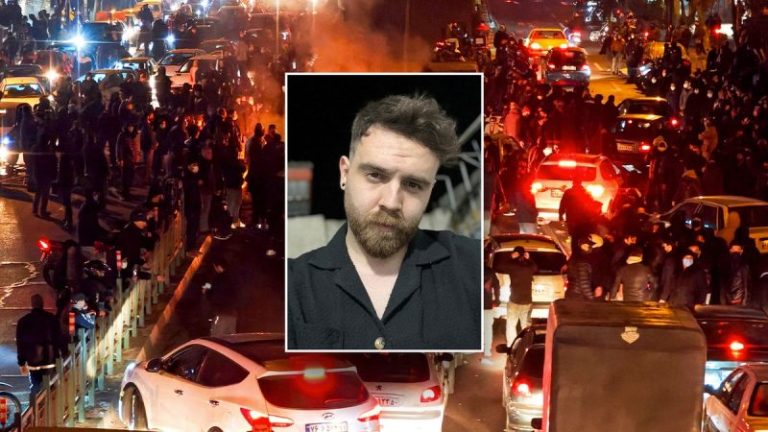
Iran’s supreme leader has publicly acknowledged for the first time that thousands of people were killed during recent anti-government protests, according to reporting from the BBC, as President Donald Trump escalated his rhetoric and called for new leadership in Iran.

Ayatollah Ali Khamenei made the remarks during a public address Saturday, blaming the U.S. for the unrest and violence and saying some protesters died ‘in an inhuman, savage manner,’ the BBC reported.

The protests, which began in late December over economic conditions, later expanded into calls for an end to Iran’s ruling system. 

U.S.-based Iranian Human Rights Activists News Agency estimates that more than 3,000 people were killed over roughly three weeks of unrest, though Iranian authorities have not released an official death toll.

According to the BBC, nationwide internet shutdowns have made independent verification difficult, with connectivity dropping to roughly 2% of normal levels, citing data from cyber monitoring group NetBlocks.

Videos authenticated by BBC Persian and BBC Verify show Iranian security forces firing on demonstrators during the unrest.

Trump told Politico on Saturday that ‘it’s time to look for new leadership in Iran,’ after being read a series of hostile posts from Khamenei’s X account accusing the president of responsibility for the violence.

‘What he is guilty of, as the leader of a country, is the complete destruction of the country and the use of violence at levels never seen before,’ Trump said, according to Politico. ‘Leadership is about respect, not fear and death.’

Trump went further in personal terms, telling Politico, ‘The man is a sick man who should run his country properly and stop killing people.’

‘His country is the worst place to live anywhere in the world because of poor leadership,’ Trump added.

Trump has previously urged Iranians to continue protesting and ‘take over institutions,’ saying that ‘help is on its way,’ according to Politico. The president later said he had been informed that the killings had stopped.

‘The best decision he ever made was not hanging more than 800 people two days ago,’ Trump told Politico, when asked about the scope of potential U.S. military action.

In a series of posts on X posts, Khamenei accused Trump of responsibility for the violence, writing, ‘We find the US President guilty due to the casualties, damages and slander he inflicted upon the Iranian nation.’

In another post, Khamenei claimed that ‘America’s goal is to devour Iran.’

Trump has said in recent days he was looking at ‘very strong options’ including possible military involvement.

The State Department did not immediately respond to Fox News Digital’s request for comment.

This post appeared first on FOX NEWS

President Donald Trump lashed out at Minnesota Democrats on social media Sunday, saying they were using the ongoing federal operations to distract from the state’s massive fraud issue.

Trump made the statement on his Truth Social media platform, saying federal agents in Minneapolis and St. Paul were targeting ‘violent criminals.’

‘ICE is removing some of the most violent criminals in the World from our Country, and bring them back home, where they belong. Why is Minnesota fighting this? Do they really want murderers and drug dealers to be ensconced in their community? The thugs that are protesting include many highly paid professional agitators and anarchists. Is this really what Minnesota wants?’ Trump wrote.

Trump went on to call out Gov. Tim Walz and Rep. Ilhan Omar, D-Minn., saying they ‘don’t mind because it keeps the focus of attention off the 18 Billion Dollar, Plus, FRAUD, that has taken place in the State!’ 

‘Don’t worry, we’re on it!’ Trump added.

Federal agents have faced harassment and protests from agitators in Minnesota in recent weeks. Federal prosecutors are investigating both Walz and Minneapolis Mayor Jacob Frey for allegedly impeding law enforcement efforts in the blue state.

U.S. Deputy Attorney General Todd Blanche told Fox News the duo’s anti-ICE rhetoric was teetering on a federal crime.

‘When the governor or the mayor threaten our officers, when the mayor suggests that he’s encouraging citizens to call 911 when they see ICE officers, that is very close to a federal crime,’ Blanche said.

Bondi added on X, ‘A reminder to all those in Minnesota: No one is above the law.’

Walz responded to the news on Friday by accusing the Trump administration of ‘weaponizing the justice system.’

‘Two days ago, it was Elissa Slotkin. Last week it was Jerome Powell. Before that, Mark Kelly,’ Walz wrote in an X post. ‘Weaponizing the justice system against your opponents is an authoritarian tactic. The only person not being investigated for the shooting of Renee Good is the federal agent who shot her.’

Frey also weighed in on social media, asserting he ‘will not be intimidated.’

‘This is an obvious attempt to intimidate me for standing up for Minneapolis, local law enforcement, and residents against the chaos and danger this Administration has brought to our city,’ Frey wrote on X. ‘I will not be intimidated. My focus remains where it’s always been: keeping our city safe.

This post appeared first on FOX NEWS

In an exclusive interview with Fox News Digital, U.S. ambassador to NATO Matthew Whitaker pushed back against growing European backlash over Washington’s focus on Greenland after France announced new military exercises with Denmark, saying Arctic security is a core American defense interest and that Europe ‘has a tendency to overreact.’

Asked whether the dispute reflects American pressure or European inaction, Whitaker said, ‘This is ultimately an issue between the United States, Denmark and Greenland.’

Whitaker said Greenland’s importance has been clear for years as the ice melts, it reshapes the Arctic and opens new routes. ‘The security of the high north, which I’ve talked about a lot before this ever happened, is the most important issue,’ he said. ‘As the ice thaws and as routes open up in the Arctic, Arctic security, and therefore the security of Greenland, which is the northern flank of the continental United States, is crucial.’

He stressed that Greenland’s location makes it central to U.S. defense planning. ‘If you think about Greenland as part of the access to the naval assets, that monitoring and awareness and fortification of that part of the Western Hemisphere is crucial for the long-term security of the United States,’ Whitaker said.

Whitaker said recent diplomacy shows the issue can be addressed without escalation. ‘I know that a very successful meeting happened between the Danes and Greenland and Vice President Vance and Secretary of State Rubio, so I think it’s going to be constructive,’ he said.

Still, he cautioned European allies against inflaming tensions. ‘Europe sometimes has a tendency to overreact anytime that an issue is put out on the table,’ Whitaker said. ‘This is one of those things where cooler heads need to prevail.’

US COMMANDER SAYS RUSSIA AND CHINA’S ARCTIC PATROLS ARE ‘NOT FOR PEACEFUL PURPOSES’

NATO, deterrence and the ‘Reagan spirit’

Speaking from the Ronald Reagan Presidential Library, Whitaker used Reagan’s ‘peace through strength’ doctrine as justification for pushing NATO allies to spend more and move faster.

‘The most important thing that we’re doing at NATO is, one, the United States is strong. Nobody denies that. We have demonstrated through Midnight Hammer, through what we did in Venezuela and elsewhere, that the United States is capable and can project power. We want all of our allies inside of NATO to be equally as strong, and they’re not at this point in time,’ he said.

He added, ‘Some of them have certainly become more capable, and that’s why you can’t just paint with a broad brush when it comes to all of our NATO allies. But there are some that are not.’

‘Europe and the EU are going to have to untie their hands from behind their back,’ he continued. ‘They’re going to have to deregulate, they are going to have to find more capital and economic growth, because at the end of the day, that’s what’s going to allow them to live up to the promises they’ve made to increase their defense spending and therefore their defense capabilities.’

He said, ‘One of the things that I’m talking about constantly with our friends downtown in the EU,’ Whitaker added, ‘is that they have to get their economy going, and there are proven, tried-and-true ways to do it.’

Whitaker said his top priority is ensuring NATO allies follow through on the major defense commitments agreed to last year in The Hague.

‘This is number one on my list right now,’ he said, ‘making sure that the political commitments we made in The Hague turn into real military capabilities at NATO.’

He said proximity to Russia has shaped how seriously countries take the threat.

‘You look at the Baltic countries like Latvia, Lithuania and Estonia, and you look at the Nordic countries… they’re very aware of the threats that Russia [poses],’ Whitaker said, citing Russia’s 2014 annexation of Crimea and its 2022 invasion of Ukraine.

Poland, he added, stands out. ‘Poland is clear-eyed,’ Whitaker said. ‘They’re gonna spend over 5% on core defense in the coming year or two.’

Others, he said, are still lagging. ‘I keep a dashboard, a one-page dashboard on my desk that is updated regularly,’ Whitaker said. ‘It’s too soon to tell.’ ‘It has to be on capabilities,’ he said. ‘It has to make them stronger, ready to fight tonight.’

‘President Trump announced a $1.5 trillion defense budget,’ Whitaker said. ‘We’ve demonstrated our capabilities that nobody else can match right now.’

‘I’m here at the Reagan Library, and it reminds me, Ronald Reagan really was able to put those policies in place to spur growth,’ Whitaker said. ‘President Trump certainly has followed that same tradition, to unleash the American entrepreneur, unleash American innovation, and get out of the way, get the regulations out of the way so that American companies can grow and prosper.’

As NATO moves forward, Whitaker said pressure on allies will remain. ‘We’re asking our European and Canadian allies to do more,’ he said. ‘So far, so good.’

This post appeared first on FOX NEWS

Iran’s Supreme Leader Ayatollah Ali Khamenei on Saturday lashed out at President Donald Trump, labeling him a ‘criminal’ and accusing the U.S. of orchestrating unrest that has erupted into the deadliest protests in decades.

‘The latest anti-Iran sedition was different in that the U.S. President personally became involved,’ Iranian media quoted Khamenei as saying, per Reuters.

The statement is the latest Iranian government rhetoric blaming the U.S. for contributing to instability in Iran, with Tehran singling out Trump as a central figure in what it calls foreign-driven unrest. The regime has also been pointing fingers at Israel. 

Protests have raged in Iran since late December, initially over economic problems but rapidly expanding into widespread anti-regime demonstrations. Demonstrators have been met with severe crackdowns by security forces.

Human rights groups say thousands of protesters have been killed in the unrest. Reports from various groups say Khamenei was responsible for a crackdown that killed thousands of protesters. The U.S.-based Human Rights Activists in Iran on Friday put the death toll at 3,090.

The number, which exceeds that of any other round of protest or unrest in Iran in decades and recalls the chaos surrounding the 1979 revolution, continues to rise.

Meanwhile, Iranian opposition figure Reza Pahlavi told Bret Baier on ‘Special Report’ on Monday that a minimum of 12,000 people were dead.

Trump has expressed support for Iranian protesters and talked about regime change, while some Republican lawmakers have openly urged Trump to consider military action.

The president said on Tuesday that he cut off meetings with the Iranian regime, saying there would be no contact until the government stops killing protesters. He also urged the Iranian people to ‘take over’ the country.

When asked if Arab and Israeli officials ‘convinced’ him to not strike Iran, Trump told reporters Friday that he convinced himself and cited the canceled hangings. 

Trump also expressed similar sentiments on social media Friday.

‘I greatly respect the fact that all scheduled hangings, which were to take place yesterday (Over 800 of them), have been canceled by the leadership of Iran. Thank you!’ Trump said in a post on Truth Social on Friday. 

It is unclear who Trump spoke to in Iran to confirm the state of any planned executions. The statement echoes what White House press secretary Karoline Leavitt told reporters Thursday about the canceled executions. She maintained that all options remained on the table when it comes to dealing with Iran.

‘What I will say with respect to Iran is that the president and his team have communicated to the Iranian regime that if the killing continues, there will be grave consequences,’ Leavitt told reporters Thursday. ‘And the president received a message as he revealed to all of you and the whole world yesterday that the killing and the executions will stop. And the president understands today that 800 executions that were scheduled and supposed to take place yesterday were halted.’ 

It’s unclear from Trump’s post if he was referring to the 800 executions that were already canceled or whether there have been two consecutive days when 800 executions have been called off. 

Meanwhile, a sermon by Ayatollah Ahmad Khatami carried by Iranian state radio sparked chants from those gathered for prayers, including: ‘Armed hypocrites should be put to death!’

Khatami, a member of Iran’s Assembly of Experts and Guardian Council long known for his hardline views, described the protesters as the ‘butlers’ of Israeli Prime Minister Benjamin Netanyahu and ‘Trump’s soldiers,’ according to The Associated Press.

He said Netanyahu and Trump should await ‘hard revenge from the system.’

‘Americans and Zionists should not expect peace,’ the cleric said.

Fox News Digital’s Benjamin Weinthal and Diana Stancy, as well as Reuters and The Associated Press contributed to this report.

This post appeared first on FOX NEWS

New York City Mayor Zohran Mamdani has officially moved into the historic Gracie Mansion, and he’s already hoping to make changes. The mayor spoke to reporters on Jan. 12 and shared his ‘aspirational hope’ to have a few bidets installed in the mayor’s residence.

‘One thing that we will change is we will be installing a few bidets into Gracie Mansion,’ Mamdani said. ‘That’s an aspirational hope. We’ll see if we can get it done.’

A prominent New York City Democrat mocked the mayor’s idea, painting it as a rich man’s fantasy coming from someone who preaches socialism.

‘He’s been mayor for a minute and now the socialist thinks he’s flush with so much cash he can buy bidets,’ the prominent Democrat, who asked to remain anonymous, told Fox News Digital.

When speaking to Fox News Digital, the prominent Democrat pointed out the difference between the reaction to Mamdani’s ‘aspirational hope’ to add bidets versus President Donald Trump’s renovations to the White House’s Lincoln Bedroom bathroom.

Trump posted photos of the renovated bathroom on Truth Social in November celebrating the upgrade which included ‘highly-polished, statuary marble.’ While the president argued that the renovation was in line with the original vision for the space, historians disagreed and comedians mocked him. John Oliver, the host of ‘Last Week Tonight,’ called it ‘tone-deaf.’

The president’s renovations to the East Wing ballroom have also drawn criticism and mockery with Democrats taking aim at the president over the project. House Minority Leader Hakeem Jeffries, D-N.Y., said during an appearance on MSNBC that Trump ‘found time to demolish the East Wing of the White House so that he can build a ballroom where he can be celebrated as if he was a king.’

The East Wing renovation was mocked on ‘Saturday Night Live,’ which did a skit featuring James Austin Johnson as Trump and Miles Teller as Drew and Jonathan Scott from HGTV’s popular home makeover show ‘The Property Brothers.’ The mockery didn’t end there. During a ‘Weekend Update’ segment, Michael Che said he was glad the floor looked ‘slippery,’ according to the Architect’s Newspaper.

The Gracie Mansion Conservancy’s website notes that the residence was originally built by Archibald Gracie, a prosperous merchant, in 1799 and was originally a country house located five miles north of what was then known as New York City. Since then, the city has expanded and the mansion is currently located in Manhattan’s Upper East Side, which is known to be one of the wealthier parts of the city.

The conservancy also stated that Gracie Mansion is one of the oldest surviving wooden structures in Manhattan and has served as the official residence of New York City mayors since 1942.

‘Parks Commissioner Robert Moses convinced City authorities to designate the Gracie Mansion as the official residence of the Mayor in 1942 when Fiorello H. La Guardia and his family moved into the house,’ the conservancy’s website reads.

HomeAdvisor, a home-improvement cost and contractor marketplace owned by Angi, said in 2025 that the average cost to install a bidet was $640, with a typical range of $400 to $1,500. The site noted that costs can run as low as $40 or as high as $2,000. The bidet type, size and quality, as well as necessary plumbing modifications can impact the installation cost.

Meanwhile, HomeGuide, a home-improvement cost guide that compiles pricing data from contractors and project estimates, broke down bidet pricing by unit and installation. The site said a standalone bidet could cost between $700 and $2,600 including installation, while the unit and installation cost for a bidet attachment typically ranges from $100 to $300.

It is unclear how exactly the city would install bidets in Gracie Mansion.

New York City’s Department of Environmental Protection celebrated Mamdani’s announcement, saying that ‘more bidets = fewer wet wipes.’

This post appeared first on FOX NEWS

As protests spread across Iran and security forces intensify their crackdown, former political prisoners are warning that what is visible on the streets represents only a fraction of the violence unfolding behind prison walls.

In interviews with Fox News Digital, three former detainees described a system designed not just to punish dissent, but to break it through solitary confinement, beatings, medical neglect and threats of execution. Their accounts span nearly two decades, from the 2009 uprising to the ‘Woman, Life, Freedom’ movement and the current wave of unrest, pointing to what they describe as a consistent and escalating pattern of abuse.

Maryam Shariatmadari, one of the faces of the ‘Girls of Revolution Street’ protests against Iran’s mandatory hijab laws, was sentenced to one year in prison in March 2018 for what authorities described as ‘encouraging corruption by removing her hijab.’

Speaking this week, Shariatmadari said the scale of the current protests has pushed the regime beyond its capacity to detain demonstrators.

‘According to the testimonies of eyewitnesses, the suppressive forces of the Islamic Republic … are delivering ‘final shots’ to wounded protesters, killing them on the spot,’ she said. ‘This has been unprecedented over the past 47 years and indicates that the number of detainees has become so large that the Islamic Republic no longer has the capacity to hold them and is killing them without any form of trial.’

She said that while detainees in earlier uprisings were transferred to prisons or unofficial ‘safe houses,’ authorities expanded detention during the 2022 ‘Woman, Life, Freedom’ protests to schools, ambulances and food transport vehicles.

‘They used ambulances and food transport vehicles to detain protesters, something I believe to be unprecedented in human history,’ Shariatmadari said.

Inside detention facilities, she described systematic abuse.

‘These include beatings, transfers to prisons without separation based on the type of offense, and the deliberate incitement of other inmates to harass and abuse us,’ she said.

One of her most traumatic experiences occurred during interrogation.

‘I was ordered to remove my clothes and remain completely naked for a body search while cameras were present,’ Shariatmadari said. ‘I knew that men were watching me, and I could hear their voices.’

She also recalled being denied urgent medical care after an injury.

‘Only after approximately 24 hours was I taken to a hospital to undergo surgery,’ she said. ‘I believe this happened as a result of media pressure and public support.’

Eight hours a day, blindfolded

Shariatmadari’s husband, Mehdi Ghadimi, a freelance journalist who worked with reformist newspapers Etemad and Shargh, was arrested in January 2023 during protests and taken to an undisclosed location. He spent nearly his entire detention in solitary confinement.

‘I was interrogated twice daily, morning and afternoon, for eight hours with my eyes blindfolded,’ Ghadimi said.

In the final days of his detention, he was transferred to a shared cell, where he encountered detainees from across Iranian society.

‘I encountered students, workers, technical specialists and others who had been arrested during the Woman, Life, Freedom movement,’ he said.

According to Ghadimi, detainees accused of supporting the Pahlavi dynasty were beaten more severely.

‘Because their slogans and symbols supported the Pahlavi dynasty, they were beaten far more than the others,’ he said.

Based on his experience, he warned that current detainees are likely to face even harsher treatment.

‘I can only imagine that this time all detainees will face similarly brutal treatment,’ Ghadimi said, adding that Iran’s judiciary chief has publicly signaled a hard line.

Ghadimi, who fled the country in 2024, also cited figures circulating among activists claiming well over the 2,600 reported, likely dwarfing that number. He said the number of detainees is likely far higher than the 10,000 reported.

‘On the other side of those bars is hell’

Shabnam Madadzadeh, who was imprisoned during the 2009 uprising, said watching the current protests has revived memories of extreme brutality and raised fears of mass executions.

‘What immediately comes to my mind is the regime’s sheer brutality in torture and killing,’ Madadzadeh said.

She said detention facilities were already overflowing during the 2009 protests.

‘There was no space left for detainees. Even the solitary cells were overflowing with people,’ she said.

Madadzadeh recalled interrogators accusing nearly everyone arrested of links to the Mujahedin-e Khalq and described torture and beatings ‘to the point of killing.’

One threat made to her during interrogation still haunts her.

‘He told me: ‘If we are going to be overthrown, we will kill all of you. We will leave no one alive,’’ she said.

She warned that the current internet blackout has heightened the danger for detainees.

‘We truly do not know what level of brutality is currently taking place inside the prisons,’ Madadzadeh said, adding that information reaching her suggests the regime is seeking to carry out executions quickly.

Citing Iran’s past, she warned of the risk of mass killings similar to the 1988 executions of political prisoners.

‘Today, at a moment when the regime is on the brink of collapse, there is a real danger that such a massacre could be repeated,’ she said.

Madadzadeh said young detainees are likely facing forced confessions, mock executions and threats of sexual violence.

‘Whatever I do to you, no one will hear your voice,’ an interrogator once told her, she recalled.

She also emphasized the suffering of families searching for loved ones.

‘Families are moving between detention centers, prisons, morgues and cemeteries,’ she said. ‘This uncertainty itself is the greatest form of torture.’

As the protests continue, all three former prisoners said the outside world must not look away.

‘The first thing I expect the free world to understand is the true voice of the people inside Iran,’ Shariatmadari said. ‘The people of Iran are united in their demand for regime change and want to restore Iran to its former dignity, a dignity in which human rights and human worth were respected.’

Ghadimi echoed that warning.

‘Without a doubt, when the regime displays such open violence in the streets, even worse atrocities occur behind prison walls,’ he said. ‘I can only imagine that this time all detainees will face similarly brutal treatment.’

For Madadzadeh, the danger is immediate.

‘The world must respond decisively to this brutality,’ she said. ‘Every minute of delay costs lives.’

She called for concrete international action.

‘Force the regime to allow independent visits to prisons and to the secret detention centers run by the IRGC and the Ministry of Intelligence,’ Madadzadeh said. ‘Lives depend on it.’

Together, their testimonies paint a stark picture of Iran’s prisons as the hidden front line of repression and a warning that what remains unseen may be even more deadly than what is already visible in the streets.

This post appeared first on FOX NEWS

President Donald Trump announced the United States would impose 10% tariffs on multiple European countries unless Denmark agrees to the ‘complete and total purchase of Greenland,’ warning that global security and U.S. national defense were at stake.

Trump made the announcement in a lengthy Truth Social post on Saturday, arguing that the U.S. has subsidized Denmark and other European Union nations for decades by failing to charge tariffs and providing what he described as ‘maximum protection.’

‘We have subsidized Denmark, and all of the Countries of the European Union, and others, for many years by not charging them Tariffs, or any other forms of remuneration,’ Trump wrote.

‘Now, after Centuries, it is time for Denmark to give back — World Peace is at stake!’

Trump wrote that both China and Russia want Greenland and he said there was ‘not a thing that Denmark can do about it.’

‘They currently have two dogsleds as protection, one added recently. Only the United States of America, under PRESIDENT DONALD J. TRUMP, can play in this game, and very successfully, at that!’ Trump wrote. 

‘Nobody will touch this sacred piece of Land, especially since the National Security of the United States, and the World at large, is at stake.’

Trump said that Denmark, Norway, Sweden, France, Germany, the United Kingdom, the Netherlands and Finland have ‘journeyed’ to Greenland, for ‘purposes unknown,’ posing a very dangerous situation for the safety, security and survival of our planet.

‘All of the above-mentioned Countries… will be charged a 10% Tariff on any and all goods sent to the United States of America,’ Trump wrote. 

On June 1, 2026, the tariff will be increased to 25%, he said. 

‘This Tariff will be due and payable until such time as a Deal is reached for the Complete and Total purchase of Greenland.’

In recent weeks, Trump has zeroed in on Greenland, the world’s largest island at a strategic crossroads in the Arctic, and floated the idea of tariffs being imposed on Friday. 

A semi-autonomous territory of Denmark, Greenland is home to a crucial U.S. military base and has taken on growing strategic importance as melting ice opens new shipping lanes and access to a wealth of natural resources.

In his Saturday post, Trump said the United States has tried to purchase Greenland for more than 150 years but that Denmark has repeatedly refused. 

He tied the push to modern weapons systems and the ‘Golden Dome,’ saying hundreds of billions of dollars are being spent on related security programs and that the system can only work at maximum efficiency if Greenland is included. 

‘The United States of America is immediately open to negotiation with Denmark and/or any of these countries that have put so much at risk, despite all that we have done for them, including maximum protection, over so many decades,’ Trump wrote. ‘Thank you for your attention to this matter!’

Trump’s remarks come as his administration awaits a Supreme Court ruling on whether some of the tariffs he imposed in 2025 were legal.

Fox News’ Amanda Macias contributed to this report. 

This post appeared first on FOX NEWS

Investment Insight

Harvest Gold offers investors a compelling opportunity to participate in early-stage exploration within Quebec’s prolific Abitibi Greenstone Belt – home to some of Canada’s richest gold deposits – through three strategically located and 100 percent owned properties, with a flagship asset positioned for significant discovery upside.

Overview

Harvest Gold (TSXV:HVG)is a Canadian junior exploration company advancing a portfolio of three 100 percent owned gold projects – Mosseau, Urban Barry and LaBelle – located within Quebec’s world-renowned Abitibi Greenstone Belt. With more than 200 million ounces of historical gold production, the Abitibi is one of the most productive gold regions globally. Harvest Gold’s properties are strategically positioned within and adjacent to the Urban Barry Greenstone Belt, an emerging gold camp that has attracted sustained interest from major mining companies.

The Urban Barry Belt hosts several high-grade, multi-million-ounce deposits, including the Windfall deposit, developed by Osisko Mining and now owned by Gold Fields, as well as Bonterra’s Gladiator and Barry deposits. As consolidation by major producers continues across the belt, Harvest Gold controls three of the few remaining independent, district-scale land packages. With excellent road access, nearby infrastructure and newly exposed bedrock from recent forest fires, the company’s properties offer exceptional discovery potential.

Harvest Gold’s strategy is underpinned by a highly experienced management and technical team. CEO Rick Mark brings over 30 years of leadership in public resource companies, having guided his 2000’s group of four companies to peak valuations of approximately C$200 million. The technical team includes Louis Martin, a two-time AEMQ “Discovery of the Year” award winner, and Warren Bates, former VP exploration at Pelangio Exploration and part of the Blackwater discovery team. Together, the team brings deep expertise in structural geology, Abitibi-focused exploration, and discovery-driven value creation.

The company is supported by Crescat Capital, a respected institutional investor with a strong record of backing early-stage discoveries. Crescat’s involvement reflects the endorsement of its strategic advisor, Dr. Quinton Hennigh, who has highlighted the district-scale opportunity created by Harvest Gold’s land position along the Wilson Pluton–volcanic contact.

Company Highlights

  • Flagship Mousseau Project: Large-scale, advanced-stage exploration property with multiple confirmed gold-bearing shear zones.
  • Tier-one address: All projects located in Quebec’s Urban Barry Greenstone Belt where Gold Fields recently acquired Osisko Mining’s world-class Windfall deposit and much of the rest of the Urban Barry belt.
  • Institutional Backing: Crescat Capital, with renowned exploration geologist Dr. Quinton Hennigh, owns 19+ percent of Harvest Gold.
  • Skilled Technical Team: Leadership includes seasoned geologists and executives with proven discovery and development track records.
  • Favourable Jurisdiction: Operates in Quebec, a politically stable, mining-friendly province with excellent infrastructure and low exploration costs.
  • Strategic Timing: Harvest Gold has commenced its maiden drill program at Mosseau during a period of historically strong gold prices.

Key Projects

Mousseau Gold Project

The Mosseau Gold Project is Harvest Gold’s flagship asset, comprising approximately 195 claims covering about 9,740 hectares in the northern Abitibi Greenstone Belt of Quebec. Located roughly 15 kilometres east of Lebel-sur-Quévillon, the project benefits from year-round road access and established regional infrastructure. The property is bordered to the north by Gold Fields and Cartier Resources and lies near a large claim block staked by noted prospector Shawn Ryan, placing Mosseau within an active and highly prospective exploration corridor.

Geologically, Mosseau straddles two major structural corridors: the Morono Shear Zone and the Kiask River Fault Zone. These structures host classic shear-related gold mineralization, characterized by multiple stacked quartz–sericite shear zones ranging from less than one metre to more than 30 metres in width, with demonstrated continuity along strike and at depth. To date, 49 significant surface gold showings have been identified, along with a historical, non–NI 43-101 compliant gold resource at the Morono Zone.

In 2024, Harvest Gold completed a high-resolution airborne magnetic survey over the entire Mosseau property. This modern dataset identified previously unrecognized structures and magnetic domains, significantly refining drill targeting. Follow-up mapping, prospecting, and soil geochemistry—greatly enhanced by new bedrock exposure from the 2023 forest fires—outlined multiple high-priority targets along both the Morono and Kiask River structural corridors.

In 2025, Harvest Gold commenced its maiden diamond drill program at Mosseau, targeting priority zones in the Northern and Central areas of the property. Results from the first six drill holes confirmed the discovery of a new, previously untested mineralized horizon approximately 100 metres east of the Trench 1B showing. This newly identified horizon is associated with a moderate induced polarization anomaly that can be traced for approximately 600 metres along strike and remains open.

Recent drilling highlights include:

  • 1.90 g/t gold over 5.4 metres, including 8.67 g/t gold over 0.6 metres
  • 1.10 g/t gold over 6.0 metres, including 2.02 g/t gold over 1.5 metres
  • Higher-grade gold associated with semi-massive sulphides containing elevated silver and base metals (copper, zinc, lead)

Fourteen drill holes totaling 3,030 metres have now been completed, representing approximately 60 percent of the planned 5,000-metre program. Drilling is ongoing, with results continuing to demonstrate the scale, continuity, and polymetallic character of the Mosseau system.

With its district-scale footprint, proven gold endowment, improving geological model, and active drilling success, the Mosseau Project is well positioned to evolve into a significant discovery with strong potential to attract strategic partners or acquirers.

Urban Barry Property

Acquired from EGR Exploration, the Urban Barry property comprises 6,879 hectares located west of the Osisko/Gold Fields Windfall property. The project spans 20 km of favorable strike length and sits along the southern margin of the Urban Barry Greenstone Belt.

Key advantages:

  • Analogous geological setting to Windfall and Gladiator
  • Road-accessible with mapped deformation zones and quartz-vein hosted gold indicators
  • 2024 magnetic surveys and fieldwork completed; drilling strategy is in development

LaBelle Project

Staked in 2024, LaBelle covers 3,394 hectares and represents a 9 km southeast extension of the Kiask River Fault. It mirrors the geological setting of Mousseau, with similar NW-SE oriented shear zones and structural contacts between the Wilson Pluton and volcanic sequences.

Though early-stage, LaBelle offers:

  • District-scale exploration potential
  • Proximity to Harvest’s other assets for operational synergy
  • Favorable structural and lithological environment

Management Team

Rick Mark – President, CEO and Chair

With more than 40 years of leadership in public resource companies, Rick Mark previously helmed VMS Ventures, North American Nickel and Pancontinental Uranium, each achieving peak valuations of C$200 million.

Louis Martin – Senior Technical Advisor, Quebec Exploration

A Quebec-focused geological consultant with more than 40 years of experience, Louis Martin is the former VP of exploration at Clifton Star Mining, where he led the team developing the Duparquet deposit. He is a multiple-time recipient of the AEMQ “Discovery of the Year” award.

Pat Donnelly – Independent Director

Recently VP capital markets at Tutor Gold, Pat Donnelly is a former co-founder and president of First Mining Gold, where he executed eight M&A deals growing the company’s market cap from $30 million to $600 million.

Len Brownlie – Independent Director

Len Brownlie brings more than 30 years of executive leadership in mining exploration. He is the former president of Goldrush Resources and director of First Silver Reserve.

Christopher Cherry – CFO and Director

Christopher Cherry has more than 15 years of experience in corporate accounting and audit for public companies. He oversees Harvest Gold’s financial strategy and compliance.

Ed Zablotny – Independent Director

Ed Zablotny boasts over 35 years in venture capital markets with expertise in trading, credit and regulatory compliance.

Warren Bates – Geological Team

Warren Bates is a veteran geologist with 30+ years in gold and base metals exploration. He is the former VP of exploration at Pelangio Exploration and part of the Blackwater deposit discovery team.

Henry Awmack – Geological Team

Henry Awmack is the co-founder of Equity Exploration Consultants, with over 40 years of exploration experience. He was notably involved in early work on the Cobre Panama copper-gold deposit.

Neil Richardson – Geological Team

Neil Richardson is a geological consultant and the VP Explorations for Hudbay Minerals. He led the team behind the discovery and development of the Reed Mine while at VMS Ventures.

This post appeared first on investingnews.com

Saga Metals Corp. (‘SAGA’ or the ‘Company’) (TSXV: SAGA,OTC:SAGMF) (OTCQB: SAGMF) (FSE: 20H), a North American exploration company focused on critical mineral discovery, is pleased to announce the assay results for two (2) additional diamond drill holes (R-0010 and R-0011) from the Company’s Q4 2025 Phase of the Mineral Resource Estimate (MRE) drill program in Trapper North at the Radar Ti-V-Fe Project, located near the port of Cartwright in Labrador, Canada.

Trapper North Assay Highlights

  • Analytical results have now been obtained for all four (4) diamond drill holes in Trapper North Zone and constitute four (4) of eight (8) drill holes completed during the Q4 2025 Phase of the MRE drill program.
  • Analytical results to-date include numerous oxide-rich intercepts, including:
    • R-0010: 135.50 m grading 50.03% Fe₂O₃, 7.87% TiO₂, and 0.352% V₂O₅.
    • R-0011: 95.15 m grading 39.49% Fe₂O₃, 6.49% TiO₂, and 0.220% V₂O₅.
    • R-0009: 87.20 m grading 50.67% Fe₂O₃, 10.15% TiO₂, 0.339% V₂O₅
    • R-0008: 67.60 m grading 46.15% Fe₂O₃, 9.21% TiO₂, 0.311% V₂O₅
  • TiO₂ strength:
    • 42.6% of samples > 7% TiO₂ (700 samples majority of which are 2 m)
  • V₂O₅ strength:
    • 53.7% of samples > 0.2% V₂O₅ (700 samples majority of which are 2 m)
  • Continued consistency and increase in overall oxide concentration in Trapper Vs Hawkeye.

Assay Results from R-0010 and R-0011

  • Hole R-0010 (collared at the same location as R-0009 but oriented at 0° azimuth for true width assessment): Intercepted 135.5 meters (from 1.5 m to 137 m) grading 50.028% Fe₂O₃, 7.872% TiO₂, and 0.352% V₂O₅.
  • Hole R-0011 (100-meter step-out along strike from R-0009 and R-0010): Intercepted 95.15 meters (from 58.1 m to 153 m) grading 39.49% Fe₂O₃, 6.49% TiO₂, and 0.22% V₂O₅. Additionally, this hole also encountered a 22-meter interval of rhythmically banded oxide, suggesting more persistent layering occurs away from the concentrated mass in the fold nose.

For comparison with the rest of Trapper North, the following table summarizes key intercepts from all four drill holes completed in Q4 2025.

Description DDH FROM TO Length Fe2O3 TiO2 V205
  ID m m m % % %
High V2O5 Layer R-0008 37.76 117.72 79.96 45.63 8.40 0.33
High TiO2 Layer R-0008 170 237.6 68.26 46.15 9.21 0.31
TiO2 Layer R-0008 237.6 266.57 28.98 40.45 7.02 0.29
High TiO2 Layer R-0009 2.53 66 63.47 44.26 9.02 0.25
High V2O5 Layer (A) R-0009 94 181.2 87.20 50.67 10.15 0.34
High V2O5 Layer (B) R-0009 196.11 216.4 20.29 49.12 8.67 0.37
North Fold Section R-0010 1.5 137 135.5 50.03 7.87 0.35
North Fold Section R-0011 58.1 153.3 95.15 39.49 6.49 0.22

Table 1: Assay results and composites of R-0008, -0009, -0010 and -0011 from Trapper North.

Michael Garagan, CGO & Director of Saga Metals, commented: ‘The successful assay results from all four drill holes at Trapper North mark a significant milestone for the Radar Project. These latest intercepts from R-0010 and R-0011 confirm the continuity of high-grade mineralization along the northern limb. This structurally related increase in thickness boosts Trapper as a standout zone with tremendous potential for titanium, vanadium, and iron mineral resources, advancing our goal of establishing a strategic North American supply of critical minerals.’

Figure 1-3 below outline all four drill holes in Trapper North with the corresponding intercepts at different viewing angles for a complete, accurate picture of the subsurface geometry:

Figure 1: Cross-Section BB looking West showing R-0008, -0009, and -0010 highlighting high-grade intercepts with the 3D Magnetic Inversion of the 2025 Trapper Zone ground magnetic survey. For the full set of R-0008 & R-0009 assays see Figure 3 cross-section N-11.

Figure 2: Cross-Section AA looking West showing R-0008, -0009, and -0011 highlighting high-grade intercepts with the 3D Magnetic Inversion of the 2025 Trapper Zone ground magnetic survey. For the full set of R-0008 & R-0009 assays see Figure 3 cross-section N-11.

Figure 3: Cross-Section N-11 looking Northwest showing R-0008, -0009, -0010 and -0011 highlighting high-grade intercepts in holes R-0008 & -0009 with the 3D Magnetic Inversion of the 2025 Trapper Zone ground magnetic survey. For the assays of R-0010 & R-0011 see Figures 1 & 2 Sections BB & AA.

Trapper North Drill Hole Details and Geological Insights

Hole R-0010 was collared at the same location as R-0009 but re-oriented to a 0-degree azimuth (compared to the standard 38 degrees) in order to test the northern limb of the Trapper North Fold. Both holes maintained a -45-degree dip. This allowed the team to drill directly through the anomaly and oxide layering at an optimal angle, enabling precise correlation of structural data between R-0009 and R-0010 while clearly defining the northern contact and limits of the oxide layer.

Hole R-0011, drilled as a 100-meter step-out along strike from R-0009 and R-0010, successfully tracked the continuation of the semi-massive oxide layer that is particularly abundant through the nose of the fold. Notably, it also intercepted a 22-meter interval of rhythmically banded oxide. This zone provides an outstanding window into the deposit, featuring exceptionally high VTM content.

Additionally, deeper oxide layering in R-0011, appeared to shallow toward the northeast—an intriguing observation that could indicate a potential at-depth connection between the Trapper and Hawkeye zones, further supporting the theory that this section of the property is one large lopolith. While this remains theoretical at present, the team intends to test the concept with future drilling once additional data increases confidence in its likelihood.

Mineral Resource Estimate Focus

The drilling in Q4 2025 at Trapper North forms part of the Company’s broader strategy to advance toward a maiden Mineral Resource Estimate for the Radar Project. The economic target is the large, continuous sections of oxide mineralization (semi-massive to massive VTM and ilmenite layers) that demonstrate consistent and exceptional grades in titanium, vanadium, and iron—critical minerals for North American supply security needed in defense, aerospace, renewable energy, and steel production.

Drilling these extensive oxide zones provides essential data on grade, thickness, continuity, and geometry, enabling the definition of a robust resource. The exceptional results from Trapper North validate the priority of targeting these enriched structural features. The rhythmic banding seen in drill hole R-0011 and in Trapper South to-date adds to the overall consistency and exceptional mineralization across the entire Trapper Zone. These elements inform the ongoing 2026 drill campaign, designed to systematically grid and delineate these zones across the Trapper Zone for increased resource confidence.

Next Steps at the Radar Ti-V-Fe Project

Personnel are expected to arrive in Cartwright, Labrador, today, and drilling will commence shortly thereafter.

The initial focus for the 2026 Radar Project drill program will be in the southern section of the Trapper Zone, also known as ‘Trapper South.’ SAGA’s geological team and Gladiator’s drill crews will take advantage of the extensive trail network created in the summer of 2025, allowing for an easy traverse for snowmobiles and the excavator used to move the drill. Drilling will begin at the southeastern extent of Trapper South, targeting approximately 30 holes (7,500 m). The program will then advance hole by hole back toward Trapper North, positioning the team to complete the remainder of the MRE drill campaign by spring.

Figure 4: Trapper Zone map outlining location of the initial 2026 focus for remainder of the MRE drill program to be completed in 2026  showing the TMI of the 2025 Trapper Zone ground magnetic survey Drilling will commence in Trapper Zone and move to Trapper North.

About Radar Property

The Radar Property spans 24,175 hectares and hosts the entire Dykes River intrusive complex (~160 km²), a unique position among Western explorers. Geological mapping, geophysics, and trenching have already confirmed oxide layering across more than 20 km of strike length, with mineralization open for expansion.

Figure 5: Radar Property map, depicting magnetic anomalies, oxide layering and the site of the 2025 drill programs. The Property is well serviced by road access and is conveniently located near the town of Cartwright, Labrador. A compilation of historical aeromagnetic anomalies is overlaid by ground-based geophysics, as shown.

Vanadiferous titanomagnetite (‘VTM’) mineralization at Radar is comparable to global Fe–Ti–V systems such as Panzhihua (China), Bushveld (South Africa), and Tellnes (Norway), positioning the Project as a potential strategic future supplier of titanium, vanadium, and iron to North American markets.

Figure 6: Radar Project’s prospective oxide layering zone validated over ~16 km strike length through Fall 2025 drilling, as shown on a compilation of historical airborne geophysics as well as ground-based geophysics in the Hawkeye and Trapper zones completed by SAGA in the 2024/2025 field programs. SAGA has demonstrated the reliability of the regional airborne magnetic surveys after ground-truthing and drilling in the 2024 and 2025 field programs.

Qualified Person

Paul J. McGuigan, P. Geo., is an Independent Qualified Person as defined under National Instrument 43-101 and has reviewed and approved the technical information disclosed in this news release.

Technical Information

Samples were cut by Company personnel at SAGA’s core facility in Cartwright, Labrador. Diamond drill core was sawed and then sampled intervals. The drill hole core diameter utilized was NQ.

Core samples have been prepared and analyzed at the Impact Global Solutions (IGS) laboratory facility in Montreal, Quebec. Blanks, duplicates, and certified reference standards are inserted into the sample stream to monitor laboratory performance. Crush rejects, and pulps are kept and stored in a secure storage facility for future assay verification. The Company utilizes a rigorous, industry-standard QA/QC program.

About Saga Metals Corp.

Saga Metals Corp. is a North American mining company focused on the exploration and discovery of a diversified suite of critical minerals that support the North American transition to supply security. The Radar Ti-V-Fe Project comprises 24,175 hectares and entirely encloses the Dykes River intrusive complex, mapped at 160 km² on the surface near Cartwright, Labrador. Exploration to date, including 4,250 m of drilling, has confirmed a large, mineralized layered mafic intrusion hosting vanadiferous titanomagnetite (VTM) and ilmenite mineralization with strong grades of titanium and vanadium.

The Double Mer Uranium Project, also in Labrador, covers 25,600 hectares and features uranium radiometrics that highlight an 18km east-west trend, with a confirmed 14km section producing samples as high as 0.428% U3O8. Uranium uranophane was identified in several areas of highest radiometric response (2024 Double Mer Technical Report).

Additionally, SAGA owns the Legacy Lithium Property in Quebec’s Eeyou Istchee James Bay region. This project, developed in partnership with Rio Tinto, has been expanded through the acquisition of the Amirault Lithium Project. Together, these properties cover 65,849 hectares and share significant geological continuity with other major players in the area, including Rio Tinto, Winsome Resources, Azimut Exploration, and Loyal Metals.

With a portfolio spanning key commodities critical to the clean energy future, SAGA is strategically positioned to play an essential role in critical mineral security.

On Behalf of the Board of Directors

Mike Stier, Chief Executive Officer

For more information, contact:

Rob Guzman, Investor Relations
Saga Metals Corp.
Tel: +1 (844) 724-2638
Email: rob@sagametals.com
www.sagametals.com

Neither the TSX Venture Exchange nor its Regulation Service Provider (as that term is defined in the policies of the TSX Venture Exchange) accepts responsibility for the adequacy or accuracy of this release.

Cautionary Disclaimer
This news release contains forward-looking statements within the meaning of applicable securities laws that are not historical facts. Forward-looking statements are often identified by terms such as ‘will’, ‘may’, ‘should’, ‘anticipates’, ‘expects’, ‘believes’, and similar expressions or the negative of these words or other comparable terminology. All statements other than statements of historical fact, included in this release are forward-looking statements that involve risks and uncertainties. In particular, this news release contains forward-looking information pertaining to the Company’s Radar Project. There can be no assurance that such statements will prove to be accurate and actual results and future events could differ materially from those anticipated in such statements. Important factors that could cause actual results to differ materially from the Company’s expectations include, but are not limited to, changes in the state of equity and debt markets, fluctuations in commodity prices, delays in obtaining required regulatory or governmental approvals, environmental risks, limitations on insurance coverage, inherent risks and uncertainties involved in the mineral exploration and development industry, particularly given the early-stage nature of the Company’s assets, and the risks detailed in the Company’s continuous disclosure filings with securities regulations from time to time, available under its SEDAR+ profile at www.sedarplus.ca. The reader is cautioned that assumptions used in the preparation of any forward-looking information may prove to be incorrect. Events or circumstances may cause actual results to differ materially from those predicted, as a result of numerous known and unknown risks, uncertainties, and other factors, many of which are beyond the control of the Company. The reader is cautioned not to place undue reliance on any forward-looking information. Such information, although considered reasonable by management at the time of preparation, may prove to be incorrect and actual results may differ materially from those anticipated. Forward-looking statements contained in this news release are expressly qualified by this cautionary statement. The forward-looking statements contained in this news release are made as of the date of this news release and the Company will update or revise publicly any of the included forward-looking statements only as expressly required by applicable law.

A photo accompanying this announcement is available at:
https://www.globenewswire.com/NewsRoom/AttachmentNg/9fbcc9ec-44a3-43f1-a7d7-7dbec24f1040
https://www.globenewswire.com/NewsRoom/AttachmentNg/00fad501-cc58-48c0-b7aa-a89459811cc2
https://www.globenewswire.com/NewsRoom/AttachmentNg/ae31ec17-733a-47f6-a9fd-6a2248f91f77
https://www.globenewswire.com/NewsRoom/AttachmentNg/0c36b8a7-5fc7-4ec2-9c73-d8ca9e544560
https://www.globenewswire.com/NewsRoom/AttachmentNg/fa283bb3-a0d0-44b9-a334-319bd3d1fcc5
https://www.globenewswire.com/NewsRoom/AttachmentNg/7ee3ee38-298e-44ac-b8db-1fda53783226

News Provided by GlobeNewswire via QuoteMedia

This post appeared first on investingnews.com

We also break down next week’s catalysts to watch to help you prepare for the week ahead.

In this article:

    This week’s tech sector performance

    Tech stocks experienced sharp swings this week, starting on relatively firm footing before a broad selloff midway through the period gave way to a late rebound in semiconductor companies.

    A Sunday (January 11) statement from US Federal Reserve Chair Jerome Powell put pressure on US stocks ahead of Monday’s (January 12) open, with ‘sell America’ sentiment prevalent among investors. Powell’s comments centered on a Department of Justice criminal probe into his testimony about Fed building renovations.

    Financial and payment companies, including major credit card issuers, also sold off at that time following political pressure for a cap on credit card interest rates. However, the overall reaction was muted during Monday’s trading session, with some early dips recovering fully, and indexes closing at record highs.

    Rotation continued to be a major theme this week, with money moving out of some mega-cap tech names and into chip stocks, small-cap companies and resource plays. Intel (NASDAQ:INTC) and Advanced Micro Devices (AMD) (NASDAQ:AMD) rallied early on after being upgraded to “overweight” by KeyBanc Capital Markets on Tuesday (January 13). Citigroup (NYSE:C) also lifted its Intel rating to “neutral” from “sell.”

    Wednesday (January 14) brought heavy selling in tech stocks, with high-flying growth names seeing losses; however, Google’s (NASDAQ:GOOGL) and Apple’s (NASDAQ:AAPL) losses were comparatively mild.

    Chipmakers were the bright spot, with the real catalyst coming on Thursday (January 15) after Taiwan Semiconductor Manufacturing Company’s (NYSE:TSM) blowout quarterly results triggered a rally across chipmakers and chip equipment stocks, including Micron Technology (NASDAQ:MU), Broadcom (NASDAQ:AVGO), Qualcomm (NASDAQ:QCOM), AMD and ASML Holding (NASDAQ:ASML), which hit a US$500 billion market cap on Thursday.

    This performance helped stabilize the broader tech space, although caution lingered.

    3 tech stocks moving markets this week

    1. Taiwan Semiconductor Manufacturing Company (NYSE:TSM)

    As mentioned, Taiwan Semiconductor reported blowout Q4 results and upbeat guidance on Thursday, fueled by relentless artificial intelligence (AI) demand. Revenue jumped 36 percent year-on-year, with management projecting 20 to 25 percent growth in 2026. Shares climbed 5.8 percent on the week.

    2. Applied Materials (NASDAQ:AMAT)

    Applied Materials gained 8.56 percent amid the broader semiconductor equipment surge.

    The company’s high-bandwidth memory revenues hit US$1.5 billion in its 2025 fiscal year. This new growth engine is tied directly to NVIDIA’s (NASDAQ:NVDA) GPU roadmap.

    3. KLA (NASDAQ:KLAC)

    KLA, a key supplier of process control equipment to chip fabricators, rode the Taiwan Semiconductor tailwind, rising 11.99 percent for the week as investors bet on sustained CAPEX from foundries.

    Taiwan Semiconductor, Applied Materials and KLA performance, January 12 to 16, 2025.

    Chart via Google Finance.

    Top tech news of the week

                Tech ETF performance

                Tech exchange-traded funds (ETFs) track baskets of major tech stocks, meaning their performance helps investors gauge the overall performance of the niches they cover.

                This week, the iShares Semiconductor ETF (NASDAQ:SOXX) advanced by 5.04 percent, while the Invesco PHLX Semiconductor ETF (NASDAQ:SOXQ) saw a gain of 4.89 percent.

                The VanEck Semiconductor ETF (NASDAQ:SMH) also increased by 3.76 percent.

                Tech news to watch next week

                Next week brings a packed slate of catalysts that could shape tech sentiment.

                Intel is set to report its Q4 earnings on January 22. Recent upgrades have the stock at 52 week highs, but investors will probe foundry progress and AI revenue traction for proof of a sustained turnaround.

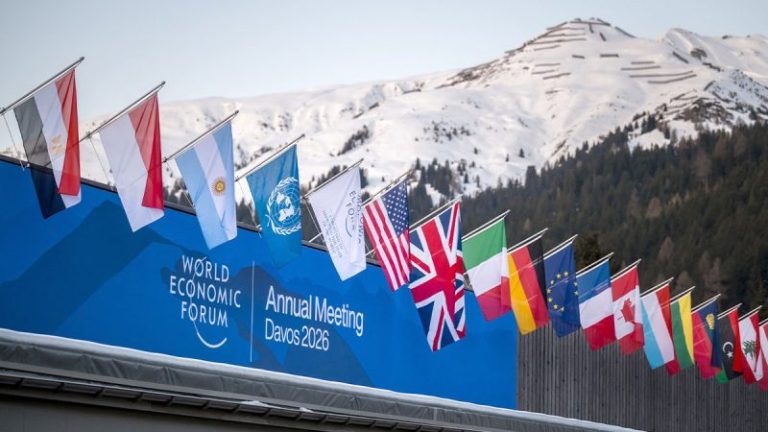
                Davos starts on January 19, with AI and energy infrastructure front and center. Global leaders and tech executives will tackle data center power crunches and supply chain frictions, with potential hints on tariff policies.

                The US Supreme Court is due to deliver rulings on the morning of January 21, including challenges to Trump’s global tariffs, while the House Financial Services Committee will hold a markup on the Financial Innovation and Technology for the 21st Century Act (FIT21), with a floor vote possible soon.

                Key economic releases include retail sales on January 20, flash purchasing managers’ indexes and jobless claims on January 22 and existing home sales on January 23. These will test the soft landing narrative.

                Securities Disclosure: I, Meagen Seatter, hold no direct investment interest in any company mentioned in this article.

                This post appeared first on investingnews.com