
Archive

February 24, 2026

Browsing

It goes against the very instincts of some of the most powerful officials in the U.S.: get all dressed up, appear before a national TV audience, but sit there like statues without betraying any words or emotion.

For members of the Supreme Court, enduring the annual State of the Union address is a civic exercise in poker-faced discretion. As recent history has shown, that has not always been easy.

Tuesday’s speech by President Donald Trump will be watched closely not only for what is said, but also for who will be there in person to hear it — especially an undetermined number of justices with front-row seats.

This year’s appearances are especially of interest, coming four days after a 6-3 majority of the court struck down the president’s sweeping tariffs, in a sweeping setback to his economic agenda.

Trump lashed out sharply at the court, especially the six members who voted against him, including two he appointed to the bench — Justices Neil Gorsuch and Amy Coney Barrett.

The president said he was ‘ashamed of certain members of the court, absolutely ashamed for not having the courage to do what’s right for the country.’

At least one member of the bench, Justice Samuel Alito, has previously stated he will likely no longer go — after lingering, dramatic criticism leveled at a court ruling by Obama in his 2010 address.

But one or more justices have almost always attended the annual speech to Congress and the nation in recent decades. Court members are not required by law to be there, but custom has dictated their appearance, mostly for show. They are a key, if low-key, part of the pageantry, and are compelled to sit politely and stoically, amid the often high-spirited partisan rhetoric and response of the event.

There is no word yet from the high court on who will appear. Invitations are sent to each chamber, and the justices have individual discretion over whether to go.

Those who do traditionally wear their judicial robes, are escorted into the House as a group, and take prominent seats up front.

Retired justices usually get asked as well, minus the robes. They are joined by other officers of the court, such as the marshal and clerk.

Chief Justice John Roberts and Justice Elana Kagan, along with former Justices Stephen Breyer and Anthony Kennedy, have been regular attendees over the years.

But the ceremony put the justices in a highly uncomfortable position in 2010.

Democrats cheered President Barack Obama when he dressed down high court conservatives for its ruling in Citizens United v. Federal Election Commission, issued a week earlier, which removed legal barriers preventing corporations and unions from spending unlimited sums on federal elections.

‘With all due deference to the separation of powers,’ Obama said, ‘the Supreme Court reversed a century of law to open the floodgates for special interests — including foreign corporations — to spend without limit in our elections.’

Alito, sitting just feet away in the audience, shook his head and mouthed words interpreted as ‘not true,’ referring to the line about ‘foreign corporations,’ court sources later confirmed.

Alito’s five fellow justices in attendance showed no emotion.

He had been a regular at previous addresses, but months after the incident, Alito told an audience in New York that he felt ‘like the proverbial potted plant’ and would not be attending in the near future. In fact, the year after the presidential dress-down, Alito was in Hawaii at a law school symposium.

The now 75-year-old justice also, with a smile, noted that his colleagues ‘who are more disciplined, refrain from manifesting any emotion or opinion whatsoever.’

Roberts labeled the political atmosphere at the 2010 address ‘very troubling.’

The head of the federal judiciary has said partisan rhetoric and gestures aimed at the court left him questioning whether his colleagues should continue to attend.

During that 2010 address, members of Congress sat just behind the justices, many applauding loudly when Obama made his remarks about the court’s election spending case, especially Sen. Charles Schumer, D-N.Y.

‘It does cause me to think whether or not it makes sense for us to be there’ Roberts said weeks after the controversy. ‘To the extent the State of the Union has degenerated into a political pep rally, I’m not sure why we’re there.’

Then-White House press secretary Robert Gibbs responded quickly at the time with an indirect attack on Roberts, saying ‘the only thing troubling’ was the Citizens United ruling itself.

Regardless, Roberts has never missed a State of the Union as chief justice.

That included 2021 with President Joe Biden’s address to a joint session of Congress that was limited in attendance because of the pandemic. The sparse, widely-separated crowd included Roberts, a few Cabinet officers and a smattering of congressional members, all wearing masks.

Some justices were regular no-shows at the State of the Union, including John Paul Stevens, who stepped down from the court months after the 2010 State of the Union.

Roberts’ predecessor, Chief Justice William Rehnquist, also rarely appeared in person, once because he considered a painting class more preferable.

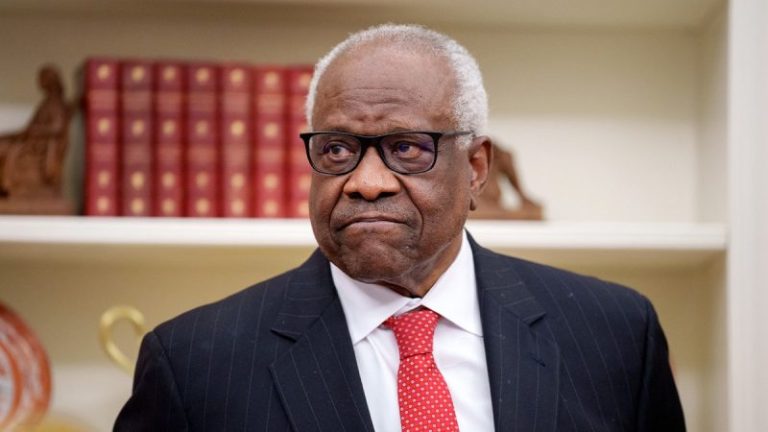
Justice Clarence Thomas called it ‘very uncomfortable for a judge to sit there.’ He went to Obama’s first annual address in 2009, but has not been back since.

‘There’s a lot that you don’t hear on TV,’ he once said, ‘the catcalls, the whooping, hollering and under-the breath comments.’

Another more vocal no-go was the late Justice Antonin Scalia, who compared the televised State of the Union to ‘cheerleading sessions.’

‘I don’t know at what point that happened, but it has happened, and now you go and sit there like bumps on a log while applause lines cause one half of the Congress to leap up while [another line] causes the other half to leap up,’ he once said. ‘It is a juvenile spectacle. And I resent being called upon to give it dignity.’

He last attended the event in 1997, but did attend a special joint session of Congress after the 9/11 terror attacks in 2001, with four other justices.

Scalia, a generally verbose and animated jurist, said bluntly: ‘You just sit there, looking stupid.’

Even remarks touching on supposedly nonpartisan topics like patriotism, war veterans and puppy dogs leave the justices in a quandary: should they applaud, should they stand and applaud or do neither? The protocols are never clear, and the public might view the court members as aloof or uncaring if they offer no reaction during, say, a salute to Martin Luther King Jr.’s memory, when everyone else is shown engaging in bipartisan applause in the chamber.   

One ‘extra-court-ricular’ event that is a must-attend for the Supreme Court is the presidential inauguration. All nine members were at last year’s public swearing-in for Trump to a second four-year term. Roberts and Kavanaugh had official duties to administer the oaths of office to the president and vice president, respectively, but the other seven justices only had to sit there, again quietly, in the Capitol Rotunda.

Breyer is the one justice who might be called a ‘regular’ at the State of the Union, going to nearly all of them since joining the court in 1994, including one in his retirement.

He missed President Bill Clinton’s last annual address in 2000 because of the flu. That year, no justices were in attendance.

Many believe the justices have to go to such events, that it is just another unwanted chore of office. Not so, Breyer told us in 2005. ‘People attend if they wish to attend. I do wish to attend, so I go.’

Here’s a list of Supreme Court members attending recent State of the Union or equivalent Joint Session of Congress addresses in recent years, based on Fox News research and congressional records. Names are listed by seniority:

– 2025: John Roberts, Elena Kagan, Brett Kavanaugh, Amy Coney Barrett, Anthony Kennedy (retired)

– 2024: Roberts, Sonia Sotomayor, Kagan, Neil Gorsuch, Kavanaugh, Ketanji Brown Jackson, Kennedy (retired)

– 2023: Roberts, Kagan, Kavanaugh, Barrett, Jackson, Kennedy, Stephen Breyer (retired)

– 2022: Roberts, Breyer, Kagan, Kavanaugh, Barrett

– 2021: Roberts (limited speech attendance because of pandemic)

– 2020: Roberts, Kagan, Gorsuch, Kavanaugh

– 2019: Roberts, Kagan, Gorsuch, Kavanaugh

– 2018: Roberts, Breyer, Kagan, Gorsuch

– 2017: Roberts, Kennedy, Breyer, Sotomayor, Kagan

– 2016: Roberts, Kennedy, Ruth Bader Ginsburg, Breyer, Sotomayor, Kagan

– 2015: Roberts, Kennedy, Ginsburg, Breyer, Sotomayor, Kagan

– 2014: Roberts, Kennedy, Ginsburg, Breyer, Kagan

– 2013: Roberts, Kennedy, Ginsburg, Breyer, Sotomayor, Kagan 

– 2012: Roberts, Kennedy, Ginsburg, Breyer, Kagan

– 2011: Roberts, Kennedy, Ginsburg, Breyer, Sotomayor, Kagan

– 2010: Roberts, Kennedy, Ginsburg, Breyer, Samuel Alito, Sotomayor

– 2009: Roberts, Kennedy, Clarence Thomas, Ginsburg, Breyer, Alito

– 2008: Roberts, Kennedy, Breyer, Alito

– 2007: Roberts, Kennedy, Breyer, Alito

– 2006: Roberts, Thomas, Breyer, Alito

– 2005: Breyer

– 2004: Breyer

– 2003: Breyer

– 2002: Kennedy, Breyer

– 2001: Breyer

– 2000: None

– 1999: Sandra Day O’Connor, Kennedy, David Souter, Thomas, Ginsburg, Breyer

– 1998: William Rehnquist, O’Connor, Souter, Thomas, Breyer

– 1997: Antonin Scalia, Kennedy, Souter, Thomas, Ginsburg, Breyer, Byron White (retired)

– 1996: Rehnquist, O’Connor, Kennedy, Thomas, Ginsburg, Breyer

– 1995: Rehnquist, O’Connor, Scalia, Ginsburg, Breyer, Harry Blackmun (retired)
Related Article

EXCLUSIVE: Trump to center SOTU on working families with sweeping economic case
This post appeared first on FOX NEWS

A federal court ruling Monday has essentially locked in a new Utah congressional redistricting map that would create a Democrat-heavy Salt Lake City-based seat, potentially flipping one of Utah’s Republican-held U.S. House seats.

A special three-judge federal panel is allowing a revised congressional redistricting map in Utah to go into effect, rejecting an effort by state Republicans to block it. The judicial panel denied a Republican-led request for a preliminary injunction to put the new map on hold.

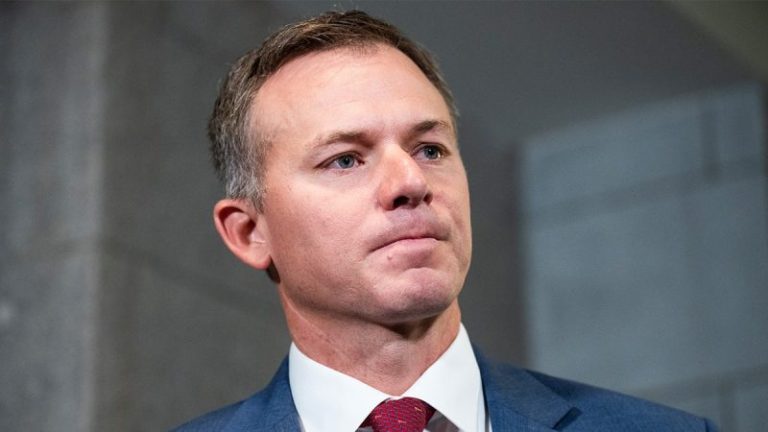
The new voting boundaries give Democrats a better shot at winning Utah’s 1st Congressional District, a seat currently held by Rep. Blake Moore, R-Utah.

Two of Utah’s other four GOP seat-holders in Congress – Rep. Burgess Owens, R-Utah; and Rep. Celeste Maloy, R-Utah – had signed on to the challenge but have accepted the decision in a joint statement.

‘We receive today’s decision with profound disappointment but respect for the Court’s careful review,’ the statement, shared on X by Owens, read. ‘This case concerns the Constitution’s allocation of authority over federal elections, a question of lasting importance beyond any single election cycle.’

‘Having these issues heard has strengthened public understanding and clarified what is at stake,’ the statement continued. ‘We remain convinced that the Constitution assigns this responsibility to the State’s lawmaking authority and that this principle is essential to preserving constitutional order and the rule of law.’

A state judge had ordered the new map, striking congressional voting lines adopted by the state legislature after the 2020 census. A state voter referendum had approved anti-gerrymandering standards. The Utah Supreme Court, in recent days, had also rejected the original map crafted by the GOP-controlled legislature.

The federal panel’s decision rested on the ‘Purcell principle’ — the idea that judicial interference so close to an election causes ‘chaos and confusion.’

Though the GOP can still appeal to the U.S. Supreme Court for emergency relief, the judges warned that any further ‘tinkering’ would come too late to prevent electoral disruption for the 2026 midterms.

Utah Republican Lt. Gov. Deidre Henderson took no position on the case, but did tell the court she needed to have a decision by Monday in order to implement the proper redistricting map, according to the ruling.

Early race ratings from The Cook Political Report have already shifted this district from ‘Solid Republican’ to ‘Solid Democratic.’

Moore’s northern Utah seat is being renumbered to the 2nd Congressional District, a seat which is currently held by Maloy. Owens currently holds the 4th Congressional District, while Rep. Mike Kennedy, R-Utah, holds the GOP’s 3rd Congressional District seat.

President Donald Trump has acknowledged the difficult history for sitting presidents’ parties in midterm elections, and the current House GOP majority is held by a slim margin of 218-214 with three current vacancies: Former Rep. Mike Sherrill, D-N.J., who resigned to become New Jersey’s governor; former Rep. Marjorie Taylor-Greene, R-Ga., who resigned at the start of the congressional year; and late Rep. Doug LaMalfa, R-Calif., who died Jan. 6.

Fox News’ Bill Mears contributed to this report.

Related Article

Maryland House approves new congressional map as Senate leaders warn of risks
This post appeared first on FOX NEWS

A new study aims to jolt Israel’s security and technology establishment into embracing a new post-Oct. 7, 2023, business model that will advance the U.S.-Israel strategic partnership in the heart of the Middle East and across the globe.

The Henry Jackson Society study titled ‘Israel 2048: A Blueprint for a Rising Asymmetric Geopolitical Power’ jumps into the future, with a view toward advancing American and Israeli security interests.

Co-author of the report, Barak M. Seener, told Fox News Digital that America requires Israel for ‘its security architecture in the region via the Abraham Accords and, more broadly, will be a force multiplier regarding the technological edge against China.’

During President Donald Trump’s first term, his administration sealed diplomatic normalization deals between Sunni Gulf and North African countries: Bahrain, United Arab Emirates, Morocco, Sudan and Israel.

Seener and co-author David Wurmser argue that there is a pressing need to reframe the U.S.–Israel strategic partnership ‘around technology,’ and ‘shift from military aid dependency towards joint R&D and investment in shared technological platforms in defence-tech, AI, quantum computing and next generational warfare capabilities.’

They wrote, ‘Israel must prioritize passing negotiated regulations for technology sharing to prevent AI/ quantum technology leakage to China.’

Seener noted that the Pentagon’s National Defense Strategy (released in January) describes Israel as a strategic military partner. ‘That has never happened before.’

He continued, ‘Israel is not only achieving regional dominance but international power by connecting trade routes and digital connectivity. Israel simply cannot remain in a purely defensive posture and hunker down and react to threats on its borders.’ 

Seener said following Israel’s successful air war campaign against the Islamic Republic of Iran in June 2025, ‘America now wants to be part of this success story. ‘

He argues that President Donald Trump entered on the side of Israel with military attacks because ‘Israel demonstrated intelligence acumen and military prowess. For the first time, America joined Israel’ in the prosecution of a war.

Consequently, Seener said Israel’s ‘defense technology makes it indispensable for nations.’

Seener and Wurmser’s 51-page study contains granular information on how the U.S. can strengthen American security and recommend embedding ‘Israel as a defense-tech and deep-tech power that is indispensable to Western security and global technological competition in supply chains for AI, semiconductors, missile defense, cyber capabilities and critical materials. Israel’s technological dominance must be leveraged to anchor alliances and shape global supply chains.’

The wobbliness of America’s European partners is also highlighted to show the need for Israel to ‘Accelerate domestic lines of production of critical military systems, munitions and energy infrastructure to reduce vulnerability to foreign political pressure such as Europe’s growing ambivalence, coupled with episodic constraints on arms transfers,’ according to the authors.

Earlier this month, Britain’s left-leaning government reportedly denied the U.S. military’s use of British bases to strike Iran.

Israel is uniquely positioned to help regenerate relations among Western powers, the study notes. According to the authors, there is an opportunity to ‘use Israel’s defense-tech, quantum computing, AI and cyber capabilities as a tool of statecraft to deepen alliances, deter political isolation and strengthen influence in Europe, the Gulf and Asia.’

Seener said, ‘Israel is not a superpower but a geopolitical power that gives nations a force multiplier, and they benefit from Israel as a tech defense nation.’

Related Article

Trump’s America First strategy builds deterrence through strong US-Israel alliance, experts say
This post appeared first on FOX NEWS

The U.S. Postal Service cannot be sued for damages for intentionally failing to deliver mail, the Supreme Court ruled in a 5-4 decision released Tuesday.

The majority opinion, written by Justice Clarence Thomas, ruled the government’s sovereign immunity bars claims for undelivered mail. 

‘The United States enjoys sovereign immunity and cannot be sued without its consent,’ Thomas wrote, citing the Federal Tort Claims Act (FTCA) granting ‘sovereign immunity for a wide range of claims about mail.’

‘Specifically, the FTCA’s postal exception retains sovereign immunity for all claims ‘arising out of the loss, miscarriage, or negligent transmission of letters or postal matter,’’ he continued, adding, ‘This case concerns whether this exception applies when postal workers intentionally fail to deliver the mail. We hold that it does.’

The case, U.S. Postal Service v. Konan, stemmed from a dispute between Texas landlord Lebene Konan and her local post office. Konan alleged that postal workers in Euless, Texas, intentionally withheld and returned mail addressed to her and her tenants at two rental properties she owned, causing financial harm and emotional distress.

After her administrative complaints failed, Konan sued the United States in federal court, asserting state law claims including nuisance, tortious interference and conversion. A federal district court dismissed her claims, citing the FTCA’s postal exception, which preserves immunity for ‘any claim arising out of the loss, miscarriage, or negligent transmission of letters or postal matter.’

The U.S. Court of Appeals for the Fifth Circuit revived the lawsuit, ruling the exception did not apply to intentional acts of nondelivery. The Supreme Court agreed to hear the case to resolve a split among federal appeals courts.

Reversing the Fifth Circuit, the high court held that the ordinary meaning of ‘loss’ and ‘miscarriage’ at the time Congress enacted the FTCA in 1946 encompassed mail that fails to arrive at its destination, regardless of whether the failure was negligent or intentional.

‘A ‘miscarriage of mail’ includes failure of the mail to arrive at its intended destination, regardless of the carrier’s intent or where the mail goes instead,’ Thomas wrote.

The decision vacates the Fifth Circuit’s ruling and sends the case back for further proceedings, though the justices did not decide whether all of Konan’s claims are barred.

‘We hold that the postal exception covers suits against the United States for the intentional nondelivery of mail,’ Thomas concluded. ‘We do not decide whether all of Konan’s claims are barred by the postal exception, or which arguments Konan adequately preserved.

Sotomayor wrote the dissenting opinion, arguing that the postal exception was meant to cover negligent mistakes, not intentional misconduct.

‘Today, the majority concludes that the postal exception captures, and therefore protects, the intentional nondelivery of mail, even when that nondelivery was driven by malicious reasons,’ she dissented.

Justice Neil Gorsuch joined the three liberal justices – Sotomayor, Elena Kagan and Ketanji Brown Jackson – in the dissent.

The ruling underscores the limits of the FTCA’s waiver of sovereign immunity and narrows the circumstances in which individuals can seek damages for mail-related harms, even when they allege deliberate wrongdoing by postal employees.

Related Article

Trump’s tariff revenues hit record highs as Supreme Court deals major blow
This post appeared first on FOX NEWS

White House press secretary Karoline Leavitt said Tuesday that President Donald Trump’s first option for Iran is ‘always diplomacy,’ but that he is ‘willing to use the lethal force of the United States military if necessary.’ 

The remarks come after Trump wrote on Truth Social Monday that ‘it will be a very bad day’ for Iran if the country can’t strike a deal over its nuclear program. 

‘President Trump’s first option is always diplomacy. But as he has shown, he is willing to use the lethal force of the United States military if necessary. So the president is always the final decision-maker around here,’ Leavitt said Tuesday. 

‘And I’ve seen a lot of sensationalist reporting over the past day that is just completely untrue. And anyone speculating to the media hiding behind an anonymous source, pretending to know what President Trump is thinking, or a decision he will make with respect to action against Iran has no idea what they’re talking about,’ she added. 

The president told reporters last week that he is ‘considering’ a limited military strike on Iran to pressure its leaders into reaching a deal over its nuclear program. 

The U.S. has recently been increasing its military assets in the Middle East, sending the USS Gerald R. Ford and its strike group toward the region. 

The USS Abraham Lincoln and three guided-missile destroyers already are in the area. 

‘Everything that has been written about a potential War with Iran has been written incorrectly, and purposefully so. I am the one that makes the decision, I would rather have a Deal than not but, if we don’t make a Deal, it will be a very bad day for that Country and, very sadly, its people, because they are great and wonderful, and something like this should never have happened to them,’ Trump wrote on Truth Social on Monday. 

This post appeared first on FOX NEWS

(TheNewswire)


GRANDE PRAIRIE, ALBERTA (February 24, 2026) TheNewswire – Angkor Resources Corp. (TSXV: ANK,OTC:ANKOF) (‘ANGKOR’ OR ‘THE COMPANY’) announces the completion of a trenching and sampling program at the CZ Gold Prospect in Ratanakiri Province, Cambodia.


As previously announced (see Angkor Resources ADVANCES EXPLORATION ON CZ GOLD AND WILD BOAR PROSPECTS, ANDONG MEAS LICENSE, CAMBODIA), the Company’s mineral exploration team initiated a large-scale trenching program at the CZ Gold Prospect, located on the west side of the Canada Wall prospect. The program is designed to determine the geology, structure and orientation of the quartz stockwork zone and its wall rocks, and to collect representative samples for analysis.


The trenching program consisted of twelve trenches excavated across the CZ Gold Prospect area. Each trench measured approximately five meters in length, two meters in width, and five meters in depth. Due to the steep slope and required depth of the trenches, the Company made the decision to utilize excavation equipment to safely and efficiently complete the program.


Click Image To View Full Size

Figure 1: The slope and depth of the trenches contributed to the decision of using equipment for the excavation program at the CZ Gold Prospect.


The excavation process involves digging each trench to the target depth, at which point Angkor’s field team entered the trench to collect samples directly from the exposed geology, including veining and stockwork visible in the trench walls. Once sampling was complete, the team exited the trench and all samples are marked, bagged, and prepared for testing and analysis on the surface. As soon as sampling was finished at each location, the trenches were filled in and the site was restored.


Click Image To View Full Size
                       

Figure 2: Angkor staff sorting sample material and preparing samples for sieving, analysis, and testing,


The Company collected 298 samples of veins, side walls, and cross sections from the twelve trenches. Each sample will be split into three parts for different methods of analysis: one part for panning in the creek adjacent to the prospect, one part for portable X-ray fluorescence (XRF) analysis, and one part for fire assay. This multi-method approach is intended to provide a comprehensive geochemical characterization of the stockwork zone and to evaluate gold content across the target area.


The Company completed sampling this weekend and has started several weeks of analysis of the samples before interpretation of the data can be completed.


QUALIFIED PERSON:

Dennis Ouellette, B.Sc., P.Geo., is a member of The Association of Professional Engineers and Geoscientists of Alberta (APEGA #104257) and a Qualified Person as defined by National Instrument 43-101 (‘NI 43-101’). He is the Company’s VP Exploration on site and has reviewed and approved the technical disclosure in this document.

ABOUT Angkor Resources CORPORATION:

Angkor Resources Corp. is a public company, listed on the TSX-Venture Exchange, and is a leading resource optimizer in Cambodia working towards mineral and energy solutions across Cambodia.  

The company’s mineral subsidiary, Angkor Gold Corp. in Cambodia holds two mineral exploration licenses in Cambodia with multiple prospects in copper and gold.  Both licenses are in their first two-year renewal term.    

Its Cambodian energy subsidiary, EnerCam Resources, was granted an onshore oil and gas license of 7300 square kilometres in the southwest quadrant of Cambodia called Block VIII.   The company then removed all parks and protected areas and added 220 square kilometres, making the license area just over 4095 square kilometres.  EnerCam is actively advancing oil and gas exploration activities onshore to meet its mission to prove Cambodia as an oil and gas producing Nation.  Having completed seismic in 2025 and identifying drill targets, the Company looks to advance to drilling Cambodia’s first onshore oil & gas exploratory wells in due course.  

CONTACT:   Delayne Weeks – CEO

Email:-   info@angkorresources.com   Website: angkorresources.com  

Telephone: +1 (780) 568-3801

Please follow @AngkorResources on , , , Instagram and .


Neither TSX Venture Exchange nor its Regulation Services Provider (as that term is defined in the policies of the TSX Venture Exchange) accepts responsibility for the adequacy or accuracy of this release.

_____________________________________

This release includes certain statements and information that may constitute forward-looking information within the meaning of applicable Canadian securities laws. Forward-looking statements relate to future events or future performance and reflect the expectations or beliefs of management of the Company regarding future events. Generally, forward-looking statements and information can be identified by the use of forward-looking terminology such as ‘intends’ or ‘anticipates’, or variations of such words and phrases or statements that certain actions, events or results ‘may’, ‘could’, ‘should’, ‘would’ or ‘occur’. This information and these statements, referred to herein as ‘forward‐looking statements’, are not historical facts, are made as of the date of this news release and include without limitation, statements regarding the anticipated benefits of new leadership expertise, and the Company’s plans to develop its resources and create shareholder value.

In making the forward-looking statements in this news release, the Company has applied certain material assumptions, including without limitation, that the Company will successfully advance the development of its resources and that such efforts will result in creating shareholder value.

These forward‐looking statements involve numerous risks and uncertainties, and actual results might differ materially from results suggested in any forward-looking statements. These risks and uncertainties include, among other things, that the Company will not advance the development of its resources and that the Company will not create shareholder value.

Copyright (c) 2026 TheNewswire – All rights reserved.

News Provided by TheNewsWire via QuoteMedia

This post appeared first on investingnews.com

NOT FOR DISTRIBUTION TO UNITED STATES NEWSWIRE SERVICES OR FOR DISSEMINATION IN THE UNITED STATES

TORONTO, ON / ACCESS Newswire / February 24, 2026 / NextSource Materials Inc. (‘NextSource‘ or the ‘Company‘) (TSX:NEXT,OTC:NSRCF) is pleased to announce that it has closed its previously announced brokered private placement offering (the ‘Offering‘) of units of the Company (the ‘Units‘) for aggregate gross proceeds of C$24,999,987, issuing 58,823,500 Units at a price of $0.425 per Unit.

The Offering was oversubscribed due to strong investor demand, with investor allocation capped by the final amount of C$24,999,987. Vision Blue Resources Ltd. (‘Vision Blue‘) purchased 27,944,464 Units under the Offering to maintain its pro rata ownership in the Company.

The net proceeds from the Offering are expected to be used to advance the UAE Battery Anode Facility, update the Molo technical report and for general corporate purposes as disclosed in the offering document.

Each Unit consists of one common share of the Company (a ‘Common Share‘) and one-half (½) of one Common Share purchase warrant of the Company (each whole warrant, a ‘Warrant‘). Each Warrant entitles the holder thereof to purchase one Common Share at an exercise price of C$0.55 per Common Share for a period beginning 61 days after the date hereof and expiring 36 months following the date hereof.

The Units distributed in connection with the Offering were issued and sold in accordance with the listed issuer financing exemption under Part 5A of National Instrument 45-106 – Prospectus Exemptions, as amended by Coordinated Blanket Order 45-935 – Exemptions from Certain Conditions of the Listed Issuer Financing Exemption (the ‘LIFE Exemption‘). A copy of the offering document related to the Offering is available to access under the Company’s issuer profile on SEDAR+ at www.sedarplus.ca and on the Company’s website at www.nextsourcematerials.com. In accordance with the LIFE Exemption, the Units issued in connection with the Offering are not subject to a hold period pursuant to applicable Canadian securities laws. The Offering is subject to final approval of the Toronto Stock Exchange.

The Offering was conducted on a ‘best-efforts’ basis by Stifel Canada, acting as lead agent and sole bookrunner, and Maxim Group LLC, as co-agent (the ‘Agents‘).

The participation of Vision Blue in the Offering constitutes a ‘related party transaction’ pursuant to Multilateral Instrument 61-101 – Protection of Minority Security Holders in Special Transactions (‘MI 61-101‘). The Company has determined that the transaction is exempt from the formal valuation and minority shareholder approval requirements of MI 61-101 by virtue of the exemptions contained in Sections 5.5(a) and 5.7(1)(a) of MI 61-101, as neither the fair market value of securities issued to Vision Blue nor the consideration paid by Vision Blue exceeded 25 percent of the Company’s market capitalization. The Company did not file a material change report in respect of the transaction 21 days in advance of closing of the Offering because Vision Blue’s participation had not been confirmed. The shorter period was necessary in order to permit the Company to close the Offering in a timeframe consistent with usual market practice for transactions of this nature.

The securities referred to in this news release have not been and will not be registered under the United States Securities Act of 1933, as amended (the ‘U.S. Securities Act‘), or any state securities laws and may not be offered or sold within the United States or to, or for the account or benefit of, ‘U.S. Persons’ (as such term is defined in Regulation S under the U.S. Securities Act) absent such registration or an applicable exemption from the registration requirements of the U.S. Securities Act. This news release does not constitute an offer for sale of securities, nor a solicitation for offers to buy any securities.

About NextSource Materials Inc.

NextSource Materials Inc. is a battery materials company based in Toronto, Canada that is intent on becoming a vertically integrated global supplier of battery materials through the mining and value-added processing of graphite and other minerals.

The Company’s Molo graphite project in Madagascar is one of the largest known and highest-quality graphite resources globally, and the only one with SuperFlake® graphite. The Molo mine has begun production through Phase 1 mine operations.

The Company is also developing a significant downstream graphite value-add business through the staged rollout of Battery Anode Facilities (BAF) capable of large-scale production of coated, spheronized and purified graphite for direct delivery to battery and automotive customers, in a fully transparent and traceable manner. The Company is now in the process of developing its first BAF in the UAE.

NextSource Materials is listed on the Toronto Stock Exchange under the symbol ‘NEXT’ and on the OTCQB under the symbol ‘NSRCF’.

For further information about NextSource Materials, please visit our website at www.nextsourcematerials.com or contact us at +1.416.364.4911 or email Brent Nykoliation, Executive Vice President at brent@nextsourcematerials.com.

Cautionary Note Regarding Forward-Looking Statements

This news release contains statements that may constitute ‘forward-looking information’ or ‘forward-looking statements’ within the meaning of applicable Canadian and United States securities legislation. Readers are cautioned not to place undue reliance on forward-looking information or statements. Forward looking statements and information are frequently characterized by words such as ‘plan’, ‘expect’, ‘project’, ‘intend’, ‘believe’, ‘anticipate’, ‘estimate’, ‘potential’, ‘possible’ and other similar words, or statements that certain events or conditions ‘may’, ‘will’, ‘could’, or ‘should’ occur. Forward- looking statements include any statements regarding,

among others: receipt of Toronto Stock Exchange approvals related to the Offering; and the intended use of proceeds from the Offering. These statements are based on current expectations, estimates and assumptions that involve a number of risks, which could cause actual results to vary and, in some instances, to differ materially from those anticipated by the Company and described in the forward-looking statements contained in this news release. No assurance can be given that any of the events anticipated by the forward-looking statements will transpire or occur or, if any of them do so, what benefits the Company will derive there from. The forward-looking statements contained in this news release are made as at the date of this news release and the Company does not undertake any obligation to update publicly or to revise any of the forward-looking statements, whether because of new information, future events or otherwise, except as may be required by applicable securities laws. Although the forward-looking statements contained in this news release are based on what management believes are reasonable assumptions, the Company cannot assure investors that actual results will be consistent with them. These forward-looking statements are made as of the date of this news release and are expressly qualified in their entirety by this cautionary statement.

SOURCE: NextSource Materials Inc.

View the original press release on ACCESS Newswire

News Provided by ACCESS Newswire via QuoteMedia

This post appeared first on investingnews.com

Forte Minerals Corp. (‘Forte’ or the ‘Company’) (CSE: CUAU,OTC:FOMNF) (OTCQB: FOMNF) (Frankfurt: 2OA) a Canadian copper and gold exploration company focused on Peru, is pleased to announce that it will exhibit at the Prospectors & Developers Association of Canada (‘PDAC’) Convention 2026, taking place March 1–4, 2026 at the Metro Toronto Convention Centre in Toronto.

Visit Forte Minerals Corp at Booth 2736 in the Investors Exchange (South Building).

PDAC is the world’s premier mineral exploration and mining convention, attracting more than 27,000 participants from over 125 countries, including institutional investors, mining executives, government representatives, analysts, and technical professionals.

Alto Ruri Gold Project: High Sulfidation Epithermal System in Peru

The Alto Ruri Gold Project is located approximately 15 kilometres south of Barrick Gold’s Pierina Mine, which is currently in its closure and reclamation phase following more than two decades of production.

Pierina demonstrated the presence of a robust high-sulfidation epithermal gold system within Peru’s Cordillera Negra belt. Alto Ruri shares similar geological characteristics, including vuggy silica and advanced argillic alteration, supporting the potential for a preserved epithermal system within the same regional corridor.

The Alto Ruri Gold Project comprises approximately 4,700 hectares of wholly owned mineral concessions situated within Peru’s prolific Miocene Tertiary Volcanic Arc, host to multiple world-class gold and copper deposits.

Initial drilling by Compañía de Minas Buenaventura in 1997 included 12 shallow drill holes totaling 2,254.5 metres. (Refer to the Company’s news release – March 4th, 2024).

The most significant intercept from Hole 001-97 returned

  • 131 metres grading 2.55 g/t gold from surface, including
  • 54 metres grading 5.39 g/t gold

These results were re-assayed in 2011, confirming the presence of a well-developed high-sulfidation epithermal system associated with vuggy silica and advanced argillic alteration.

True widths remain undetermined, and modern confirmation drilling is planned as part of the Company’s systematic advancement strategy.

The Alto Ruri Gold Project represents a modern re-evaluation opportunity within a proven Andean gold district that has not undergone comprehensive exploration in nearly three decades.

Figure 1 The Alto Ruri Gold Project is located 15 kilometres south of Barrick’s Pierina Mine in Peru’s Cordillera Negra

Forte Minerals Leadership at PDAC 2026

Senior leadership from Forte Minerals Corp. will be present at Booth 2736 throughout PDAC 2026, including:

Patrick Elliott, MSc. MBA Chief Executive Officer and Director. An economic geologist and capital markets strategist with over 20 years of experience in the mineral exploration sector. Mr. Elliott has a proven track record of identifying high-value assets and raising the necessary capital to scale junior explorers across the Americas. He was instrumental in the early-stage development of major discoveries, including Zafranal (Teck) and Stibnite Gold (Perpetua).

Manuel Montoya, P.Geo, General Manager, Peru: A veteran geologist with 36+ years of experience in global project generation and strategic exploration. Mr. Montoya previously led Teck’s exploration efforts across South America and is widely credited with the discovery of the Zafranal Cu-Au deposit in Peru. His technical expertise spans a diverse range of deposit types, including high-sulfidation epithermal systems, porphyries, and skarns.                                  

Patrick Elliott, Chief Executive Officer and Director of Forte Minerals Corp, commented:    


‘We are focused on the Alto Ruri Gold Project and the significant re-evaluation opportunity it presents.

Backed by two major strategic partners, we are positioned to advance this high-sulfidation system thoughtfully and systematically.

With gold near all-time highs, PDAC is the ideal venue to share our story with a new wave of investors and outline our next phase of exploration in Peru.’

Qualified Person and NI 43-101 Disclosure

Richard Osmond, P.Geo., an Independent Director, is the Company’s Qualified Person (‘Qualified Person’) as defined by National Instrument 43-101. He has reviewed and approved the technical information contained in this news release.

About Forte Minerals

Forte Minerals Corp. is a well-funded exploration company with a strong portfolio of high-quality copper and gold assets in Peru. Through a strategic partnership with GlobeTrotters Resources Perú S.A.C., the Company gains access to a rich pipeline of historically drilled, high-impact targets across premier Andean mineral belts. The Company is committed to responsible resource development that generates long-term value for shareholders, communities, and partners.

On behalf of Forte Minerals Corp.

(signed) ‘Patrick Elliott
Patrick Elliott, MSc, MBA, PGeo
President & Chief Executive OfficerT: (604) 983-8847

Investor Inquiries
Kevin Guichon, IR & Capital Markets
E: kguichon@forteminerals.com
C: (604) 612-0997
Media Contact
Anna Dalaire, VP Corporate Development
E: adalaire@forteminerals.com
info@forteminerals.com
www.forteminerals.com
Follow Us On Social Media: LinkedIn | Instagram | X | Meta | The Drill Down; Newsletter
   

Certain statements included in this press release constitute forward-looking information or statements (collectively, ‘forward-looking statements’), including those identified by the expressions ‘anticipate’, ‘believe’, ‘plan’, ‘estimate’, ‘expect’, ‘intend’, ‘may’, ‘should’ and similar expressions to the extent they relate to the Company or its management. The forward-looking statements are not historical facts but reflect current expectations regarding future results or events. This press release contains forward looking statements relating to the intended use of proceeds of the Strategic Placement. These forward-looking statements and information reflect management’s current beliefs and are based on assumptions made by and information currently available to the Company with respect to the matter described in this press release. Forward-looking statements involve risks and uncertainties, which are based on current expectations as of the date of this release and subject to known and unknown risks and uncertainties that could cause actual results to differ materially from those expressed or implied by such statements. Additional information about these assumptions and risks and uncertainties is contained under ‘Risk Factors and Uncertainties’ in the Company’s latest management’s discussion and analysis, which is available under the Company’s SEDAR+ profile at www.sedarplus.ca, and in other filings that the Company has made and may make with applicable securities authorities in the future.

Forward-looking statements are not a guarantee of future performance and involve risks, uncertainties and assumptions which are difficult to predict. Factors that could cause the actual results to differ materially from those in forward-looking statements include the continued availability of capital and financing, and general economic, market or business conditions. Forward-looking statements contained in this press release are expressly qualified by this cautionary statement. These statements should not be read as guarantees of future performance or results. Such statements involve known and unknown risks, uncertainties and other factors that may cause actual results, performance or achievements to be materially different from those implied by such statements. Although such statements are based on management’s reasonable assumptions, there can be no assurance that the statements will prove to be accurate or that management’s expectations or estimates of future developments, circumstances or results will materialize. The Company assumes no responsibility to update or revise forward-looking information or statements to reflect new events or circumstances unless required by law. Readers should not place undue reliance on the Company’s forward-looking statements.

Neither the Canadian Securities Exchange (the ‘CSE’) nor its Regulation Services Provider (as that term is defined in the policies of the CSE) accepts responsibility for the adequacy or accuracy of this release.

Photos accompanying this announcement are available at

https://www.globenewswire.com/NewsRoom/AttachmentNg/3dc98d3f-6818-4e65-9eda-55a4ebd3a405

https://www.globenewswire.com/NewsRoom/AttachmentNg/b0f95451-b6b1-48d2-aeb0-18f0588e2dbe


News Provided by GlobeNewswire via QuoteMedia

This post appeared first on investingnews.com

Gilead Sciences (NASDAQ:GILD) will acquire cancer immunotherapy partner Arcellx (NASDAQ:ACLX) in a deal worth up to US$7.8 billion, moving to take full control of their jointly developed multiple myeloma therapy anito-cel as it seeks to expand its oncology pipeline.

The agreement, announced Monday (February 23), gives Gilead full control of an experimental multiple myeloma treatment the companies have been developing jointly. Gilead will pay US$115 per share in cash, plus a potential additional US$5 per share tied to future sales milestones.

The therapy, known as anitocabtagene autoleucel, or anito-cel, is a next-generation CAR-T treatment targeting multiple myeloma, a blood cancer that often returns after several rounds of therapy.

So far, clinical trials suggest anito-cel can deliver lasting responses, with side effects the company says are more manageable than those seen with some current CAR-T therapies.

The drug is currently under review by the US Food and Drug Administration (FDA) as a fourth-line treatment, with a decision expected by December 23, 2026. The filing is supported by results from a Phase 1 study and the pivotal Phase 2 iMMagine1 study.

The CVR would pay out if cumulative global net sales of anito-cel reach at least US$6.0 billion from launch through the end of 2029.

“This agreement reflects our conviction in the potential of anito-cel and our intention to move with speed so we can make the most of that potential for patients with multiple myeloma,” said Daniel O’Day, Chairman and Chief Executive Officer of Gilead Sciences.

“Beyond the potential launch this year, anito-cel could become a foundational treatment for multiple myeloma over time, including earlier lines of therapy.”

The deal also gives Gilead access to Arcellx’s proprietary D-Domain platform, a technology designed to improve how engineered immune cells recognize cancer targets. Gilead said this could support future work in cell therapies, including potential in vivo approaches.

The acquisition also marks the company’s largest deal since 2020 and continues a strategy of using partnerships to secure promising oncology assets. The company has been looking to expand its cancer portfolio as sales of its COVID-19 treatment decline and long-term patent expirations approach in its core HIV franchise.

Upon FDA approval of anito-cel, Gilead expects the transaction to be accretive to earnings per share in 2028 and thereafter.

Securities Disclosure: I, Giann Liguid, hold no direct investment interest in any company mentioned in this article.

This post appeared first on investingnews.com

Faraday Copper (TSX:FDY,OTCQX:CPPKF) has signed a letter of intent (LOI) to acquire BHP’s (ASX:BHP,NYSE:BHP,LSE:BHP) historic San Manuel property, combining the two adjacent assets into a single US-focused copper district.

Under the deal, Faraday would acquire 100 percent of the San Manuel property. The site sits next to Faraday’s Copper Creek project in Pinal County, Arizona.

San Manuel includes the legacy San Manuel and Kalamazoo deposits, the former plant site, closed tailings facilities, and surrounding BHP-owned land, along with related mineral rights, quarries and associated assets.

The mine operated between 1955 and 1999 as one of the largest underground copper mines in the United States, producing more than 4.5 million metric tons of copper. Faraday would assume all environmental and closure liabilities tied to the property.

Copper Creek, located roughly 80 road kilometres northeast of Tucson and about 19 kilometres from San Manuel, is a 100 percent owned porphyry copper project with an updated mineral resource estimate and preliminary economic assessment released in 2023.

The deposit remains open in all directions and hosts both breccia-hosted and vein-style mineralization. Faraday says significant exploration upside remains, with less than 15 percent of known breccia occurrences drill tested.

The proposed consolidation would add approximately 27,000 acres of private land and access to existing regional infrastructure. Faraday has also outlined a staged development concept prioritizing copper cathode production, followed by open pit sulphides and later underground operations.

If completed, the transaction would see Faraday issue common shares to BHP equivalent to a 30 percent interest in the company on a fully diluted basis at closing. BHP would also receive customary investor rights so long as it maintains a minimum shareholding.

“This agreement provides the opportunity for a transformative acquisition as it looks to consolidate two adjacent and complementary assets in the heart of the Arizona copper corridor at a time when sourcing of critical minerals within the USA is essential,” CEO and president Paul Harbidge said.

“The combined project has the potential to become a multi-generational copper district delivering made-in-America copper, while providing significant economic opportunities to the local communities.”

For BHP, the deal would convert a legacy asset into a strategic equity position in a junior developer focused on US copper supply.

The LOI also includes a six-month exclusivity period and a financing participation clause under which BHP has agreed to subscribe for 30 percent of any Faraday equity raise over the next 24 months, up to US$20 million.

Separately, Faraday recently announced a non-brokered private placement of up to C$100 million, priced at C$4.20 per share.

Strategic investors, including the Lundin Family Trusts and BHP, intend to participate.

The proceeds are earmarked primarily for advancing copper projects in Pinal County, including expenses related to the planned San Manuel acquisition.

Securities Disclosure: I, Giann Liguid, hold no direct investment interest in any company mentioned in this article.

This post appeared first on investingnews.com