Archive

March 4, 2026

Browsing

War Secretary Pete Hegseth said Wednesday that an Iranian leader behind a unit that attempted to assassinate President Trump has been killed in Iran amid Operation Epic Fury.

‘The leader of the unit that attempted to assassinate Trump has been hunted down and killed,’ Hegseth said during a press conference Wednesday morning.

‘Iran tried to kill President Trump and President Trump got the last laugh,’ Hegseth continued. ‘Now, this is not a ‘mission accomplished’ situation. This is simply a reality check.’

In 2024, Iran-linked actors attempted to arrange an assassination plot to take out the president. Iran has previously threatened to assassinate Trump following the 2020 killing of Iranian Gen. Qasem Soleimani. 

In 2022, an Iranian video depicted an assassination attempt on Trump while he played golf.

U.S. officials confirmed earlier this week that strikes on Iran, which began Saturday, killed Iran’s supreme leader, Ayatollah Ali Khamenei. 

Trump reflected on Khamenei’s death in a call to ABC News’ Jonathan Karl earlier this week, saying: ‘I got him before he got me.’

‘They tried twice,’ Trump continued, referring to Iran’s previous attempts on his life. ‘Well, I got him first.’

Meanwhile, Hegseth, on Wednesday said the combination of U.S. and Israeli intelligence and combat power ‘will control Iran and will control it soon.’

‘America is winning decisively, devastatingly and without mercy,’ Hegseth said.

Related Article

From hostage crisis to assassination plots: Iran’s near half-century war on Americans
This post appeared first on FOX NEWS

This story discusses suicide. If you or someone you know is having thoughts of suicide, please contact the Suicide and Crisis Lifeline at 988 or 800-273-TALK (8255).

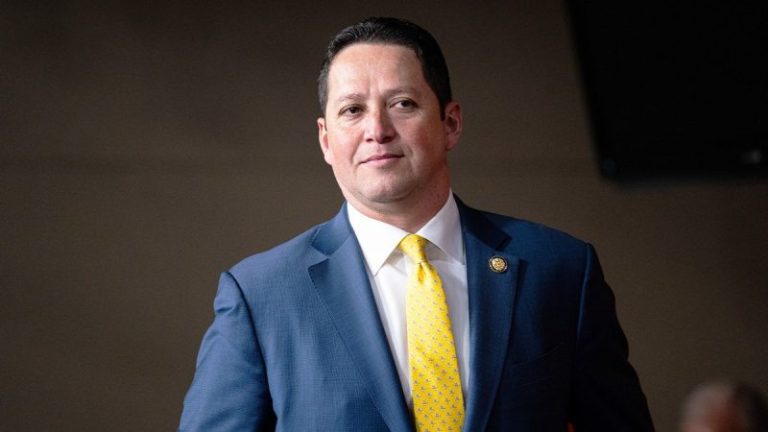
The House of Representatives is launching an internal investigation into a GOP lawmaker accused of having an affair with and sexually harassing an aide who committed suicide last year.

The House Ethics Committee revealed on Wednesday that it is launching an investigative subcommittee on Rep. Tony Gonzales, R-Texas, in response to allegations he ‘engaged in sexual misconduct towards an individual employed in his congressional office’ and ‘discriminated unfairly by dispensing special favors or privileges.’

Gonzales narrowly avoided defeat in his GOP primary race on Tuesday night but failed to clinch an outright majority of the vote. He’ll be facing conservative social media personality Brandon Herrera in a runoff election in May.

The Texas Republican has denied the affair with his Uvalde-based late aide, Regina Santos-Aviles, and accused her husband of extortion.

‘During my six years in Congress, not a single formal complaint has been levied against my office. Now days away from an election, coordinated political attacks reign in. IT WON’T WORK. Halfway through early voting and the intensity resides w/ TG voters. I’d rather be us than them,’ he posted on X in late February.

He told Fox News Digital in response to the probe on Wednesday, ‘I welcome the opportunity to present all the facts to the committee.’

It’s not immediately clear what impact the allegations had on his performance or how they will play out between now and his next election. Gonzales defeated Herrera by less than 2% in his 2024 Republican primary.

But the growing scandal has spurred calls for his resignation, notably by some of his fellow House Republicans.

‘I would encourage him to consider resigning,’ Rep. Anna Paulina Luna, R-Fla., told reporters last week.

His fellow Texas lawmaker, Rep. Brandon Gill, R-Texas, urged Gonzales not to run for re-election. ‘America deserves better. Tony should drop out of the race,’ he posted on X.

Rep. Nancy Mace, R-S.C., who has also called for his resignation, announced just this week that she is forcing a vote on a measure requiring the House Ethics Committee to disclose information on lawmakers accused of sexually harassing their staff. 

She told Fox News Digital that Gonzales’ situation was the impetus for her effort, ‘I mean, literally, this girl killed herself in the most heinous way. She literally lit herself on fire and died, and we’re just going to sit here and say, let the process play out? No.’

Gonzales, for his part, previously told reporters that he had no intention of resigning.

The traditionally secretive House Ethics Committee does not give a set timeline for its probes, nor does it typically forecast regular updates on them.

Related Article

House GOP Rep Doug LaMalfa dead at 65
This post appeared first on FOX NEWS

Turkey’s Defense Ministry said on Wednesday that a ballistic missile launched from Iran towards its airspace was intercepted by NATO defense systems, marking a first in the conflict with Iran. A senior NATO military official confirmed to Fox News Digital that the alliance conducted the interception.

Turkey’s Head of Communications Burhanettin Duran said that the missile was detected after it crossed into Iraqi and Syrian airspace before it was intercepted by NATO units in the eastern Mediterranean.

‘Turkey’s resolve and capacity to ensure the security of our country and our esteemed nation remain at the highest level. All necessary steps to defend Turkish territory and airspace will be taken without hesitation,’ Duran said in a statement posted on X, adding that the country’s response to ‘any potential hostile acts’ would be in accordance with international law.

‘We reiterate our warning to all parties to refrain from steps that could escalate tensions in the region and lead to the spread of the conflict to a wider area. It is of great importance that all parties act with a sense of responsibility,’ Duran added.

Turkey’s Defense Ministry issued a similar warning, saying that ‘Every step taken to defend our territory and airspace will be taken resolutely and without hesitation.’ 

‘We remind all parties that we reserve the right to respond to any hostile actions against our country,’ it said.

Turkish ⁠foreign minister Hakan Fidan reportedly spoke with Abbas Araghchi after the incident and conveyed his displeasure, according to Reuters, which cited a Turkish diplomatic source.

A NATO spokesperson told Fox News Digital that the alliance condemned the incident and affirmed that it stood by Turkey.

‘We condemn Iran’s targeting of Turkey. NATO stands firmly with all allies, including Turkey, as Iran continues its indiscriminate attacks across the region. Our deterrence and defense posture remains strong across all domains, including when it comes to air and missile defense,’ a NATO spokesperson told Fox News Digital.

NATO has parts of a broader European ballistic missile defense system on Turkish soil, including an early-warning radar at the Kurecik base that can detect missiles from Iran.

Since the launch of Operation Epic Fury on Feb. 28, Iran has carried out a series of retaliatory attacks against U.S.-allied countries in the region. Turkey is the first NATO ally to have an Iranian missile encroach upon its airspace. On March 1, an Iranian retaliatory attack killed six U.S. Army Reserve soldiers supporting Operation Epic Fury in Kuwait.

The Associated Press contributed to this report.

Related Article

US submarine sinks Iranian warship by torpedo in a first since World War II
This post appeared first on FOX NEWS

President Donald Trump will host executives of major tech companies at the White House Wednesday afternoon to sign a pledge ensuring the tech giants protect Americans against higher electricity bills tied to data center power demand.

Google, Microsoft, Meta, Oracle, xAI, OpenAI and Amazon are expected to sign the Ratepayer Protection Pledge Wednesday afternoon, Fox News Digital learned. 

The pledge will have the companies agreeing to ‘build, bring, or buy new generation resources and cover the cost of all power delivery infrastructure upgrades required for data centers,’ the White House said.

The Trump administration has promoted the proliferation of artificial intelligence to keep the U.S. as the world’s tech leader, which has included the creation of new data centers and mounting concern energy prices could increase for everyday Americans. The pledge works to combat these concerns and protect Americans against spiking electricity bills. 

The pledge will also have the companies vow against passing expenses to American households.

It also commits companies to hiring and training talent from within communities where they build and operate data centers, which will create thousands of jobs and enhance workforce skills.

‘President Trump’s ratepayer protection pledge will deliver more affordable, reliable, and secure energy for the American people and help stop the rising electricity prices that started during the previous administration,’ Energy Secretary Chris Wright said ahead of the event. ‘This plan will strengthen American energy dominance, while also ensuring the United States wins the AI race.’

Wright added: ‘We will continue partnering with technology leaders to strengthen America’s competitive edge, while keeping energy costs low for hardworking families.’

Michael Kratsios, assistant to the president and director of the White House Office of Science and Technology Policy said Trump ‘continues to ensure the U.S. leads the world in AI while strengthening the grid and driving down energy costs for American families.’

As for the tech companies, Matt Garman, chief executive officer of Amazon web services, said they are signing the pledge ‘to reinforce our commitment to paying our full energy costs and ensuring our data centers do not increase electricity bills for consumers.’

‘We welcome the Administration’s leadership on this issue and support the pledge’s commitments, which establish a clear baseline to protect ratepayers while enabling responsible, long-term energy partnerships that strengthen the grid and the communities where data centers operate,’ he said.

Microsoft vice chair and president Brad Smith also touted the pledge, calling it an ‘important step,’ with Meta president and vice chair Dina Powell McCormick saying the pledge ‘ensures families aren’t the ones footing the bill for AI’s energy consumption.’ 

McCormick said the pledge ‘gives companies like Meta the certainty we need to keep up the momentum, ensuring that American AI dominance and the prosperity of American families go hand-in-hand.’

And Ruth Porat of Alphabet and Google said the pledge affirms the company’s ‘long-held commitment to protect energy affordability for American households, accelerate breakthroughs to secure America’s energy future, and deliver energy infrastructure – all of which are critical to maintaining America’s global leadership in this era of innovation.’

‘Building the infrastructure to advance AI is vital for America’s economic competitiveness and for ensuring the benefits of AI reach everyone,’ OpenAI chief operating officer Brad Lightcap said. ‘As demand for AI continues to grow, we believe the infrastructure that enables AI should benefit the communities that make it possible, and that’s why we’re proud to support the White House’s Ratepayer Protection Pledge.’

The White House said the pledge will contribute to ‘lower electricity costs, stronger grid infrastructure, and enhanced grid resilience during emergencies.’

The president announced the Ratepayer Protection Pledge during his State of the Union address in February. 

‘Tonight, I’m pleased to announce that I have negotiated the new ratepayer protection pledge,’ he said. ‘You know what that is? We’re telling the major tech companies that they have the obligation to provide for their own power needs.’

‘We have an old grid,’ he said. ‘It could never handle the kind of numbers, the amount of electricity that’s needed. So I’m telling them, they can build their own plant. They’re going to produce their own electricity. It will ensure the company’s ability to get electricity, while at the same time, lowering prices of electricity for you.’ 

The AI race has pitted the U.S. against China as tech leader, with the Trump administration amplifying efforts to not cede ground to the Asian nation since January 2025. Texas, Louisiana and Pennsylvania are among states seeing expanded data center campuses and AI growth. 

A White House official previously told Fox Digital that the president and administration have been working on the initiative for a while, including Trump posting about the issue on Truth Social in January. 

The pledge comes as affordability concerns continue to be a top issue for voters heading into the midterm election season. Democratic candidates in just a handful of races in the off-year 2025 cycle campaigned on promises of lowering costs for everyday Americans, which proved to be a winning strategy on election night. 

Trump has consistently pushed back on Democrats promoting affordability, pointing to sky-high inflation under the Biden administration as evidence that liberal policies have left Americans’ pocketbooks with less cash. 

Related Article

Scoop: Trump brings Big Tech to White House to curb power costs amid AI boom
This post appeared first on FOX NEWS

As the Middle East conflict escalates, many cruise passengers in the region have been left stranded, searching for ways to get home.

Celestyal Journey, Celestyal Discovery and MSC Euribia were all grounded in the last few days.

Thousands of passengers were on ships in the affected areas during the U.S.-Israeli strikes on Iran. Many of the vessels have been ordered to halt all activity, Fox News Digital has learned.

‘MSC Cruises is working continuously with airline partners in the region, particularly Emirates and Etihad Airways, to identify and secure return flights for our guests,’ MSC Cruises, headquartered in Geneva, told Fox News Digital in a statement. 

The highly limited number of flights is creating another layer of chaos.

‘We are requesting priority for our guests from our partners. At present, airlines [that are] operating flights have indicated that they will follow an order of priority based on the original flight date,’ MSC Cruises continued.

‘In order to speed up the repatriation, we are working on other options such as chartering flights from Dubai, Abu Dhabi or Muscat,’ the cruise company added.

‘Each evacuation presents a different problem set.’

Across seven major Middle East airports, the total cancellations exceeded 12,000 flights on Tuesday, according to TravelPirates.

‘Right now, the biggest danger is direct fire or debris from Iranian missiles and drones. Iran has targeted the airports and prominent hotels,’ Dale Buckner, a retired U.S. Army colonel and CEO of security firm Global Guardian, based in Virginia, told Fox News Digital.

‘Each evacuation presents a different problem set,’ Buckner continued. ‘One of the biggest challenges has been the chaos at the different UAE-Oman land crossings, where officials are overwhelmed by the influx.’   

At least six ships from four different companies were affected by the conflict in the region, according to Cruise Hive.

‘The situation on board remains calm. We are providing guests with regular updates on the situation,’ MSC Cruises said.

‘We are in constant contact with local authorities, embassies and foreign offices,’ the group added.

Celestyal Cruises, based in Athens, Greece, had two voyages scheduled to depart March 2.

‘We regret to inform our guests and travel partners that, in view of the current circumstances in the Middle East, the Celestyal Journey cruise scheduled to depart from Dubai on March 2, and the Celestyal Discovery cruise scheduled to depart from Abu Dhabi on March 2, have been [canceled],’ Celestyal said in a statement shared with Cruise Critic.

Celestyal Journey will stay in Doha until March 7, according to a statement made by the company on social media. Passengers have been told they can remain on board or disembark.

Celestyal Discovery passengers are not permitted to disembark in Dubai as of now.

‘Once disembarkation is approved, we will provide support to assist guests with transfers from the ship to Abu Dhabi Airport,’ the cruise line said.

Cruise passengers who were booked on the canceled voyages will receive a full refund or future credit.

Norwegian Cruise Line has vessels that travel to the Middle East, but there are no current sailings.

‘We are closely monitoring the evolving conflict in Iran and the broader region,’ a spokesperson for Norwegian Cruise Line told Fox News Digital.

‘We recognize that broader regional disruptions, including airline cancellations and airspace restrictions, may impact some guests’ ability to travel,’ the spokesperson continued.

‘Guests who are unable to reach their embarkation port due to airline-canceled flights related to these events will be eligible for a future cruise credit,’ the company added.

Dubai, which at one time was considered a safe haven in the region, has become a pressure point during a deepening conflict.

‘To date, the UAE has been targeted by around 1,000 Iranian munitions, including drones and ballistic missiles,’ Buckner said.

Kristy Ellmer, a consultant from New Hampshire, had been traveling in Dubai with her husband, Matt Carwell. 

She was promoting her upcoming book and taking time to relax with her husband. Everything changed Saturday.

‘We were just sitting on the beach,’ Ellmer told Fox News Digital in an interview. ‘All of a sudden, we felt explosions.’

Ellmer was originally scheduled to leave Dubai on Sunday night. She had flights canceled for Sunday, Monday and Tuesday.

She finally got onto a flight headed for Munich on Wednesday as part of her journey home. 

‘It was very calm’ at Dubai International Airport, she said. ‘It was clear where you needed to go.’

Related Article

American trapped in Dubai describes hotel fright and ‘shock waves’ as Iran launches airstrikes
This post appeared first on FOX NEWS


Private credit is cracking just as AI infrastructure spend surges into the trillions.

The tremor is fueled by software and IT companies seeing sharp drops in valuation as fears mount that AI advancements will render their core products obsolete.

Blue Owl Capital set off alarms in the private credit market, which has extended billions in financing, by selling assets across three funds and tweaking redemptions amid withdrawals tied to AI-threatened tech loans and stalled data centers. As UBS strategists recently noted, the worst-case default rate for private credit could climb as high as 15 percent as AI disrupts traditional software companies.

In the race to secure GPUs, neo-clouds – specialized providers that focus almost exclusively on high-performance AI compute – are ready to deploy the hardware powering the next generation of LLMs, but are being sidelined by underwriting processes that take months to move and equity models that demand too much control.

The financing bottleneck and the asset-backed solution

With global AI capital expenditures projected to reach trillions this decade, the mechanisms used to fund that growth cause delays that create supply bottlenecks.

Filichkin, Compute Labs’ chief business officer, described the dynamic clearly: operators are currently caught between slow banks and the limitations of venture capital.

Under the traditional model, a neo-cloud must raise massive venture rounds just to afford the down payments required by banks, forcing founders to give up control of their companies simply to buy the hardware needed to operate.

Zhang added that underwriting processes and capital structuring take several months, delaying off-take customers and forcing them to go elsewhere simply because they need capacity now. “Many AI customers… will simply go to some other providers, or they will just go to the market and then buy the capacity at a very high spot price,” he explained.

Capital inefficiencies also increase computing costs. When neo-clouds cannot deploy on time, demand pressure builds on existing providers, which allows them to charge more.

To bypass these delays, Compute Labs, a fintech that bridges neo-clouds and investors, packages GPU clusters for asset-backed deals. The company vets partners, secures senior debt and fundraises the missing 20-30 percent cash slice from investors to complete each deal. This lets neo-clouds deploy without equity dilution, while investors gain direct hardware yield from the contracts.

GPUs: The yield-generating asset class

A whitepaper co-published by the team at Compute Labs and The Family Office Association in December 2025 pitched GPUs as a new yield-generating asset class for family offices, like digital power plants producing steady cash from AI rentals for training and inference.

“When we work with these partners, one of the first things that they worry about is diluting their equity, and we know of an interesting business model that allows an investor just direct exposure to the most fundamental asset, which is the hardware,” explained Filichkin.

He noted the dual value points this structure serves: the neo-cloud avoids dilution, and the investor gains the raw hardware component without worrying about the volatility of the equity markets.

“More fundamentally,” added Hosseinion, “when we refer to a venture bet, we’re talking about VCs…betting on the founders to find product market fit, whereas (Compute Labs is) allowing investors direct access to the actual chips that power AI.”

These assets are secured by three- to five-year off-take contracts, a structure where end-users pre-commit to buying the compute power before it is even deployed. “The financial profile is a lot more similar to project finance… high upfront capex, the deployment phase, and then just a long tail of predictable yield.”

However, much AI infrastructure funding still relies on venture-style equity, despite the fact that typical VC rounds are often too small for major hardware buys.

‘Carfax for GPUs’

For GPUs to mature into a genuine asset class, the market requires a level of transparency that traditional tech lending has historically lacked. The current hesitation in private credit often stems from a “visibility gap” that prevents lenders from easily verifying the health, location or even the existence of the hardware they are financing.

Solving this requires what the Compute Labs team described as a “Carfax for GPUs” that employs a registry system that tracks the provenance, thermal history and real-time utilization of a chip, which would provide lenders the same level of auditability found in real estate or aviation.

While this strategy provides technical transparency, Compute Labs’ “revenue haircut” – where the 20 to 30 percent revenue share is the first to be sacrificed if performance targets are missed – provides financial safeguards that protect lenders from operational failures. This ensures that even if a neo-cloud struggles, the investors remain at the front of the repayment line.

Operational buffers are also becoming a benchmark for these deals; the team stressed that daily running costs, specifically electricity and maintenance, must typically remain under a quarter of the total income produced by the chips in order to maximize returns.

While concerns about technical obsolescence persist, the current supply-chain reality offers a natural hedge. Zhang noted that while new chips are announced frequently, it often takes up to 24 months for them to reach the market in significant volume at a reasonable price, providing a predictable “useful life” window for current-generation hardware.

Infrastructure before innovation

Ultimately, the shift toward asset-backed GPU financing is about unblocking what the team calls the “innovation funnel.” At the top of this funnel sit the thousands of AI applications and agents that promise to reshape the global economy. However, these innovations are entirely dependent on the physical infrastructure at the base.

By moving away from the slow, small financing models of the past and treating GPUs as a stable, bankable utility, the industry can finally provide the consistent power required to sustain the AI revolution.

However, if the bottom of the funnel remains choked by inefficient capital, the intelligence at the top will inevitably stall.

Securities Disclosure: I, Meagen Seatter, hold no direct investment interest in any company mentioned in this article.

This post appeared first on investingnews.com

Cameco (TSX:CCO,NYSE:CCJ) has secured a nine-year uranium supply agreement with India worth an estimated US$2.6 billion, accelerating its nuclear power expansion as it deepens critical mineral ties with the country.

The Saskatoon-based uranium producer will supply nearly 22 million pounds of uranium ore concentrate (U3O8) to India’s Department of Atomic Energy between 2027 and 2035 under market-related pricing terms.

Cameco Chief Executive Officer Tim Gitzel attended a signing event in New Delhi alongside Indian Prime Minister Narendra Modi, Canadian Prime Minister Mark Carney and Saskatchewan Premier Scott Moe.

“Cameco is proud to be a strategic partner with India to help meet its civil nuclear fuel needs and support its trade relationship with Canada,” Gitzel said. “India is embarking on an ambitious nuclear expansion to power its development plans and meet the future energy security needs of its people. That isn’t possible without a stable supply of uranium fuel.”

India currently operates 24 nuclear reactors and has outlined plans to deploy dozens more as it works toward a target of 100 gigawatts of nuclear capacity by 2047.

The new agreement revives a trading relationship first established in 2015, when Cameco began supplying uranium to India under a five-year contract.

Gitzel also pointed to broader market dynamics. “Importantly, this demand underscores an emerging trend of sovereign buyers locking up large volumes from multiple suppliers, and in a window where demand continues to grow and available supplies continue to become more uncertain and constrained.”

Cameco operates the Cigar Lake and McArthur River/Key Lake uranium mines in northern Saskatchewan. According to the Saskatchewan Mining Association, uranium mining employs more than 2,300 people in the province, with nearly half of the workforce in northern operations drawn from local communities.

Saskatchewan Premier Scott Moe said the contract would benefit both countries. “It’s going to be good for the electricity outbuild here in India as well as good for the economy in particular in northern Saskatchewan,” he told reporters in New Delhi as reported by CBC.

India continues to recently take steps to broaden its critical minerals strategy. Last month, the country announced it has signed a memorandum of understanding with Brazil to deepen cooperation on rare earths and other critical minerals.

“Increasing investments and cooperation in matters of renewable energy and critical minerals is at the core of a pioneering agreement that we have signed today,” Brazilian President Luiz Inácio Lula da Silva said at the time.

The country’s multibillion deal with Cameco first sparked rumors back in late 2025, when an earlier meeting between the two state leaders signaled the thawing of diplomatic tensions that started in 2023.

Securities Disclosure: I, Giann Liguid, hold no direct investment interest in any company mentioned in this article.

This post appeared first on investingnews.com

Surface Metals Inc. (CSE: SUR,OTC:SURMF) (OTCQB: SURMF) (FSE: V6X) (WKN: A417U2) (‘Surface Metals’ or the ‘Company’) is pleased to announce that its common shares have been accepted for listing on the Frankfurt Stock Exchange (‘FSE’) and have started trading under the symbol V6X WKN: A417U2.

https://live.deutsche-boerse.com/equity/surface-metals-inc?mic=XFRA

Surface Metals Inc.’s common shares are now cross listed on the Canadian Securities Exchange, OTCQB, and the Frankfurt Stock Exchange.

The FSE is one of the world’s largest and most established international stock exchanges and serves as a key marketplace for European institutional and retail investors, particularly those with a long-standing interest in the natural resources sector.

About Surface Metals Inc.

Surface Metals Inc. (CSE: SUR,OTC:SURMF) (OTCQB: SURMF) (FSE: V6X) is a North American mineral exploration company focused on advancing a diversified portfolio of gold and lithium projects in Nevada, USA. The Company’s Cimarron Gold Project is located in Nye County, Nevada, in a historically productive gold district. Surface’s Clayton Valley Lithium Brine Project hosts an inferred resource of approximately 302,900 tonnes LCE adjacent to Albemarle’s Silver Peak Mine. Surface Metals is also advancing a sedimentary claystone lithium project in Fish Lake Valley, Nevada.

For more information, please visit: www.surfacemetals.com

On behalf of the Board of Directors

Steve Hanson
Chief Executive Officer, President, and Director
Telephone: (604) 564-9045
info@surfacemetals.com

Neither the CSE nor its regulations service providers accept responsibility for the adequacy or accuracy of this news release. This news release contains certain statements which may constitute forward-looking information within the meaning of applicable securities laws (‘forward-looking statements’). Forward-looking statements are statements that are not historical facts and are generally, but not always, identified by the words ‘expects,’ ‘plans,’ ‘anticipates,’ ‘believes,’ ‘intends,’ ‘estimates,’ ‘projects,’ ‘potential’ and similar expressions, or that events or conditions ‘will,’ ‘would,’ ‘may,’ ‘could’ or ‘should’ occur and in this news release include but are not limited to the attributes of, timing for and expected benefits to be derived from exploration, drilling or development at Surface’s project properties. Information inferred from the interpretation of drilling, sampling and other technical results may also be deemed to be forward-looking statements, as it constitutes a prediction of what might be found to be present when and if a project is actually developed. Surface’s project location adjacent to or nearby other mineral projects does not guarantee exploration success or that mineral resources or reserves will be defined on Surface’s properties. Exploration, development, and activities conducted by regional companies provide assistance and additional data for exploration work being completed by Surface. These forward-looking statements are subject to a variety of risks and uncertainties which could cause actual events or results to differ materially from those reflected in the forward-looking statements, including, without limitation: risks related to fluctuations in metal prices; uncertainties related to raising sufficient financing to fund the planned work in a timely manner and on acceptable terms; changes in planned work resulting from weather, logistical, technical or other factors; the possibility that results of work will not fulfill expectations and realize the perceived potential of the Company’s properties; risk of accidents, equipment breakdowns and labour disputes or other unanticipated difficulties or interruptions; the possibility of cost overruns or unanticipated expenses in the work program; the risk of environmental contamination or damage resulting from the Company’s operations and other risks and uncertainties. Any forward-looking statement speaks only as of the date it is made and, except as may be required by applicable securities laws, the Company disclaims any intent or obligation to update any forward-looking statement, whether as a result of new information, future events or results or otherwise. Unless otherwise indicated, the market and industry data contained herein is based upon information from industry and other publications and the knowledge and experience of management. While we believe that this data is reliable, market and industry data is subject to variations and cannot be verified with complete certainty due to limits on the availability and reliability of raw data, the voluntary nature of the data gathering process and other limitations and uncertainties inherent in any statistical survey. We have not independently verified any of the data from third-party sources referred to in this news release or ascertained the underlying assumptions relied upon by such sources. With regard to the Cimarron Project potential quantity and grade of mineralization described is conceptual in nature as there has been insufficient exploration to define a mineral resource, and it is uncertain if further exploration will result in targets being delineated as a mineral resource. Surface Metals has not undertaken any independent verification of drill results from historical drilling not completed by Surface Metals. Surface Metals has not independently analyzed the results of the historical exploration work in order to verify the results and believes that the historical drill results may not all conform to the presently accepted industry standards and as such should not be relied upon by the reader. Surface Metals Inc. considers these historical drill results relevant as Surface Metals Inc. will use this data as a guide to plan future exploration programs. Surface Metals Inc. also considers the data to be reliable for these purposes, however, Surface Metal Inc.’s future exploration work will include verification of the data through drilling. All technical and scientific disclosure pertaining to our mineral property interests in this news release have been reviewed by a Qualified Person, meaning an individual who is an engineer or geoscientist with at least five years of experience in mineral exploration, mine development or operation or mineral project assessment, or any combination of these; has experience relevant to the subject matter of the mineral project and the technical report; and is a member or licensee in good standing of a professional association.

To view the source version of this press release, please visit https://www.newsfilecorp.com/release/286186

News Provided by TMX Newsfile via QuoteMedia

This post appeared first on investingnews.com

VANCOUVER, BRITISH COLUMBIA / ACCESS Newswire / March 4, 2026 / CoTec Holdings Corp. (TSX-V:CTH)(OTCQB:CTHCF) (‘CoTec’ or the ‘Company’) is pleased to announce the accelerated expiry date of the common share purchase warrants (‘Warrants’) issued by the Company pursuant to the Listed Issuer Finance Exemption (‘LIFE’) Offering and Private Placement announced by the Company on May 20, 2025 and completed in tranches on June 18, July 3, July 16 and July 21, 2025 (together the ‘Financing’).

The Company issued an aggregate of 17,339,336 Warrants pursuant to the Financing entitling the holders thereof to purchase one common share of the Company (‘Common Share’) per Warrant at an exercise price of C$1.20 per Common Share for a period of 18 months following the date of issuance, subject to the Acceleration Clause (as defined herein).

The Warrants are subject to an accelerated expiry provision such that if, for any 15 consecutive trading days during the unexpired term of the Warrants, the closing price of the Common Shares on the TSX-V exceeds $1.35 (the ‘Acceleration Trigger’), the Company may accelerate the expiry date of the Warrants by way of an announcement (‘Acceleration Clause’).

The Company hereby advises that the Acceleration Trigger has been met as a result of the closing price of the Common Shares on the TSXV exceeding $1.35 for a period of 15 consecutive trading days ended March 3, 2026. Accordingly, the accelerated expiry date of the Warrants shall be Wednesday, April 10, 2026 (‘Accelerated Expiry Date’), being 37 days following the date of this notice. All Warrants that remain unexercised after 5:00 p.m. (Vancouver time) on the Accelerated Expiry Date will expire and become void and of no further force or effect.

To date, 5,132,643 Warrants have been exercised resulting in gross proceeds of $6,159,172 to the Company. If all the remaining 12,206,696 Warrants are exercised, the Company will receive further gross proceeds of approximately C$14,648,036.

About CoTec

CoTec Holdings Corp. (TSX-V:CTH)(OTCQB:CTHCF) is redefining the future of resource extraction and recycling. Focused on rare earth magnets and strategic materials, CoTec integrates breakthrough technologies with strategic assets to unlock secure, sustainable, and low-cost supply chains.

CoTec’s mission is clear: accelerate the energy transition while strengthening strategic mineral supply chains for the countries we operate in. By investing in and deploying disruptive technologies, the Company delivers capital-efficient, scalable solutions that transform marginal assets, tailings, waste streams, and recycled products into high-value critical minerals.

From its HyProMag USA magnet recycling joint venture in Texas, to iron tailings reprocessing in Québec, to next-generation copper and iron solutions backed by global majors, CoTec is building a diversified portfolio with long-term growth, rapid cash flow potential, and high barriers to entry. The result is a differentiated platform at the intersection of technology, sustainability, and strategic materials.

For more information, please visit www.cotec.ca

For further information, please contact:

Braam Jonker – (604) 992-5600
Chief Financial Officer

Forward-Looking Information Cautionary Statement

Statements in this press release regarding the Company and its investments which are not historical facts are ‘forward-looking statements’ that involve risks and uncertainties. Forward-looking statements in this release include, without limitation, statements relating to the advancement, development, financing and potential construction of the Company’s projects and investments; anticipated economic metrics; expected production, permitting, engineering and execution milestones; potential strategic transactions or listings; future investment opportunities; and management’s expectations regarding the Company’s strategy and growth plans. Such forward-looking statements are based on a number of assumptions, including assumptions regarding the continued advancement of the Company’s projects, availability of financing, receipt of required permits and approvals, commodity price assumptions, and general economic and market conditions. Since forward-looking statements address future events and conditions, by their nature they involve inherent risks and uncertainties. Actual results could differ materially from those currently anticipated due to a number of factors and risks, including, without limitation: risks relating to project development and execution; the ability to obtain financing on acceptable terms or at all; changes in commodity prices; changes in government regulation or policy; permitting and environmental risks; joint venture and counterparty risks; and general economic, market and industry conditions. For further details regarding risks and uncertainties facing the Company, readers are encouraged to review the Company’s public disclosure documents, which are available under the Company’s SEDAR+ profile at www.sedarplus.ca.

Neither the TSX Venture Exchange nor its Regulation Services Provider (as that term is defined in the policies of the TSX Venture Exchange) accepts responsibility for the adequacy or accuracy of this news release.

SOURCE: CoTec Holdings Corp.

View the original press release on ACCESS Newswire

News Provided by ACCESS Newswire via QuoteMedia

This post appeared first on investingnews.com

Copper prices have surged since the middle of 2025, as tariffs, rising demand and supply disruptions came together to create the perfect storm for metals traders.

These factors are helping raise awareness of the challenges copper producers will face in the coming years, as supply deficits are expected to become more pronounced amid aging mines and a lack of new operations.

Colin Hamilton, Teck Resources’ (TSX:TECK.A,TECK.B,NYSE:TECK) vice president of market research and economic analysis, spoke on changing copper market dynamics at the 2026 Prospectors & Developers Association of Canada (PDAC) convention.

In his talk, Hamilton highlighted China’s role as the world’s largest consumer of copper, and the country’s increasing influence on the global copper market.

China’s role in copper markets

There are few parts of the economy that copper doesn’t touch. It’s used in construction, manufacturing, the transmission of electricity and in many high-tech products like mobile phones and electric vehicles.

Copper is a fundamental commodity for the global economy, and demand for it is only going to grow in the coming years on a variety of factors.

The red metal is essential for changing dynamics in the global south, where a greater share of the population is moving to urban centers and upward economic mobility is driving demand for household appliances like air conditioners, refrigerators and washing machines.

Adding to this demand are emerging sectors like the energy transition, where wind and solar require greater copper inputs, as well as AI and the data centers that support it.

Hamilton told the PDAC audience that China, the world’s largest consumer of the red metal, sits at a confluence of demand generation.

The country is often considered the world’s factory for its manufacturing glut, it has a growing middle class, and its tech sector is booming. These factors are also driving significant growth in its electricity grid.

“A decade ago, China was more or less in parallel with the rest of the world,” Hamilton said. “China has surged ahead in terms of that electricity share, and it’s going to continue in a world where artificial intelligence is arguably the next geopolitical battleground.”

He explained that because of its manufacturing base, China’s energy grid has benefited from significant investment, a trend that is set to continue.

“China is planning to increase grid investment by 40 percent over the next five years. This is huge spending that is continuing to come through, and that will be copper-intensive spend,” Hamilton said.

China isn’t the only country that needs to expand its electrical grid. Hamilton also noted that Europe has an energy problem that it is solving, in the short term, by buying Chinese-produced solar technology, adding further copper demand to already constrained Chinese supply.

Smelting supply shortfalls

The biggest issue impacting copper markets and causing increased prices is a lack of supply.

This has led to a shortfall of copper concentrate supply for smelters to refine.

“To keep it in simple terms, we see a situation where smelting demand over 2025 is going to be 600,000 to 650,000 metric tons more than the available concentrate in the custom market,” Hamilton said. “That’s really what sets that raw material constraint. There’s just not enough copper supply to go around.”

The lack of supply in concentrates has pushed treatment and refining charges, which are typically paid by mining companies to smelters, down to zero. Hamilton said these historically low charges outline how acutely tight the market really is. He explained that it’s a trend that won’t moderate in the short term, as supply growth is failing to keep pace with refining capacity.

Hamilton noted that 10 years ago the expectation was that copper supply would be in the 20 million to 30 million metric ton per year range by 2026. In reality, supply is expected to be 23 million metric tons this year, closer to the lower end of the range.

“Not to say projects haven’t come online, but we have seen depletion of existing assets,” he said.

China’s copper supply strategy

In addition to being the leading consumer of copper, China is also leading in adding new supply to the market.

“Who has been successful at growing copper supply is China, not necessarily in the country, but a lot through investments, particularly in the Democratic Republic of the Congo,” Hamilton said.

Those investments have contributed to the DRC adding 2.5 million metric tons of annual supply over the last decade, as well as increases in Peruvian production from the Las Bambas and Toromocho operations, owned by China-based MMG and Chinalco, respectively.

This dominance by China has led the rest of the world to play catch-up. Hamilton pointed to Chile, the world’s top copper producer, noting that Chilean production has been flat for 20 years. While there is growth planned, he said it’s going to take some time and a change in mindset within the industry.

In the long term, Hamilton suggests China will take what is available from the concentrate market; however, he pointed out that fallout from the copper tariffs last year led US traders to buy up significant quantities of copper cathode.

“Now that material is not available for price formation yet,” he said. “It is locked in economically to the US. It will come back to the market at some point. So we have to be aware that is a little bit of an inventory overhang, but I do believe trading houses will slowly bleed this out into the market in a managed form.”

What comes next?

The market needs to adapt to changing times, Hamilton emphasized, in much the way copper smelters have in the face of difficult copper market conditions.

“Smelters have really pulled the levers they can pull as the whole economics of the value chain changes to maintain profitability. That’s good, that’s what we like to see, that healthy change in business model to changing market conditions,” Hamilton said.

Hamilton suggested that there needs to be some evolving perspectives within the industry, in which every part of the value chain works together, and they should be able to make money.

China, he points out, has focused on a commodity-first business model, in which it imports raw materials from wherever they are available and uses its domestic processing capacity to upgrade them.

Although growth in its domestic processing capacity has stalled, he suggested that its funding of processors outside the country is likely to increase.

“China started to dominate the copper exports of (semirefined products) and cable into the world. I do think that’s a trend that will continue, though it does mean there will probably be some trade barriers,” Hamilton said, noting the trend could also extend to finished products.

He went on to say that copper has delivered consistent premiums, spending nearly 50 percent of the time since 2000 in the 90th percentile of the cost curve.

“The industry has just been using the money, the free cash flow, to do dividends and buybacks and servicing debt, but we haven’t actually seen that capital allocation back towards growth,” Hamilton said.

While keeping shareholders happy is important, so too is growth of the business.

“Capital intensity is hugely important. Where companies have got mining projects wrong, in many cases, over the past decade has been blowing out in terms of capital intensity, so you have to look for smart solutions,” he said.

Hamilton noted that the easiest copper resources have already been developed, and the next ones will become increasingly more challenging. With prices reaching record highs, it should unlock some projects.

“At these copper price levels, if you’ve got a shovel-ready project, you can bring it to market pretty quickly. Those big greenfield projects are much harder,” he said.

Using capital efficiently will be critical as companies look to open these new assets. However, Hamilton believes that copper’s solid fundamentals, and new energy sectors, will drive industry growth.

Securities Disclosure: I, Dean Belder, hold no direct investment interest in any company mentioned in this article.

This post appeared first on investingnews.com