Archive

March 8, 2026

Browsing

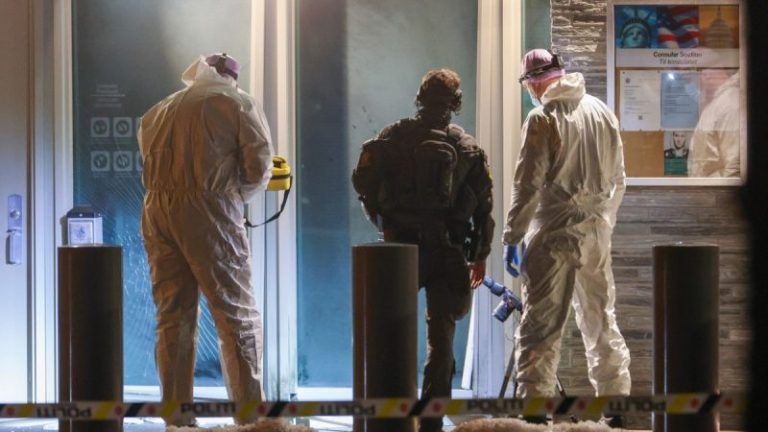
Norwegian police are investigating an attack on the U.S. Embassy in Oslo that caused no injuries and only minor damage.

Amid the war on Iran, the Norwegian Justice Minister Astri Aas-Hansen is deploying ‘considerable resources’ to search for potential multiple perpetrators.

‘This is an unacceptable incident that we are taking very seriously,’ she told Norwegian press agency NTB.

A ‘loud bang’ was reported at the U.S. embassy in Oslo early Sunday morning at 1 a.m. local time (Saturday 7 p.m. ET), according to police, and eyewitnesses told Reuters that they saw thick smoke by the entrance of the consular section.

‘There was a very thick layer of smoke on the street,’ said Sebastian Toerstad, 18, a high school student who drove past the embassy at the time of the explosion.

‘There was some damage to the entrance.’

No explosive devices had been found in the area, according to police.

‘Investigations have been carried out at the scene with the aid of dogs, drones and a helicopter, searching for one or more potential perpetrators,’ the Oslo police department said in a statement.

PST, the Norwegian police security service, called in additional personnel following the incident but has not changed the country’s terror threat level, according to communication adviser Martin Bernsen.

PST operations manager Mikael Dellemyr does not ‘connect’ the attack to U.S. bombings in the Middle East or terrorist or Iranian retaliation.

‘It is far too early’ in the investigation, he told Oslo’s TV 2.

Fox News Digital reached out to the State Department for comment, but they did not immediately respond.

The Associated Press and Reuters contributed to this report.

Related Article

Iran proxies wage war on Israel, threaten US interests as Iraq slammed for not disarming them
This post appeared first on FOX NEWS

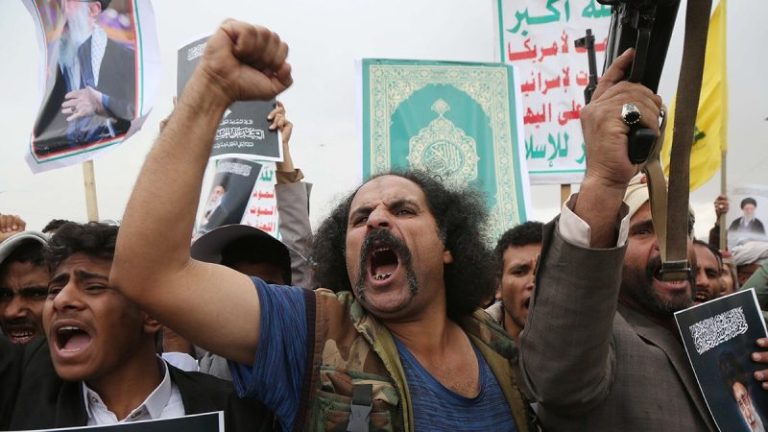
The Iran-backed Houthi terrorist movement has yet to enter the conflict on Iran’s side but in recent days has been ratcheting up its rhetoric in support of Tehran, with its leader, Abdul Malik al-Houthi, declaring that it was prepared to enter the war against the U.S. and Israel if necessary.

‘Regarding military escalation and action, our fingers are on the trigger, ready to respond at any moment should developments warrant it,’ al-Houthi said on Thursday.

‘The reason why the Houthis have not intervened is they are last line of resistance for the axis. Especially after other axis members were degraded,’ Nadwa Al-Dawsari, an expert on Yemen and an associate fellow at the Middle East Institute, told Fox News Digital.

The official slogan of the Houthi movement (Ansar Allah) reads, ‘Allah is Greater. Death to America. Death to Israel. Curse on the Jews. Victory to Islam.’ 

Al-Dawsari, who has written extensively about Yemen and the Houthis, said: ‘I think the Houthis will intervene at some point. The longer the war continues, the more likely the Houthis will intervene. I think what the Houthis want to do — and they have been itching for a while to do — is to attack the Saudis. If the Saudis intervene, the Houthis will find a reason to attack the Saudis.’

The Islamic Republic of Iran formed an ‘Axis of Resistance’ prior to Hamas’ invasion of Israel on Oct. 7, 2023. Iran’s axis coalition of Shiite and Sunni terrorist proxies, includes the Lebanon-based Hezbollah, Hamas and Palestinian Islamic Jihad in the Gaza Strip, the Houthis, Shiite militias in Iraq, and the now-defunct Baathist regime in Syria.

Within the first few weeks of his administration, President Joe Biden launched a reset with the Houthis and pressured the Saudis to end the war against the bellicose Houthi movement. ‘The war in Yemen must end,’ Biden declared in his first major foreign policy speech about the Mideast in February 2021.

Biden’s reversal of American support for the Saudi-led allies in their war against the Houthis was also coupled with his administration de-listing the Houthis as a foreign terrorist organization. President Donald Trump swiftly reimposed the terrorist designation for the Houthis at the start of his second term and launched military strikes against the terrorists in Yemen.

Al-Dawsari said another reason why the Houthis have yet to join the conflict is that it’s not in the interests of Iran’s Islamic Revolutionary Guard Corps (IRGC) ‘to drag the Houthis into a suicidal war.’ She argues ‘If the Iranian regime collapses, and if a new regime emerges, I think the IRGC will regroup in Yemen or Somalia. Yemen is the key ally.’

There has been discussion between the IRGC and Houthis about why the ‘Houthis’ continued existence is of strategic importance to the IRGC,’ she said.

‘The IRGC can’t afford to lose the Houthis. Yemen is so important to them. They need to preserve the Houthis for tomorrow for the IRGC to continue even after the regime,’ Al-Dawsari continued.

She noted that ‘Houthis have established themselves in the Horn of Africa. The IRGC is behind the Houthis. Intervention might be symbolic by the Houthis.’ She continued that Iran’s ‘tactic now is to prolong the war and widen it across the region and to put more pressure on the U.S.’ 

In May 2025, Trump announced that the U.S. would stop its air bombing campaign against the Houthis because, he said, the Houthis ‘don’t want to fight.’

‘They just don’t want to, and we will honor that. We will stop the bombings,’ Trump said. The Houthis had launched attacks against commercial vessels in the Red Sea, as well as the Jewish state, to support their ally Hamas in Gaza.

Al-Dawsari said after the Trump announcement the Houthis did not attack American ships. ‘They know Trump does not joke. They know they will suffer consequences.’

Related Article

Iran proxies wage war on Israel, threaten US interests as Iraq slammed for not disarming them
This post appeared first on FOX NEWS

Nearly 28,000 Americans have returned from the Middle East, according to the State Department, which outlined a large-scale evacuation effort as Senate Democrats escalated criticism over the conflict in Iran.

A top State Department official, in a letter to Senate Democrats first obtained by Fox News Digital, noted that since fighting in Iran escalated following Operation Epic Fury, the agency has ‘taken proactive, rapid action to support Americans in the region.’

That has included chartered flights, ground transport from closed-airspace areas and round-the-clock crisis staffing.

Paul Guaglianone, the State Department’s senior bureau official of legislative affairs, wrote in a letter to several Senate Democrats on the Senate Foreign Relations Committee that before the strikes, the agency ‘planned immediate measures to protect and evacuate U.S. citizens.’

The letter comes as diplomats and officials have faced ‘multiple direct strikes from the Iranian regime.’

‘The professionalism and competence of America’s diplomatic corps are inspiring,’ Guaglianone wrote. ‘The Department has taken all necessary steps to protect its safety, both in the region and at posts worldwide.’

‘Despite ongoing threats, our diplomats remain active and focused,’ he continued. ‘They continue to communicate with our allies and partners and advance American diplomatic interests.’

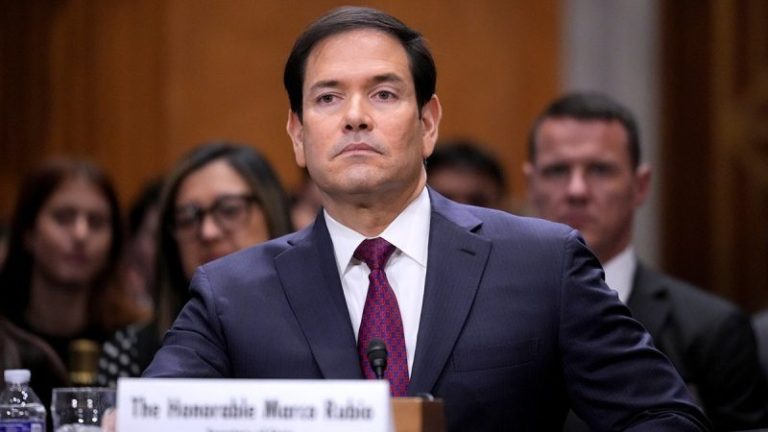
His letter responds directly to criticism from Senate Democrats, led by Sen. Jeanne Shaheen, D-N.H., who argued that Secretary of State Marco Rubio and the Trump administration have ‘not prioritized getting experienced ambassadors in place in the Middle East,’ leading to a breakdown in evacuating diplomats and Americans since the strikes began.

The lawmakers noted that three ambassadors were dismissed in Qatar, Kuwait and Egypt ‘without explanation,’ and that the administration is behind in finding replacements and filling vacancies.

‘Of the 14 countries where the Department urged Americans to urgently leave last Monday, only six have confirmed ambassadors,’ the lawmakers wrote. ‘There are currently no pending nominees before the Senate for ambassadorships in the Middle East. As a result, many key posts are without experienced senior leadership at a time of crisis.’

‘Simply put, abrupt decision-making and lack of planning by State Department leadership to ensure the safety and security of its own staff left our personnel and their families unnecessarily at risk,’ they continued. ‘Days into the conflict, the Department still appears caught off-guard and lacks a clear, comprehensive plan to safeguard American personnel, their families or other Americans in the region.’

Guaglianone noted that the agency is providing frequent updates to more than 106,000 Americans enrolled in the Smart Traveler Enrollment Program, operating a 24/7 call center with no wait times and responding quickly to congressional inquiries while coordinating closely with lawmakers to assist constituents.

He also wrote that the agency is chartering additional planes for Americans as more commercial flights become available in Saudi Arabia, the United Arab Emirates, Jordan and Oman, and that ground transportation is being offered to expand relocation options for Americans in places with closed airspace.

Americans in Oman, Kuwait, Bahrain, the United Arab Emirates, Qatar, Saudi Arabia and Israel who complete the Crisis Intake form receive direct outreach about upcoming charter aviation and ground transportation options from the agency.

‘At this time, nearly one in three American citizens who requested help departing turn down U.S. government-provided transportation options when contacted,’ Guaglianone wrote. ‘Some American citizens wish to remain in-country, while others prefer an alternative departure option.’

Related Article

US Embassy urges Americans in Iraq to shelter in place until further notice
This post appeared first on FOX NEWS

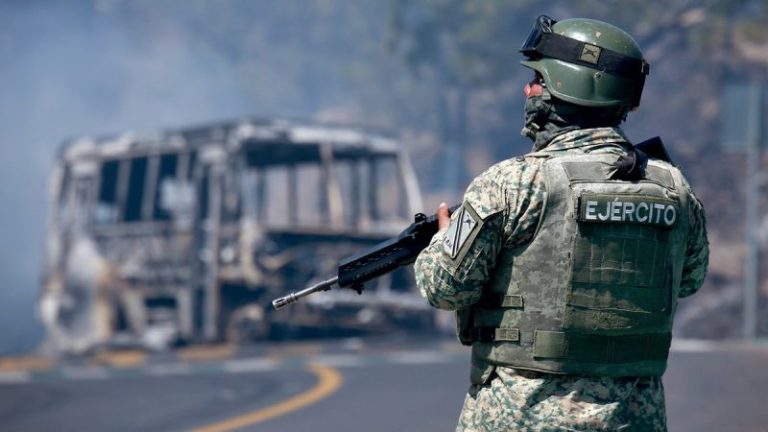
Mexican drug cartels are increasingly calculated in their targeting decisions, often avoiding deliberately attacking American tourists and citizens out of concern it could prompt intensified U.S. retaliation, according to experts.

Following last month’s killing of Ruben ‘Nemesio’ Oseguera Cervantes, known as ‘El Mencho,’ the powerful leader of the Mexican Jalisco New Generation Cartel (CJNG) White House press secretary Karoline Leavitt joined ‘Fox & Friends’ and had a warning for the drug gangs: ‘The Mexican drug cartels know not to lay a finger on a single American, or they will pay severe consequences under this president.’

Analysts say actions by President Donald Trump — including the designation of cartels as foreign terrorist organizations and high-profile operations abroad such as the capture of Nicolás Maduro and the killing of Ayatollah Khamenei in Iran — have reinforced cartel perceptions of heightened risk. 

Mexican drug cartels have long operated with a primary objective: protect revenue streams and avoid actions that could trigger an overwhelming government response. Security analysts and former U.S. officials say that calculus often includes avoiding the deliberate targeting of American tourists and citizens inside Mexico.

‘Of course, drug cartels are afraid of President Trump since he declared them terrorist organizations. That may be one of the reasons why they don’t attack American citizens or tourists,’ cartel expert and activist Elena Chávez told Fox News Digital.

She said the cartels ‘modernized and are well-informed about what is happening, especially because they know there are bounties on their heads. That’s why they fear the United States, even more so since Trump became president and declared the cartels terrorist organizations. Of course, they monitor all of this and have people who keep the leaders informed about how things are moving. The price on ‘El Mencho’s’ head in the United States was very high.’

Adding to the pressure, Trump spoke Saturday at the newly minted Shield of the Americas Summit in Florida — a coalition of 12 Latin American and Caribbean nations — coming together to take on the cartels, among other policies. 

‘We have to knock the hell out of them because they’re getting worse. They’re taking over their country. The cartels are running Mexico. We can’t have that. Too close to us,’ Trump warned.

‘Right now, there must be more than a million Americans coming to Mexico to spend their vacations in their homes. The drug cartels don’t mess with them or their homes. They know there’s no way to avoid a reaction from the United States if they mess with its citizens. There’s an unwritten rule that says you shouldn’t mess with American citizens; if you do, you’ll suffer retaliation from the United States. And even more so now with the Trump administration’ Samuel González, national security expert and former prosecutor of the specialized unit on organized crime, told Fox News Digital.

While high-profile killings of Americans in Mexico have occurred, experts describe them as isolated and liabilities to cartel interests rather than part of a strategic campaign.

‘There are several precedents that demonstrate why the cartels are particularly careful not to touch American citizens. One of the most important was the Camarena case: the kidnapping, torture, and murder of DEA agent Enrique ‘Kiki’ Camarena in 1985 in Mexico, perpetrated by leaders of the Guadalajara Cartel (Rafael Caro Quintero, Miguel Ángel Félix Gallardo, and Ernesto Fonseca Carrillo) in retaliation for the destruction of ‘El Búfalo’ marijuana ranch.

‘This crime marked a turning point in the anti-drug relationship between Mexico and the U.S., prompting the DEA’s ‘Operation Leyenda’ to capture those responsible and revealing the complicity between drug traffickers and high-ranking Mexican officials.’

He added, ‘Another case is that of Agent Zapata. On Feb. 15, 2011, gunmen from ‘Los Zetas’ cartel killed Special Agent Jaime Zapata of Immigration and Customs Enforcement (ICE/HSI) and shot Agent Victor Avila on a highway in San Luis Potosí, Mexico. The murder triggered intense pressure from the United States on Mexico to combat the cartels, resulting in the capture of several implicated Los Zetas members, including Julián Zapata Espinoza, alias ‘El Piolín.’

‘All these precedents are examples of why the cartels learned that it is not in their best interest to attack American citizens.’

Security experts say cartels closely monitor political rhetoric in Washington, particularly statements suggesting unilateral U.S. military action or expanded cross-border operations. Public debate over labeling cartels as terrorist groups has resurfaced in recent years, with some lawmakers arguing it would provide additional tools to disrupt financing and logistics networks.

According to former federal officials, cartels’ avoidance of deliberately targeting Americans is rooted less in ideology and more in risk management. High-profile attacks on U.S. citizens can generate intense media coverage, diplomatic strain and increased enforcement operations that disrupt trafficking routes.

Director General of the National Citizen Observatory, Francisco Rivas, told Fox News Digital: ‘Drug traffickers are much more afraid of attacking a foreigner than a Mexican because crimes against foreigners are prosecuted much more severely by the Mexican authorities. The greater media pressure when the victim is a foreigner creates more incentive for the police and prosecutors to investigate a kidnapping, extortion, disappearance or homicide.’

‘In Mexico, more than 90% of intentional homicides and disappearances are related to people who had specific contact with the cartels, primarily for business reasons. The problems tourists experience in Mexico are the same as they might encounter in Miami, London, Rome or Paris: robberies, fraud and even some extortion, but these are proportionally marginal. Most crimes suffered in Mexico are suffered by Mexicans, and most violent crimes involve Mexican victims linked to cartels,’ he said.

While millions of Americans travel to Mexico each year without incident, law enforcement officials emphasize that criminal violence remains widespread in regions where cartels operate.

Authorities on both sides of the border maintain that cartel decision-making is driven by financial incentives and survival calculations. Actions perceived as likely to trigger direct U.S. retaliation are widely viewed by analysts as counterproductive to those interests.

Related Article

Trump’s ‘total elimination’ strategy paved way for fall of cartel kingpin ‘El Mencho’
This post appeared first on FOX NEWS

President Donald Trump is vowing to reject signing any new bills into law until the SAVE America Act is passed by the Senate, a tall order with just 53 Republicans seated and the 60-vote filibuster threshold a high hurdle.

‘Great Job by hard working Scott Pressler on Fox & Friends talking about using the Filibuster, or Talking Filibuster, in order to pass THE SAVE AMERICA ACT, an 88% issue with ALL VOTERS,’ Trump wrote Sunday morning on Truth Social. ‘It must be done immediately.’

‘It supersedes everything else,’ Trump added. ‘MUST GO TO THE FRONT OF THE LINE.’

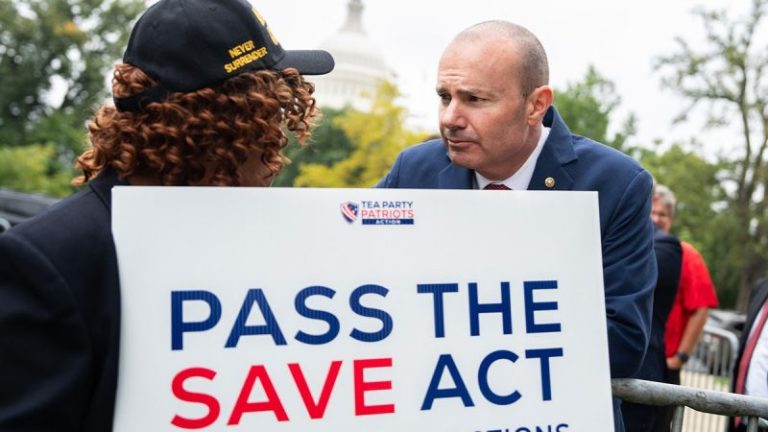
The vow to halt all new law signings is a new one coming from the White House and notable because of the Senate hesitation to follow the urgings of Sen. Mike Lee, R-Utah, to force the Senate to bring the bill forward through the talking filibuster.

‘I, as President, will not sign other Bills until this is passed,’ Trump’s post continued, ‘AND NOT THE WATERED DOWN VERSION – GO FOR THE GOLD: MUST SHOW VOTER I.D. & PROOF OF CITIZENSHIP: NO MAIL-IN BALLOTS EXCEPT FOR MILITARY – ILLNESS, DISABILITY, TRAVEL: NO MEN IN WOMEN’S SPORTS: NO TRANSGENDER MUTILIZATION FOR CHILDREN! DO NOT FAIL!!!’

While Senate Majority Leader John Thune, R-S.D., has publicly acknowledged a willingness to bring a vote on the SAVE America Act before the upper chamber, there is hesitation within the Republican Party about forcing the talking filibuster under the current Senate rules.

The talking filibuster would force Democrats to speak on the Senate floor to argue against a voter identification position widely supported by Americans, as Trump noted, but it would also force Republicans to sit in attendance with a quorum. That has been rebuked by longtime Senate GOP veterans as something that would ‘waste time.’

Former Senate GOP leader Mitch McConnell, R-Ky., has been publicly opposed to forcing a talking filibuster because of the time constraints it would force on the Senate GOP, and he remains one of the few Senate Republicans not signing on to support the SAVE America Act.

Another development that clouds the SAVE America Act filibuster is the recent appointment of Sen. Markwayne Mullin, R-Okla., to serve as the next Department of Homeland Security secretary, perhaps resigning from the Senate by the end of March.

Fox News Digital reached out to Mullin’s office for comment. McConnell’s office declined to comment on Trump’s Truth Social vow to block all new law signings amid the standoff on the DHS funding that has the government in a partial shutdown and the Senate sitting on the House-passed SAVE America Act.

‘We’re going to have a vote on this, but in terms of what the president is willing to sign, Maria, we need to get the Department of Homeland Security funded,’ Senate Majority Whip John Barrasso, R-Wyo., told Maria Bartiromo on ‘Sunday Morning Futures.’

‘The Democrats have blocked that right now. And the greatest threat to the American people today is terrorism. So I want to make sure that the Democrats work with us to pass and fund the Department of Homeland Security, because I’m worried about the lone wolf, the sleeper cells and the cyber terrorism that’s coming our way because of what Iran is telling people around the world to do to continue this reign of terror,’ Barrasso said.

Getting to 60 votes in the Senate is unlikely with just Sen. John Fetterman, D-Pa., as the lone potential Democrat vote to side with the Senate GOP on the SAVE America Act.

‘The Democrats are against so many of the things that I think help this country,’ Barrasso added to Bartiromo. ‘They’d rather stand with illegal immigrant criminals than with the safety and security of the American people. I want to get the SAVE Act to the floor. I want to have a vote.’

‘That’s the next step on this need to get the Department of Homeland Security open and funded,’ he continued. ‘The Democrats are bowing to the liberal left: The people that want to eliminate ICE, the people that want open borders again, and the people that really aren’t looking out for the best interest of the American people.

‘As the president said in the State of the Union, it is the first duty of the American government to protect American citizens, not illegal aliens. But that’s what not one single Democrat stood up for that when every Republican stood and cheered loudly.’

Barrasso, the Senate GOP member whipping up support, considers the SAVE America Act ‘common sense.’

‘You want to make sure that only citizens can vote,’ he concluded to Bartiromo. ‘You want to make sure that when people show up, they have a photo ID to prove they are who they say they are. You need a photo ID to buy a beer, to board a plane, all of those things. And it’s 90% popular with the American people. The only people against this are the Democrats because they want to make it easier to cheat.’

Related Article

DAVID MARCUS: Passing the Save America Act to save Cornyn is a fair deal
This post appeared first on FOX NEWS