Archive

March 9, 2026

Browsing

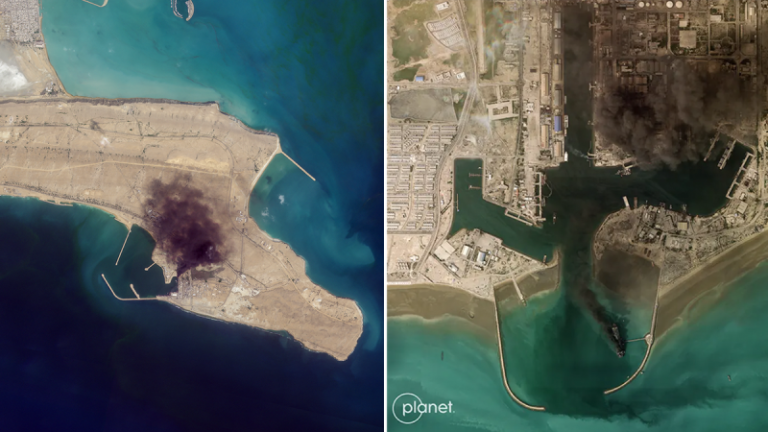
Fresh satellite images give a rare aerial view of the damage across Iran after U.S.-Israeli strikes and what Tehran’s retaliation left behind across the region.

Planet Labs satellite imagery captured burning ships and damaged facilities at the Konarak base in southern Iran, as well as significant destruction at Iran’s naval headquarters in Bandar Abbas on the Persian Gulf, reflecting the scale of the strikes on military infrastructure.

Imagery from Vantor shows damage to facilities and vessels located in Iran’s Bushehr port in the Persian Gulf.

In addition to naval assets, satellite photos show a bunker at Bushehr air base hit by a strike, leaving a large crater and destroying several nearby small buildings.

More strikes targeted the Choqa Balk drone facility in western Iran.

Radar systems at the Zahedan air base in eastern Iran — near the country’s borders with Pakistan and Afghanistan — were also struck.

The two facilities are about 800 to 900 miles apart, underscoring the broad reach of the coordinated strikes.

Satellite imagery also reveals damage to aircraft on the tarmac at Shiraz air base, including scorch marks and debris around several parking areas.

Satellite imagery from Planet Labs shows thick smoke plumes rising above Tehran, signaling explosions and fires inside the Iranian capital.

The smoke underscores how the conflict has moved beyond isolated military sites and into the heart of Iran’s political center.

Iran has since responded with missile and drone strikes of its own, expanding the conflict across the region. 

Satellite images reveal damage to the port city of Sharjah in the United Arab Emirates. Sharjah is the third most populous after Dubai and Abu Dhabi.

The Jebel Ali Port, the region’s largest maritime hub, was also targeted, underscoring how the retaliation extended beyond military sites to key infrastructure.

The new satellite imagery comes on the heels of U.S.-Israeli strikes that killed Iran’s supreme leader, Ayatollah Ali Khamenei, and several top members of the regime, triggering a succession crisis.

President Donald Trump warned on Sunday that Iran’s new leader is ‘not going to last long’ without U.S. approval as Operation Epic Fury marches into a third week. 

Related Article

Watch shipping through the Strait of Hormuz grind to a halt amid Iran conflict
This post appeared first on FOX NEWS

As Americans are stranded in the Middle East amid the U.S. and Israel war with Iran, government and private agencies are working around the clock to conduct evacuations.

In addition to the U.S. Department of State’s 24/7 task force aimed at evacuating Americans, private security firm Global Guardian is also working around the clock to complete the same mission.

As of Friday, Global Guardian has evacuated more than 4,000 people from the Middle East, according to its CEO and President, Dale Robert Buckner.

While operations and logistics teams sit in an office building in northern Virginia, the firm has personnel in more than 140 countries, allowing Global Guardian access to nearly every corner of the world for emergency response or evacuations.

‘We provide medical evac services, we provide kidnap, ransom, extortion negotiation payment if someone is kidnapped or extorted,’ Buckner said. ‘We’re providing about 300 missions a month of executive protection travel, in about 84 countries a month.’

The private security firm also conducts camera surveillance of residences and commercial property and has cyber analysts monitoring mobile devices. 

After the U.S. and Israel struck Iran in a joint attack last weekend, the firm has been coordinating multiple emergency response evacuations — but this isn’t the first time it has assisted Americans out of a crisis zone.

‘That means getting people out of Puerto Vallarta a week ago, and Jalisco, Mexico. That means getting people out of Asheville, North Carolina when it got wiped out by a hurricane,’ Buckner said. 

Logistically, getting tourists out of a war zone and back to safety is a process, but the firm works fast, completing their first border crossing within the first six hours of the missile strikes.

Immediately, the firm received a call from a pair of students studying abroad, Deputy Vice President of Operations Colin O’Brien told Fox News. He said they were trying to leave Dubai.

‘Within about four and a half hours from the phone call, we had our teams in motion to go pick these people up and it was two college-aged women,’ said O’Brien.

‘Put them in the car, we were then able to move from the Omani border and by eight hours we were at the border. Work through the border checkpoint to a hotel in Muscat, where we could stop and give them a short rest while we arrange their transportation home,’ he says. 

The group said it remains active year-round to ensure evacuation plans are in place before disasters strike.

‘There’s a narrative of, here’s the pickup point, here’s the key crossing site,’ Buckner said. ‘This is what you’re gonna need from a paperwork standpoint, legally. And then we’re gonna put you in a hotel or straight onto a commercial flight. Most likely, at this point in the war, we’re gonna put you on a private charter.’

Buckner said most of these missions happening in the region are ground movement, done by locals. He says in the 140 countries the firm is in, they have ground teams working year-round. Consistently training year-round. 

‘We’re communicating, we’re coordinating, we’re executing. Executive protection agents, armed agents, armed vehicles, large-scale event support with medical and security personnel,’ he said, describing the firm’s standard operating capabilities.

‘We’re coordinating whether the firm needs drivers. From Dubai to Oman, Israel to either Oman, Jordan or Egypt. Out of Bahrain into Saudi Arabia,’ Buckner said.

While the firm is coordinating with the State Department, it said it has not yet conducted a flight mission on behalf of the department.

Global Guardian offers these services through what it calls a ‘Duty of Care Membership,’ which Buckner said costs $15,000 per year for a family of five.

‘You are going to sign a contract — whether it’s a family, a family office or typically a large corporate logo. Then we become, at your beck and call,’ Buckner said, describing the emergency response services included in the agreement.

For Americans currently stuck in the Middle East, Buckner said the cost of evacuation using ground and air resources varies depending on the situation and location.

Related Article

Trump says defense giants will quadruple production of ‘exquisite class’ weapons after White House meeting
This post appeared first on FOX NEWS

President Donald Trump’s latest push to slash prescription drug prices promises relief at the pharmacy counter, but behind the headline savings lie trade-offs that could reshape how drugs are developed, priced and delivered in the United States.

To deliver on that promise, the administration has rolled out TrumpRx, a federal price-comparison platform aimed at lowering out-of-pocket costs. The effort unfolds against the backdrop of the midterm election cycle, where rising healthcare costs remain a central concern for voters and a defining campaign issue.

The political appeal is clear, but experts warn the economics are messier. Economists point to a basic trade-off: lower prices today can shape how and whether new drugs are developed tomorrow.

‘When drug prices are capped or negotiated down, companies anticipate lower returns, reducing investment in drug research and development,’ said Olivia Mitchell, a professor of business economics and public policy at the Wharton School.

‘Economic evidence shows that lower prices depress incentives to develop new drugs,’ she added. 

‘In the short term, patients and payers can see meaningful savings through lower prices and out-of-pocket costs, but in the longer term, there is more risk of fewer or slower-arriving new medicines, especially in areas most exposed to price controls.’

Michael Baker, director of healthcare policy at the American Action Forum, said government price setting does not eliminate costs so much as redistribute them.

‘At the most basic level, government price setting only limits what patients pay for a drug — usually reflected in an out-of-pocket or co-insurance payment,’ Baker said. ‘This does nothing to address the overall cost of the drug, which someone still has to pay, nor does it lower the cost associated with development.’

As a result, he said, those costs could reemerge through tighter health coverage rules, fewer treatment options or reduced future innovation.

Supporters of the administration counter that the policy does not amount to strict government price caps. Instead, they describe it as a negotiated arrangement.

Ed Haislmaier of the Heritage Foundation said companies appear to be lowering prices in exchange for expanded market access or other relief, a structure he argues avoids the most disruptive effects of traditional price controls.

‘In such cases, companies are likely calculating that revenue losses from lower prices will be offset by revenue gains from more sales,’ Haislmaier told Fox News Digital. 

‘The kind of government price controls that are most damaging to innovation are ones that limit the initial price a company can charge for a new product. That is the situation in some countries, but fortunately not yet in the United States,’ he added.

For patients squeezed by rising costs, the promise of immediate savings is hard to dismiss. 

But economists say the long run question is whether the system can deliver cheaper drugs without dulling the incentives that produce the next generation of treatments —an issue both parties are likely to keep pressing as health costs stay front and center.

This post appeared first on FOX NEWS

Lawmakers on Capitol Hill could soon add another priority to their growing agenda as Republicans work to navigate a partial government shutdown and other deadlines looming in the next several weeks — weighing whether to provide additional cash to fund President Donald Trump’s operation in Iran.

Early chatter is beginning in the House of Representatives over a potential supplemental funding bill to aid the U.S. and Israel’s joint strikes on Iran, depending on how long the operation lasts and how much both countries bear down on the Islamic Republic.

House Appropriations Committee Chairman Tom Cole, R-Okla., told reporters last week that he would ‘expect’ a supplemental funding request from the Department of War ‘well before the end of the year.’

‘We’ve been told the Pentagon is looking at it, but we haven’t been given anything about an amount or time frame yet,’ Cole said.

Asked by Fox News Digital about what kind of price tag he would expect, Cole speculated, ‘Maintaining two carrier battle groups in action is not a cheap thing, not to mention all the other resources that are being expended. So I would expect it to be very robust.’

‘It’s been a pretty frequent part of conversation,’ House Foreign Affairs Committee Chairman Brian Mast, R-Fla., told Fox News Digital of an Iran funding bill.

House Homeland Security Committee Chairman Andrew Garbarino, R-N.Y., also told Fox News Digital he would ‘absolutely’ back a defense supplemental funding bill.

A senior member of the House Appropriations Committee, who was granted anonymity to speak freely, said they envisioned a modest increase in funding for Iran but said there were multiple variables at work that made a total cost unknowable at this point.

‘It depends on how long it lasts,’ they said. ‘A lot of this depends on, do our Gulf Coast partners participate? If they do, that helps. It depends on how long Israel goes. But we’ll definitely need some more munitions, so I’d say a small supplemental is probably important to just restock.’

But it will likely be difficult to sell the need for more Iran funding to House Democrats, many of whom have argued Trump’s involvement has amounted to an illegal war.

‘We’ll cross that bridge when we get to it in terms of if the administration makes a request to Congress to consider additional funding,’ House Minority Leader Hakeem Jeffries, D-N.Y., told NBC’s ‘Meet The Press’ on Sunday. ‘But at this particular point in time, the administration has failed to make its case as to the rationale or justification for this war of choice in the Middle East.’

And with the House GOP’s razor-thin majority, which is expected to grow to two votes after a special election in Georgia this week, Republican leaders could have a tough time appeasing fiscal hawks in their own party.

‘We need to know what the terms of the conflict are going to be, how long — a lot of us are very happy with going after and taking out Iran’s capabilities and taking out a lot of their bad guys, but what’s the endgame?’ Rep. Chip Roy, R-Texas, said to Fox News Digital.

‘Number two, is it paid for? So, you know, general support for what we’re doing to go after the bad guys, but we’ve got to know what the limits are and how much it’s gonna cost, and if it’s paid for.’

Even if it passes the House, such legislation would need 60 votes to advance in the Senate, meaning at least several Democrats would need to be on board. 

Fox News Digital reached out to the Department of War for additional comment.

This post appeared first on FOX NEWS

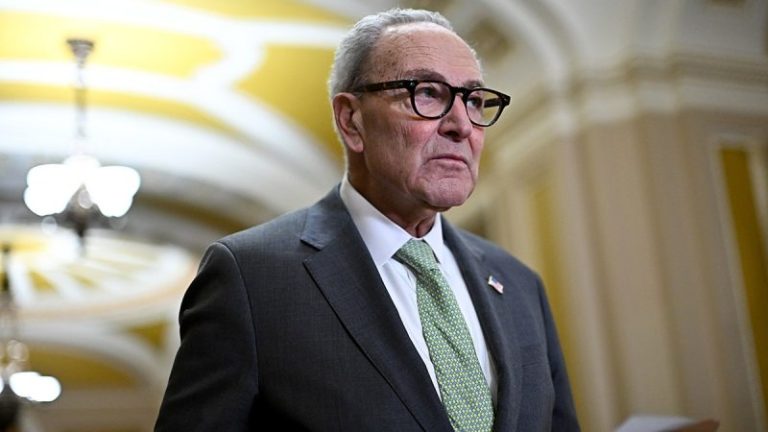
The top Senate Democrat wants President Donald Trump to tap the nation’s oil stockpile as fuel prices skyrocket, years after blocking his attempt to replenish the supply when prices were low.

Senate Minority Leader Chuck Schumer, D-N.Y., called on Trump to unleash reserve barrels of oil from America’s Strategic Petroleum Reserve (SPR) as oil prices spike amid the ongoing conflict in the Middle East.

Schumer argued in a statement that the reserve ‘exists for moments exactly like this.’

‘When wars and global crises disrupt energy markets, the United States has the ability to act, but President Trump and his administration are refusing to do so,’ Schumer said. ‘Trump should release oil from the SPR now to stabilize markets, bring prices down, and stop the price shock that American families are already feeling thanks to his reckless war.’

During his first term, Trump wanted to use about $3 billion from a colossal COVID-19 stimulus package making its way through Congress to fill the reserve, but the move was promptly rejected by Schumer and congressional Democrats, who panned it as a ‘bailout’ for the oil industry.

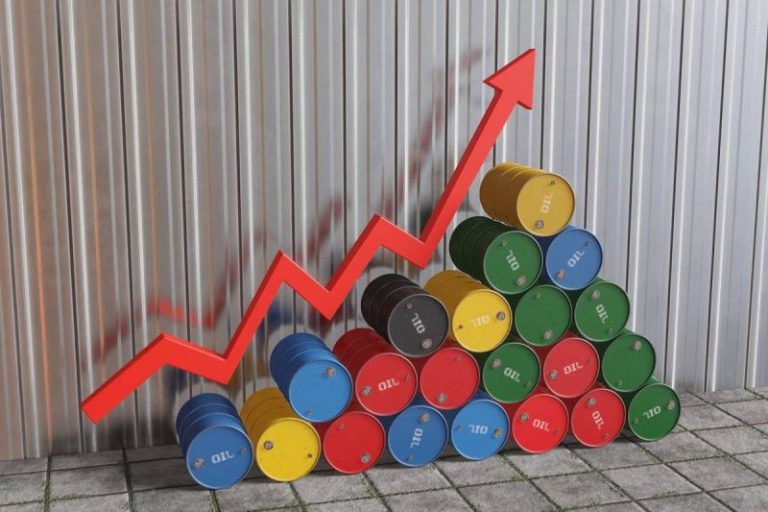
The price per barrel at the time was roughly $29, according to WTI Crude Oil. Now, oil has eclipsed $110 per barrel over the weekend for the first time since 2022.

Though the SPR has capacity for over 700 million barrels of crude oil, the reserve currently has far less.

That’s because under former President Joe Biden, it was tapped twice — once to relieve soaring fuel prices as the nation still grappled with the economic fallout from the COVID-19 pandemic, and another time to combat increased energy costs at the onset of the war between Russia and Ukraine.

At the end of Biden’s term, the reserve had about 415 million barrels of crude on hand, according to data from the Department of Energy. Schumer supported both instances when Biden opened the nation’s oil reserves but, years prior, blocked Trump from building up the stockpile toward the end of his first term.

‘Senator Schumer championed Joe Biden’s Green New Scam, which raised energy costs, threatened our national security, and stifled American energy independence,’ White House spokeswoman Taylor Rogers told Fox News Digital in a statement. ‘President Trump has been unleashing American energy dominance since day one, and now, American oil and gas production is at record highs.’ 

Schumer lauded Biden’s first move to tap into the SPR in 2021, arguing that it provided ‘much-needed temporary relief at the pump.’

‘Of course, the only long-term solution to rising gas prices is to continue our march to eliminate our dependence on fossil fuels and create a robust green energy economy,’ he said at the time.

And toward the end of Biden’s presidency, his administration did buy back barrels of oil to refill the reserves, which Schumer did not object to. 

Fast-forward, and the price per barrel of oil has launched into the stratosphere since Trump’s Operation Epic Fury and Iran’s response to put the Strait of Hormuz — a key route ferrying barrels around the globe — into a chokehold.

For now, the administration has no public plans to tap into the reserve as Americans undergo sticker shock at the pump.

Energy Secretary Chris Wright argued that the best way to lower prices was to reopen the Strait of Hormuz by neutralizing Iran’s ability to target oil tankers.

Wright told Fox News over the weekend that the disruption would last for ‘weeks, certainly not months.’

‘We believe this is a small price to pay to get to a world where energy prices will return back to where they were,’ Wright said. ‘Iran will finally be defanged, and now you can see more investment, more free flow of trade, and less ability to threaten energy supplies.’

This post appeared first on FOX NEWS

Oreterra Metals Corp. (TSXV: OTMC,OTC:OTMCF) (OTCID: OTMCF) (FSE: D4R0) (WKN: A421RQ) (‘Oreterra’ or the ‘Company’) announces the granting of stock options to directors and officers to purchase an aggregate of 4,507,750 common shares of the Company. The stock options are exercisable at a price of $0.64 per common share and have a term of five (5) years from the date of grant. The stock option grant is subject to approval by the TSX Venture Exchange.

About Oreterra Metals Corp.

Oreterra Metals Corp. commenced trading on February 2, 2026, under the ticker OTMC, following a months-long effort to restructure the former Romios Gold Resources Inc. Management took on the task because it believes the Company’s wholly-owned Trek South porphyry copper-gold prospect represents, based upon the impressive results of the spectrum of geosciences applied to the target area to date, among the finest new targets of its kind in BC’s Golden Triangle. The Company recently released (news, January 22, 2026) a National Instrument 43-101 Technical Report for the Trek property which recommends two initial phases of drilling at Trek South, for execution in the approaching 2026 field season. A copy of the Technical Report is available on the Company’s website at www.oreterra.com, and on the Company’s SEDAR+ issuer profile at www.sedarplus.ca.

Additional wholly-owned Company property interests include two former producers in Nevada: the Kinkaid claims in the Walker Lane trend covering numerous shallow Au-Ag-Cu workings over what is believed to be one or more porphyry centres (source: J.Biczok, P.Geo, June 2025, Kinkaid Gold-Copper-Silver Project, www.oreterra.com), and the Scossa mine property in the Sleeper trend which is a former high-grade gold producer (source: J.Biczok, P.Geo, July 2025, Scossa Historic Gold Mine Property, www.oreterra.com). The Company also holds a 100% interest in the large Lundmark-Akow Lake Au-Cu property adjacent to the northwest of the Musselwhite Mine in northwestern Ontario, where drilling by the Company has produced highly encouraging, broad VMS-style Au-Cu intersections.

For further information, visit www.oreterra.com or contact:

Kevin M. Keough
Chief Executive Officer
Tel: 613 622-1916
Email: kkeough@oreterra.com
Stephen Burega
President
Tel: 647 515-3734
Email: sburega@oreterra.com


Neither the TSX Venture Exchange nor its Regulation Services Provider (as that term is defined in the policies of the TSX Venture Exchange) accepts responsibility for the adequacy or accuracy of this release.

Cautionary Statement Regarding Forward-Looking Information

This news release includes certain ‘forward-looking statements’ which are not comprised of historical facts. Forward-looking statements include estimates and statements that describe the Company’s future plans, objectives or goals, including words to the effect that the Company or management expects a stated condition or result to occur. Forward-looking statements may be identified by such terms as ‘believes’, ‘anticipates’, ‘expects’, ‘estimates’, ‘may’, ‘could’, ‘would’, ‘will’, or ‘plan’. Since forward-looking statements are based on assumptions and address future events and conditions, by their very nature they involve inherent risks and uncertainties. Although these statements are based on information currently available to the Company, the Company provides no assurance that actual results will meet management’s expectations. Risks, uncertainties and other factors involved with forward-looking information could cause actual events, results, performance, prospects and opportunities to differ materially from those expressed or implied by such forward-looking information. Factors that could cause actual results to differ materially from such forward-looking information include, but are not limited to failure to identify mineral resources, delays in obtaining or failures to obtain required governmental, environmental or other project approvals, political risks, inability to fulfill the duty to accommodate First Nations, uncertainties relating to the availability and costs of financing needed in the future, changes in equity markets, inflation, changes in exchange rates, fluctuations in commodity prices, delays in the development of projects, capital and operating costs varying significantly from estimates and the other risks involved in the mineral exploration and development industry, and those risks set out in the Company’s public documents filed on SEDAR+. Although the Company believes that the assumptions and factors used in preparing the forward-looking information in this news release are reasonable, undue reliance should not be placed on such information, which only applies as of the date of this news release, and no assurance can be given that such events will occur in the disclosed time frames or at all. The Company disclaims any intention or obligation to update or revise any forward-looking information, whether as a result of new information, future events or otherwise, other than as required by law.

To view the source version of this press release, please visit https://www.newsfilecorp.com/release/287697

News Provided by TMX Newsfile via QuoteMedia

This post appeared first on investingnews.com

  • Advancing Alzheimer’s and Age-Related Macular Degeneration Programs Toward FDA Engagement and IND-Enabling Activities
  • Targeting Initiation of Phase 1 Clinical Trial in Alzheimer’s Disease in 2027

InMed Pharmaceuticals Inc. (NASDAQ: INM) (‘InMed’ or the ‘Company’), a pharmaceutical company focused on developing a pipeline of disease-modifying small molecule drug candidates that target CB1CB2 receptors, today provides a pharmaceutical development outlook for 2026.

‘Over the last several quarters, we made meaningful scientific and operational progress across our pipeline, particularly with INM-901, generating data that fundamentally strengthened its scientific rationale and strategic positioning in the Alzheimer’s segment. These results support a differentiated approach to Alzheimer’s disease that extends beyond single-target strategies. We further refined the program’s direction and reinforced our conviction that targeting neuroinflammation is critical to addressing Alzheimer’s disease progression,’ commented Eric A. Adams, InMed President and CEO.

‘Looking ahead in 2026, our primary focus is executing activities toward a pre-IND meeting with the FDA in Q3 to discuss the INM-901 program, which we believe will be a key inflection point as we work toward IND submission and initiation of a Phase 1 clinical trial in 2027. In parallel, we will continue developing INM-089 and plan for a pre-IND meeting in Q4 2026.’

INM-901 Program Outlook

INM-901 is a proprietary, orally bioavailable, disease-modifying small molecule drug candidate that is a preferential CB1/CB2 signaling agonist and can cross the blood-brain barrier with a specific focus on treating neuroinflammation in Alzheimer’s disease. InMed believes INM-901 is uniquely positioned within the evolving Alzheimer’s disease treatment landscape as increasing scientific consensus suggests that the disease is driven by multiple, interrelated biological pathways, rather than a single pathogenic mechanism.

InMed has generated preclinical evidence supporting that INM-901 exerts a therapeutic effect by directly attenuating neuroinflammation, which functions as a primary pathogenic driver for the Alzheimer’s disease progression rather than a secondary or a reactive effect. Additional data on neuroprotection and neuritogenesis of INM-901 demonstrated a multifactorial mechanism of action, engaging several complementary pathways critical to mitigate neurodegeneration. By clarifying its focus, InMed strengthened the clinical and commercial rationale for INM-901 and positioned the program to pursue the most efficient and impactful path forward.

Scientific and Development Progress in 2025 include:

Key Anti-Neuroinflammation Progress

    Progress Across Additional Mechanisms Within Alzheimer’s Pathology

    • Molecular Validation: mRNA data aligns with behavioral findings, supporting observed improvements in cognition, memory and neurogenesis.

    Additional Drug Development Progression

    • Initiation of the dose-ranging and exposure assessments supporting advancement toward IND-enabling studies.
    • Progress in drug substance and drug product development, including formulation development and scale up to support dose ranging and future GLP studies.
    • Advancement of drug product and drug substance analytical methods and stability assessments consistent with regulatory expectations.
    • Initiation of a regulatory and clinical development framework to support first-in-human evaluation.

    2026 Development Priorities for INM-901 include:

    • Conduct a pre-IND meeting with the U.S. Food and Drug Administration in Q3/2026.
    • Continue to execute on IND-enabling pharmacology and toxicology studies.
    • Continued development and scale up of drug substance and product manufacturing activities to support IND enabling studies and submission.
    • Subject to regulatory feedback and completion of IND-enabling activities, the Company targets submission of an IND and initiation of a Phase 1 clinical trial in 2027.

    As we move forward, the progress achieved to date reinforces our confidence in INM-901 and in our strategic direction with a disciplined focus on neuroinflammation with a clear development plan. We believe we are positioned to advance INM-901 efficiently and deliver meaningful long-term value for shareholders.

    INM-089 Program Outlook

    INM-089 is a small molecule drug candidate being studied for its potential as a treatment for dry age-related macular degeneration.

    Scientific and development progress and plans include:

    • Generation of data supporting continued evaluation of therapeutic potential.
    • Completion of preclinical studies, including dose-ranging assessment, demonstrating dose proportionality and pharmacologically relevant concentration following dosing.
    • Drug substance and drug product process in place to support IND enabling studies, with further optimization expected in advance of IND submission.
    • Planning for a pre-IND meeting with the FDA in Q4 2026.

    About InMed:

    InMed Pharmaceuticals is a pharmaceutical company focused on developing a pipeline of proprietary small molecule drug candidates targeting the CB1/CB2 receptors. InMed’s pipeline consists of three separate programs in the treatment of Alzheimer’s, ocular and dermatological indications. For more information, visit www.inmedpharma.com.

    Investor Contact:
    Colin Clancy
    Vice President, Investor Relations
    and Corporate Communications
    T: +1.604.416.0999
    E: ir@inmedpharma.com

    Cautionary Note Regarding Forward-Looking Information:

    This news release contains ‘forward-looking information’ and ‘forward-looking statements’ (collectively, ‘forward-looking information’) within the meaning of applicable securities laws. Forward-looking statements are frequently, but not always, identified by words such as ‘expects’, ‘anticipates’, ‘believes’, ‘intends’, ‘potential’, ‘possible’, ‘would’ and similar expressions. Such statements, based as they are on current expectations of management, inherently involve numerous risks, uncertainties and assumptions, known and unknown, many of which are beyond our control. Forward-looking information is based on management’s current expectations and beliefs and is subject to a number of risks and uncertainties that could cause actual results to differ materially from those described in the forward-looking statements. Without limiting the foregoing, forward-looking information in this news release includes, but is not limited to, statements about: developing a pipeline of disease-modifying small molecule drug candidates that target CB1/CB2 receptors; the potential efficacy of INM-901; INM-901’s ability to treat Alzheimer’s; marketability and uses for INM-901; the advancement of chemistry, manufacturing, and controls (CMC) activities; the planning of GLP-enabling studies and the preparation of an IND submission the further development; planning for a pre-IND meeting in Q3 2026; engaging regulatory / clinical experts to map out topline clinical design for first in human clinical trials for the INM-901; targeting submission of an IND and initiation of a Phase 1 clinical trial in 2027; potential efficacy, and marketability of INM-089 for dry age-related macular degeneration; preparing for a pre-IND meeting with the FDA in Q4 2026 for INM-089.

    Additionally, there are known and unknown risk factors which could cause InMed’s actual results, performance, or achievements to be materially different from any future results, performance or achievements expressed or implied by the forward-looking information contained herein. A complete discussion of the risks and uncertainties facing InMed’s business is disclosed in InMed’s Annual Report on Form 10-K and other filings with the Securities and Exchange Commission on www.sec.gov.

    All forward-looking information herein is qualified in its entirety by this cautionary statement, and InMed disclaims any obligation to revise or update any such forward-looking information or to publicly announce the result of any revisions to any of the forward-looking information contained herein to reflect future results, events or developments, except as required by law.

    To view the source version of this press release, please visit https://www.newsfilecorp.com/release/287694

    News Provided by TMX Newsfile via QuoteMedia

    This post appeared first on investingnews.com

    West High Yield Resources Ltd. (TSXV: WHY,OTC:WHYRF) (the ‘Company’ or ‘West High Yield’) is pleased to announce that it has received a draft access permit (the ‘Draft Permit’) from the British Columbia Ministry of Transportation and Transit (the ‘MOTT’) for highway access associated with the Company’s Record Ridge Industrial Mineral Mine project (the ‘RRIMM Project’) located near Rossland, British Columbia.

    The Draft Permit outlines the proposed framework for controlled RRIMM Project access from the provincial highway system, including the Cascade Highway corridor. This represents another key regulatory step forward as the Company advances the RRIMM Project following the issuance of its Mines Act permit from the British Columbia Ministry of Mines on October 20, 2025.

    Highway access is a critical infrastructure component for the RRIMM Project, supporting construction mobilization, transportation logistics, and future mining operations. The Company will now work with the MOTT to finalize permit conditions, including final engineering design, traffic safety measures, and operational parameters required for project access.

    The receipt of the Draft Permit further strengthens the RRIMM Project’s position as one of the most advanced permitted magnesium projects under development in North America, at a time when governments across Canada and the United States are prioritizing the development of domestic critical minerals supply chains.

    Magnesium is recognized as a strategic material essential to automotive lightweighting, aerospace manufacturing, defense applications, and advanced industrial alloys. Global supply is currently highly concentrated outside North America, creating increasing urgency for the development of secure, domestic sources of magnesium and related critical materials.

    ‘Receiving the draft highway access permit from the Ministry of Transportation and Transit is another important milestone as we continue advancing Record Ridge toward development,’ said Frank Marasco, West High Yield’s President and CEO. ‘Infrastructure access is fundamental to transitioning the project from permitting into construction readiness. With the Mines Act Permit already secured, this step moves us closer to unlocking one of North America’s largest and most strategically positioned magnesium resources.’

    ‘With global leaders at PDAC 2026 highlighting a ‘hinge moment’ for the mining sector, we believe Record Ridge is well positioned to contribute to Canada’s critical minerals strategy,’ Mr. Marasco continued. ‘As magnesium becomes increasingly important for advanced manufacturing and clean technologies, Record Ridge has the potential to provide a secure, low-carbon source of magnesium for North American supply chains.’

    The Company is diligently working with its consultants and government authorities to advance post-permit compliance requirements and complete remaining project permitting. In parallel, the Company continues to advance several development initiatives, including pilot processing programs, engineering studies, and strategic industry engagement, with the goal of advancing the processing plant project toward a commercial feasibility study planned for mid-2026.

    The Company will provide additional updates as further project development milestones are achieved.

    About West High Yield

    West High Yield is a publicly traded junior mining exploration and development company, established in 2003, and focused on acquiring, exploring, and developing mineral resource properties in Canada. Its primary objective is to develop its Record Ridge critical mineral (magnesium, silica, and nickel) deposit using green processing techniques to minimize waste and CO2 emissions.

    The Company’s Record Ridge critical mineral deposit located 10 kilometers southwest of Rossland, British Columbia has approximately 10.6 million tonnes of contained magnesium based on an independently produced National Instrument 43-101 – Standards of Disclosure for Mineral Projects (‘NI 43-101‘) Preliminary Economic Assessment technical report (titled ‘Revised NI 43-101 Technical Report Preliminary Economic Assessment Record Ridge Project, British Columbia, Canada’) prepared by SRK Consulting (Canada) Inc. on April 18, 2013 in accordance with NI 43-101 and which can be found on the Company’s profile at https://www.sedarplus.ca.

    Qualified Person

    Rick Walker, B.Sc., M.Sc., P.Geo., the Company Geologist is a Qualified Person as defined in NI 43-101 and has reviewed and approved the technical information in this press release.

    Contact Information:

    West High Yield (W.H.Y.) RESOURCES LTD.

    Frank Marasco Jr., President and Chief Executive Officer
    Telephone: (403) 660-3488
    Email: frank@whyresources.com

    Barry Baim, Corporate Secretary
    Telephone: (403) 829-2246
    Email: barry@whyresources.com

    Cautionary Note Regarding Forward-looking Information

    This press release contains forward-looking statements and forward-looking information within the meaning of Canadian securities legislation. The forward-looking statements and information are based on certain key expectations and assumptions made by the Company. Although the Company believes that the expectations and assumptions on which such forward-looking statements and information are based are reasonable, undue reliance should not be placed on the forward-looking statements and information because the Company can give no assurance that they will prove to be correct.

    Forward-looking information is based on the opinions and estimates of management at the date the statements are made and are subject to a variety of risks and uncertainties and other factors that could cause actual events or results to differ materially from those anticipated in the forward-looking information. Some of the risks and other factors that could cause the results to differ materially from those expressed in the forward-looking information include, but are not limited to: general economic conditions in Canada and globally; industry conditions, including governmental regulation; failure to obtain industry partner and other third party consents and approvals, if and when required; the availability of capital on acceptable terms; the need to obtain required approvals from regulatory authorities; and other factors. Readers are cautioned that this list of risk factors should not be construed as exhaustive.

    Readers are cautioned not to place undue reliance on this forward-looking information, which is given as of the date hereof, and to not use such forward-looking information for anything other than its intended purpose. The Company undertakes no obligation to update publicly or revise any forward-looking information, whether as a result of new information, future events or otherwise, except as required by applicable law.

    NEITHER THE TSX VENTURE EXCHANGE NOR ITS REGULATION SERVICES PROVIDER (AS THAT TERM IS DEFINED IN THE POLICIES OF THE TSX VENTURE EXCHANGE) ACCEPTS RESPONSIBILITY FOR THE ADEQUACY OR ACCURACY OF THIS RELEASE.

    To view the source version of this press release, please visit https://www.newsfilecorp.com/release/287761

    News Provided by TMX Newsfile via QuoteMedia

    This post appeared first on investingnews.com

    Global oil and gas prices rallied sharply over the weekend as escalating geopolitical tensions in the Middle East rattled energy markets and triggered fears of a major supply disruption.

    Benchmark crude prices surged to their highest levels in years, with traders pricing in the possibility of prolonged instability across one of the world’s most important energy-producing regions. Brent crude briefly climbed above US$115 a barrel in early trading, while US benchmark West Texas Intermediate (WTI) also spiked sharply, marking one of the largest short-term gains since the energy shock following Russia’s invasion of Ukraine in 2022.

    At the heart of the rally is the escalating conflict involving Iran and its regional rivals, which has raised concerns about the security of critical oil infrastructure and shipping routes.

    Analysts say the market reaction reflects the risk that the conflict could disrupt flows through the Strait of Hormuz, a narrow waterway that normally carries roughly 20 percent of the world’s oil supply.

    Recent attacks on energy infrastructure have intensified those fears. In early March, a drone strike targeted Saudi Arabia’s Ras Tanura refinery, one of the kingdom’s largest oil processing facilities, prompting temporary operational disruptions and contributing to an immediate spike in global crude prices.

    At the same time, tanker traffic through the Strait of Hormuz has plummeted as shipping companies and energy traders reassess risks in the region. Reports indicate that hundreds of vessels have avoided the route, effectively constraining the flow of crude from major Gulf exporters including Saudi Arabia, Iraq, Kuwait and the United Arab Emirates.

    Markets are particularly sensitive to disruptions in the Gulf because the region serves as a critical artery for global energy trade. If the conflict escalates further or shipping lanes remain restricted, analysts warn that millions of barrels per day could be removed from the market.

    “The conflict has shifted from geopolitical risk to real supply disruption,” analysts said, noting that energy infrastructure attacks and transport bottlenecks are tightening the global supply outlook.

    Energy traders are also watching the potential response from major producing nations and international organizations. The Organization of the Petroleum Exporting Countries and its allies, known as OPEC+, have historically attempted to stabilize markets by adjusting production quotas. Decisions by the group to cut or increase output often play a decisive role in shaping oil prices.

    From surplus to deficit

    “The global oil market has been in significant surplus since the start of 2025. Ahead of the military actions that began on 28 February, global oil supply was also expected to far exceed demand in 2026,” an International Energy Agency report notes.

    “However, prolonged supply disruptions could flip the market into a deficit. The disruption to oil flows through the Strait has forced some operators to start shutting in production. The region’s output of refined products has also been impacted.”

    Meanwhile, some governments are weighing the release of strategic petroleum reserves in an attempt to dampen the rally. Several Group of Seven countries have signaled they could coordinate emergency stockpile releases if supply disruptions worsen.

    Despite these potential interventions, market analysts warn that geopolitical shocks tend to produce sharp and prolonged price swings. If the current conflict expands or energy infrastructure remains under threat, crude prices could climb even higher, with some forecasts suggesting oil could test US$120 to US$150 per barrel under severe supply constraints.

    For the Independent Commodity Intelligence Services (ICIS) the duration of any disruption is the most critical factor in determining the scale of price impacts.

    ICIS model-based analysis suggests that even a relatively short interruption to shipping through the Strait could push European gas prices sharply higher. Under a scenario in which the waterway is closed for four weeks, benchmark prices at the Title Transfer Facility (TTF) could rise to approximately 60 euros per megawatt-hour in March, with summer prices remaining about 20 percent above pre-crisis forward levels.

    A more prolonged disruption would amplify the impact considerably. In a scenario where the Strait remains closed for three months, TTF prices could climb to roughly 85 euros per megawatt-hour, reflecting heightened competition for global liquefied natural gas (LNG) cargoes and growing concerns over European supply security.

    The analysis underscores the extent to which Europe’s gas market remains exposed to global LNG dynamics, even after several years of efforts to diversify supply following the Russian invasion of Ukraine. The continent now relies heavily on LNG imports to balance demand, meaning that any disruption affecting shipments from the Middle East, one of the world’s largest LNG-exporting regions, would quickly ripple through European pricing.

    Higher LNG prices would also have important implications for gas storage levels across the EU. As imported cargoes become more expensive, utilities may draw more heavily on existing inventories to meet near-term demand. This dynamic would likely lead to faster depletion of stored gas during the spring and early summer, leaving less cushion ahead of the winter heating season.

    At the same time, elevated prices would increase the urgency of replenishing storage facilities during the summer injection period. Market participants would need to secure additional LNG cargoes to rebuild inventories, further intensifying competition for global supply and sustaining upward pressure on prices.

    Recent adjustments to EU storage policy could somewhat soften the immediate price shock, but analysts say the broader supply-risk profile would remain largely unchanged. In particular, the European Union’s decision to relax storage-filling requirements may reduce short-term demand for gas injections, thereby moderating the initial spike in spot prices.

    However, the policy shift does little to alter the underlying supply constraints that could emerge later in the year.

    Securities Disclosure: I, Georgia Williams, hold no direct investment interest in any company mentioned in this article.

    This post appeared first on investingnews.com

    Force majeure declarations are beginning to ripple across the global commodities sector as the escalating conflict in the Middle East threatens to spread shocks beyond oil and gas.

    Energy companies, producers, and traders are already grappling with interruptions to shipments through the Strait of Hormuz, the narrow waterway linking the Persian Gulf to global markets.

    The strait typically carries roughly one-fifth of the world’s oil and liquefied natural gas supply, making it one of the most important chokepoints in global commodity trade.

    Energy producers declare force majeure

    Some of the first force majeure declarations have emerged from the energy sector.

    QatarEnergy declared force majeure on liquefied natural gas (LNG) deliveries this week after attacks forced the state-owned company to halt production at key facilities. The decision followed strikes on two LNG installations and continuing security threats in the region.

    In Israel, Chevron (NYSE:CVX) also declared force majeure at the Leviathan offshore gas field after authorities ordered a shutdown following US–Israeli strikes on Iran and subsequent retaliation across the region.

    Leviathan is Israel’s largest gas field and supplies natural gas to Israel, Egypt and Jordan. The suspension marks the second time in less than a year that regional hostilities have interrupted operations at the site.

    Meanwhile, oil producers in the Gulf have begun cutting output as tankers struggle to move through Hormuz. The United Arab Emirates (UAE) and Kuwait have both started reducing production after storage facilities began filling up when exports could not leave the region.

    Aluminum, precious metals markets feel the shock

    Aluminium Bahrain BSC has invoked force majeure on some shipments after maritime traffic through Hormuz effectively stalled. The company said the measure was tied to transit disruptions rather than damage to its smelter operations.

    The announcement sent aluminum prices sharply higher. Futures in London surged to their highest level since 2022, rising as much as 5.1 percent during trading before settling higher on the day.

    The aluminum market is particularly sensitive to supply disruptions because the metal is used across a wide range of industries, including automotive manufacturing, construction, appliances and packaging. Even short interruptions can create shortages for manufacturers that rely on tightly timed deliveries of specialized metal products.

    Mining financier Robert Friedland, founder of Ivanhoe Mines (TSX:IVN,OTCQX:IVPAF), warned that the broader consequences of a prolonged closure of the Strait of Hormuz could extend far beyond the Gulf region.

    “Further to what we said about the impact that the closing of the Strait of Hormuz has on the sulphur market… and therefore African copper production… Craig Tindale maps out that this is only one small piece of a giant and critically important 3D jigsaw,” Friedland wrote on X.

    “Everything affects everything, everywhere, all of the time.”

    Meanwhile, precious metals markets are also feeling the effects of the conflict. Air traffic across much of the Gulf region has been curtailed since US and Israeli strikes on Iran began earlier this week, halting most flights in and out of Dubai.

    Dubai, one of the world’s most important hubs for bullion logistics, handled roughly 20 percent of global gold shipments last year, serving as a key transit point for metal moving from Africa and Europe to Asian markets.

    With flights grounded, traders say shipments of gold and silver have stalled across several trading centers.

    “Gold availability has become a concern following the suspension of flights from the Middle East,” said John Reade, senior market strategist at the World Gold Council (WGC).

    Some traders say prolonged disruptions could increase volatility in precious metals markets that have already seen sharp price swings this year. Gold recently surged to record levels above US$5,400 per ounce amid geopolitical tensions before easing slightly this week.

    Even after the pullback, prices remain nearly 20 percent higher since the start of the year.

    Geopolitical turmoil drive metals market swings

    Jeffrey Christian, managing partner at CPM Group, said geopolitical instability has been a major driver of investor demand for gold and silver.

    “That has caused investors to buy more gold and silver than ever before.”

    Christian added that high prices and volatility can also create bottlenecks in the physical metals market.

    “You have to understand that with the high prices and the high volatility, that really puts a constraint… on the flow of physical metal through the market,” he said.

    For now, the biggest question facing commodity markets is how long disruptions in the Persian Gulf will last.

    The Strait of Hormuz remains effectively closed to most commercial shipping, leaving hundreds of oil and gas tankers anchored outside the passage while governments consider military escorts to reopen the route.

    Securities Disclosure: I, Giann Liguid, hold no direct investment interest in any company mentioned in this article.

    This post appeared first on investingnews.com