Archive

March 30, 2026

Browsing

EXCLUSIVE: The Trump administration is launching a new effort to “make government cool again” by hiring Gen Z workers to rebuild the federal talent pipeline after a year of Department of Government Efficiency cuts and to compete more aggressively with the private sector, Fox News Digital has learned.

Officials told Fox News Digital that only about 7% of the federal workforce is under age 30 — something Trump administration officials want to change, saying it “poses long-term risks to government readiness and institutional strength.”

That 7% is compared to about 22% of the non-government workforce.

“By a factor of 3:1, the federal government is massively under-indexed on early career talent,” an official said.

FLASHBACK: DOGE’S GREATEST HITS: LOOK BACK AT THE DEPARTMENT’S MOST HIGH-PROFILE CUTS DURING TRUMP’S FIRST 100 DAYS

The focus on hiring is a shift from this time last year, when OPM was part of the Department of Government Efficiency’s efforts to reduce the size of the federal workforce.

Last year, more than 75,000 federal employees accepted a deferred resignation program—with more than 280,000 layoffs of federal workers and contractors.

Officials defended the new hiring move as one focused on competing with the private sector, explaining the number of DOGE reductions among younger employees was minimal.

“DOGE helped cut back where government was too large or inefficient,” an administration official told Fox News Digital. “This focus is on hiring—rebuilding the federal workforce with skilled early-career talent who can help tackle the challenges facing our country.”

DOGE SLASHES ‘WASTEFUL’ ‘PROBLEM-SOLVING’ CONTRACT WORTH $50K IN LATEST ROUND OF ELIMINATIONS

The U.S. Office of Personnel Management, in partnership with the White House, is launching a new “Early Career Talent Network” designed to connect emerging professionals with full-time career opportunities across the federal government.

The cross-agency, early career talent network can be found at Earlycareers.gov — where officials are encouraging young people to apply as they seek to bring a “broad cohort of full-time employees into the federal workforce.”

Officials say they are starting with five categories where they see current demand for early career talent— finance, human resources, engineering, project management and procurement.

Individuals will be hired “based on demonstrated talent,” not on where or whether they went to college or how long they have been in a job, Fox News Digital learned. 

“Building a strong pipeline of early-career talent is essential to the future of the federal workforce,” OPM Director Scott Kupor said. “We are making it easier for talented individuals to connect with meaningful careers in public service while helping agencies efficiently identify the talent they need to deliver results for the American people.” 

BEN CARSON POINTS TO GEN Z CHURCH REVIVAL AS YOUNG AMERICANS PUSH BACK ON SECULAR CULTURE

An official told Fox News Digital that Kupor wants to “get the word out that folks early in their career can come to government, work on critically important, unique projects where they learn skills that will be marketable to both the private and public sector in the future.”

“He wants to make government cool again,” the official said.

Officials plan to visit college and university campuses later this year to expand their recruitment efforts.

As artificial intelligence expands into classrooms, workplaces, and homes, a new coalition warns that risks to children and workers are growing faster than efforts to control the new technology.

The newly formed Alliance for a Better Future (ABF) is pushing for AI safeguards as Washington debates regulation.

“We know that we’ve got to decide, is this great new technology going to be something that propels kids into the future or something that causes harm to them?” ABF CEO Janet Kelly told Fox News Digital. 

JOSEPH GORDON-LEVITT SLAMS BIG TECH FOR SEXTORTION, THREATS TO CHILDREN WHILE CALLING FOR KEY INTERNET REFORM

“We are on the side of families who want to make sure that it is done well and that it is good for kids, and we believe that that is possible,” Kelly added.

The group is launching as AI spreads quickly into everyday life with little oversight, even as Washington scrambles to catch up. Supporters warn the decisions being made now will shape whether the technology protects families or puts them at risk.

ABF debuted with a striking video featuring congressional testimony from parents whose children were harmed, some driven toward suicide, after interacting with AI chatbots. 

NEW PRO-AI GROUP BACKED BY TRUMP ALLIES PLANS $100M MIDTERM SPENDING PUSH

Positioning itself as both pro-innovation and pro-family, ABF argues AI can deliver enormous benefits but only if developed responsibly. 

“We believe that it’s possible to make great AI with American values, not just Silicon Valley values,” said Kelly, a mother of three.

She added that policymakers must focus on the interests of children, workers and creators, not just the companies building the technology. 

ABF plans to engage aggressively at both the federal and state levels, equipped with targeted ads and public education campaigns. The group expects to spend at least eight figures this year to elevate the voices of concerned parents and workers.

The organization builds on earlier battles over online child safety, bringing multiple groups under one umbrella. 

Its policy council is chaired by Dr. Brad Littlejohn of American Compass and includes representatives from the Family Policy Alliance, National Center on Sexual Exploitation, Institute for Family Studies, Heritage Foundation, and American Principles Project.

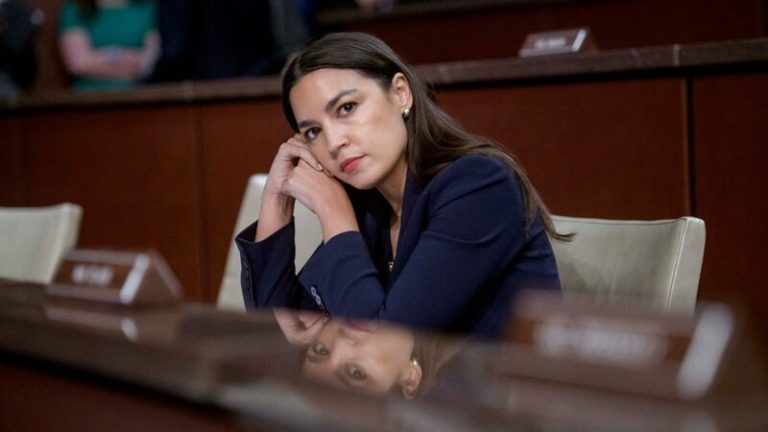
A watchdog group filed a federal election complaint alleging Rep. Alexandria Ocasio-Cortez, D-N.Y., improperly used campaign funds to pay nearly $19,000 to Boston-based psychiatrist Dr. Brian Boyle for what her campaign reported as “leadership training and consulting.”

The National Legal and Policy Center (NLPC) alleged in a March 27 complaint to the Federal Election Commission (FEC) and the Office of Congressional Conduct (OCC) that Ocasio-Cortez, her campaign committee and its treasurer should be investigated over three 2025 payments to Boyle totaling $18,725.

“NLPC alleges that AOC’s expenditure of almost $19,000 of campaign funds in 2025 to psychiatrist Dr. Brian W. Boyle ostensibly for ‘leadership training and consulting’ was expended instead for personal psychiatric services provided to AOC or members of her campaign staff,” NLPC counsel Paul Kamenar wrote in the complaint. “Accordingly, those expenses were also misreported by the campaign committee with the FEC.

“NLPC requests that the FEC and OCC immediately investigate the facts and circumstances of these payments and impose appropriate penalties and disciplinary sanctions against AOC.”

INDICTED DEMOCRAT REP SHEILA CHERFILUS-MCCORMICK ONE STEP CLOSER TO EXPULSION

Boyle is an “interventional psychiatrist” who specializes in treating depression, PTSD and anxiety, specifically through ketamine therapy.

“Nowhere does Dr, Boyle advertise offering ‘Leadership Training’ or ‘consulting’ services to candidates or their campaign,” the letter added. “Communications to Dr. Boyle and AOC’s campaign to comment on these expenditures went unanswered.”

JEFFRIES DECLINES TO BREAK WITH INDICTED DEMOCRAT AFTER ETHICS PANEL’S GUILTY VERDICT

According to the complaint, the payments were made on March 10, May 15 and Oct. 1, 2025, and were disclosed as “Leadership Training and Consulting.” On page 2, the filing lists those payments as $11,550, $2,800 and $4,375, totaling $18,725.

The complaint, citing federal election law and House ethics guidance, contends campaign money cannot be used for personal expenses and argues the key question is whether the expense would exist regardless of candidacy. It says that if the services were therapeutic rather than campaign-related, they could amount to prohibited personal use. On pages 5 through 7, the filing quotes FEC and House standards requiring campaign expenditures to be both bona fide and verifiable.

“There is reason to believe that AOC’s use of campaign funds to pay for a psychiatrist who has no experience in ‘leadership training’ was not for a ‘bona fide campaign or political purpose,’ but rather for personal psychiatric therapy for AOC or her campaign staff,” Kamenar wrote.

AOC SPENT OVER $53K IN CAMPAIGN FUNDS ON LUXURY HOTELS IN 2025: ‘CARPETBAGGER’

The allegations follow reporting by the New York Post, which noted Boyle is known for interventional psychiatry and as “a leading authority on ketamine” — the controlled substance that was given to late “Friends” star Matthew Perry.

The complaint itself does not establish wrongdoing, but asks regulators to determine whether the payments were misreported and whether any campaign-finance or House rules were violated.

Ocasio-Cortez’s campaign or office has not yet responded to Fox News requests for comment.

AOC SAYS POLITICIANS, ESPECIALLY DEMOCRATS, SHOULD PROMISE NOT TO ACCEPT ‘AI MONEY’

Ocasio-Cortez has in the past spoken publicly about needing therapy.

“Oh yeah, I’m doing therapy but also I’ve just slowed down,” Ocasio-Cortez told People in 2021.

She has in the past been an advocate for reviewing Schedule I drugs to remove barriers to scientific research and promote the therapeutic potential of psychedelic substances like marijuana, psilocybin and MDMA.

“Right now our law says these drugs have zero medical application but the science says something else,” Ocasio-Cortez said last week during a House Health Subcommittee hearing. “Not only that, but the wealth of medical research shows that these are potential treatments for treatment resistant PTSD, traumatic brain injuries, but the schedule classification really prevents researchers from continuing to do work on this.”

She argued that increasing Schedule 1 prohibitive drugs and criminal penalties has not slowed overdoses, but has doubled them in the state of Florida.

Israeli officials are warning that Iran’s ongoing internet blackout is shaping the battlefield in ways that extend far beyond cyberspace, limiting visibility into the impact of U.S. and Israeli strikes while tightening the regime’s grip on its own population.

Multiple Israeli sources told Fox News that the blackout is not only restricting information from leaving Iran but also preventing citizens from organizing internally, at a time when pressure on the regime is mounting. Attempts by civilians to access the internet through satellite services such as Starlink have been disrupted through jamming, according to Israeli officials, while hundreds of individuals suspected of using such terminals have been detained.

“This is a blackout on truth,” a senior Israeli intelligence official told Fox News. “The regime is hiding reality from its own people. They don’t want the Iranian people to see how badly they’re getting hit.” 

ISRAEL HAMMERS IRANIAN INTERNAL SECURITY COMMAND CENTERS TO OPEN DOOR TO UPRISING

The information vacuum inside Iran is being filled by state-controlled narratives, according to the official. 

“Iranians only know what they see on TV channels controlled by the Islamic regime, which falsely shows the U.S. and Israel being destroyed,” the Israeli official said.

But the impact goes beyond perception. The blackout is also affecting behavior on the ground. 

“And it’s not just about what people see, it’s about what they can do,” the official said. “Cutting the internet stops people from communicating, from sharing what’s really happening, and from organizing.” 

The restrictions come as the Iranian regime faces both external military pressure and lingering internal unrest following a brutal crackdown earlier in 2026. In January, security forces opened fire on nationwide protests, with reports suggesting the toll could be more than 30,000 killed in a matter of days. 

Against that backdrop, Israeli officials say the blackout reflects the regime’s fear of renewed unrest. 

“The Iranian people are one of the things the regime fears most,” the official said. “That’s why this blackout was such a priority.”

IRAN REGIME HIDES IN BUNKERS AS CIVILIANS LEFT EXPOSED WITHOUT ADEQUATE BOMB SHELTERS OR SIRENS

The result, according to Israeli officials, is a war that is unfolding largely out of public view. 

“This is one of the least visible wars in modern history because very little footage is coming out,” the official said. “When this blackout is lifted, the full extent of the damage to the regime will become clear. Right now, we’re only seeing a small glimpse of just how badly they’re being decimated.” 

Israeli sources also linked the blackout directly to high-value military targets. 

The U.S. and Israel, the official claims, “have taken out 25 senior commanders from the MOIS,” referring to Iran’s Ministry of Intelligence. 

“The majority (were) eliminated in the opening strike when they gathered for a meeting,” the official said, adding that those targeted were involved in managing the blackout.

The official identified Esmail Khatib as among those killed, describing him as “the minister of Intelligence who was the guy who signed off on the blackout.”

A senior U.S. administration official told Fox News Digital that, “President Trump wants a better life for the Iranian people — including unimpeded access to information. Unfortunately, the terrorist Iranian regime has a long, brutal history of oppressing its own people, but Operation Epic Fury continues to meet or surpass all of its benchmarks, and the entire region will be safer and more stable once these actions are complete.”

IRAN MOVES HUNDREDS OF MILLIONS IN CRYPTO DURING NATIONWIDE INTERNET BLACKOUT, REPORT REVEALS

U.S. analysts say the information domain is becoming a central front in the conflict. 

John Spencer, executive director of the Urban Warfare Institute, wrote on X that “Iran has repeatedly shut down internet access to control its population. That capability can be reversed.”

Spencer argued that external actors could shift the balance by targeting regime communications while enabling civilian connectivity. 

“Disrupt regime command networks while enabling connectivity for the population through external systems. Information becomes a weapon,” he wrote. “Control of narrative, coordination, and awareness shifts away from the regime.”

He also pointed to underlying instability inside Iran, noting that the country’s population is “over 85 million, young, urban, and repeatedly discontent,” with protest activity suggesting that a significant portion opposes the regime.

“Until now, civilians have largely been told to shelter,” Spencer wrote. “That could change.”

Fox News Digital reached out to the Iranian mission to the United Nations, which responded, “no comment.”

A Michigan Democrat running for U.S. Senate is facing backlash after a report on leaked audio showing him explaining why he shouldn’t take a public position on the death of former Iran Supreme Leader Khamenei because of people in Dearborn, Michigan, who are “sad.”

Progressive Democrat Abdul El-Sayed, according to a report from the Washington Free Beacon, was recorded in a staff meeting strategizing about how to address the Iranian leader’s death after he was killed during U.S. and Israel’s military action in the country.

“I’m just gonna go straight to pedophilia, frankly,” El-Sayed is heard saying about his response if pressed by a reporter. “I’ll just be like, ‘Pedophile president decides that he doesn’t like the front page news, so he decides to take us into another war.’”

El-Sayed also told his team, in reference to the significant Muslim population in Dearborn, “I also want to remind you guys that there are a lot of people in Dearborn who are sad today. So, like, I just don’t want to comment on Khamenei at all. Like, I don’t think it’s worth even touching that.”

SANDERS-ENDORSED SENATE CANDIDATE KNOCKED FOR ALLEGED FLIP-FLOP TO ‘HAVE IT BOTH WAYS’ ON KEY ISSUE

The report sparked immediate backlash from Republicans and conservatives on social media.

“Speaks volumes about the level of extremism within the El-Sayed coalition here,” Fox News radio political analyst Josh Kraushaar posted on X.

“Democrats have an abundance of riches to choose from when selecting which one of their Senate candidates is the craziest, most radical, and most anti-American,” GOP Sen. Bernie Moreno posted on X.

“Beyond parody,” conservative communicator Steve Guest posted on X.

“Well this is insane,” GOP adviser Nathan Brand posted on X.

TLAIB-BACKED SENATE CANDIDATE IN THE HOT SEAT AFTER DELETING ‘DEFUND THE POLICE’ SOCIAL MEDIA POSTS

“Anyone who is sad that the Ayatollah is dead should be deported,” Heritage Foundation Senior Research Fellow Jason Bedrick posted on X.

“Disgraceful,” the Republican Jewish Coalition posted on X.

In a post on X, former Biden-Harris surrogate Kevin Walling called the news “disqualifying.”

Fox News Digital reached out to El-Sayed’s campaign for comment.

In a statement to the Washington Free Beacon, campaign lawyers at the Sandler Reiff law firm said the recording was “obtained without the campaign’s permission” and “without knowledge that individuals were being recorded.”

“The campaign is considering its legal options against the individual in question,” the statement added.

El-Sayed, who is Muslim, recently faced controversy for agreeing to team up with Hasan Piker, a far-left streamer who once said “America deserved 9/11.”

Michigan’s Democratic Senate primary will be held on Aug 4 as El-Sayed squares off against Michigan state Sen. Mallory McMorrow and Democratic Rep. Haley Stevens to replace outgoing Sen. Gary Peters. 

The Cook Political report ranks the race as a “toss up” heading into November’s consequential midterms.

A flurry of bets made prior to major announcements about the Iran war has ramped up speculation that individuals or groups with advance knowledge of U.S. military plans are cashing in on insider information.

And while prediction market platforms Polymarket and Kalshi now say they are taking more proactive measures designed to prevent such illicit activity, experts say there have been few signs so far that Trump administration regulators are cracking down.

“You need the deterrent factor that exists on the government side,” said Chris Ehrman, an attorney who previously served as head of the Commodity Futures Trading Commission’s whistleblower office. Without it, he said, simply allowing the platforms to self-regulate often amounts to “whipping them with a wet noddle.”

So far, the suspect bets have been largely concentrated on Polymarket, a platform that allows users to wager on the likelihood of certain events taking place. But in at least one case, speculation about a possible insider trade has migrated to a more traditional market.

The CFTC did not respond to a request for comment. In an interview this week with the Washington Reporter, an online conservative publication, CFTC Chairman Michael Selig pushed back on the idea that his office was not taking on the issue.

“There’s this false media narrative that CFTC-regulated markets are the Wild West and have no regulation and that’s blatantly false,” he said. “The CFTC uses complex surveillance tools and has seasoned career staff that pro-actively monitor these markets for insider trading and fraud.”

The CFTC recently issued guidance that reminded prediction market platforms of their responsibilities to limit insider trading.

Noah Solowiejczyk, a partner at law firm Fenwick & West and a former federal prosecutor, said the agency has recently shown signs it wants to take insider trading cases more seriously.

“I think you’ll see an enforcement action or prosecution happen” in an events-driven insider trading case, Solowiejczyk predicted.

Once relegated to the world of finance, insider has become a major topic in recent years as concerns about everything from politicians’ stock trades to professional athletes’ performances are now widely scrutinized for evidence of manipulation — fueled in part by the ongoing creep of investing and gambling onto smartphones and into everyday life.

Data suggests traders with advanced knowledge of geopolitical events may have collectively pocketed millions from recent bets on Polymarket. Last month, in the run-up to the latest round of American and Israeli attacks on Iran, some $529 million was traded on the platform tied to the timing of the strikes, Bloomberg News reported.

Earlier this week, analytics firm Bubblemaps said a series of connected Polymarket accounts had earned $1 million over the past two years predicting U.S. and Israeli strikes in the Middle East.

On Monday, approximately 15 minutes before President Donald Trump posted that there had been “productive” talks with Iran, stocks and oil futures trades on the main exchange run by longtime markets firm CME Group saw an unusual burst of volume compared to the relatively subdued backdrop seen the rest of that morning.

The bets predicted stocks would rise and oil prices would fall that day — precisely what happened once Trump made his announcement.

Depending on when they closed, the trades could have yielded millions — though shortly after Trump’s post, Iran denied there had been direct talks, and the market moves reversed somewhat.

Polymarket did not respond to a request for comment. A CME spokespersn declined to comment.

Solowiejczyk said the CFTC has likely been hampered by staffing shortages, which may be impacting its ability to take on new cases. Barron’s magazine recently reported that the CFTC has made significant cuts in its enforcement division, including the loss of all enforcement attorneys in its Chicago office.

It is not clear to what extent the anonymity that’s available to traders on Polymarket and Kalshi would hinder a federal investigation into illicit trading.

While part of Polymarket is registered in the U.S., making it subject to federal know-your-customer requirements, another part is registered in Panama — something that could make it harder to trace individuals making insider bets. Experts also say traders can circumvent geographic restrictions by using virtual private networks, or VPNs, that mask which country they are operating in.

So far, no American has faced federal charges in connection with insider trading on event-driven news. In February, Israel charged two of its military service members with using classified information to place bets on Polymarket related to unspecified combat operations.

Polymarket only recently began accepting trades from U.S.-based users, following an effort by the Trump administration to end a Biden-era push to restrict its use here.

Kalshi is fully registered in the U.S., and recently suspended an editor for influencer MrBeast in connection with alleged insider trading.

Many of the suspect bets on Polymarket are placed by accounts that are either new or solely focused on one specific outcome, further suggesting insiders could be behind them.

Even prior to the recent military operations and the accompanying suspicious bets, accusations of insider trading on Polymarket had begun to surface.

In January, a Polymarket user earned some $400,000 betting that then-Venezuelan President Nicolás Maduro would soon be out of office. One trader appeared to make approximately $1.2 million forecasting whom Google would announce as the most-searched people of 2025.

In response to a question about insider trading in November, Polymarket CEO Shayne Coplan told “60 Minutes” that “having an edge” is “a good thing.”

Coplan said that while he was focused on the ethics of insider transactions, it was “sort of an inevitability that this will happen, and there’s a lot of benefits from it.”

This week, Polymarket and Kalshi both unveiled measures designed to further crack down on insider trading.

Polymarket announced new rules explicitly stating users cannot act on insider information or trade on events whose outcome they could influence.

Kalshi said it was deploying technology that would “preemptively block politicians, athletes, and other relevant people” from trading in politics and sports markets. It also said it was adding a whistleblower function to its markets homepage that would allow users to flag potential violations.

A representative for Kalshi said the company has not been involved in the recent suspect trades. “We ban insider trading and enforce it,” a spokeswoman said in an email.

Polymarket, recently valued at $9 billion, counts Donald Trump Jr. as an investor. The president’s eldest son is also a strategic adviser to Kalshi, its top competitor.

White House representatives denied any wrongdoing originated from the administration and blasted insinuations that they were.

“All federal employees are subject to government ethics guidelines that prohibit the use of nonpublic information for financial benefit,” White House spokesman Kush Desai said in a statement.

“However, any implication that Administration officials are engaged in such activity without evidence is baseless and irresponsible reporting.”

“The President has no involvement in business deals that would implicate his constitutional responsibilities,” David Warrington, White House counsel, said in a statement. “President Trump performs his constitutional duties in an ethically sound manner and to suggest otherwise is either ill-informed or malicious.”

“Don does not interface with the federal government as part of his role with any company that he invests in or advises and has no influence or involvement with administration policies relating to prediction markets,” a representative for Donald Trump Jr. said in a statement.

Members of Congress have taken a more circumspect view of event-market platforms, putting forward legislation that would ban elected officials and government employees from using them and restricting the types of events, such as war or deaths, users can wager on.

The most recent bill, introduced by Sen. Chris Murphy, D-Conn., and Rep. Greg Casar, D-Texas, would ban trades on government actions, terrorism, war, assassination and events “where an individual knows or controls the outcome.”

“There’s no getting around the fact that any prediction market where somebody knows or controls the outcome of a bet is ripe for corruption,” Murphy said in a statement.

“Even worse, prediction markets are also an avenue by which government decisions get influenced by who’s making money off them, and that should be unforgivable to the American public,” he said.

President Donald Trump is used to bending financial markets to his will.

But with the war in Iran, he may have reached the limit of his ability to do so.

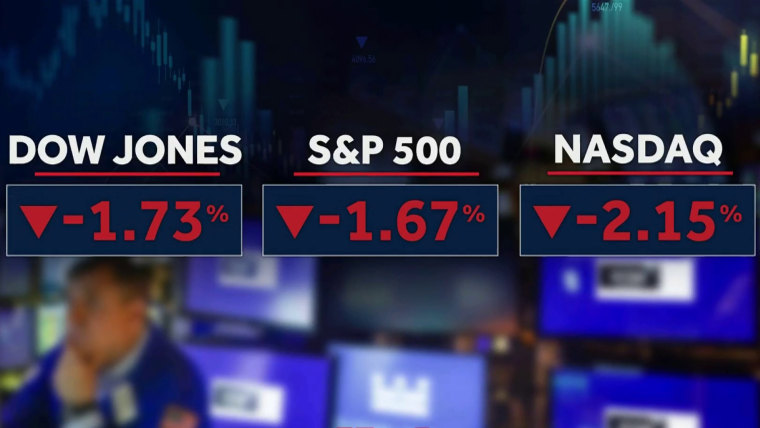
On Friday, the S&P 500 closed down 1.7% and notched its fifth-straight weekly decline, its worst stretch since 2022 and a sign of rapidly faltering confidence in a swift resolution to the Iran war.

Since the U.S. attacked Iran on Feb. 28, the S&P 500 has declined about 7%.

The Dow Jones Industrial Average fell 1.7% Friday and has lost nearly 4,000 points since the start of the war. It is now down more than 10% from its most recent high, a correction in technical terms.

The tech-heavy Nasdaq fell further into correction territory Friday, closing down 2% and off 13% since its record close in October.

Oil prices also rose sharply, with U.S. crude topping $100 a barrel and global Brent crude at approximately $114 at around 4 p.m. ET. The yield on the 10-year Treasury note surged to 4.4%, the highest since last summer. Some energy stocks, like Exxon, traded near all-time highs.

Shortly after stock markets had closed Thursday, Trump announced he was pausing attacks on Iranian energy sites for 10 days. But stocks barely budged.

Just days earlier, they had rocketed higher Monday when the president announced there had been “productive” talks with Iranian representatives, so he would pause strikes on Iranian power facilities for five days.

“The market is looking beyond commentary from the administration,” said Adam Turnquist, chief strategist at LPL Financial investment group, which manages nearly $2 trillion in assets. “They actually want concrete details and a resolution. And actions speak louder than words, that’s really present in [current] price action.”

This new reality stands in contrast to Trump’s ability to move markets throughout his first term and into the outset of his second.

Trump spent the better part of 2025 whipsawing traders via frequent changes regarding tariff levels. Eventually, a pattern emerged: The president would announce a new import duty, markets would fall, and Trump would usually end up reversing himself in some way.

The trend even got a nickname, coined by a columnist for the Financial Times: “TACO” — for “Trump Always Chickens Out.” (Last month, the Supreme Court struck down many of the tariffs.)

This time, the chain of events unleashed by Trump’s decision to attack Iran are such that a return to prewar conditions — and market levels — is virtually impossible in the short or even medium term, experts say.

The disruption to flows of oil and gas has been so substantial that transport costs, and ultimately the price paid per barrel, are likely to stay elevated indefinitely. Even when the Strait of Hormuz, which Iran has used as a chokepoint to drive concessions from the West, eventually reopens, the cost of transiting through it has likely gone up for the foreseeable future.

And the broader fallout on the economy and consumer purchases is already being felt.

That, in turn, has made interest rate cuts by the Federal Reserve less likely, because the higher oil costs are set to contribute to already sticky inflation. The odds of a rate hike before the end of the year have now outpaced the odds of a cut.

“Let’s say hostilities end tomorrow — the market will rally, but it’s not necessarily ripping back to where it was before because of the disruptions that have occurred,” said Steve Sosnick, chief strategist at Interactive Brokers financial group. “You’re not going to see oil go back to where it was immediately. You’re not going to see markets price in rate cuts the way they were before.”

White House spokesman Kush Desai said Friday that Trump “continues to be a powerful force driving the market’s confidence in the United States as the most dynamic, pro-business economy in the world.”

“Once the military objectives of Operation Epic Fury have been achieved and the market’s short-term disruptions are behind us, everyday investors are set to reap a windfall in a booming American economy,” Desai said.

A day earlier, the president said he was not concerned about the market’s recent performance.

Oil prices “have not gone up as much as I thought, Scott, to be honest with you,” he said during a Cabinet meeting, addressing Treasury Secretary Scott Bessent. “It’s all going to come back down to where it was and probably lower.”

Markets have not fallen further because the outlook for earnings growth remains bullish, Turnquist said — though that could change the longer the conflict drags on and further impinges on consumer spending and business investment.

And compared to prior oil shocks, the U.S. economy is less oil-intensive, as it has transitioned to one that is largely service-oriented. Global oil markets have also been supported by America’s oil production boom over the past decade — with more supplies online, overall prices are less likely to rise as much.

Yet by some metrics, stocks were already considered expensive prior to the hostilities. Having already contended with stretched valuations, traders may find it much harder to power stock prices back to the record levels seen just prior to the start of the latest conflict.

“The risk-reward is still very heavily weighted toward [the] risk” of further stock-price declines,” said Matt Maley, chief market strategist at Miller Tabak financial group.

Should hostilities persist, Trump’s ability to influence markets will only further erode, Sosnick predicted.

“He now realizes he’d like to jawbone his way out of it, but it’s not that easy at this point because the situation encompasses so many moving parts and difficult variables,” Sosnick said. “It doesn’t lend itself to a quick set of comments mollifying investors.”

WASHINGTON — House Republicans voted Friday evening to pass a short-term funding bill for the Department of Homeland Security that has no viable path in the Senate and is likely to extend the shutdown stalemate on Capitol Hill.

The vote of 213-203 came after Speaker Mike Johnson, R-La., rejected the Senate-passed bill, which would fund all of DHS except Immigration and Customs Enforcement and Customs and Border Protection. Funding for DHS lapsed in mid-February.

He called the Senate measure “a joke,” placing full blame for it on Democrats, even though Republicans control the Senate and the bill passed by unanimous consent early Friday morning.

“They have taken hostage the funding processes of government so that they can impose their radical agenda on the American people,” Johnson told reporters before the House vote.

His remarks came around the same time President Donald Trump signed an order directing the Department of Homeland Security to pay Transportation Security Administration employees who have missed paychecks during the DHS shutdown, leading to high TSA callout rates that have created long lines for passengers at U.S. airports. The dollar amount and authority for tapping the funds was not immediately clear, but a DHS spokesperson said paychecks should start arriving as early as Monday.

We’d like to hear from you about how you’re experiencing the partial government shutdown, whether you’re a TSA agent who can’t work right now or a federal employee who is feeling the effects at your agency. Please contact us at tips@nbcuni.com or reach out to us here.

The House-passed bill, which would fund DHS through May 22, is not expected to become law. The Senate left town Friday for a two-week recess, and Democratic senators have consistently vowed to block funding for ICE and CBP without constraints on immigration enforcement operations.

Asked if Trump has endorsed his plan, Johnson told reporters on Friday afternoon: “I spoke to the president a few moments ago; he understands exactly what we’re doing and why, and he supports it.”

Senate Majority Leader John Thune, R-S.D., has no plans to bring back the Senate because there is no realistic path to passing the House bill, a GOP aide told NBC News.

The belief among Senate Republican leadership is that it does not make sense to pursue a path other than the bipartisan bill to fund the Department of Homeland Security, minus ICE and CBP, that the Senate passed early Friday morning, according to a senior GOP aide.

The Senate over the past six weeks has attempted to pass numerous measures identical to the one passed by the House on Friday night, and all have failed in the face of Democratic opposition.

Senate Minority Leader Chuck Schumer, D-N.Y., warned that a House bill that funds ICE and CBP without guardrails would go nowhere in the Senate, where it would require 60 votes to advance. Republicans hold a 53-47 majority.

“We’ve been clear from day one: Democrats will fund critical homeland security functions — but we will not give a blank check to Trump’s lawless and deadly immigration militia without reforms,” Schumer said, adding that the House GOP’s short-term funding bill would be “dead on arrival in the Senate, and Republicans know it.”

House Minority Leader Hakeem Jeffries, D-N.Y., sided with Schumer in favor of the Senate-passed bill.

“We have this bipartisan bill sent over by the Senate that House Democrats are prepared to support,” he told reporters Friday. “If that bill is brought to the floor today it will pass. The Trump-Republican DHS shutdown will be over. Unfortunately, MAGA extremists in the House of Representatives continue to inflict pain on the American people.”

Johnson put forward the short-term funding bill after a bloc of House conservatives expressed outrage over the Senate-passed measure and vowed to vote against it, complicating any move toward swift passage in the House.

Rep. Ralph Norman, R-S.C., called the Senate bill “irresponsible” and added that voter identification provisions and parts of ICE funding must be included.

“Those two things will have to be in,” he said.

Rep. Susie Lee, D-Nev., said Democrats won’t support a bill to fund ICE without constraints after immigration enforcement agents killed two Americans in Minneapolis.

“I think we made it very clear, and the American public is demanding some sort of guardrails on an agency that has basically terrorized communities across this country, resulted in the death of two American citizens,” she said. “We have shone a light on just how rogue ICE was acting.”

Leaving the Capitol on Friday, Johnson told NBC News that he gave Thune a heads up before deciding to reject the Senate-passed measure and its omission of funding for ICE and CBP.

“We talked today, and I told him it shouldn’t be a surprise to anybody we would not be able to do that,” Johnson said. “We’re not going to split apart two of the most important agencies in the government and leave them hanging like that. We just couldn’t do it.”