Author

admin

Browsing

It’s been yet another historic week for gold, as well as silver.

Gold broke through US$4,000 per ounce midway through the period, entering never-before-seen territory as the US government shutdown continued into a second week.

Silver’s milestone was perhaps even more impressive. The white metal pushed through the elusive US$50 per ounce mark and continued on past US$51, marking a new record.

What’s behind its takeoff? Silver is known for its duality as both a precious and industrial metal, and experts have emphasized that it’s a mix of factors moving silver right now. It’s catching up to gold, which itself is supported by global geopolitical uncertainty and concerns about fiat currencies, and it’s also got its own specific elements at play.

Backwardation, which happens when a commodity’s spot price is higher than its futures price, has been a frequent topic of discussion, and prior to silver’s move past US$50, precious metals analyst Ted Butler gave a rundown of the implications for silver.

Here’s what he said:

‘Normally, (backwardation) results in an overwhelming demand for physical. That could take the form of SLV investors standing for delivery, whether that be the the industrial players, who are notoriously resolute, or even billionaire whales from India.

‘But in that event, which is already playing out, by the way, silver prices and premiums will continue to increase, maybe even dramatically, as the news of insufficient physical silver transmits itself through the market.’

As those who follow precious metals will know, silver has only been at the US$50 level twice before — the first time was in 1980, when the Hunt brothers tried to corner the market, and the second instance was over a decade ago in 2011. Both of those moves were brief, and investors are understandably wondering if this time is different for silver.

It’s impossible for anyone to say for sure, but I’ve been hearing market watchers highlight the gold-silver ratio as a way to gauge the outlook for silver.

Ahead of silver’s US$50 landmark, David Morgan of the Morgan Report explained that the ratio shows silver still has room to rise. Here’s what he said:

‘We’re still in the 80s for the gold-silver ratio, which is historically high. And until we get to 70, I’m not going to be particularly happy. And off of today’s gold price, a 71 ratio would be like … US$55 silver, and that would be over that US$50 mark.’

Morgan also talked about the psychological impact of US$50 silver, saying that it could prompt algorithmic traders and institutions to enter the sector:

‘You’ll see algorithms come in and start trading silver, and you’ll probably see institutions come in, because they know that it’s a small market, and they can move the market with a buy order, if it’s significant enough.

How high can gold and silver prices go?

Taking a step back to look at the precious metals rally as a whole, I want to reiterate that the experts I’ve been hearing from don’t think this is the end of the bull market.

While many have emphasized that a correction would be healthy for gold and silver, they think the current cycle is still in progress and is likely to end with much higher prices.

Here’s Lynette Zang of Zang Enterprises on what could be coming:

‘If you go back to the beginning of the year, what you actually see is that while everything is going up, the spot contracts on gold and silver, and particularly silver, are much stronger and more powerful than those prices that we’re seeing in the stock market, or even in the Bitcoin market, in the crypto markets.

‘Gold and silver are handily outperforming, and that’s telling us (why) the central banks have been accumulating more gold than they ever have since they began tracking — because they know what they’re doing to destroy the currencies.’

It’s also worth noting that it’s not just people in the gold and silver space that are optimistic.

Precious metals are increasingly making news headlines, and more and more mainstream authorities are touting their protective benefits.

Just this week, American billionaire Ray Dalio of Bridgewater Associates suggested that investors allocate as much as 15 percent of their portfolios to gold. He compared the current environment to the 1970s, a time of high inflation and debt.

Dalio’s opinion is similar to that of DoubleLine Capital’s Jeffrey Gundlach, who recently said a 25 percent weighting toward gold wouldn’t be excessive.

Platinum and palladium take off

Gold and silver may be attracting the most attention, but platinum and palladium are also on the move.

Platinum, which spent years trading at rangebound levels, has broken out in 2025, and is currently above US$1,600 per ounce, a price not seen since 2013.

Palladium, whose price has been subdued since seeing several spikes between about 2020 and 2022, was also on the move this week, approaching US$1,500 per ounce.

While these precious metals are similar, it’s mostly platinum that’s being talked about as a potential opportunity for investors. Historically it’s often been priced higher than gold, and some see the two finding parity again in the future.

Securities Disclosure: I, Charlotte McLeod, hold no direct investment interest in any company mentioned in this article.

This post appeared first on investingnews.com

This week, the technology sector remained the dominant force shaping overall market trends in the US, despite the ongoing complexity of macroeconomic and geopolitical conditions.

The partial US government shutdown continued to delay key economic reports, creating a data vacuum that heightened reliance on soft data like consumer sentiment surveys. Notably, the University of Michigan’s Consumer Sentiment Index held steady at a subdued 55, reflecting persistent concerns about high prices and a challenging labor market.

Meanwhile, Canada reported a surprising gain of 60,400 jobs in September, with employment increases concentrated in full-time positions and manufacturing. The unemployment rate held steady at 7.1 percent, defying expectations and signaling a cautious stabilization after recent job losses.

Investor appetite for AI and related innovation remained high, pushing the Nasdaq Composite (INDEXNASDAQ:.IXIC) and S&P 500 (INDEXSP:.INX) to record or near-record levels midweek. However, ongoing trade frictions between the US and China continue posing risks to semiconductor supply chains and international tech trade flows.

On Friday (October 10), China introduced additional export restrictions on rare earth metals and related refining technologies, expanding controls to five more elements critical for electronics, defense and high-tech industries. US President Donald Trump responded by threatening to escalate tariffs on Chinese imports and warned of the potential cancellation of his upcoming meeting with President Xi Jinping at APEC in South Korea.

The news sent major stock indexes lower, with the S&P 500 seeing its largest decline since tariffs were first announced in April and the Nasdaq Composite losing 3.56 percent. The Philadelphia SE Semiconductor Index led losses, pulling back 6.32 percent.

After a nearly three-year rally fueled by enthusiasm for AI, concerns among analysts and investors about elevated valuations and concentrated exposure in AI-related companies continue to emerge.

The Bank of England’s Financial Policy Committee warned of an increased risk of market correction, particularly in AI-focused tech firms, due to stretched valuations. They noted high market concentration in the S&P 500’s top five companies, many being AI-centric. Disappointing AI adoption or increased competition could trigger a downturn by reassessing high earnings expectations. Bottlenecks in AI advancements also pose valuation risks.

Similarly, IMF Managing Director Kristalina Georgieva warned that AI-fueled global stock prices are overvalued and vulnerable to a sudden correction. She cited weakening job creation and US tariffs as “troubling signs” that could lead to instability and dampen global growth.

Analysts from JPMorgan Chase & Co. (NYSE:JPM) also wrote in a Monday (October 6) note that AI-related debt has reached US$1.2 trillion, making it the largest segment in the investment-grade market. AI companies now represent 14 percent of the high-grade market, exceeding US banks. However, this debt is primarily in investment-grade bonds from companies with strong balance sheets,

This complex interplay of cautious optimism underscores the evolving narratives dominating the tech market.

Three tech stocks that moved markets this week

1. Advanced Micro Devices (NASDAQ:AMD)

AMD’s stock opened over 31 percent higher on Monday after announcing a multi-year deal to supply up to 6 gigawatts of AI chips to OpenAI, starting with its MI450 series in the second half of 2026.

The company extended its gains on Tuesday (October 7) after Jefferies upgraded the stock rating to “buy” as other brokerages hiked their price targets. The news helped temper losses seen throughout the tech sector as trade tensions escalated on Friday.

The partnership grants OpenAI warrants to acquire up to 160 million shares of AMD, representing around 10 percent ownership upon achieving deployment milestones. This deal positions AMD as a major AI hardware supplier and represents a challenge to Nvidia’s dominance in the sector.

2. Intel (NASDAQ:INTC)

Intel shares jumped as much as 3.05 percent on Friday after the company unveiled its Panther Lake architecture, the first PC processor built on its advanced 18A semiconductor manufacturing process, with high-volume production beginning later this year at its Fab 52 facility in Arizona.

Panther Lake is set to significantly enhance power efficiency and performance, delivering an anticipated 50 percent increase in CPU and GPU capabilities compared to earlier generations. This chip is designed for premium laptops and is central to Intel’s plan to re-establish its leadership in semiconductor manufacturing within the US.

Intel also previewed its first 18A-based server processor, Clearwater Forest, slated for release in the first half of 2026. Panther Lake is scheduled for commercial availability in early 2026, coinciding with major consumer electronics shows.

3. Tesla (NASDAQ:TSLA)

Tesla released the long-awaited lower-priced versions of the Model Y and Model 3 on Tuesday, with the Model Y Standard starting at US$39,990.

After an initial rally on Monday following a weekend teaser of the announcement, shares fell by as much as 4.57 percent after an underwhelming reaction to modest price cuts and the vehicles’ lack of key features present in the pricier models.

The company also reportedly paused large-scale production of its humanoid robot Optimus due to technical difficulties and faced a new preliminary safety investigation by the NHTSA into its Full Self-Driving system, covering nearly 2.9 million vehicles amid reports of traffic law violations.

Company announcements helped Intel and AMD weather sector-wide losses on Friday

Chart courtesy of Google Finance

ETF performance

This week, the iShares Semiconductor ETF (NASDAQ:SOXX) only declined by about 6.27 percent, while the Invesco PHLX Semiconductor ETF (NASDAQ:SOXQ) pulled back by approximately 6.49 percent.

For its part, the VanEck Semiconductor ETF (NASDAQ:SMH) only lost 5.86 percent.

These losses occurred against a backdrop of heightening trade tensions between tech’s two largest markets.

Other tech market news

            Tech news to watch next week

            Next week, investors will be closely monitoring a slate of important earnings reports from leading financial and technology companies, including JPMorgan Chase, Bank of America Corp (NYSE:BAC), Goldman Sachs (NYSE:GS), Morgan Stanley (NYSE:MS), IBM, Intel and Tesla.

            Additionally, the US government’s shutdown resolution or extension will affect the release of vital economic data, influencing market sentiment and investment strategies.

            On the policy front, investors should watch for Federal Reserve communications for clues on interest rate directions, as well as progress in US-China trade negotiations, which will undoubtedly define the near-term trajectory of the tech market.

            Securities Disclosure: I, Meagen Seatter, hold no direct investment interest in any company mentioned in this article.

            This post appeared first on investingnews.com

            Here’s a quick recap of the crypto landscape for Friday (October 10) as of 9:00 a.m. UTC.

            Get the latest insights on Bitcoin, Ether and altcoins, along with a round-up of key cryptocurrency market news.

            Bitcoin and Ether price update

            Bitcoin (BTC) was priced at US$121,578, down by 1.6 percent in 24 hours. The cryptocurrency’s lowest valuation of the day was US$119,967, and its highest was US$123,548.

            Bitcoin price performance, October 10, 2025.

            Chart via TradingView

            Bitcoin may be trading near record highs, but one of its most respected on-chain indicators suggests the rally could still have significant room to run possibly as far as US$180,000.

            The Mayer Multiple, a long-term metric that compares Bitcoin’s current price to its 200-week moving average, remains well below levels that have historically marked market tops.

            “Bitcoin is at all-time highs and the Mayer Multiple is ice cold,” crypto analyst Frank Fetter wrote on X (formerly Twitter). According to Fetter, Bitcoin would need to climb to around US$180,000 before the indicator flashes “overbought” conditions, implying that the current cycle could still have room to expand.

            The indicator’s historical context adds weight to that view. During Bitcoin’s 2017 and 2021 peaks, the Mayer Multiple surged well above 2.4, signaling excessive market exuberance before major corrections followed.

            This time, the pattern looks different. The Multiple’s highest level in the current cycle—1.84 in March 2024, when Bitcoin neared US$72,000—never approached prior extremes, according to Glassnode data. Analysts see this moderation as a sign of a more sustainable advance.

            Despite these encouraging on-chain signals, not everyone is convinced the path higher will be smooth. Short-term traders remain divided on whether Bitcoin can maintain momentum into the final quarter of the year.

            Trader Tony “The Bull” Severino argued that Bitcoin may be entering a decisive 100-day window. Writing on X, Severino pointed to the Bollinger Bands indicator on Bitcoin’s weekly chart, which has tightened to levels not seen before. He noted that Bitcoin’s recent inability to hold above US$126,000, after briefly testing the upper band, could signal a short-term pullback before any sustained breakout.

            Ether (ETH) also slid after last week’s rally, but has since recovered some of its losses. It was up by 0.7 percent over 24 hours to US$4,365.58. Ether’s lowest valuation on Friday was US$4,285.77, and its highest was US$4,401.99.

            Altcoin price update

            • Solana (SOL) was priced at US$222.58, an increase of 1.1 percent over the last 24 hours and its highest valuation of the day. Its lowest valuation on Friday was US$217.57.
            • XRP was trading for US$2.83, trading flat over the last 24 hours. Its lowest valuation of the day was US$2.78, and its highest was US$2.84.

            Derivatives trends

            The crypto derivatives market saw heavy liquidations over the past 24 hours, totaling roughly US$674 million, according to Coinglass data. Long positions accounted for US$505 million of that amount, while short positions made up US$169 million, marking one of October’s sharpest liquidation waves.

            Among major assets, Bitcoin long liquidations reached US$116 million, compared to US$68.22 million in shorts, indicating that overleveraged bullish traders bore the brunt of the latest downturn. Ether long positions were liquidated for US$146 million, against US$34.54 million in shorts, reflecting a similar shakeout of optimistic bets amid heightened volatility.

            Despite the sell-off, futures open interest for Bitcoin rose 0.23 percent in the last four hours to US$90.19 billion, suggesting that traders are gradually re-entering positions or maintaining leverage at elevated levels.

            Ether futures open interest also ticked up 0.22 percent to US$59.53 billion, showing that market participants remain engaged even after widespread liquidations.

            Bitcoin’s relative strength index (RSI) at 72.15 indicates that the asset remains in overbought territory, potentially signaling near-term price swings or corrective moves. Still, the market’s resilience near the US$120,000 level points to continued speculative interest.

            Today’s crypto news to know

            XRP, DOGE, SOL slip as US$2.7 billion flows into Bitcoin ETFs

            Major altcoins faced losses Friday as traders took profits from Bitcoin’s record-breaking rally, even as spot ETF demand remained strong.

            Bitcoin briefly dipped to around US$120,000 overnight before stabilizing near US$122,000, while Ether erased its weekly gains with a 2.4 percent drop.

            Solana, XRP, Dogecoin, and Cardano each slid up to 3 percent, according to CoinDesk data. Despite the retreat, US-listed Bitcoin ETFs drew US$2.72 billion in inflows this week, highlighting resilient institutional appetite.

            The ETF surge underscores Bitcoin’s growing role as a “digital safe-haven,” especially as gold surged above Us$4,000 an ounce. However, a possible pullback to the US$107,000–US$115,000 range could be imminent ahead of the Federal Reserve’s October 29 policy meeting.

            EU dismisses ECB’s call for new stablecoin rules

            The European Commission said Friday that existing crypto regulations under MiCA are adequate to handle stablecoin risks, pushing back on calls from the European Central Bank for stricter oversight.

            According to a Reuters report, the ECB had urged Brussels to introduce new safeguards against “multi-issuance” models, where stablecoins minted outside the EU could be treated as interchangeable with those issued within.

            Industry groups, including members like Circle, asked the Commission to formally clarify that multi-issuance is allowed under current rules.

            In a statement to Reuters, the Commission said MiCA already provides a “robust and proportionate framework” and that further guidance will be published soon.

            The ECB’s main concern is that redemptions from non-EU tokens could drain reserves inside the bloc, posing systemic risks. Stablecoin issuers countered that their reserve structures already mitigate such threats.

            Bitcoin ETFs extend Uptober gains as Ethereum products lose momentum

            US spot Bitcoin ETFs posted another strong day Tuesday, with US$197.8 million in net inflows, reinforcing Bitcoin’s dominance as institutional investors rotated away from Ethereum products.

            Data from SoSoValue showed total Bitcoin ETF assets climbing to US$164.79 billion, representing nearly 7 percent of Bitcoin’s market cap.

            BlackRock’s iShares Bitcoin Trust (NASDAQ:IBIT) led inflows with US$255 million, extending its lead over rivals as total assets surpassed $97 billion. Fidelity Wise Origin Bitcoin Fund (BATS:FBTC) and Grayscale Bitcoin Trust (NYSEARCA:GBTC) saw outflows of US$13 million and US$45 million, respectively.

            The renewed demand follows a surge of US$1.19 billion in inflows earlier this week, the highest since July, with BlackRock again accounting for the majority.

            Bitcoin has gained over 10 percent in October, peaking at US$126,080 before easing to $121,000. Meanwhile, Ethereum ETFs snapped their eight-day inflow streak with US$8.7 million in withdrawals, reflecting a temporary pause after a strong start to the month.

            Securities Disclosure: I, Meagen Seatter, hold no direct investment interest in any company mentioned in this article.

            Securities Disclosure: I, Giann Liguid, hold no direct investment interest in any company mentioned in this article.

            This post appeared first on investingnews.com

            HONG KONG — China outlined new curbs on exports of rare earths and related technologies on Thursday, extending controls over use of the elements critical for many high-tech and military products ahead of a meeting in about three weeks between President Donald Trump and Chinese leader Xi Jinping.

            The regulations announced by the Ministry of Commerce require foreign companies to get special approval to export items that contain even small traces of rare earths elements sourced from China. These critical minerals are needed in a broad range of products, from jet engines, radar systems and electric vehicles to consumer electronics including laptops and phones.

            Beijing will also impose permitting requirements on exports of technologies related to rare earths mining, smelting, recycling and magnet-making, it said.

            China accounts for nearly 70% of the world’s rare earths mining. It also controls roughly 90% of global rare earths processing. Access to such materials is a key point of contention in trade talks between Washington and Beijing.

            As Trump has raised tariffs on imports of many products from China, Beijing has doubled down on controls on the strategically vital minerals, raising concerns over potential shortages for manufacturers in the U.S. and elsewhere.

            It was not immediately clear how China plans to enforce the new policies overseas.

            During a cabinet meeting Thursday, Trump said he had yet to be briefed on the new rules but suggested that the U.S. could stop buying Chinese goods. “We import from China massive amounts,” Trump said. “Maybe we’ll have to stop doing that.”

            Neha Mukherjee, a rare earths analyst at Benchmark Mineral Intelligence, called the new export controls “a strategic move by China that mirror some of Washington’s new chip export rules.

            “Most rare earth magnet manufacturers in the U.S., Japan and elsewhere remain heavily dependent on rare earths from China, so these restrictions will force some difficult decisions — especially for any company involved in military uses of rare earths because most of those export licenses are expected to be denied, he said.

            “The message is clear: if the U.S. and its allies want supply chain security, they must build independent value chains from mine to magnet,” Mukherjee said.

            The new restrictions are to “better safeguard national security” and to stop uses in “sensitive fields such as the military” that stem from rare earths processed or sourced from China or from its related technologies, the Commerce Ministry said.

            It said some unnamed “overseas bodies and individuals” had transferred rare earths elements and technologies from China abroad for military or other sensitive uses which caused “significant damage” to its national security.

            The new curbs were announced just weeks ahead of an expected meeting between Trump and Chinese President Xi Jinping on the sidelines of the Asia-Pacific Economic Cooperation forum in South Korea, that begins at the end of this month.

            “Rare earths will continue to be a key part of negotiations for Washington and Beijing,” George Chen, a partner at The Asia Group, said in an emailed comment. “Both sides want more stability but there will be still a lot of noises before the two leaders, President Trump and Xi, can make a final deal next year when they meet. Those noises are all negotiation tactics.”

            These new restrictions will likely prompt additional government and private investments in developing a mine-to-magnet supply chain outside of China. Mukherjee said that $520 million of investments in the American rare earths industry were announced just in the second quarter with most of that coming from the government.

            And there is some progress already being made with American magnet maker Noveon announcing an agreement with Lynas Rare Earths this week to secure a supply of rare earths outside of China from Lynas’ mine in Australia, and MP Materials preparing to begin producing magnets later this year at its new plant in Texas that uses rare earths from the only U.S. mine that it operates in California.

            In July, the U.S. Defense Department agreed to invest $400 million in shares of the Las Vegas company, establish a floor for the price of key elements, and ensure that all of the magnets made at a new plant in the first 10 years are purchased.

            An MP Materials spokesperson said China’s action “reinforces the need for forward-leaning U.S. industrial policy. Building resilient supply chains is a matter of economic and national security.”

            Wade Senti, president of the U.S. permanent magnet company AML, said it’s time to innovate.

            “The game of chess that China is playing underscores the importance of developing innovation that changes the game and puts the United States in leading position,” Senti said.

            Nazak Nikakhtar, a former Commerce Department undersecretary, said the new restrictions are “a significant development and escalation” by extending controls to related technology and equipment and to sectors like chipmakers. “This should be a wake-up call to the U.S. government that we need to invest in and appropriate more to domestic capabilities. Both are critical to rebuild America’s rare earths industrial base,” she said.

            In April, Chinese authorities imposed export curbs on seven rare earth elements shortly after Trump unveiled his steep tariffs on many trading partners including China.

            While supplies remain uncertain, China approved some permits for rare earth exports in June and said it was speeding up its approval processes.

            This post appeared first on NBC NEWS

            NOT FOR DISTRIBUTION TO U.S. NEWS WIRE SERVICES OR FOR DISSMINATION IN THE UNITED STATES.

            Saga Metals Corp. (‘SAGA’ or the ‘Company’) (TSXV: SAGA,OTC:SAGMF) (OTCQB: SAGMF) (FSE: 20H), a North American exploration company focused on critical minerals, is pleased to announce the closing of its previously announced non-brokered private placement pursuant to which the Company raised aggregate gross proceeds of C$2,988,024.64 (the ‘ Offering ‘).

            Pursuant to the Offering, the Company issued (i) 7,100,088 flow-through common share units of the Company (the ‘ FT Units ‘) at C$0.28 per FT Unit for gross proceeds of C$1,988,024.64, and (ii) 4,000,000 hard dollar common share units of the Company (the ‘ HD Units ‘, and together with the FT Units, the ‘ Securities ‘) at C$0.25 per HD Unit for gross proceeds of C$1,000,000.

            Financing Overview:

            Each FT Unit consists of one flow-through common share as defined in subsection 66(15) of the Income Tax Act (Canada) (the ‘ Tax Act ‘), and one-half of one transferable common share purchase warrant (each whole warrant, a ‘ Warrant ‘). Each Warrant will entitle its holder to purchase one common share in the capital of the Company (a ‘ Warrant Share ‘) at a price of C$0.50 until October 10, 2027. The Warrant Shares underlying the FT Units will not qualify as ‘flow-through shares’ under the Tax Act.

            Each HD Unit consists of one common share and one-half of one Warrant. Each whole Warrant will entitle its holder to purchase one Warrant Share at a price of C$0.50 until October 10, 2027.

            Each of the Warrants will be subject to the right of the Company to accelerate the expiry date of the Warrants to a date that is 30 days following dissemination of a news release announcing such acceleration if, at any time, after October 10, 2025 (the ‘ Closing Date ‘), the closing price of the Company’s common shares equals or exceeds C$0.75 for a period of ten consecutive trading days on the TSX Venture Exchange (the ‘ Exchange ‘).

            All securities issued in connection with the Offering are subject to a hold period of four months and one day following the Closing Date pursuant to applicable securities laws, expiring February 11, 2026.

            The Company paid cash finder’s fees in the aggregate amount of $130,003 and issued an aggregate of 478,204 finder’s warrants in connection with the Offering. Each finder’s warrant entitles the holder thereof to purchase one common share of the Company at a price of $0.50 per share for a period of 24 months from the Closing Date.

            The gross proceeds from the FT Units will be used by the Company for ‘Canadian exploration expenses’ that are ‘flow-through critical mineral mining expenditures’ (as such terms are defined in the Tax Act) on the Company’s Canadian mineral resource properties. The net proceeds of the HD Units will be used by the Company for administrative and general working capital, which may include investor relations activities.

            The securities of SAGA have not been and will not be registered under the United States Securities Act of 1933, as amended (the ‘ U.S. Securities Act ‘), or any state securities laws, and may not be offered or sold, within the United States, unless exemptions from the registration requirements of the U.S. Securities Act and applicable state securities laws are available.

            No securities regulatory authority has reviewed or approved of the contents of this news release. This news release does not constitute an offer to sell or a solicitation of an offer to buy any securities of SAGA in any jurisdiction in which such offer, solicitation or sale would be unlawful.

            Marketing Services Agreement with Capitaliz.

            The Company further reports that it has entered into a digital marketing services agreement effective as of October 13, 2025 (the ‘ Capitaliz Agreement ‘) with 1123963 B.C. Ltd. D.B.A. Capitaliz (‘ Capitaliz ‘). Pursuant to the Capitaliz Agreement, Capitaliz will, among other things, provide the Company with certain marketing services to expand investor awareness of the Company’s business and to communicate with the investment community (the ‘ Capitaliz Services ‘). The Capitaliz Services will be provided by Capitaliz over a three-month term. The Capitaliz Agreement may be terminated at any time by either party with 30 days’ notice.

            Capitaliz is a content-driven digital marketing agency that connects public companies with social media influencers across all major social media platforms, leveraging a creator network that reaches over 100 million subscribers.

            The Capitaliz Services will include, among other things: (i) multimedia content creation and syndication, including the production and distribution of editorial video content; (ii) targeted traffic generation through a combination of pay-per-click advertising, social media marketing, native advertising, search engine optimization, email campaigns, and retargeting strategies; and (iii) strategic social media amplification of campaign content across platforms such as Investorhub and YouTube; and (iv) expanded distribution through established relationships with financial media platforms. In consideration of the Capitaliz Services, and pursuant to the terms and conditions of the Capitaliz Agreement, the Company has agreed to pay Capitaliz a fee of C$200,000 (plus applicable taxes) over a three-month term, which will be paid using the Company’s available working capital.

            The Capitaliz Services will be rendered primarily online through a variety of news and investment community communications channels. Jeff Leslie, the principal of Capitaliz – located at 704 – 595 Howe Street, Box 35, Vancouver, BC, V6C 2T5 – will be involved in conducting the Capitaliz Services. Capitaliz and Mr. Leslie do not have any interest, directly or indirectly, in the Company or its securities, or any right or intent to acquire such an interest. The terms and conditions of the Capitaliz Agreement remain subject to approval of the Exchange.

            Online Marketing Agreement with i2i Marketing Group, LLC.

            In addition, the Company reports that it entered into an online marketing agreement (the ‘ i2i Agreement ‘) with i2i Marketing Group, LLC (‘ i2i ‘). Pursuant to the i2i Agreement, i2i will, among other things, provide the Company with corporate marketing and investor awareness services, including, but not limited to, content creation management, author sourcing, project management and media distribution (the ‘ i2i Services ‘). The i2i Services will be provided by i2i pursuant to an initial US$250,000 budget, which will be paid using the Company’s available working capital, and may continue on a month-to-month basis thereafter until the i2i Agreement is terminated. The i2i Agreement may be terminated by either party upon 10 days’ advance written notice to the other party during the contract term.

            The i2i Services will be rendered primarily online through a variety of news and investment community communications channels. Joe Grubb and Kailyn White, principals of i2i will be providing services on behalf of i2i, which has an office located at 1107 Key Plaza #222 Key West, FL 33040. i2i, Mr. Grubb, and Ms. White do not have any interest, directly or indirectly, in the Company or its securities, or any right or intent to acquire such an interest.

            The terms and conditions of the i2i Agreement remain subject to approval of the Exchange.

            About Saga Metals Corp.

            Saga Metals Corp. is a North American mining company focused on the exploration and discovery of a diversified suite of critical minerals that support the global transition to green energy. The Radar Titanium Project comprises 24,175 hectares and entirely encloses the Dykes River intrusive complex, mapped at 160 km² on the surface near Cartwright, Labrador. Exploration to date, including a 2,200m drill program, has confirmed a large and mineralized layered mafic intrusion hosting vanadiferous titanomagnetite (VTM) with strong grades of titanium and vanadium.

            The Double Mer Uranium Project, also in Labrador, covers 25,600 hectares featuring uranium radiometrics that highlight an 18km east-west trend, with a confirmed 14km section producing samples as high as 0.428% U 3 O 8 and uranium uranophane was identified in several areas of highest radiometric response (2024 Double Mer Technical Report).

            Additionally, SAGA owns the Legacy Lithium Property in Quebec’s Eeyou Istchee James Bay region. This project, developed in partnership with Rio Tinto, has been expanded through the acquisition of the Amirault Lithium Project. Together, these properties cover 65,849 hectares and share significant geological continuity with other major players in the area, including Rio Tinto, Winsome Resources, Azimut Exploration, and Loyal Metals.

            With a portfolio that spans key minerals crucial to the green energy transition, SAGA is strategically positioned to play an essential role in the clean energy future.

            On Behalf of the Board of Directors

            Mike Stier, Chief Executive Officer

            For more information, contact:

            Rob Guzman, Investor Relations
            Saga Metals Corp.
            Tel: +1 (844) 724-2638
            Email: rob@sagametals.com
            www.sagametals.com

            Neither the TSX Venture Exchange nor its Regulation Service Provider (as that term is defined in the policies of the TSX Venture Exchange) accepts responsibility for the adequacy or accuracy of this release.

            Cautionary Disclaimer

            This news release contains forward-looking statements within the meaning of applicable securities laws that are not historical facts. Forward-looking statements are often identified by terms such as ‘will’, ‘may’, ‘should’, ‘anticipates’, ‘expects’, ‘believes’, and similar expressions or the negative of these words or other comparable terminology. All statements other than statements of historical fact, included in this release are forward-looking statements that involve risks and uncertainties. In particular, this news release contains forward-looking statements regarding discussions of future plans, estimates and forecasts and statements as to management’s expectations and intentions with respect to, among other things, the Offering, including the expected use of proceeds from the Offering, the receipt of the Capitaliz Services and the i2i Services, and the terms of the Capitaliz Agreement and the i2i Agreement. There can be no assurance that such statements will prove to be accurate and actual results and future events could differ materially from those anticipated in such statements. Important factors that could cause actual results to differ materially from the Company’s expectations include, but are not limited to, changes in the state of equity and debt markets, fluctuations in commodity prices, delays in obtaining required regulatory or governmental approvals, environmental risks, limitations on insurance coverage, inherent risks and uncertainties involved in the mineral exploration and development industry, particularly given the early-stage nature of the Company’s assets, and the risks detailed in the Company’s continuous disclosure filings with securities regulations from time to time, available under its SEDAR+ profile at www.sedarplus.ca. The reader is cautioned that assumptions used in the preparation of any forward-looking information may prove to be incorrect. Events or circumstances may cause actual results to differ materially from those predicted, as a result of numerous known and unknown risks, uncertainties, and other factors, many of which are beyond the control of the Company. The reader is cautioned not to place undue reliance on any forward-looking information. Such information, although considered reasonable by management at the time of preparation, may prove to be incorrect and actual results may differ materially from those anticipated. Forward-looking statements contained in this news release are expressly qualified by this cautionary statement. The forward-looking statements contained in this news release are made as of the date of this news release and the Company will update or revise publicly any of the included forward-looking statements only as expressly required by applicable law.

            News Provided by GlobeNewswire via QuoteMedia

            This post appeared first on investingnews.com
            Now that Israel and Hamas have agreed to a ceasefire and hostage deal, the White House is shifting focus to its next diplomatic goal: expanding the landmark Abraham Accords, which normalized relations between Israel and several Arab states.

            ‘There’s a lot of positive momentum that will pick up,’ a senior administration official told reporters Thursday evening after the deal was signed. ‘Hopefully this will lead to much better sentiment and the opportunity to expand the Abraham Accords — to really just change the tone in the region.’

            During President Donald Trump’s first administration, the accords brought the United Arab Emirates, Bahrain, Sudan, and Morocco into normal relations with Israel. Saudi Arabia had been next on the list.

            ‘We passed on to the Biden administration that Saudi was ready to go if they engaged,’ said the official. ‘A deal could have been done in six months. We outlined the parameters of their interests and wished them luck. But they didn’t focus on that for a couple of years. Then a lot happened in the region — October 7 and the war in Gaza created a black cloud and shifted sentiment. The mood today is certainly better than it was even a few days ago.’

            An official pointed to a range of countries that could be next in line for normalization. ‘I think there’s a lot of opportunity to get back to work on Saudi-Israel normalization, and on Indonesia-Israel,’ the official said. ‘We were talking with Mauritania last time. You’ve got Algeria, Syria, Lebanon. There’s a whole host of countries — and now there are more formal relations with Qatar. We’re going to start that trilateral mechanism very soon.’

            Israel began drawing down its troop presence in Gaza on Friday under phase one of the agreement but will continue to occupy roughly 53% of the territory until the next phase. Hamas has 72 hours to release the remaining hostages, living and dead.

            Roughly 200 U.S. troops already stationed in the Middle East will be sent to Israel to oversee the ceasefire and ensure humanitarian aid flows into Gaza. White House press secretary Karoline Leavitt emphasized ‘Up to 200 U.S. personnel, who are already stationed at CENTCOM, will be tasked with monitoring the peace agreement in Israel, and they will work with other international forces on the ground.’

            Saudi Arabia has long insisted that normalization with Israel must be tied to tangible progress toward Palestinian statehood — though that condition has never been clearly defined. The kingdom is also seeking a formal U.S. defense assurance as part of any broader regional deal.

            The U.S.-brokered 20-point ceasefire proposal stops short of guaranteeing Palestinian statehood but suggests that, as Gaza reconstruction proceeds and the Palestinian Authority reasserts control in the enclave, ‘the conditions may finally be in place for a credible pathway to Palestinian self-determination and statehood, which we recognize as the aspiration of the Palestinian people.’

            An administration official acknowledged that the agreement remains fragile and that deep mistrust persists between Israel, Hamas and other Arab governments.

            ‘It was important for [Trump] to send another message to the Arab mediators — and through them to Hamas,’ the official said. ‘He wanted them to know he was standing behind every principle and aspect of the Trump 20-point plan for peace, guaranteeing that everyone involved would act in good faith and keep their commitments.’

            ‘There’s just a lot of mistrust between the Israelis and Hamas, and also among some of the other Arab governments,’ the official added. ‘For all the obvious reasons.’

            This post appeared first on FOX NEWS

            President Donald Trump has called off efforts to arrange a meeting with President Xi Jinping after China tightened export controls on rare earth minerals this week. 

            ‘Some very strange things are happening in China!’ Trump wrote on Truth Social. ‘They are becoming very hostile, and sending letters to Countries throughout the World, that they want to impose Export Controls on each and every element of production having to do with Rare Earths, and virtually anything else they can think of, even if it’s not manufactured in China.’

            ‘We’ve never seen anything like this,’ Trump added. 

            ‘One of the Policies that we are calculating at this moment is a massive increase of Tariffs on Chinese products coming into the United States of America. There are many other countermeasures that are, likewise, under serious consideration.’

            The president said his relationship with China over the past six months has been ‘very good’ and called the crackdown on exports ‘surprising.’ 

            ‘I have always felt that they’ve been lying in wait, and now, as usual, I have been proven right!’ he added. 

            The administration had suggested Trump might meet Xi at the Asia-Pacific Economic Cooperation summit later this month in South Korea, but ‘now there seems to be no reason to do so,’ he said.

            Over the past few decades, China has captured a dominant position in the rare earth minerals and magnets industry and now uses that control — vital for electronics worldwide — as political leverage.

            ‘There is no way that China should be allowed to hold the World ‘captive,’ but that seems to have been their plan for quite some time, starting with the ‘Magnets’ and, other Elements that they have quietly amassed into somewhat of a Monopoly position, a rather sinister and hostile move, to say the least,’ Trump added. 

            The world’s two largest economies have been locked in trade negotiations for months, imposing tit-for-tat tariffs on each other.

            China announced Thursday it is expanding export controls on five additional rare earth metals — holmium, erbium, thulium, europium and ytterbium — adding to the seven restricted in April.

            China also restricted exports of technology used to refine rare earth minerals.

            China cited national security concerns for the restrictions. ‘Rare-earth-related items have dual-use properties for both civilian and military applications. Implementing export controls on them is an international practice,’ a Chinese Ministry of Commerce spokesperson said.

            Rare earth metals are essential for both commercial goods — including electric cars, household appliances, lithium batteries and camera lenses — and critical to the U.S. defense industry.

            Rare earths are also used to produce semiconductors vital for artificial intelligence processing.

            As of 2024, China mines about 60 percent of the world’s rare earth minerals and processes nearly 90 percent, according to the Center for Strategic and International Studies.

            The Trump administration has invested heavily in domestic rare earth mining and processing to reduce U.S. dependence on China.

            This post appeared first on FOX NEWS

            Publicly, the White House says the latest strikes in the Caribbean are aimed at cartel infrastructure. Privately, some analysts suspect the campaign is calibrated to do something else: weaken longtime U.S. foe Nicolás Maduro’s grip on power.

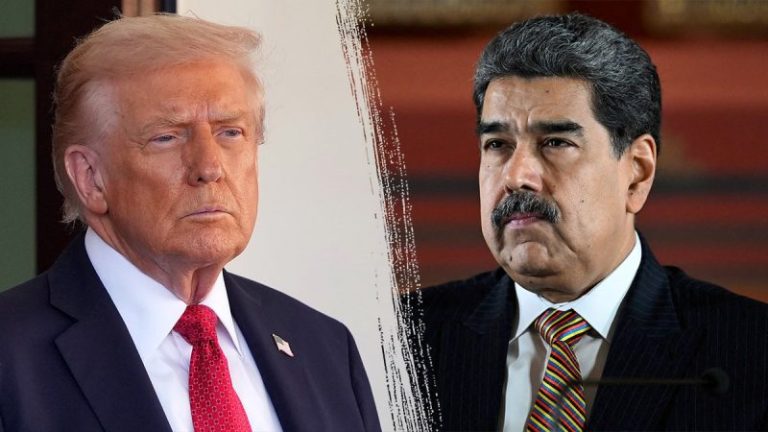
            President Donald Trump is ramping up pressure on the Venezuelan regime, striking four boats in the Caribbean Sea linked to drug trafficking networks tied to Caracas over the past month. Alongside those strikes, the U.S. has repositioned three destroyers, an amphibious assault ship, a nuclear-powered attack submarine and a squadron of F-35s to Puerto Rico — a deployment that has prompted one question in Washington and across the region: is the United States preparing for all-out war on Caracas?

            So far, defense analysts say that seems unlikely. A ground invasion would require far more troops than are currently in the theater — between 50,000 and 150,000 by some estimates.

            Somewhere around 10,000 troops have been repositioned in Latin America, a senior defense official told The New York Times.

            ‘The U.S. just doesn’t have enough forces there,’ said Mark Cancian, a senior defense adviser at the Center for Strategic and International Studies. ‘What I think they’ve put in place is the capability to launch strikes at either the cartels or the Maduro regime. If I had to bet, it’s probably against the cartels — but I wouldn’t rule out something against the regime.’

            That limited but flexible posture reflects what some experts call a modern form of coercive diplomacy.

            ‘It sort of looks like we’re in the throes of a 21st-century version of gunboat diplomacy,’ said Brandan Buck, a foreign policy analyst at the Cato Institute. ‘The Trump administration is doing what it can to force some sort of transition [of] power — out of Maduro’s hands and into someone else’s — without a classic invasion.’

            The pressure campaign has accelerated this year. The administration raised the bounty on Maduro — Venezuela’s kleptocratic leader for more than a decade — to $50 million, and officials familiar with internal discussions say Trump has grown frustrated with the dictator’s refusal to step aside. Diplomatic outreach to Caracas was reportedly suspended this week.

            While the Pentagon continues to frame the campaign as counter-narcotics, the U.S. military’s posture now allows for much more. Ryan Berg, director of the Americas Program at the Center for Strategic and International Studies, said Washington’s evolving approach reflects a growing willingness to confront the regime directly.

            ‘There appears to be growing appetite to confront Maduro’s regime directly — including potentially land-based strikes within Venezuela,’ Berg said. ‘The force posture currently in the southern Caribbean is consonant with the potential for precision strikes using Tomahawk missiles or other weapons, but without risking the lives of U.S. service personnel.’

            Behind the scenes, Berg noted, the administration has taken steps to prepare the legal ground for such action.

            ‘The clearest signal yet is the legal justification for a non-international armed conflict,’ he said. ‘That tells us several departments’ Office of Legal Counsel were tasked with building the case for potential strikes.’

            The White House continues to describe the operation as homeland defense — stopping drug and fentanyl shipments before they reach U.S. shores — but analysts say Venezuela’s unique role in the drug trade blurs that line.

            ‘Under Maduro, Venezuela is a criminal regime,’ Berg said. ‘What makes the threat unique is that the regime controls the institutions of the state — and its military — to move drug shipments and participate in other illicit economies.’

            That dynamic means targeting cartels could also destabilize the regime that depends on them. Brent Sadler, a senior research fellow at the Heritage Foundation and retired Navy officer, said striking cartel networks could ultimately make Maduro’s rule unsustainable.

            ‘The Maduro regime is reliant on the cartels to maintain its bottom line and stay in power,’ Sadler said. ‘If you weaken the cartel backing of the regime, then the regime itself becomes unsustainable. You don’t have to go in guns blazing — you let it crumble under its own weight.’

            Cancian said the expanding U.S. presence at sea and in the air ‘indicates this thing may end up being larger or go on longer than expected.’ Any strikes against cartel production facilities inland, he added, risk bleeding into regime targets such as intelligence or defense ministries.

            ‘They could easily strike the intelligence service or the Ministry of Defense,’ Cancian said. ‘That’s where things could start to blur.’

            But Democrats have accused Trump officials of trying to get the U.S. roped into another war. Republican senators on Thursday blocked an effort led by Senate Democrats to curb Trump’s war powers with a resolution stating Trump does not have the power to authorize strikes without approval from Congress.

            The potential for retaliation remains a wild card. Venezuela’s conventional forces are weak, but analysts warn that the regime could rely on its cartel allies or proxy networks to strike back indirectly.

            ‘Maduro could facilitate their retaliation,’ Cancian said. ‘That could mean attacks on DEA agents or American citizens in the Caribbean. The cartels have the ability to do that.’

            So far, few regional actors appear willing to come to Maduro’s defense. Berg said even many of the regime’s neighbors would quietly welcome his fall.

            ‘Many would be secretly happy to see him go,’ he said. ‘But you’d expect a few voices —  [President Gustavo] Petro in Colombia, [President Inacio] Lula in Brazil — to object to the use of force.’

            Erik Suarez, a Venezuelan-born political activist, said the hemisphere is already dividing over the issue.

            ‘We can divide South America [into] two sides,’ he said. ‘Lula in Brazil and Petro in Colombia are aligned with Maduro, but many others — Ecuador, Peru, Guyana, and Caribbean states — see Venezuela as a major threat because of mass migration and the spread of drug traffickers and terrorists.’

            Suarez said the Maduro regime’s alliances with armed groups and terror networks make it not just a domestic problem but a direct threat to U.S. security.

            ‘Venezuela represents a huge national security threat — not only ideologically, but to homeland security,’ he said. ‘They’ve issued passports to Hezbollah members and targeted dissidents abroad. Keeping Maduro in power is a long-term danger to the U.S.’

            That view is shared by Venezuelan opposition leaders in the U.S. and many Latin Americans who fled communist dictatorships and their descendants, including Secretary of State Marco Rubio.

            Even if Washington succeeds in toppling Maduro, rebuilding Venezuela would be a monumental challenge. The country’s opposition — led by María Corina Machado and 2024 President-elect Edmundo González Urrutia — has legitimacy but faces the task of stabilizing a shattered state.

            ‘The opposition has had months to prepare for governing,’ Berg said. ‘They’re full of plans to get Venezuela back on a path of development and greater security.’

            This post appeared first on FOX NEWS

            Senate Republicans are taking a hands-off approach to threats from White House budget chief Russ Vought, arguing that his pressure on Senate Democrats to reopen the government, for now, is warranted.

            Away from the gridlock on Capitol Hill, Vought, who is the director of the Office of Management and Budget (OMB), has made moves to pressure Senate Democrats, led by Senate Minority Leader Chuck Schumer, D-N.Y., to reopen the government.

            Before the shutdown started earlier this month, the OMB released a memo to government agencies instructing mass firings beyond the typical furloughs of nonessential employees during government shutdowns. He has since withheld nearly $30 billion in infrastructure funding to blue states and cities.

            And earlier this week, a memo circulated around the White House that suggested that furloughed employees would not receive back pay when the government reopened — a move that runs counter to a law signed by President Donald Trump in 2019.

            ‘We heard earlier, right at the beginning of the shutdown, that we may see some terminations, some firings within the department,’ Sen. Lisa Murkowski, R-Alaska, told Fox News Digital. ‘We saw a lot of big numbers kind of thrown around, and they haven’t materialized, which I think is good, but certainly what it does, it’s very unsettling.’

            The administration’s latest actions come as conversations on a path out of the shutdown have been ongoing. For now, Republicans don’t believe that Vought’s moves are undercutting those talks.

            Sen. John Hoeven. R-N.D., told Fox News Digital that Vought was what Vought ‘thinks probably helps push Democrats to come to the table and open the government back up.’

            ‘I mean, that’s for him to decide,’ he said. ‘What I’m looking to do is to try to talk to enough Democrats, and I hope that between reaching out to them and pressure they get from back home, we can get the government open and back to work on these things.’

            Senate Majority Leader John Thune, R-S.D., told Fox News Digital that the administration was ‘going to do what they’re going to do, and they’ve got to manage this, and they’re going to manage it according to their priorities.’

            ‘I think they’re trying to be sensitive to discussions up here that might be productive,’ Thune said. ‘But, you know, as of right now, it’s like I said before, all this stuff is just kind of window dressing until we fundamentally get down to the issue about, are we going to open up the government or not?

            ‘And I think when all those issues go away, these guys, the things that the White House is talking about doing or hinting that they might do, become unnecessary,’ he continued.

            Senate Democrats are demanding a deal extending expiring Obamacare subsidies, and won’t provide the votes needed to reopen the government unless they get more than a guarantee to tackle the issue.

            Thune and Senate Republicans are adamant that they will negotiate on extending the tax credits, with reforms baked in, only after the government reopens. And so far, as the stalemate has dragged on, neither Vought nor the administration have taken action on their threats of mass firings or back pay.  

            ‘Right now it’s fine,’ Sen. Thom Tillis, R-N.C., told Fox News Digital. ‘If he starts taking Draconian sorts of actions, then I think it creates a more difficult scenario for us. It puts us further away from what he wants to get accomplished, too.’

            Still, Senate Democrats have not taken kindly to his overtures.

            Sen. Gary Peters, D-Mich., told Fox News Digital that there was ‘no question’ Vought was hurting ongoing talks between the parties.

            ‘Russ Vought is basically acting like a bomb thrower, and bomb throwers are never helpful in negotiations,’ he said. 

            This post appeared first on FOX NEWS

            The Senate is set to leave town on Friday until early next week as neither side is ready to give in the ongoing government shutdown stalemate.

            Lawmakers voted deep into the night on Thursday on the 2026 National Defense Authorization Act, which advanced on a largely bipartisan vote. But the $925 billion package, which authorizes funding for the Pentagon, was effectively the last hurrah for the week in the upper chamber.

            While there was discussion of putting the House GOP’s continuing resolution (CR), along with congressional Democrats’ counter-proposal, on the floor for one last vote, the plan never came to fruition. Both would likely have failed for an eighth consecutive time.

            Senate Republicans and Democrats will instead return on Tuesday next week, after observing Columbus Day, to continue the ongoing back and forth on the GOP’s CR following a week of trying and failing to pass the bill and reopen the government.

            Senate Majority Leader John Thune, R-S.D., plans to continue bringing the Republicans’ bill to the floor in an effort to fragment Senate Democrats. So far, only three Democratic caucus members have consistently split from their largely unified party.

            Talks have continued in the background behind closed-doors, but nothing has quite yet materialized into full-blown negotiations on expiring Obamacare, formally known as the Affordable Care Act (ACA), tax credits to find an off-ramp as the government shutdown barrels into a third week.

            ‘The ACA issue is important to a lot of us, not just to Democrats,’ Sen. Susan Collins, R-Maine, said. ‘The tax subsidies were enhanced during COVID. They do need to be reformed, but they do need to be extended as well.’

            Sen. Markwayne Mullin, R-Okla., is one of a handful of Republicans consistently meeting with Democrats. He said he’s not meeting with lawmakers ‘so dug in that they can’t get off their position,’ but still, no movement across the aisle has happened.

            Mullin and other Republicans want to pass their short-term CR until Nov. 21, while Senate Democrats are adamant that, unless there is a deal on the ACA subsidies, they won’t provide GOP with the votes to reopen the government.

            ‘Well, if it continues, the way it’s gone, the longer we go, the harder it is,’ Mullin said. ‘It’s a big task. Anything to do with ACA or healthcare, you get a lot of moving parts. I think that gets very difficult the longer this thing [goes on]. You get into next week. I mean, we’ve got four and a half weeks left, right, and so that timeframe keeps getting shorter.’

            Their return next week also all but guarantees that members of the military will not receive their paychecks on time, given that the date to have payroll locked in and processed falls on Monday.

            ‘Certainly, if folks miss a paycheck, the intensity will go up,’ Sen. Shelley Moore Capito, R-W.V., said.

            The continued gridlock has most in the Senate GOP unwilling to consider turning to the ‘nuclear option,’ a move they made last month when they unilaterally changed the Senate’s rules for confirmations on nominations to break through Senate Minority Leader Chuck Schumer, D-N.Y., and his caucus’ blockade of President Donald Trump’s nominees, to change the filibuster.

            ‘There’s always a lot of swirl out there, as you know, from, you know, social media, etc., but no, we’re not having that conversation,’ Thune said.

            But not every Republican wants to ignore nuking the 60-vote filibuster as, day in and day out, the GOP’s plan to reopen the government falls five votes short.

            Sen. Bernie Moreno, R-Ohio, said that if the shutdown continues, it’s an option that should be considered.

            ‘Look, 50%, 60% of Americans live paycheck to paycheck,’ he said. ‘We’re going to trip that wire next week. Now if there’s another paycheck — that’s probably 80% of Americans that can’t go without two paychecks in a row. I think at that point we have to look at it and say ‘the Democrats are still doing political stunts.’’

            Republicans also found a new point of attack against Democrats. Schumer told Punchbowl News in an interview that ‘Every day gets better for us,’ in his assessment of Senate Democrats’ political momentum as the shutdown marches onward.

            ‘Who is ‘us?’ Not better for the American people,’ Senate Majority Whip John Barrasso, R-Wyo., said. ‘Who does he mean by ‘us?’ Not the military who is not getting paid. Not the Border Patrol who are not getting paid. Not the air traffic controllers who are not getting paid. Who is ‘us?’ He’s playing a game!’

            But Senate Democrats are largely shrugging off the issue. Sen. Brian Schatz, D-Hawaii, contended that it was Republicans’ latest attempt to ‘change the topic from 114% increase in premiums,’ a point Democrats have argued could happen if the Obamacare tax credits aren’t extended.

            ‘They’re a little desperate to change the news cycle, and this is their latest attempt,’ Schatz said. 

            This post appeared first on FOX NEWS