
Author

admin

Browsing

Statistics Canada released its August job numbers on Friday (September 5). The report indicated a loss of 66,000 jobs in the Canadian economy and an increase in the unemployment rate to 7.1 percent from the 6.9 percent recorded in July.

The losses were primarily felt in the professional, scientific and technical services sector with a decrease of 26,000 jobs, followed by losses of 23,000 jobs in the transportation and warehousing sector and 19,000 jobs in manufacturing.

One small caveat: of the 66,000 jobs lost, 60,000 were part-time workers, while full-time employment saw little change after shedding 51,000 positions the previous month.

South of the border, the US Bureau of Labor Statistics (BLS) also released its August jobs report on Friday. The report is the first jobs report since Donald Trump fired the head of the BLS after the release of July’s labor report showed weakness trickling into the economy.

The economy added an estimated 22,000 jobs during August, well below analysts’ expectations of 75,000 new jobs. The unemployment rate also ticked up to 4.3 percent from 4.2 percent in July.

The federal workforce saw the largest job decline, losing 15,000 jobs. The mining, quarrying and oil and gas extraction sector also saw its most significant change over the last 12 months, shedding 6,000 workers.

Additionally, the BLS revised June and July’s figures. While July’s numbers rose to 79,000 added jobs from the 73,000 first reported, the agency made a significant downward revision to June’s numbers, indicating the economy lost 13,000 jobs for the month instead of gaining 14,000.

Jobs data from the last few months will play an important role when the Federal Reserve next meets on September 16 and 17 to discuss changes to the Federal Funds Rate, which is currently set in the 4.25 to 4.5 percent range. Most analysts are predicting the Fed to make a 25 point cut to the benchmark rate, with some now eyeing a larger 50 point cut.

Markets and commodities react

Canadian equity markets were mostly positive during the shortened trading week. The S&P/TSX Composite Index (INDEXTSI:OSPTX) set another new record high on Friday, closing the week up 1.7 percent to 29,050.63. The S&P/TSX Venture Composite Index (INDEXTSI:JX) did even better, climbing 3.34 percent to finish Friday at 857.25. However, the CSE Composite Index (CSE:CSECOMP) went the opposite direction, falling 5.16 percent to end the week at 158.32.

US equity markets were volatile this week, falling sharply at the open of the trading week Tuesday (September 2) before moving back into positive territory. Although the S&P 500 (INDEXSP:INX) pulled back slightly on Friday’s weak jobs data, it ultimately ended the week up 0.33 percent at 6,481.51. The Dow Jones Industrial Average (INDEXDJX:.DJI) took a larger hit Friday, and closed down 0.32 percent on the week at 45,400.87. Of the three, the Nasdaq 100 (INDEXNASDAQ:NDX) was the week’s biggest winner, rising 1.01 percent to 23,652.44.

The gold price was in focus this week as it climbed to a new record high Wednesday (September 3) on expectations of a September rate cut by the Federal Reserve and news on August 29 that a Federal Appellate court had struck down the majority of Donald Trump’s reciprocal tariffs. Gold ended the week up 4.03 percent at US$3,586.27 per ounce after the lackluster jobs report pushed gold above Wednesday’s highs.

Silver had a similarly explosive week, climbing past US$40 for the first time since 2011 and moving as high as US$41.38 on Wednesday. The precious metal finished Friday with a 3.32 percent weekly gain at US$41.07 per ounce.

On the other hand, copper was off this week, shedding 0.87 percent to US$4.54 per pound. The S&P Goldman Sachs Commodities Index (INDEXSP:SPGSCI) posted a decrease of 1.17 percent by close on Friday, finishing at 543.28.

Top Canadian mining stocks this week

How did mining stocks perform against this backdrop?

Take a look at this week’s five best-performing Canadian mining stocks below.

Stocks data for this article was retrieved at 4:00 p.m. EDT on Friday using TradingView’s stock screener. Only companies trading on the TSX, TSXV and CSE with market caps greater than C$10 million are included. Mineral companies within the non-energy minerals, energy minerals, process industry and producer manufacturing sectors were considered.

1. Carlton Precious (TSXV:CPI)

Weekly gain: 77.78 percent
Market cap: C$17.74 million
Share price: C$0.24

Carlton Precious is a mineral exploration company focused on a portfolio of precious metals projects in the Americas and Australia.

Its flagship Esquilache silver project, located in Peru, consists of two mining concessions covering an area of 1,600 hectares. Unsubstantiated records from the property indicate historic mining produced 10 million ounces of silver between 1950 and 1962. Exposed structures on the property show mineralization of silver, lead, zinc, copper and gold.

On March 19, Carlton reported assay results from a 2024 surface channel sampling program, with grades peaking at 13.45 grams per metric ton (g/t) gold and 1,018 g/t silver.

The company’s most recent announcement came on July 14, when Carlton signed an agreement with the community of San Antonio de Esquilache for the project allowing for further exploration at the property. Carlton added that its staff has designed a program of up to 40 drill holes that it expects to commence in fall 2025.

In its September 2025 investor presentation, the company stated it is submitting its drill permit applications.

2. Quantum Critical Metals (TSXV:LEAP)

Weekly gain: 73.68 percent
Market cap: C$17.31 million
Share price: C$0.165

Formerly Durango Resources, Quantum Critical Metals is a polymetallic exploration company developing a portfolio of projects in Québec and British Columbia, Canada.

Its flagship NMX East critical metals project is in the Eeyou Istchee James Bay region of Québec and lies adjacent to Nemaska Lithium’s Whabouchi mine. According to the project page, the company has drilled four holes at the property, producing a highlighted assay of 107.68 meters from surface containing average grades of 38.85 g/t gallium, 701.03 g/t rubidium, 24.98 g/t cesium and 3.61 g/t thallium.

Quantum Critical Metals has also been working to advance its Victory antimony project in Haida Gwaii, British Columbia. The site was initially discovered in the 1980s and hosts mineralization of arsenic, antimony and mercury. On August 25, the company announced it submitted an application to expand the property to 1,444 hectares.

The company’s most recent news came on Thursday (September 4), when it identified mica as a key carrier of critical minerals at its NMX project. Quantum selected samples from the 107 meter interval mentioned above, and the samples with the highest mica content returning significantly higher grades of critical metals, including gallium, rubidium, lithium and niobium.

Quantum has now sent the samples for further testing. If the testing confirms the results, stated the discovery will allow for easier removal of these elements from the rock, as the company can first isolate the mica.

3. Electric Metals (TSXV:EML)

Weekly gain: 66.67 percent
Market cap: C$79.98 million
Share price: C$0.45

Electric Metals is a mineral development company focused on advancing its flagship North Star manganese project in Minnesota, US. According to the company, the asset is North America’s highest-grade manganese resource. It plans to produce high-purity manganese sulphate monohydrate for lithium-ion batteries.

On August 26, Electric Metals released its preliminary economic assessment (PEA) for North Star. The assessment demonstrated a base-case after-tax net present value of US$1.39 billion, with an internal rate of return of 43.5 percent and a payback period of 23 months.

The report also included an updated mineral resource estimate with an indicated resource of 7.6 million metric tons of ore grading 19.07 percent manganese, 22.33 percent iron and 30.94 percent silicon, and an inferred resource of 3.73 million metric tons of ore grading 17.04 percent manganese, 19.04 percent iron and 30.03 percent silicon.

Momentum from the PEA release landed Electric Metals on this list of top performers last week, and its shares climbed even higher this week after the company announced the results of its annual and special shareholder meeting.

Shareholders approved all resolutions, including two related to Electric Metals’ plan to redomicile its business in Delaware, US. The first is continuance from the Canada Business Corporations Act to the Business Corporations Act of British Columbia. Shareholders also voted to authorize a continuance of the company to the Delaware General Corporation Law, with the condition of a successful corporate move to BC.

Electric Metals CEO Brian Savage said the change is intended to align its corporate home with the company’s mission to build a fully domestic US supply of manganese.

4. Valhalla Metals (TSXV:VMXX)

Weekly gain: 66.67 percent
Market cap: C$11.53 million
Share price: C$0.15

Valhalla Metals is a polymetallic exploration company working to advance a pair of projects in Alaska’s Ambler Mining District. Its Sun project consists of 392 claims that cover an area of 25,382 hectares.

A May 2022 technical report states that the indicated mineral resource for the project is 1.71 million metric tons of ore containing 162.96 million pounds of zinc, 55.85 million pounds of copper, 42.04 million pounds of lead, 3.3 million ounces of silver and 12,000 ounces of gold.

It also reported an inferred resource of 9.02 million metric tons containing 831.33 million pounds of zinc, 239.64 million pounds of copper, 290.26 million pounds of lead, 23.68 million ounces of silver and 73,000 ounces of gold.

The project is largely dependent on the construction of the 211 mile Ambler Access Road, which Donald Trump approved in his first term as president. Joe Biden rescinded the federal permit in 2024 due to environmental concerns.

Shares in Valhalla gained momentum this week after Congress voted 215 to 210 on Wednesday to move ahead with the project. It’s expected that the Senate will follow suit when it votes on the resolution in the next few weeks.

5. Orosur Mining (TSXV:OMI)

Weekly gain: 65.31 percent
Market cap: C$108.97 million
Share price: C$0.405

Orosur Mining is an exploration company focused on the development of early to advanced-stage assets in South America.

Exploration has revealed multiple gold deposits at its flagship Anzá gold project in Colombia, which is located 50 kilometers west of Medellin and sits along Colombia’s primary gold belt.

Orosur acquired the project, previously a 49/51 joint venture between Newmont and Agnico Eagle, in November 2024.

Since that time, the company has been working to explore the property and has made several announcements regarding its exploration efforts. The most recent came on August 26, when it reported highlights from infill drilling being carried out at the property, including one hole with 6.13 g/t gold over 71.85 meters from near surface at the Pepas gold prospect.

Orosur also owns several early-stage projects, the El Pantano gold-silver project in Argentina, the Lithium West project in Nigeria and the Ariquemes project in Brazil, which is prospective for tin, niobium and rare earths.

On Monday (September 1), Orosur reported that in August, it had issued 3.28 million new common shares for a total consideration of US$174,711.67 following its exercise of the same number of warrants. It also stated that 31.51 million warrants remained outstanding.

FAQs for Canadian mining stocks

What is the difference between the TSX and TSXV?

The TSX, or Toronto Stock Exchange, is used by senior companies with larger market caps, and the TSXV, or TSX Venture Exchange, is used by smaller-cap companies. Companies listed on the TSXV can graduate to the senior exchange.

How many mining companies are listed on the TSX and TSXV?

As of May 2025, there were 1,565 companies listed on the TSXV, 910 of which were mining companies. Comparatively, the TSX was home to 1,899 companies, with 181 of those being mining companies.

Together, the TSX and TSXV host around 40 percent of the world’s public mining companies.

How much does it cost to list on the TSXV?

There are a variety of different fees that companies must pay to list on the TSXV, and according to the exchange, they can vary based on the transaction’s nature and complexity. The listing fee alone will most likely cost between C$10,000 to C$70,000. Accounting and auditing fees could rack up between C$25,000 and C$100,000, while legal fees are expected to be over C$75,000 and an underwriters’ commission may hit up to 12 percent.

The exchange lists a handful of other fees and expenses companies can expect, including but not limited to security commission and transfer agency fees, investor relations costs and director and officer liability insurance.

These are all just for the initial listing, of course. There are ongoing expenses once companies are trading, such as sustaining fees and additional listing fees, plus the costs associated with filing regular reports.

How do you trade on the TSXV?

Investors can trade on the TSXV the way they would trade stocks on any exchange. This means they can use a stock broker or an individual investment account to buy and sell shares of TSXV-listed companies during the exchange’s trading hours.

Article by Dean Belder; FAQs by Lauren Kelly.

Securities Disclosure: I, Dean Belder, hold no direct investment interest in any company mentioned in this article.

Securities Disclosure: I, Lauren Kelly, hold no direct investment interest in any company mentioned in this article.

This post appeared first on investingnews.com

The average rate on the 30-year fixed mortgage dropped 16 basis points to 6.29% Friday, according to Mortgage News Daily, following the release of a weaker-than-expected August employment report.

It’s the lowest rate since Oct. 3 and the biggest one-day drop since August 2024. Rates are finally breaking out of the high 6% range, where they’ve been stuck for months.

“This was a pretty straightforward reaction to a hotly anticipated jobs report,” said Mortgage News Daily Chief Operating Officer Matt Graham. “It’s a good reminder that the market gets to decide what matters in terms of economic data, and the bond market has a clear voting record that suggests the jobs report is always the biggest potential source of volatility for rates.”

Graham said in a post on X that many lenders are “priced better” than Oct. 3 and would be quoting in the high 5% range.

The drop is a major change from May, when the rate on the 30-year fixed peaked at 7.08%. It’s big for buyers out shopping for a home today, especially given high home prices.

Take, for example, someone purchasing a $450,000 home, which is just above August’s national median price, using a 30-year fixed mortgage with a 20% down payment. Not including taxes or insurance, the monthly payment at 7% would be $2,395. At 6.29%, that payment would be $2,226, a difference of $169 per month.

That might not sound like a lot to some, but it can mean the difference in not just affording a home, but qualifying for a mortgage.

Homebuilder stocks reacted favorably Friday, with names like Lennar, DR Horton and Pulte all up roughly 3% midday. Homebuilding ETF ITB has been running hot for the last month as rates slowly moved lower. It’s up close to 13% in the past month.

The big question is whether the drop in rates will be enough to get homebuyers back in the market.

Mortgage demand from homebuyers, an early indicator, have yet to respond to gradually improving rates. Applications for a mortgage to purchase a home last week were 6.6% lower from four weeks before, according to the Mortgage Bankers Association.

“Homebuyers grapple with a lack of affordability, sellers contend with more competition, and builders deal with lower buyer demand,” Danielle Hale, chief economist at Realtor.com, said Friday in a statement after the release of the August employment report. “These conditions haven’t spelled catastrophe, but have created a cruel summer for the housing market.”

Some analysts have argued that buyers need to see mortgage rates in the 5% range before it really makes a difference. Home prices remain stubbornly high, and while the gains have definitely cooled, they are not yet coming down on a national level. In addition, uncertainty about the state of the economy and the job market has left many would-be buyers on the sidelines.

This post appeared first on NBC NEWS

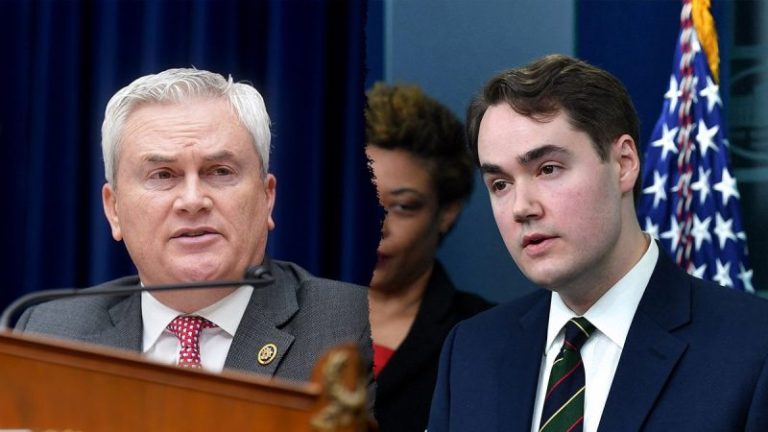
The House Oversight Committee is slamming former Biden spokesman Andrew Bates after he accused Republican lawmakers of having a misguided focus in his opening remarks during the panel’s autopen probe.

Bates, the latest former White House official to be interviewed by House investigators, affirmed ex-President Joe Biden’s leadership while criticizing his successor in an opening statement obtained by Fox News Digital via a source familiar.

An Oversight Committee spokesperson said in response, ‘Andrew Bates was part of the Biden cognitive decline cover-up and he’s delusional.’

‘His so-called opening statement — leaked in the middle of his transcribed interview and not even read at the time it was leaked — peddled the same fantasy he’s been trying to sell the American people. The public has rejected Bates’ spin and witnessed President Biden’s decline with their own eyes,’ the spokesperson said. 

‘And just this week, new records revealed that President Biden neither approved — nor may have even been consulted on — thousands of pardons. This is a historic scandal with massive repercussions.’

Bates said in the opening statement provided to Fox News Digital, ‘I was proud to support Joe Biden as President because we believe in the same values. In the White House, it was universally understood that Joe Biden was in charge. That is completely consistent with my personal experience with the President.’

‘Now someone else with a very different character is in charge,’ the statement said.

Bates accused Oversight Committee Republicans of ‘spending taxpayer dollars investigating Joe Biden — an honorable man under whom the economy performed far better than it is today — while turning a blind eye to corruption under Donald Trump.’

He went on to rip President Donald Trump’s tariffs, accuse him of ‘illegally trying to take over the Federal Reserve,’ and criticize the president’s personal investments in cryptocurrency and acceptance of a jet from Qatar to be used for official business, among other items.

‘To my knowledge, none of the above are being investigated. As a taxpayer and private citizen, I feel that is wrong,’ Bates said, according to the written comments.

House Oversight Committee Chair James Comer, R-Ky., has been investigating whether Biden’s senior aides covered up signs of mental decline in the former president, and whether any executive decisions were signed off on via autopen without the then-leader’s full awareness.

They’re looking in particular at the litany of clemency orders that Biden signed in the latter half of his term, though Biden allies have dismissed the probe as politically motivated.

This post appeared first on FOX NEWS

The Defense Department confirmed on Thursday night that two Venezuelan aircraft flew near a U.S. Navy vessel in international waters. The incident, which the department called a ‘highly provocative move,’ comes as the Trump administration ramps up its anti-narco-terrorism efforts.

‘Today, two Maduro regime military aircraft flew near a U.S. Navy vessel in international waters. This highly provocative move was designed to interfere with our counter narco-terror operations,’ the Defense Department wrote in a statement posted to X. ‘The cartel running Venezuela is strongly advised not to pursue any further effort to obstruct, deter or interfere with counter-narcotics and counter-terror operations carried out by the U.S. military.’

On Friday, Reuters reported that the U.S. 10 F-35 fighter jets to a Puerto Rico airfield as part of its efforts to combat drug cartels.

s

Venezuela’s actions followed an unprecedented U.S. Marine strike Tuesday on a cartel-operated vessel. The Trump administration later said 11 members of the notorious Venezuelan gang Tren de Aragua – a U.S.-designated terrorist organization – were killed in the strike.

Prior to the strike on Tuesday, U.S. efforts to counter cartels and international gang organizations had taken place largely in the form of seizure and apprehension operations. The strike, however, appeared to signal that the Trump administration was shifting towards a tougher new approach.

On Thursday, during a visit to Ecuador, Secretary of State Marco Rubio announced that two gangs were being reclassified as foreign terrorist organizations. Rubio also slammed the Venezuelan leadership’s involvement in the drug trade. He went on to condemn Nicolás Maduro as an ‘indicted drug trafficker’ and a ‘fugitive of American justice.’

‘Maduro is indicted by a grand jury in the Southern District of New York. That means the Southern District of New York presented the evidence to a grand jury, and a grand jury indicted him. And then a superseding indictment came out that was unsealed about a year and a half ago that specifically detailed Maduro’s actions,’ Rubio said on Thursday. ‘So, number one, let there be no doubt he, Nicolás Maduro, is an indicted drug trafficker in the United States, and he’s a fugitive of American justice.’

Rubio also seemed to indicate that the U.S. and its allies were working together on this tougher approach to cartels and international gang organizations. He said that ‘cooperative governments’ would help the U.S. identify drug traffickers and ‘blow them up, if that’s what it takes.’

Fox News Digital’s Caitlin McFall contributed to this report.

This post appeared first on FOX NEWS

President Donald Trump has never played by the stale rules of Washington and Americans are grateful for it. His bold call for a 2026 pre-midterm convention is a political masterstroke that will cement America First policies, energize the Republican base, and ignite Generation Z voters. 

This convention is a seismic shift that sends a clear message to every politician: fight for the American people or step aside.

The GOP’s victories, from retaking the White House and strengthening congressional majorities to delivering real wins on border security, tax cuts, a stronger economy and energy independence, set the stage for Trump’s call for a pre-midterm national convention that breaks political tradition. 

While establishment Republicans cling to fundraising dinners, closed-door sessions and tired speeches that leave voters disengaged, Trump has mastered turning rallies into movements, from the electrifying 2016 campaign that flipped battleground states to the packed arenas of 2024 that reenergized the base. A pre-midterm convention would unite delegates from all 50 states to celebrate achievements, set a clear agenda and ignite voters. 

The contrast is clear. Conservative values of law and order through Trump’s National Guard blueprint to combat crime, economic freedom that fuels innovation, and family-first policies that honor tradition stand in sharp contrast to Democrat failures, including 9.1% inflation in 2022, open borders that allowed more than 11 million illegals, and foreign policy disasters that emboldened adversaries. 

By highlighting Republican successes like cutting gas prices through energy independence and appointing judges who defend constitutional rights, this convention would rebuke the Washington elite and prove Republicans deliver results while Democrats deliver excuses.

Unity is part of the strategy, but this is also a pivotal opportunity to mobilize Gen Z, the 68 million young Americans born between 1997 and 2012 who are increasingly open to conservative policies but need a reason to show up. A midterm convention can be that reason. 

Their frustration with the Left is clear: sky-high inflation, record crime and the relentless push of woke ideology. The 2025 Harvard Youth Poll found that 75% of young voters believe the country is headed in the wrong direction, with 62% citing a worsening economy under current policies and nearly half naming cost of living such as housing, food and gas as their top concern. A Yale Youth Poll revealed 35% now favor Republicans in the midterms, a notable increase from past cycles. 

Gen Z does not trust institutions and is disillusioned by political posturing. They crave authenticity while being bombarded by liberal propaganda in schools, on social media and from Hollywood. They see through empty promises of equity, knowing it means higher prices, fewer jobs and more division, with nearly 60% of Gen Z college graduates unemployed compared to just 25% of prior generations. 

President Trump understands this. A high-energy convention featuring conservative stars like Sen. Josh Hawley, R-Mo., and Rep. Anna Paulina Luna, R-Fla., along with influencers such as Charlie Kirk and Anthony Raimondi, known as Conservative Ant, can deliver messages tailored for TikTok and X. 

These voices can speak directly to Gen Z’s entrepreneurial spirit with policies that support small business tax cuts, energy independence to cut gas prices and unapologetic defenses of freedom. That spark could boost Gen Z turnout by 10% to 15% in the midterms, making them the GOP’s secret weapon. Failure to capture their energy risks apathy or a drift toward third parties.

This convention will energize the grassroots and unify the Republican Party. The GOP is already outpacing Democrats in record-breaking fundraising, but a unified front delivers more than dollars. It locks in a clear midterm agenda, quashes internal battles and promises a surge of support as Trump, Vice President JD Vance and other Republican stars deliver high-profile speeches that draw major contributions. 

By showcasing Republican successes in safety, job growth, lower gas prices and judicial appointments that protect constitutional rights, against Democrat failures like open borders and green energy disasters, the convention will mobilize voters. With the economy rebounding and Trump’s approval rising, it ensures Republicans avoid complacency and secure dominance.

A midterm convention also challenges GOP lawmakers to deliver results or leave Washington. Voters are demanding accountability, expecting politicians to prove their commitment to the America First agenda by securing the border, cutting red tape and prioritizing American workers, while elevating rising stars who represent the next wave of conservative leadership. This moment is an opportunity to purge establishment Republicans who align with elites and replace them with fighters for the American people, reshaping the future bench of Congress. 

Meanwhile, Democrats are leaderless and floundering in internal chaos and deeply unpopular policies. A 2025 CNN poll shows that while 72% of Democrats say they are motivated to vote, only 58% view their party favorably, compared to 76% for Republicans. Trump’s call for a midterm convention is another power move that highlights Democratic disarray, exposing their lack of leadership, failed policies and overall weakness.

Trump’s midterm convention is not just about exposing Democratic failure, it is about building the future of the movement and securing a foundation that lasts for generations. It is now or never for conservatives. 

A pre-midterm GOP convention led by Trump represents the next chapter in his revolution, timed to capture Gen Z’s openness to conservative ideas. By rallying young voters with authenticity and real solutions to their everyday struggles, amplifying momentum, and holding Republican leaders accountable, this convention can turn frustration into lasting America First policies. 

The GOP cannot afford to let woke politics or establishment complacency derail America’s future. Seizing this moment ensures 2026 delivers not just a victory but a generational turning point that will shape the direction of this country for decades to come.

This post appeared first on FOX NEWS

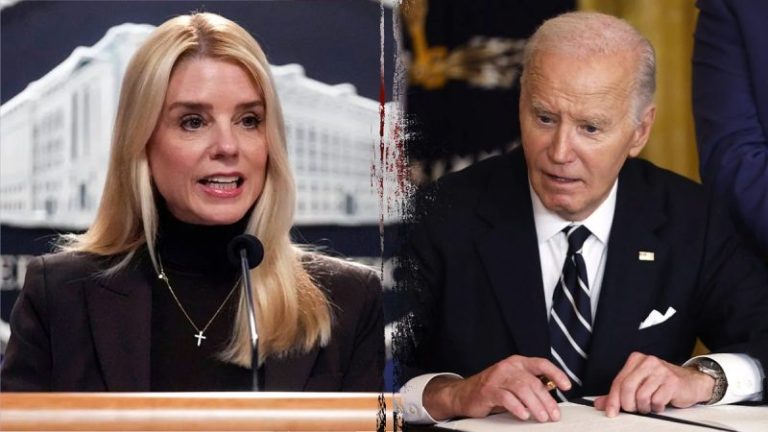
The Biden administration ‘weaponized the full weight of the federal government against Christians,’ according to Trump leadership, laying out in a new report the ‘numerous instances’ of past anti-Christian bias and recommendations to protect faith in America.

Fox News Digital exclusively obtained the report published by the Task Force to Eradicate Anti-Christian Bias, created by President Donald Trump and chaired by Attorney General Pam Bondi.

The task force had a clear mandate to ensure that ‘any unlawful and improper conduct, policies, or practices that target Christians are identified, terminated, and rectified.’

The task force was directed to deliver an initial assessment, which Fox News Digital exclusively obtained Friday. The report provides an overview of ‘the damage that can be done when religious liberty is not protected and preserved for all Americans.’

‘The Task Force makes this commitment: the federal government will never again be permitted to turn its power against people of faith,’ the report states. ‘Under President Trump and Attorney General Bondi’s leadership, in partnership with all members of this Task Force, the rule of law will be enforced with vigor, and every religion will be treated with equality in both policy and action.’

The report added: ‘The days of anti-Christian bias in the federal government are over. Faith is not a liability in America—it is a liberty.’

After a preliminary review of federal agencies and departments, the task force uncovered ‘numerous instances of anti-Christian bias during the Biden administration.’

‘Joe Biden weaponized the full weight of the federal government against Christians and trampled on their fundamental First Amendment rights,’ White House spokeswoman Taylor Rogers told Fox News Digital. ‘Unlike Joe Biden, President Trump is protecting Christians, not punishing them.’

The Task Force found that the Department of Defense, Equal Employment Opportunity Commission and Department of Labor all ‘deprioritized, mishandled, or denied requests for religious exemptions to the Biden administration’s COVID-19 mandate.’

The Task Force also found that at the Department of Education the Biden administration ‘attempted to impose record-breaking fines on some of the nation’s largest Christian universities, including Liberty University ($14 million) and Grand Canyon University ($37.7 million).’ 

At the Department of Homeland Security, the task force found that Customs and Border Protection omitted Christian perspectives from a directive for detainees but deliberately noted accommodations for Islam, Rastafarianism and sects of Judaism.

At the Justice Department, the task force found that the Biden administration lacked an effort to ‘address and prosecute violations of the law where anti-Christian bias was demonstrated by the persecutors.’

‘Instead, during that time, the DOJ pursued novel theories of prosecution against those speaking or demonstrating based upon their Christian faith,’ the report states.

The task force also found that the Department of Justice, under the Biden administration, arrested and convicted approximately two dozen individuals under the Freedom of Access to Clinic Entrances Act for praying and demonstrating outside abortion facilities.

‘Yet, the same DOJ refused to apply the FACE Act to protect places of worship and crisis pregnancy centers,’ the report states.

At the FBI, the task force pointed to the bureau’s memo asserting that ‘radical-traditionalist’ Catholics were ‘domestic terrorism threats.’

At the Treasury Department, the task force pointed to the many ‘pro-Christian groups’ that have been ‘debanked.’

The task force found that, under the Biden administration, the Department of State provided ‘limited humanitarian relief to Christians relative to other populations and offered muted responses to attacks on Christians compared to other groups.’

Also at the State Department, the task force said it discovered evidence that ‘preferential employment practices were afforded’ for those of non-Christian religions, while Christian employees ‘were disfavored.’

‘It was particularly concerning that employees were less likely to be permitted leave for observation of certain Christian holidays as opposed to non-Christian ones.’

Officials also said the State Department imposed ‘radical LGBTQ gender ideology on foreign governments and State employees, including the forced usage of preferred pronouns and rainbow flags, violating the sincerely held religious beliefs of many Christians and other Americans of faith.’

The task force also found that the Department of Labor dismantled its office of faith-based initiatives and replaced it with a diversity, equity and inclusion office.

The task force also said that the Department of Housing and Urban Development ‘discriminated against Christian perspectives in its marketing, treating social media posts celebrating Christian holidays, such as Palm Sunday, Good Friday, and Easter, differently than posts celebrating other religious or interest group holidays, including Pride Month, Ramadan, and Diwali.’ 

Officials said Housing and Urban Development took down the Christian posts and left up the others.

The task force held its first meeting in April. Prior to the meeting, members of the task force conducted initial reviews of their respective agencies to identify any unlawful anti-Christian policies, practices or agency conduct during the Biden administration.

Officials said that the task force is not finished with its inquiry, but merely just beginning, and will continue its work to investigate the full scope of anti-Christian bias that ‘pervaded the federal government during the Biden administration.’

A final report is expected by February 2026.

Trump also signed an executive order establishing a White House Faith Office in February. 

The office empowers faith-based entities, community organizations and houses of worship ‘to better serve families and communities,’ according to the White House. 

The office is housed under the Domestic Policy Council and consults with experts in the faith community on policy changes to ‘better align with American values.’ 

A former Biden White House official did not immediately respond to Fox News Digital’s request for comment. 

This post appeared first on FOX NEWS

House Republicans on the Appropriations Committee are at odds with the Trump administration and some conservatives over how to avert a government shutdown.

Congress is currently marking up fiscal 2026 spending levels, but some in the administration are pressing to bypass the process and instead extend current levels through a year-long continuing resolution (CR).

Republicans broadly agree some form of CR will be needed to avoid a partial shutdown when fiscal 2025 ends on Sept. 30, but some appropriators are frustrated with a lack of a top-line budget number from the House, Senate and White House as they continue their work.

A Trump administration official told Fox News Digital that appropriators’ complaints about a top-line ‘nonsense,’ arguing they are simply unhappy with the funding levels the administration had proposed.

Meanwhile, length is also an issue. The White House is in favor of a clean CR stretching into the new year, while one House lawmaker said appropriators would like a stopgap that was ‘as short as possible.’ Some conservative lawmakers have even argued for a bill lasting at least the full fiscal year.

Committee member Rep. Ryan Zinke, R-Mont., called the idea of a long-term measure ‘very frustrating.’

‘As a member of Appropriations, where you do an enormous amount of work, and it leads to a continuing resolution because that’s easier…I’m deeply concerned that we will roll over and not do our job,’ Zinke told Fox News Digital.

Senior appropriator Rep. Mario Diaz-Balart, R-Fla., predicted ‘a very short-term CR,’ but he warned a year-long measure ‘would be devastating for the country.’

‘The concept that Republicans control the House, Senate and the White House, and we would somehow be stuck with the last Biden [budget] for a second year, to me, is preposterous,’ Diaz-Balart said, adding that the push for a year-long measure ‘is not coming from appropriators.’

Other committee Republicans echoed those concerns and issues with what they saw as a lack of direction from top officials on a top-line spending number.

The Trump administration official said accusations that House appropriators were not given enough direction from leaders are ‘completely false,’ however, and said the White House was engaged in monthly and weekly conversations with lawmakers relevant to the process.

‘The frustrating part is we don’t have a top line yet,’ Rep. John Rutherford, R-Fla., said.

One GOP lawmaker, granted anonymity to speak candidly, said, ‘We’re sort of flying blind right now, trying to get something done and across the finish line without really having a direction on what leadership wants, or frankly, what the president wants.’

Another House Republican pointed to Russ Vought, director of the Office of Management and Budget (OMB), accusing him of delaying the administration’s proposed budget until early May to build support for a year-long CR. 

‘That’s what Russ Vought wants. He wants a year-long CR,’ that lawmaker said. ‘There’s enough appropriators who won’t allow that. That will fail.’

It’s not uncommon for administrations to unveil their budget proposals after the traditional early February deadline, however. The Biden administration similarly let its budgets slip past the Feb. 15 deadline, including fiscal 2022, when its proposal was not released until late May. 

In 2018, during the Obama administration, no White House budget was proposed at all.

House Freedom Caucus Chair Andy Harris, R-Md., told Fox News Digital he supports going even further with a CR that stretches into December 2026.

‘Why put us through the misery next September?’ Harris said. ‘The American people shouldn’t be subjected to the question of whether or not Chuck Schumer wants to shut down the government for the election.’

House Appropriations Committee Chair Tom Cole, R-Okla., for his part, said he would like to see a CR into November but would work with ‘any timeframe’ from leaders. And while he said there were ‘a lot of people’ who could share blame for the current situation, he was hesitant to single any one party out.

‘The top-line number, that wasn’t done this year, the president’s budget was late in arriving, and I think Democrats are still flustered by President Trump and aren’t sure whether they should deal with him or fight him at every step,’ he said.

Cole also said of the White House’s proposal, ‘There’s some discussion about going as far as the first quarter. That’s not coming from the appropriators, but it is coming out of the White House…I’m willing to work within any time frame my leadership gives me. I don’t want a government shutdown. I want a bipartisan deal.’

In March, with the White House’s support, Congress passed a CR through Sept. 30 that extended fiscal 2024 spending levels, with some increases for defense funding.

The White House has since acted to rescind some of those funds, chiefly aimed at foreign aid and public broadcasting.

It’s soured bipartisan government spending talks with Democrats, who have warned they will not agree to any spending deal without assurances that more funding rescissions would not happen.

A White House official told reporters on a recent call, however, that they believed a clean CR for ‘however length’ would put Democrats in a politically tricky situation and pin the blame for a shutdown on them if they reject the measure.

Speaker Mike Johnson, R-La., has privately signaled support for a short-term clean CR, two sources told Fox News Digital. Democrats have indicated openness to that approach.

When reached for comment, a spokesperson for Johnson pointed Fox News Digital to recent comments in Punchbowl News that he understood both sides of the argument. ‘There are reasonable peopleon both sides who understand this is a basic function and responsibility of the government, so we’re working towards that,’ he said.

House Minority Leader Hakeem Jeffries, D-N.Y., said Tuesday he had an ‘opening conversation’ with Johnson on funding.

With just 11 joint House and Senate working days left before the Sept. 30 deadline, lawmakers are racing to avoid another shutdown showdown.

This post appeared first on FOX NEWS

Perth, Australia (ABN Newswire) – Altech Batteries Limited (ASX:ATC,OTC:ALTHF) (FRA:A3Y) (OTCMKTS:ALTHF) is pleased to announce that it has received EUR1M in funds from the remaining Bearer Bond facility in place with major shareholder Deutsche Balaton. The original facility was for EUR2.5M and this has now been adjusted by mutual agreement to EUR2M. The full EUR2M has now been drawn down.

As announced to the ASX on 25 March 2025, the Company advised that it is in the process of selling its Malaysian land to help fund the ongoing development of the CERENERGY(R) battery project and the Silumina Anodes(TM) battery materials project, as well as to support general working capital requirements.

The Company also announced that it had entered into a binding Bond Note Subscription Deed with its major shareholder Deutsche Balaton AG, under which Altech could drawdown up to EUR2.5M in cash in the form of interest-bearing Bearer Bonds.

As the Bond Note Subscription Deed involved the Company granting a security interest over the Company’s Malaysian land, shareholder approval was required. The Company convened a General Meeting on 13 May 2025 and shareholders approved all Resolutions put to the General Meeting. The Company then applied to have the Malaysian land security registered with the relevant land authority, being Johor Corp. Although there were no laws or regulations precluding Johor Corp from registering the land security, it considered Deutsche Balaton AG a ‘non-lending foreign entity’ and advised that accordingly it was not comfortable in registering the land security.

The Company’s wholly owned subsidiary Altech Chemicals Sdn. Bhd. is the holder of the lease agreement over the Malaysian land. The only asset of value within Altech Chemicals Sdn. Bhd. is the lease agreement over the Malaysian land. In order to provide the security to Deutsche Balaton AG so as to drawdown the Bearer Bonds, the Company enforced security over the shares of Altech Chemicals Sdn. Bhd. in favour of Deutsche Balaton AG in lieu of the land security.

On 20 August 2025, the Company’s wholly owned subsidiary Altech Chemicals Australia Pty Ltd (shareholder of Altech Chemicals Sdn. Bhd.) executed a Share Charge with Deutsche Balaton AG in connection with the Bond Note Subscription Deed. Pursuant to the Share Charge, Altech Chemicals Australia Pty Ltd has offered as a continuing Security for the due and punctual payment of all the requirements of the Bond Note Subscription Deed, charged all its rights, title and interest to all of the shares held in Altech Chemicals Sdn. Bhd. in favour of Deutsche Balaton AG. The Security is a continuing security and will extend to the ultimate balance of the due and punctual payment of all the requirements of the Bond Note Subscription Deed.

On 20 August 2025, the Company executed an Amendment Deed to the Bond Note Subscription Deed. Under the terms of the Amendment Deed, the agreed amount of bonds available to be drawdown was reduced from EUR2.5M to EUR2.0M. Additionally, the Company’s Meckering land was offered as additional security for the due and punctual payment of all the requirements of the Bond Note Subscription Deed.

Altech Meckering Pty Ltd, the Company’s wholly owned subsidiary and holder of the Meckering land, has entered into a mortgage over the Meckering Land in favour of Deutsche Balaton AG as a continuing Security for the due and punctual payment of all the requirements of the Bond Note Subscription Deed.

About Altech Batteries Ltd:

Altech Batteries Limited (ASX:ATC,OTC:ALTHF) (FRA:A3Y) is a specialty battery technology company that has a joint venture agreement with world leading German battery institute Fraunhofer IKTS (‘Fraunhofer’) to commercialise the revolutionary CERENERGY(R) Sodium Alumina Solid State (SAS) Battery. CERENERGY(R) batteries are the game-changing alternative to lithium-ion batteries. CERENERGY(R) batteries are fire and explosion-proof; have a life span of more than 15 years and operate in extreme cold and desert climates. The battery technology uses table salt and is lithium-free; cobalt-free; graphite-free; and copper-free, eliminating exposure to critical metal price rises and supply chain concerns.

The joint venture is commercialising its CERENERGY(R) battery, with plans to construct a 100MWh production facility on Altech’s land in Saxony, Germany. The facility intends to produce CERENERGY(R) battery modules to provide grid storage solutions to the market.

Source:
Altech Batteries Ltd

Contact:
Corporate
Iggy Tan
Managing Director
Altech Batteries Limited
Tel: +61-8-6168-1555
Email: info@altechgroup.com

Martin Stein
Chief Financial Officer
Altech Batteries Limited
Tel: +61-8-6168-1555
Email: info@altechgroup.com

News Provided by ABN Newswire via QuoteMedia

This post appeared first on investingnews.com

Investor Insight

Brazil’s expanding natural gas market, supported by an attractive and stable regulatory framework and fiscal regime, presents a unique opportunity for Alvopetro Energy to leverage its high-potential upstream and midstream assets. In early 2025, Alvopetro also announced a strategic entry into Western Canada focused on the prolific Mannville stack play fairway in Saskatchewan. With capital investment opportunities in Canada and Brazil, Alvopetro is on the pathway for long-term growth.

Overview

Alvopetro Energy (TSXV:ALV;OTCQX:ALVOF) is an independent energy company focused on unlocking onshore natural gas in Brazil while expanding its footprint into Canada. The company is recognized as Brazil’s first integrated onshore natural gas producer, having established a unique model that combines upstream production, midstream infrastructure and long-term sales agreements with stable pricing linked to Brent and Henry Hub benchmarks.

Since commencing production in 2020, Alvopetro has delivered strong operating results, sector-leading netbacks and consistent dividends. With a disciplined capital allocation strategy, approximately half of the cash flow from operations has been reinvested in organic growth, while the remainder has been returned to shareholders through dividends, debt reduction and share repurchases. This balance has underpinned exceptional shareholder returns, including a cumulative 1,495 percent total shareholder return since 2018.

Alvopetro’s growth is anchored by two pillars: its high-margin natural gas business in the Recôncavo Basin of Bahia, Brazil, and its newly established Western Canadian heavy oil platform. Together, these assets provide a diversified base of production and reserves, supporting near-term growth and long-term value creation.

Headquartered in Calgary, Canada, and operating in Salvador, Brazil, Alvopetro is led by a proven management team with extensive international oil and gas experience. The company is committed not only to profitable growth but also to sustainable development, investing in local communities through education, entrepreneurship, cultural programs and biodiversity initiatives.

Company Highlights

  • Alvopetro is a leading independent upstream and midstream gas operator in the state of Bahia, Brazil.
  • The company’s growth strategy targets opportunities with the best combinations of geological prospectivity and fiscal regime. In Brazil, Alvopetro is focused on unlocking Brazil’s on-shore natural gas potential, building off the development of its Caburé and Murucututu natural gas fields strategic midstream infrastructure. In Canada, four wells have been drilled and are on production and Alvopetro has expanded its land base with potential for over 100 drilling locations.
  • Over 95 percent of Alvopetro’s Brazil production is from natural gas and the company has a 2P reserve base of 9.1 million barrels of oil equivalent (MMboe) with a before-tax NPV10 of $327.8 million.
  • The company generates highly attractive operating netbacks and profitability per unit of production, setting it apart from its Latin American and North American peers. The state of Bahia boasts a favorable fiscal regime with low royalties and Alvopetro’s projects are eligible for a 15 percent income tax rate.

Key Projects

Caburé

The company’s flagship Caburé asset has historically delivered the majority of the company’s production. The project is a joint development of a conventional natural gas discovery across four blocks, two held by Alvopetro and two by its partner.

Following the first redetermination in 2024, Alvopetro’s working interest in Cabure increased to 56.2 percent, entitling the company to a larger share of production. The unitized area includes eight producing wells and all necessary production facilities. Gross unit production capacity has increased by 33 percent to 21.2 million cubic feet per day (MMcfpd), and an ongoing development program includes five additional wells, four of which have already been drilled.

Murucututu Gas

Immediately north of Caburé, Murucututu is a 100 percent owned Alvopetro asset with significant growth potential. Independent reserves evaluators have assigned 2P reserves of 4.6 MMboe, with an additional 4.5 MMboe of risked best estimate contingent resources and 10.2 MMboe of risked best estimate prospective resources.

The company successfully completed the 183-A3 well in 2024 and drilled the 183-D4 well updip of the 183-A3 well in 2025, bringing the 183-D4 well online in August 2025, which achieved initial production of 953 barrels of oil equivalent per day (boepd). With field production facilities already in place, Alvopetro plans a multi-year development program targeting both the Gomo and Caruaçu formations, including at least six more development wells.

Midstream – Infrastructure and marketing

Alvopetro owns and operates all of the key infrastructure needed to process and deliver its natural gas. Production from Caburé and Murucututu is transported via Alvopetro’s 11-kilometre transfer pipeline to its UPGN gas processing facility, which has a capacity of more than 18 MMcfpd.

At the UPGN, condensate and water are removed, with condensate sold at a premium to Brent. Processed natural gas is delivered to the Bahiagás city gate, with onward transportation through a 15-kilometre distribution pipeline into Bahia’s Camacari industrial complex. Under the long-term gas sales agreement with Bahiagás, pricing is set quarterly based on Brent and Henry Hub benchmarks. An updated agreement, effective January 1, 2025, increased firm sales volumes by 33 percent, further securing Alvopetro’s cash flow stability.

Western Canadian Growth Platform

Beyond Brazil, Alvopetro has expanded its global footprint into North America with the establishment of a new heavy oil growth platform in Western Canada. The company holds a 50 percent working interest in 27.5 sections (8,890 net acres) of Mannville conventional heavy oil lands in Alberta and Saskatchewan, in partnership with an experienced operator, where we are deploying leading edge open hole multilateral drilling technology:

The diagram above depicts the evolution of drilling technology to develop a ¼ section of land. On the far left, traditional development would have required 32 vertical wells. Technology then advanced to horizontal wells, as depicted in the middle of the diagram with 4 separate wells. Today, multilateral drilling technology (as depicted on the far right) allows for just a single well with 6+ open-hole lateral legs developing the ¼ section of land. Alvopetro’s first 2 wells drilled in Saskatchewan each included 6 lateral legs. A total of 15 km of open-hole horizontal legs were drilled.

The Mannville stack is a multi-zone fairway with shallow depths, lower geological risk and attractive drilling economics. The first two earning wells were drilled with more than 15 km of open hole and brought into production in April 2025. Two additional wells were drilled in Big Gully in July 2025, with more than 19 km of open hole, with oil sales from the new wells are expected to commence in September 2025.

With the potential for more than 100 drilling locations, the Canadian platform provides Alvopetro with a complementary source of long-term production growth.

Management Team

Corey C. Ruttan – President, Chief Executive Officer and Director

Corey C. Ruttan is the president, chief executive officer and director of Alvopetro. He was the president and CEO of Petrominerales, from May 2010 until it was acquired by Pacific Rubiales Energy in November 2013. Prior to that, he was the vice-president of finance and chief financial officer of Petrominerales. From March 2000 to May 2010, Ruttan was the senior vice-president and chief financial officer of Petrobank Energy and Resources, and held increasingly senior positions with Petrobank since its inception in 2000. He also served as executive vice-president and chief financial officer of Lightstream Resources from October 2009 to May 2010; served as vice-president of Caribou Capital from June 1999 to March 2000; and manager financial reporting of Pacalta Resources from May 1997 to June 1999. He began his career at KPMG where he worked from September 1994 to May 1997. Ruttan obtained his Bachelor of Commerce degree majoring in accounting from the University of Calgary in 1994 and his chartered accountant designation in 1997.

Alison Howard – Chief Financial Officer

Alison Howard is a chartered accountant with over 20 years of experience in Canadian and international taxation, accounting and finance. Howard joined Petrominerales in July 2011 as a tax manager and was subsequently promoted to tax director. From May 2008 to July 2011, Howard was the tax manager at Petrobank Energy and Resources. Prior to that, Howard spent a number of years at Deloitte LLP in Calgary. She obtained her Bachelor of Commerce degree from the University of Saskatchewan in 1999.

Adrian Audet – VP, Asset Management

Adrian Audet joined Petrominerales in 2013 and has held increasingly senior roles with Alvopetro since its inception. Audet has spent extensive time in Bahia overseeing the operations, realizing extensive cost savings and improvements in efficiency. Previously, Audet held engineering roles with increasing responsibility in the oil and gas industry. Audet began his career in 2006 and completed his masters and undergraduate degrees in mechanical engineering at the University of Alberta. Audet is a professional engineer registered with APEGA and is a CFA charterholder.

Nanna Eliuk – Exploration Manager

Nanna Eliuk is a professional geophysicist (M.Sc.) with over 23 years of diversified petroleum exploration and development experience. She has expertise in conventional and unconventional plays in both carbonate and clastic reservoirs in different depositional and structural settings (including pre-salt) in various basins around the world. Prior to joining Alvopetro, Eliuk was the senior explorationist of Condor Petroleum (Kazakhstan) for two years, and prior thereto, she was the vice-president of geophysics and land for Waldron Energy. Eliuk started her career in 1997, holding progressively senior roles at Husky Energy for five years, and at Compton Petroleum for over six years. Her extensive experience includes geophysical evaluation and analysis for business development opportunities and new ventures in various international basins, along with regional mapping, play fairway analysis, petroleum system evaluation, prospect definition, and seismic attribute analysis. Eliuk holds a masters degree in geology and geophysics, and a BSc. in geology.

Darcy Reynolds – Western Canadian Business Unit Lead

Darcy Reynolds, P.Geo is the Western Canadian Business Unit Lead with over 20 years of subsurface and asset evaluation experience across Western Canada. For the past 12 years, Reynolds has focused on heavy oil development, including horizontal multilateral wells, enhanced oil recovery (waterflood, polymer, CO₂), and thermal SAGD projects. He has held senior leadership and technical roles at Rubellite Energy (senior geologist), Cenovus Energy (geoscience director), Husky Energy (geoscience director), and Talisman Energy (geology manager). Reynolds holds a B.Sc. in Geology from the University of Alberta and is a registered professional geoscientist with APEGA

Frederico Oliveira – Country Manager

Frederico Oliveira has held increasingly senior roles since 2008 and has expertise in regulations, contracts, partnerships, management and cost efficiency. He has held management roles in large private companies in Brazil, performing strategic planning, project implementation, process restructuring, efficiency and productivity improvements, and cost control. Oliveira obtained an MBA from the Federal University of Minas Gerais in 2004 and a Bachelor of Science degree in Mechanical Engineering from the Pontificia Universidade Catolica de Minas Gerais.

This post appeared first on investingnews.com

Investor Insights

Aurum Resources offers a compelling value proposition through its highly prospective gold assets in Côte d’Ivoire, a fast-emerging gold region in West Africa. Its cost-effective exploration strategy of drill rig ownership also distinguishes it from its peers.

Overview

Aurum Resources (ASX:AUE) is a mineral exploration company primarily focused on gold through its Boundiali and Napié gold projects in Côte d’Ivoire, West Africa.

Côte d’Ivoire’s gold mining sector is experiencing significant growth and development, with several key projects contributing to the country’s economic expansion. The overall gold mining sector in Côte d’Ivoire is supported by substantial investments in infrastructure and exploration.

Geopolitically, Côte d’Ivoire outperforms most developing countries in the world in political, legal, tax and operational risk metrics. Additionally, Côte d’Ivoire continues to make notable strides in its political stability and Absence of Violence and Terrorism Index.

Boundiali Gold Project – BD Target 1 Artisanal Working

In March 2025, Aurum completed the acquisition of 100 percent of Mako Gold, bringing together its strong balance sheet and industry-leading drilling efficiencies to accelerate resource growth across northern Côte d’Ivoire. The company now holds a 90 percent interest in the highly prospective Napié Project, a 224 sq km land package with a 30 km strike near Korhogo.

Aurum has delivered a major milestone in 2025 with a +50 percent increase in the JORC Mineral Resource Estimate at its Boundiali Gold Project in Côte d’Ivoire, adding 820koz for a total of 2.41Moz. This lifts the company’s group resources to 3.28Moz, including Napié, highlighting the scale and growth potential of Aurum’s portfolio.

Supported by a seasoned board and management team with deep gold sector expertise—and strengthened by its recent capital raising—Aurum is well-funded to expand resources and advance development plans that drive long-term shareholder value.

Company Highlights

  • 3.28Moz and Growing in Côte d’Ivoire: Two cornerstone gold projects — Boundiali (2.41Moz) and Napié (0.87Moz) — positioned for rapid growth with multiple resource updates and development milestones in 2025–2026.
  • Outstanding Metallurgy = Simple, Profitable Processing: Boundiali delivers free milling ore with 95 percent recoveries and a straightforward flowsheet, while Napié achieves +94 percent recoveries in tests, showcasing strong economics and low technical risk.
  • Aggressive, Cost-Effective Growth Strategy: In-house drill fleet drives efficiency and scale: 100,000m at Boundiali and 30,000m at Napié planned in 2025.
  • Premier Mining Jurisdiction: Located in Côte d’Ivoire’s prolific Birimian Greenstone Belt, backed by a stable, supportive government and excellent infrastructure—creating the right conditions for mine development success.
  • Leadership with a Proven Track Record: A seasoned management team with a history of value creation, supported by committed shareholders who back the company’s long-term growth vision.

Key Projects

Boundali Gold Project

The Boundiali gold project in Cote d’Ivoire is located within the Boundiali Greenstone Belt, which hosts Resolute’s Syama gold operation (11.5 Moz) and the Tabakoroni deposit (1 Moz) in Mali. Neighbouring assets also include Barrick’s Tongon mine (5 Moz) and Montage Gold’s Kone project (4.5 Moz).

The Boundiali project area covers the underexplored southern extension of the Boundiali belt, where a highly deformed synclinal greenstone horizon traverses finer-grained basin sediments, and to the west, Tarkwaian clastic rocks lie in contact with a granitic margin. The project benefits from year-round road access and excellent infrastructure.

The first stage of drilling at Boundiali occurred from late October 2023 to end of November 2024 for both the BM and BD tenements (BM1 and BM2; BD1, BD2 and BD3 targets) and was designed to test below-gold-in-soil anomalies oriented along NE trending structures, define new gold prospects and define maiden JORC resources. With over 63,000m diamond holes drilled during this period, Maiden JORC gold resources estimate was delivered in late December 2024.

Drilling costs are estimated at US$45 per metre, as Aurum owns all of its eight drilling rigs and employs its operators, representing a significant value proposition relative to peers who use commercial drilling companies that charge upwards of $200 per meter. The company believes there is potential for multi-million ounce gold resources to be defined with hundreds thousands meters of drilling over years within the Boundiali Gold Project’s land holding areas.

The Boundiali gold project comprises four contiguous granted licenses: PR0808 (80 percent interest), PR0893 (80 percent and earning to 88 percent interest), PR414 (100 percent interest), and PR283 (earning to 70 percent interest). Historic exploration at PR0893 includes 93 AC drill holes and four RC holes. Airborne geophysical surveying, geological mapping and extensive soil sampling have also been performed at PR0893, while PR0808 has had 91 RC holes drilled for 6,229 metres along with geochemical analysis and modeling. Detailed geochemical sampling and drilling at PR414 revealed three strong gold anomalies and returned impressive high-grade results.

In May 2024, Aurum entered a strategic partnership agreement to earn up to a 70 percent interest in exploration tenement PR283, to be renamed Boundiali North (BN). Aurum, through subsidiary Plusor Global Pty Ltd, has partnered with Ivorian company Geb & Nut Resources Sarl and related party (GNRR) to explore and develop the Boundiali North (BN) tenement which covers 208.87sq km immediately north of Aurum’s BD tenement. Further to this agreement,

Aurum announced it has earned 80 percent project interest after completing more than 20,000 m of diamond core drilling.

Boundiali Project JORC Mineral Resource Estimate

Aurum has announced a maiden independent JORC mineral resource estimate of 1.59 Moz gold for its 1,037 sq. km. The Boundiali Gold Project comprises the BST, BDT1 & BDT2, BMT1 and BMT3 deposits. Drilling is ongoing on these deposits, and Aurum has identified other prospects at Boundiali which have yet to be drilled. Since October 2023, the company has completed an extensive 63,927-metre diamond drilling program. This aggressive exploration campaign has rapidly defined a significant gold resource of 50.9 Mt @ 1.0 g/t gold for 1.6 million ounces.

In August 2025, Aurum announced a 50 percent increase in the JORC Mineral Resource Estimate (MRE). The update adds 820koz, lifting Boundiali’s resource to 2.41Moz and boosting total group resources to 3.28Moz, including Napié. The 2025 MRE covers six deposits, including BST1, BDT1, BDT2, BDT3, BMT1, and BMT3, with drilling ongoing and additional untested targets offering strong growth potential.

Aurum is working towards completing an open pit PFS for the Boundiali Gold Project by the end of 2025. This will provide an evaluation of the project’s economics and technical feasibility.

Napié Gold Project

Aurum holds a 90 percent interest in the Napié Project in north-central Côte d’Ivoire, acquired through its takeover of Mako Gold. Located approximately 30 km southeast of Korhogo, the project covers a 224 sq km land package with a 30 km strike length along the highly prospective Napié Shear Zone.

As of June 2022, Napié hosts a JORC 2012 Mineral Resource Estimate of 868,000 ounces of gold (22.5 Mt at 1.20 g/t Au), based on the Tchaga and Gogbala deposits—two of four known prospects along the shear. To date, only 13 percent of the Napié Shear has been explored, leaving substantial potential for further discoveries.

Napié Project – Previous results with detailed mapping area on Komboro Prospect shown in black rectangle

Project Highlights:
  • Gold Resource: Shallow open pit 0.87Moz JORC Resource at 1.20g/t Au, with mineralisation open along strike and at depth. Maximum resource depth between 160 m – 195m across the two deposits
  • Exploration Upside: Less than 13 percent of the 30 km Napié Shear has been explored, offering significant potential for resource growth.
  • Preliminary Recovery Test Work: Returned more than 94 percent average gold recoveries.
  • Resource Growth Target: First MRE update planned end of 2025, to significantly expand the resource base.
  • Infrastructure: Excellent access to hydroelectricity, roads, and water, supporting future development.

Management Team

Troy Flannery – Non-executive Chairman

Troy Flannery has more than 25 years’ experience in the mining industry, including nine years in corporate and 17 years in senior mining engineering and project development roles. He has a degree in mining engineering, masters in finance, and first-class mine managers certificate of competency. Flannery has performed non-executive director roles with numerous ASX listed companies and was the CEO of Abra Mining until October 2021. He has worked at numerous mining companies, mining consultancy and contractors, including BHP, Newcrest, Xstrata, St Barbara Mines and AMC Consultants.

Dr. Caigen Wang – Managing Director

Dr. Caigen Wang founded Tietto Minerals (ASX:TIE), where he led the company as managing director for 13 years through private exploration, ASX listing, gold resource definition, project study and mine building to become one of Africa’s newest gold producers at its Abujar gold mine in Côte d’Ivoire. He holds a bachelor, masters and PhD in mining engineering. He is a fellow of AusIMM and a chartered professional engineer of Institution of Engineer, Australia. Wang has 13 years of mining academic experience in China University of Mining and Technology, Western Australia School of Mine and University of Alberta, and over 20 years of practical experience in mining engineering and mineral exploration in Australia, China and Africa. Other professional experience includes senior technical and management roles in mining houses, including St. Barbara, Sons of Gwalia, BHP Billiton, China Goldmines PLC and others.

Mark Strizek – Executive Director

Mark Strizek has nearly 30 years’ experience in the resource industry, having worked as a geologist on various gold, base metal and technology metal projects. He brings invaluable geological, technical and development expertise to Aurum, most recently as an executive director at Tietto Minerals’, which progressed from an IPO to gold production at the Abujar gold project in West Africa. Strizek has worked as an executive with management and board responsibilities in exploration, feasibility, finance, and development-ready assets across Australia, West Africa, Asia, and Europe.

Steve Zaninovich – Non-Executive Director

Ateve Zaninovich is a qualified engineer with over 25 years of experience in mining project development, business development, maintenance, and operational readiness, with a focus on gold, base metals, and lithium. He is currently director of operations at Kodal Minerals, where he is responsible for advancing the Bougouni Lithium Project. His previous roles include project director at Lycopodium Minerals for the Akyem Gold Project in Ghana and chief operating officer at Gryphon Minerals. Following Gryphon’s acquisition by Teranga Gold Corporation, he became vice-president of major projects and a member of Teranga’s executive management team.

This post appeared first on investingnews.com