Author

admin

Browsing

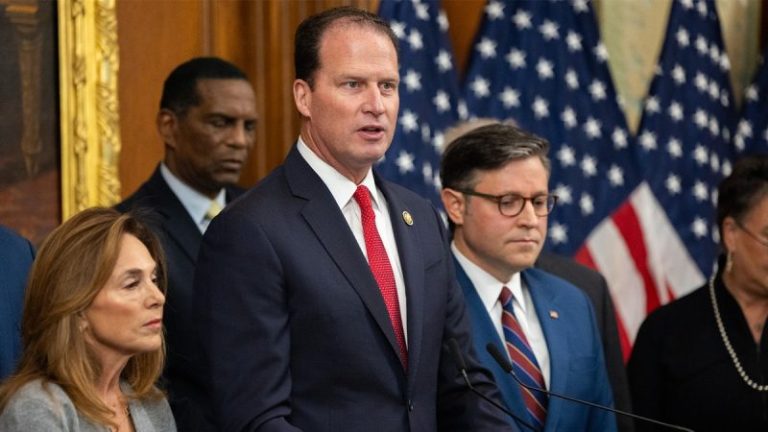
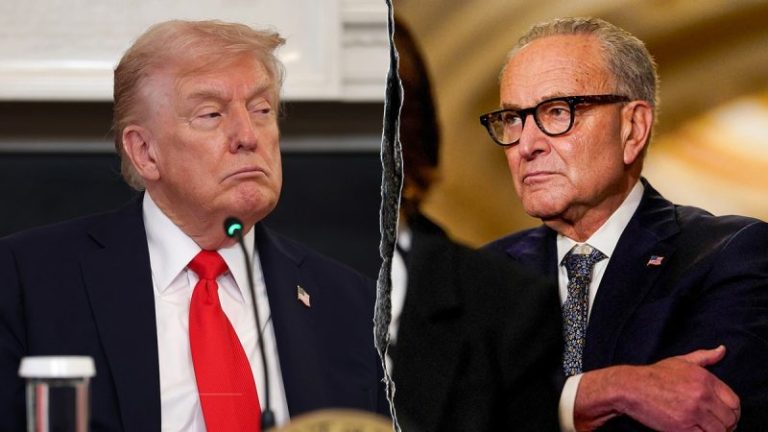
Rep. Chip Roy, R-Texas, tore into the Democratic Party during House GOP leaders’ press conference on Day 20 of the government shutdown after anti-Trump protests swept the country over the weekend.

He blasted the left’s embrace of the ‘No Kings’ rallies, where millions of people across the U.S. took to city streets to protest President Donald Trump.

‘This is the dying breaths of a bankrupt party, in my humble opinion, all too happy to shut down the government,’ Roy said during the press conference Monday.

He and House Freedom Caucus Chair Andy Harris, R-Md., joined House GOP leaders’ daily shutdown press conference in a show of unity across the Republican conference.

‘No one disputes one obvious fact: It is Democrats who have chosen not to fund government. We can at least establish that truth, right? It is, in fact, the truth. And the question is, why?’ Roy said.

‘And you saw it on Saturday — it was basically for a political rally, a rally for cover for [Senate Minority Leader Chuck Schumer, D-N.Y.], who’s in his own political battle in New York,’ he added in reference to Republican accusations that left-wing leaders are kowtowing to Democrats’ progressive base.

He continued, ‘That’s the truth. And the irony of this is, this ‘No Kings’ rally. What are we actually talking about? I mean, it wasn’t President Trump, but Democrats who tried to make us take a shot or lose our job. It wasn’t President Trump, but Democrats who were burning our cities to the ground in 2020 and attacking police officers.’

Republican leaders spent last week hammering Democrats who planned to participate in Saturday’s ‘No Kings’ rallies, including Schumer.

House Speaker Mike Johnson, R-La., during his portion of the press conference, made a plea to Schumer to accept the GOP’s federal funding bill now that the protests were over.

‘Now that Democrats have had their protest and publicity stunts, I just pray that they come to their senses and end this shutdown and reopen the government this week. Republicans are waiting. The American people are waiting,’ Johnson said.

The House passed a bill to keep the federal government funded at current levels through Nov. 21 — called a continuing resolution (CR) — mostly along party lines last month.

It’s since failed 10 times in the Senate, with a majority of Democrats rejecting any spending deal that does not also include an extension of COVID-19 pandemic-era Obamacare subsidies that will expire at the end of this year without congressional action.

The ongoing government shutdown is now the third-longest in history.

This post appeared first on FOX NEWS
Government shutdowns can be pretty boring.

Until a shutdown impacts you.

There’s a missed paycheck. Flight delays. You can’t visit the Smithsonian. Questions about food and drug safety.

You get the idea.

But until you reach that tipping point, most Americans are ho-hum about government shutdowns and interpret the infighting between Democrats and Republicans as de rigueur on Capitol Hill.

So they don’t pay much mind to them.

However, Democrats engineered a scheme in advance of this fall’s government shutdown. They would transmogrify the shutdown into something Americans care about: healthcare.

Democrats know that healthcare consistently polls well with voters. Democrats have known for months that many people who receive their healthcare coverage via ‘Obamacare exchanges’ would absorb a marked price spike with their premiums early next year. Moreover, notices informing people about the impending price increase would start to hit mailboxes in mid-October.

So Democrats have pleaded with Republicans to subsidize Obamacare to defray looming price increases. Obamacare subsidies and the government shutdown aren’t directly connected. But Democrats believed they could link the two. And then, after people snored off to sleep about the government shutdown on Oct. 1, they were rudely awakened by a notice in the mail that their healthcare premiums were about to jump.

Say what you will about the tactics, but it was a shrewd strategy by Democrats to seize on an issue important to their base. Moreover, it gave the party the opportunity to show voters that it’s ‘fighting’ against President Donald Trump. That’s something which didn’t happen in the March funding round. In fact, the Democrats’ lack of fighting is what set a match to an internecine fight among Democrats about how to combat the president. The public and the government are absorbing the flames of that internal conflagration now, but Democrats may have found a way to salve those wounds.

‘Fighting for healthcare is our defining issue,’ said House Minority Whip Katherine Clark, D-Mass., in an exclusive sit-down interview with Fox News. ‘Shutdowns are terrible and there will be families that are going to suffer. We take that responsibility very seriously. But it is one of the few leverage times we have.’

That’s why healthcare is the linchpin to the shutdown.

But enter Republicans. They believe Democrats own the healthcare crisis. They passed Obamacare in the first place. It was a Democratic Congress under President Joe Biden that boosted the subsidy to defray the cost of Obamacare in the Inflation Reduction Act (IRA), the touchstone of the Democrats’ legislative agenda.

‘It is the Democrats who created that subsidy who put the expiration date on it. They did it all on their own,’ said House Speaker Mike Johnson, R-La.

Some Republicans have even reverted to their 2010 mantra to ‘repeal and replace’ Obamacare.

That said, Johnson tried to beat back those calls from conservatives.

‘There’s no way to repeal and replace it because it’s too deeply ingrained right now. We have to improve it,’ said Johnson.

Such a declaration would have been unthinkable a few years ago. Here we have a Republican Speaker of the House arguing that Congress must sustain — even assist — Obamacare.

‘Obamacare has been a failure,’ said Rep. Marlin Stutzman, R-Ind., on Fox News. ‘We’ve been enduring this now for almost 15 years.’

Stutzman benefited from the GOP’s plan to ditch Obamacare in 2010. It was an historic, 63-seat midterm election pickup for Republicans. Voters sent Stutzman to Washington for the first time in that midterm.

The Indiana Republican added that he’s ‘not sure that subsidies are the answer in the long run.’

‘Every couple of years they need more and more subsidies to be able to prop [Obamacare] up because it’s not affordable,’ said Sen. James Lankford, R-Okla., on Fox Business Network.

Democrats are demanding Obamacare subsidies before they agree to a Republican plan to fund the government.

‘It is an inflection point in this budget process where we have tried to get the Republicans to meet with us and prioritize the American people,’ said Clark.

But Democrats believe the need to boost Obamacare reveals flaws in the law.

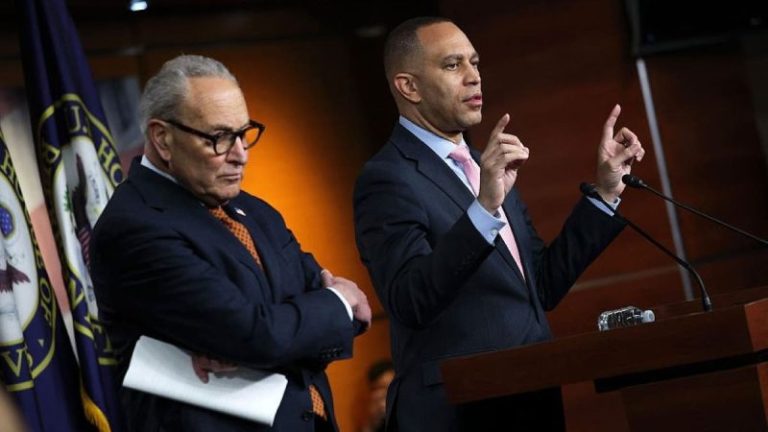
‘Isn’t that an indictment that there’s a problem with [Obamacare]?’ I asked House Minority Leader Hakeem Jeffries, D-N.Y. ‘The fact that it needs to be propped up in some form?’

‘No,’ replied Jeffries. ‘The overwhelming majority of the American people, including in the Republican-run states, support an extension of the [Obamacare] tax credits.’

Some Republicans reject extending the subsidies.

‘I’m not going to vote to extend these subsidies.They’re through the roof expensive,’ said Sen. Lindsey Graham, R-S.C.

But other conservatives insist that Obamacare needs rescuing.

‘If you’re on [Obamacare] your premium is going to literally double. If you have your own private health insurance policy, your premium is going to go up and people already can’t afford their premiums,’ said Rep. Marjorie Taylor Greene, R-Ga. ‘People back at home are going, ‘Wait a minute, my premium is going to skyrocket.’’

Greene is one of the most outspoken members of her party when it comes to concerns about the premium increases. In fact, she believes that Republicans allowed ‘Democrats to hold the moral high ground on it, because they’re talking about it.’

Greene and Johnson spoke about her concerns several days ago.

But Obamacare vexed the GOP for years.

Former House Speaker John Boehner, R-Ohio, and others led an effort to repeal and replace Obamacare. House Republicans voted dozens of times to wipe out Obamacare in 2011 and 2012. They couldn’t push such a package through the Senate, but it made for a powerful GOP talking point. Former House Speaker Paul Ryan, R-Wisc., got a little closer. Republicans had the Senate in 2016. So the House and Senate both voted for the first time to repeal and replace Obamacare, but President Barack Obama vetoed it.

Republicans finally had the trifecta of the House, Senate and White House in 2017 after Trump won the election. The House initially stumbled, having to yank the repeal and replace package off the floor in the spring of 2017. But the House regrouped and finally engineered a strategy that passed. But the late Sen. John McCain, R-Ariz., single-handedly tanked the bill when he famously voted against the package in a dramatic roll call vote in the summer of 2017.

‘I still have PTSD from the experience,’ said Johnson of the GOP efforts.

Trump even offered a familiar, if well-traveled promise, during last year’s campaign.

‘I have concepts of a plan,’ the president said at the ABC presidential debate last fall. ‘You’ll be hearing about it in the not too distant future.’

So while a resolution to the government shutdown remains elusive, so do the positions about one of the most controversial pieces of legislation in the past 50 years.

Republicans have tried to flip the script on the Democrats — now highlighting the problems with Obamacare. The GOP hopes that rekindles a familiar antipathy the right has for Obamacare and helps them during the shutdown.

‘Obamacare is a failed product in the first place. And they used that as an excuse in order to add additional federal dollars,’ said Sen. Mike Rounds, R-S.D.

The sides just don’t see eye-to-eye.

‘When [Obamacare] was passed, healthcare was a lot less costly than it is now, and insurance rates were a lot lower. So these healthcare tax credits are necessary for healthcare inflation to make it affordable for people,’ said Sen. Richard Blumenthal, D-Conn.

Obamacare and the shutdown are now inextricably linked. And if dealing with that wasn’t complicated enough, the infusion of Obamacare into the debate makes the legislative morass seemingly intractable.

This post appeared first on FOX NEWS
Surface Metals Inc. (CSE: SUR,OTC:SURMF) (OTCQB: SURMF) (the ‘Company’, or ‘Surface Metals’) announced today a non-brokered private placement financing of up to 4,000,000 units (the ‘Units’) at $0.20 CAD per Unit for aggregate gross proceeds of up to $800,000 CAD (the ‘Offering’). Each Unit will be comprised of one (1) common share and one-half of one transferable common share purchase warrant, with each whole warrant entitling the holder to purchase one additional common share at a price of $0.40 CAD for two (2) years from the closing date of the Offering.

The Company intends to use the proceeds of the Offering to fund exploration at its Cimarron Gold project and the ongoing maintenance and development of its Clayton and Fish Lake Valley lithium brine projects in Nevada as well as for general working capital purposes.

Finder’s fees, including cash and warrants, may be paid on some or all of the Offering. All securities that are issued pursuant to the Offering will be subject to, among other things, a hold period of four months and one day in accordance with applicable Canadian securities laws.

About Surface Metals Inc.

Surface Metals Inc. is a mineral exploration company focused on acquiring, exploring, and developing gold and battery metal projects in partnership with leading commodity and technology companies in North America. Surface Metals holds a 90% interest in the Cimarron Gold Project in Nye County Nevada, and through its US subsidiary, ACME Lithium US Inc., is advancing and developing a lithium brine resource at Clayton Lake Valley, Nevada and holds a sedimentary lithium claystone project at Fish Lake Valley, Nevada. Surface Metals Inc. has entered into a strategic exploration agreement with Snow Lake Resources Ltd, a leading partner at a group of lithium projects in the pegmatite region of Shatford, Birse and Cat-Euclid Lakes in southeastern Manitoba.

On behalf of the Board of Directors

Steve Hanson
Chief Executive Officer, President, and Director
Telephone: (604) 564-9045
info@surfacemetals.com

Neither the CSE nor its regulations service providers accept responsibility for the adequacy or accuracy of this news release. This news release contains certain statements which may constitute forward-looking information within the meaning of applicable securities laws (‘forward-looking statements’). These include statements regarding the amount of funds to be raised under the Offering, and the use of such funds. There is no guarantee the Offering will be completed on the terms outlined above, or at all. Use of funds is subject to the discretion of the Company’s board of directors, and as such may be used for purposes other than as set out above. Any forward-looking statement speaks only as of the date it is made and, except as may be required by applicable securities laws, the Company disclaims any intent or obligation to update any forward-looking statement, whether as a result of new information, future events or results or otherwise.

NOT FOR DISSEMINATION IN THE UNITED STATES OR FOR DISTRIBUTION TO U.S. WIRE SERVICES

To view the source version of this press release, please visit https://www.newsfilecorp.com/release/270989

News Provided by Newsfile via QuoteMedia

This post appeared first on investingnews.com

Believed to be breakthrough marking first domestically sourced and refined antimony metal in decades, validating a 100% American made mine-to-metal supply chain that advance U.S. national objectives ahead of Australia and United States Meetings in Washington DC this week

Locksley Resources Ltd. (ASX: LKY,OTC:LKYRF; OTCQX: LYRF), announced the company has achieved a significant milestone with the production of a 100% American made antimony ingot, indicating the return of U.S. domestic antimony metal production in decades. Additional information: https:announcements.asx.com.auasxpdf20251020pdf06qrb935vmr84j.pdf

The milestone represents proof-of-concept for a fully American mine-to-metal supply chain. The ore was sourced at the Company’s Mojave Desert Antimony Mine in California, and refined entirely within the U.S. by Hazen Research Inc., a well-respected metallurgical and process development U.S.-based laboratory.

‘This breakthrough directly supports U.S. government and Presidential Executive Orders aimed at re-establishing domestic production of critical minerals vital to defense, clean energy, and strategic manufacturing supply chains,’ said Kerrie Matthews, CEO of Locksley. ‘Where mine-to-metal has been the focal point of numerous other companies in the critical minerals space, Locksley has shown that this is not only possible but is already underway.’

She noted that now that Locksley has proof-of- concept, the company is going to focus its efforts on scaling this achievement into a sustainable, commercial supply chain to support America’s industrial and defense sectors.

Locksley is collaborating closely with its strategic partners, and Washington DC based advisors, GreenMet, to advance permitting and funding initiatives to support the next stage of the company’s commercialization efforts.

Drew Horn, CEO of GreenMet said, ‘Locksley’s achievement is not only a technical success, but also a national milestone. The ability to produce an American sourced and American refined antimony ingot is precisely the kind of outcome that U.S. policymakers and industry leaders have been seeking to re-establish domestic supply chains for critical minerals.’

Locksley Resources is focused on critical minerals in the U.S. The company is actively advancing the Mojave Project in California, targeting rare earth elements (REEs) and antimony. Locksley is executing a mine-to-market strategy for antimony, aimed at re-establishing domestic supply chains for critical materials, underpinned by strategic downstream technology partnerships with leading U.S. research institutions and industry partners. This integrated approach combines resource development with innovative processing and separation technologies, positioning Locksley to play a key role in advancing U.S. critical minerals independence.

Contact: Beverly Jedynak, beverly.jedynak@viriathus.com, 312-943-1123; 773-350-5793

View original content to download multimedia:https://www.prnewswire.com/news-releases/locksley-unveils-first-100-american-made-antimony-ingot-302588457.html

SOURCE Locksley Resources

News Provided by PR Newswire via QuoteMedia

This post appeared first on investingnews.com

TSX:FVL,OTC:FGOVF  OTCQX: FGOVF

Highlights:  

•  GS2520

8.18 g/t Au over 18m

2.38g/t Au over 104.6m

incl 4.0g/t Au over 34.4m

•  GS2506

1.62 g/t Au over 45.7m

•  GS2507

1.07g/t Au over 99m

•  GS2512

1.33 g/t Au over 59.4m

The width refers to drill hole intercepts; true width cannot be determined due to the uncertain geometry of mineralization

2025 PROGRAM

  • Drilling is ongoing with 5 rigs
  • Conversion of inferred resources into indicated & further exploration drilling and geotechnical drilling.
  • 43 holes ( ~28,000m) completed 
  • Ongoing metallurgical work, focusing on flowsheet optionality with sulphide oxidation is a key part of our strategy to maximize the potential of the resource. 
  • Commencement of a Pre-Feasibility Study (PFS) 

VANCOUVER, BC, Oct. 20, 2025 /CNW/ – Freegold Ventures Limited (TSX: FVL,OTC:FGOVF) (OTCQX: FGOVF) pleased to announce the results from four additional drill holes at the Golden Summit project. To date, the company has completed 43 drill holes, totaling approximately 28,000 meters, with an additional five holes currently in progress. A substantial number of assay results are still pending.

Objectives of the 2025 Drill Program
The 2025 drill program is designed with multiple objectives: to continue infilling and upgrading existing resources, to explore areas for expansion of existing mineralization, and to define the mineralized boundaries primarily in the Dolphin/Cleary Zones. These objectives are being addressed through a combination of exploration, geotechnical, and metallurgical test holes.  Significant exploration potential remains to the west of the known deposit.

Metallurgical testwork is advancing, and further metallurgical processes are being evaluated to potentially increase overall gold recoveries.

Dolphin Zone

Hole

Depth

Dip

Azimuth

From 

To 

Interval

Au

Number

(m)

(m)

(m)

g/t

GS2520

508.7

-75

360

43.6

61.6

18

8.18

incl

43.6

44.2

0.6

87.3

incl

57.6

59.1

1.5

42.6

124

446.2

322.2

1.13

incl

124

228.6

104.6

2.38

incl

194.2

228.6

34.4

4.00

 incl

428.9

446.2

17.3

1.11

The width refers to drill hole intercepts; true width cannot be determined due to the uncertain geometry of mineralization.

GS2520
GS2520 was drilled as an infill hole in the northern part of the Dolphin Zone. Results from this hole demonstrate the potential for higher-grade mineralization closer to the surface in the northern portion of the Dolphin deposit. Notable intercepts include 8.18 g/t Au over 18m from a depth of 43m, as well as 1.13 g/t Au over 322.2m, which includes a higher-grade zone averaging 2.38 g/t Au over 104.6m.

GS2507 and GS2512
GS2507 and GS2512, two PQ core holes from the current program, were drilled to the north and both intersected broad zones of higher-grade mineralization. GS2507 returned 1.07 g/t Au over 99m from 294.1m. GS2512 intersected 184.4m grading 0.81 g/t Au at a shallower depth, well above the current resource cut-off grade of 0.5 g/t Au, and also returned an intersection of 1.33 g/t Au over 59.4m from 512.7m. This demonstrates the continued potential for mineralization at depth.

In addition to infill drilling, the core from these holes is also being used for further metallurgical testwork at BaseMet in Kamloops, BC, where it will be used to assess the comminution parameters of the Golden Summit deposit across various lithologies, alteration types, and locations.

Hole

Depth

Dip

Azimuth

From 

To 

Interval

Au

Number

(m)

(m)

(m)

g/t

GS2507

663.5

-75

360

11.3

19.8

8.5

0.98

94.5

104.9

10.4

2.48

294.1

393.1

99

1.07

GS2512

800.1

-80

360

197.5

214

16.5

1.15

264

448.4

184.4

0.81

512.7

572.1

59.4

1.33

702.6

708.7

6.1

6.16

The width refers to drill hole intercepts; true width cannot be determined due to the uncertain geometry of mineralization.

Cleary Hill Area – Hole 2506

Hole

Depth

Dip

Azimuth

From 

To 

Interval

Au

Number

(m)

(m)

(m)

g/t

GS2506

511.1

-70

360

50.3

66.1

15.8

1.09

258.2

303.9

45.7

1.62

447.1

456.3

9.2

0.73

The width refers to drill hole intercepts; true width cannot be determined due to the uncertain geometry of mineralization.

GS2506 was drilled to the north to infill the deposit in the Cleary area further. It continues to show the potential for broader zones of higher-grade mineralization, intersecting 1.62 g/t Au over 45.7m.

Metallurgical Program
Flotation testing continues for the master composite. Initial locked-cycle tests have shown gold recovery rates exceeding 95%, utilizing gravity and cleaner flotation with the sulphide concentrate accounting for less than 5% of the total mass, thereby minimizing the volume that needs further oxidation. These results will be incorporated into a small pilot plant program at BaseMet to produce a substantial amount of concentrate for upcoming oxidation optimisation studies. These studies will be ongoing over the next several months.

Flotation tailings from this process have also passed the EPA TCLP procedure 1311, with all leachate concentrations for metals falling below maximum allowable limits, confirming environmental compliance. Further investigations are ongoing to better understand and characterize the environmental impact of all flowsheet products and tailings.

Ongoing and Future Work
The 2025 program continues to make substantial progress, with assay results from over 20,000 meters yet to be reported. Ongoing work also supports the commencement of a Pre-Feasibility Study, including cultural resource assessments, paleontology, and groundwater characterization studies.

Since 2020, the Golden Summit Project has become one of North America’s largest undeveloped gold resources. The significant increase in resource ounces and grade is the result of targeted drilling campaigns from 2020 to 2024 (over 130,000 meters), ongoing improvements to geological models, and a better understanding of mineralization controls. Positive metallurgical test results have also advanced the project. Ongoing drilling has continued to delineate zones of higher-grade mineralization and to convert previously considered waste areas into potentially economically viable mineralized zones. Continued westward expansion has resulted in the discovery of new higher-grade zones, increasing both indicated gold resources and grades.

Recovery rates exceeding 90% have been achieved using sulphide-oxidizing techniques, including BIOX®, POX, and the Albion Process. As of July 2025, the current Golden Summit resource includes an Indicated Primary Mineral Resource of 17.2 million ounces at 1.24 g/t Au and an Inferred Primary Mineral Resource of 11.9 million ounces at 1.04 g/t Au, calculated using a 0.5 g/t cut-off grade and a gold price of $2,490. A significant number of assay results remain pending. Drilling is expected to continue until mid-December and resume in February 2026. Results from the 2025 drilling campaign will inform an updated mineral resource estimate, which will support the upcoming Pre-Feasibility Study (PFS).

Links to the Plan and Section 479200E

https://freegoldventures.com/site/assets/files/6287/nr_10202025_plan_map.png
https://freegoldventures.com/site/assets/files/6287/e479200e_october2025_newsrelease.pdf

HQ Core is logged, photographed and cut in half using a diamond saw, and one-half placed in sealed bags for preparation and subsequent geochemical analysis by MSA Laboratories in Fairbanks, Alaska or ALS’s facilities in Vancouver and Thunder Bay.  At MSALABS, the entire sample will be dried and crushed to 70% passing -2mm (CRU-CPA). A ~500g riffle split was analyzed for gold using CHRYSOS PhotonAssay (CPA-Au1). From this, 250g will be further riffle split from the original PhotonAssay sample, pulverized, and a 0.25g sub-sample analysed for multi-element geochemistry using MSA’s IMS230 package, which includes 4-acid digestion and ICP-MS finish. MSALABS operates under ISO/IEC 17025 and ISO 9001 certified quality systems.

Core samples were delivered to ALS’s facility in Vancouver, Canada, where each sample was crushed to 70% passing a 2 mm (Tyler 9 mesh, U.S. Std. No. 10) screen.  A representative ~500 g subsample was obtained by riffle splitting (SPL-32a) and analyzed for gold using ALS method Au-PA01, which provides a detection range of 0.03 to 350 ppm, in Thunder Bay. In addition, a subsample was analyzed for multi-element geochemistry using ALS method ME-ICP61 (34-element, four-acid ICP-AES).

A QA/QC program includes laboratory and field standards inserted every ten samples. Blanks are inserted at the start of the submittal, and at least one blank every 25 standards.

The Qualified Person for this release is Alvin Jackson, P.Geo., Vice President of Exploration and Development for Freegold, who has approved the scientific and technical disclosure in this news release.

About Freegold Ventures Limited
Freegold is a TSX-listed company focused on exploration in Alaska.

Some statements in this news release contain forward-looking information, including, without limitation, statements as to planned expenditures and exploration programs, potential mineralization and resources, exploration results, the completion of an updated NI 43-101 technical report, and any other future plans. These statements address future events and conditions and, as such, involve known and unknown risks, uncertainties, and other factors which may cause the actual results, performance, or achievements to be materially different from any future results, performance, or achievements expressed or implied by the statements. Such factors include, without limitation, the completion of planned expenditures, the ability to complete exploration programs on schedule, and the success of exploration programs. See Freegold’s Annual Information Form for the year ended December 31st, 2024, filed under Freegold’s profile at www.sedar.com, for a detailed discussion of the risk factors associated with Freegold’s operations.

SOURCE Freegold Ventures Limited

View original content to download multimedia: http://www.newswire.ca/en/releases/archive/October2025/20/c1467.html

News Provided by Canada Newswire via QuoteMedia

This post appeared first on investingnews.com

Here’s a quick recap of the crypto landscape for Monday (October 20) as of 9:00 a.m. UTC.

Get the latest insights on Bitcoin, Ether and altcoins, along with a round-up of key cryptocurrency market news.

Bitcoin and Ether price update

Bitcoin (BTC) was priced at US$111,087, a 3.2 percent decrease in 24 hours. Its lowest valuation of the day was US$107,453, and its highest was US$111,374.

Bitcoin price performance, October 20, 2025.

Chart via TradingView

Bitcoin is showing signs of stabilization as key macroeconomic pressures begin to ease. After briefly dipping below US$105,000 last week, Bitcoin climbed nearly 2 percent over the past 24 hours to set a high of US$109,405, sparking a mild rally across the broader altcoin market.

The rebound comes as investors respond to last week’s dovish shift from the US Federal Reserve. Chair Jerome Powell hinted that the central bank’s quantitative tightening (QT) program may be nearing an end and that rate cuts are now under consideration. Analysts say such a move could ease liquidity constraints that have weighed on risk assets, potentially setting the stage for renewed crypto inflows.

The improving sentiment also coincides with tentative progress in US-China trade relations. Treasury Secretary Scott Bessent and Chinese Vice Premier He Lifeng are expected to meet in Malaysia this week to defuse tensions that previously triggered a historic US$21 billion liquidation across the crypto market earlier this month.

Trader Ted Pillows also pointed to shifting dynamics between traditional and digital hedges. “Gold had a sharp rejection from the US$4,350 level, while Bitcoin showed a decent bounce back from the US$104,000 area,” Pillows posted on X.

“I think it would be too early to call for a rotation until two things happen: a US-China trade deal and soft inflation data this week. If that happens, we could see a rotation from gold into Bitcoin,” Pillows added.

Meanwhile, on-chain data suggest that market emotions are cooling and volatility is compressing. Bitcoin researcher Axel Adler Jr. noted that the coin’s Net Unrealized Profit (NUP) metric has been narrowing since March, signaling a state of “neutral equilibrium.”

“This means emotions have cooled down, the crowd is neither in euphoria nor in panic,” Adler explained. ‘ Each new rally brings less and less profit. The market is like a compressed spring. The longer the compression, the stronger the next surge will be.’

Bitcoin dominance in the crypto market now stands at 57.36 percent.

Ether (ETH) was priced at US$4,032.14, a 2.9 percent increase in 24 hours. Its lowest valuation of the day was US$3,917.06, and its highest was US$4,082.02.

Altcoin price update

  • Solana (SOL) was priced at US$192.09, an increase of 1.7 percent over the last 24 hours. Its lowest valuation of the day was US$184.58, and its highest was US$194.13.
  • XRP was trading for US$2.45, an increase of 3.5 percent over the last 24 hours. Its lowest valuation of the day was US$2.36 and its highest was US$2.48.

ETF data and derivatives trends

The Fear & Greed Index currently reads 40, dipping further and further into ‘fear’ territory spurred by global macroeconomic volatility.

Last week, the cumulative net flows for spot Bitcoin exchange-traded funds (ETFs) were predominantly NEGATIVEd. According to data from the week of October 13 to October 19, spot Bitcoin ETFs had outflows on four days, with October 10 being the outlier at US$102.5 million in inflows.

Cumulative total inflows for spot Bitcoin ETFs stood at US$61.54 billion as of October 17.

Today’s crypto news to know

Top crypto leaders to meet with Senate Democrats

A high-profile group of crypto executives is set to meet with Senate Democrats as discussions over US crypto market structure legislation remain gridlocked.

The meeting, led by Senator Kirsten Gillibrand, will feature Coinbase CEO Brian Armstrong, Galaxy Digital’s Mike Novogratz, Ripple’s Stuart Alderoty, and other industry leaders.

Gillibrand, who co-authored the Responsible Financial Innovation Act with Senator Cynthia Lummis, has emerged as a key Democratic voice pushing for regulatory clarity.

Despite bipartisan talks earlier this year, analysts at TD Cowen note that partisan disagreements have stalled progress and could delay meaningful legislation until after next year’s midterm elections.

Democrats are reportedly drafting a new framework emphasizing DeFi oversight, while Republicans favor clearer jurisdictional lines between the SEC and CFTC.

Japan’s banks mull holding Bitcoin

Japan’s top financial regulator is weighing reforms that could allow domestic banks to directly hold Bitcoin and other unbacked crypto assets on their balance sheets.

The Financial Services Agency (FSA) has begun consultations on revising restrictions introduced in 2020 that barred banks from acquiring crypto investments due to volatility concerns.

The discussions coincide with Japan’s three largest banks—MUFG, SMFG, and Mizuho—preparing to jointly issue yen-pegged stablecoins for corporate use under the updated Payment Services Act of 2023.

Crypto adoption in Japan has surged, with over 12 million accounts registered nationwide as of February, more than triple the number from five years ago.

Asset managers open UK Retail Access to Bitcoin and Ethereum ETPs

UK retail investors can now trade Bitcoin and Ethereum exchange-traded products for the first time following the Financial Conduct Authority’s decision to lift a four-year ban on crypto ETNs.

Asset managers 21Shares, Bitwise, and WisdomTree launched physically backed Bitcoin and Ethereum ETPs on the London Stock Exchange this week, joining BlackRock’s iShares Bitcoin ETP.

The listings mark a significant expansion of crypto access, allowing retail investors to buy exposure through regulated brokerage accounts and tax-efficient wrappers like ISAs and SIPPs.

Despite the progress, retail trading of crypto derivatives remains prohibited as the FCA finalizes broader crypto market regulations set to take effect by 2026.

Securities Disclosure: I, Giann Liguid, hold no direct investment interest in any company mentioned in this article.

Securities Disclosure: I, Meagen Seatter, hold no direct investment interest in any company mentioned in this article.

This post appeared first on investingnews.com

Ontario is moving to overhaul how it approves new mines, launching a new framework aimed at cutting permitting times in half and boosting investment in the province’s critical minerals sector.

The “One Project, One Process” (1P1P) system, announced Friday (October 17) by the Ministry of Energy and Mines, promises a coordinated, single-window approach to approvals for advanced exploration and mine development projects.

“With President Trump taking direct aim at our economy, it has never been more important to protect Ontario jobs and build the mines that will power our future,” said Stephen Lecce, Ontario’s Minister of Energy and Mines.

“Our new ‘One Project, One Process’ framework ends the era of unacceptable delays. We are delivering a dedicated service that cuts government review times in half, giving operators and investors the confidence they need to hire, and helps us unlock the full economic potential of our province’s world-class resource sector.”

The province says the move will modernize an approval system that currently takes as long as 15 years to greenlight a single mine. Under 1P1P, designated projects will be handled by a dedicated Mine Authorization and Permitting Delivery Team, which will serve as a single point of contact for companies seeking provincial approvals.

Officials say this coordinated approach is designed to reduce red tape and speed up investment without compromising environmental standards.

“This is about cutting delays, not corners – by removing red tape, we’re accelerating responsible development while maintaining strong environmental safeguards.” said Andrea Khanjin, Minister of Red Tape Reduction.

Ontario’s mining industry has long argued that excessive regulatory duplication has deterred investors and slowed access to high-demand resources such as nickel, lithium, cobalt, and titanium, which are minerals essential for electric vehicles, electronics, and renewable energy technologies.

Currently, Ontario has 36 active mining operations that directly provide the above resources.

The Ring of Fire region in northern Ontario, often described as one of the world’s richest untapped mineral deposits, has been a particular flashpoint for permitting delays.

Officials say the 1P1P framework supports Ontario’s Critical Minerals Strategy, which aims to develop a secure, “made-in-Ontario” supply chain for electric vehicle batteries and other advanced technologies.

The government is betting that faster permitting will help the province compete globally for new investment, which includes 70,000 direct and indirect jobs tied to the sector.

Industry leaders and Indigenous representatives cautiously welcomed the new approach.

Greg Rickford, Minister of Indigenous Affairs and First Nations Economic Reconciliation, said many First Nations leaders are increasingly supportive of the 1P1P framework, calling robust consultation central to the process.

“First Nations business and political leaders have an increasing interest in the ‘One Project, One Process’ framework to advance their major projects. Central to this framework is robust consultation with First Nations, which we remain committed to,” he said.

While 1P1P is not part of the controversial Bill C-5 which has drawn criticism from several Ontario First Nations communities and leaders, some of the newly announced framework overlaps with parts of the contentious bill’s goals.

Some Indigenous groups in Ontario have argued the Bill C-5 legislation undermines their treaty rights and bypasses meaningful consultation. The Anishinabek Nation—representing 39 First Nations—warned the bill allows the federal government to fast-track major projects without adequately engaging affected communities.

In August, six northern Ontario First Nations filed a challenge to the province’s Mining Act in the Superior Court of Justice.

‘The Ontario Mining Act is a piece of racist legislation that bulldozes over First Nations lands and rights. It says to the world that the land in Ontario is free for the taking and drilling and blowing up,’ said Chief June Black of Apitipi Anicinapek Nation, during a press conference following the filing. ‘These are not your lands to give away, Ontario.’


Securities Disclosure: I, Giann Liguid, hold no direct investment interest in any company mentioned in this article.

This post appeared first on investingnews.com

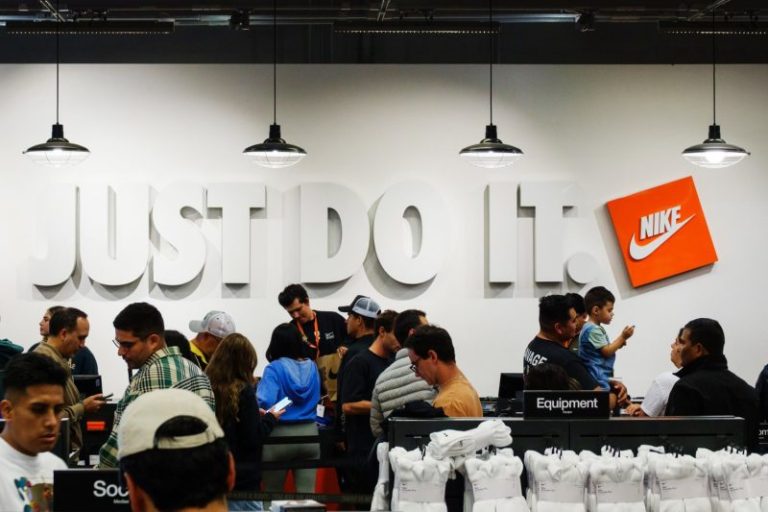
Customers of the athletic shoe company On have filed a class action lawsuit alleging that some of the brand’s sneakers squeak embarrassingly loudly when they walk.

The class action suit, filed in the U.S. district court in Portland — where On’s U.S. headquarters is located — on October 9, targets On’s shoes made with ‘CloudTec’ technology. A hallmark of many of the brand’s styles, ‘CloudTec’ is composed of differently shaped holes that cover the external and bottom surfaces of the shoes, according to the lawsuit.

At least 11 of On’s sneaker styles are referenced in the lawsuit, including the Cloud 5 and Cloud 6, CloudMonster, and Cloudrunner, among others.

Lawyers for the plaintiffs did not immediately respond to a request for comment. A representative for On said the company does not comment on ongoing legal matters.

According to the lawsuit, ‘CloudTec’ was created to ‘provide cushioned support when wearers land.’ But according to plaintiffs, the technology ‘rubs together’ when wearers walk or run, ‘causing a noisy and embarrassing squeak with each and every step.’

The lawsuit, however, admits that while the squeaky shoes are ‘seemingly inconsequential,’ the company has allegedly refused to provide refunds to those who are unhappy with their sneakers, leaving customers with ‘no relief after buying almost $200 shoes they can no longer wear without their doing significant DIY modifications to the shoe.’

‘No reasonable consumer would purchase Defendant’s shoes — or pay as much for them as they did — knowing each step creates an audible and noticeable squeak,’ the lawsuit states.

Nurses and those who are on their feet all day ‘bear the brunt of this defect,’ the suit argues, which allegedly causes ‘issues for consumers in their daily lives.’

According to the lawsuit, complaints about the squeaking have been widespread and documented on TikTok and Reddit, where customers share ‘DIY’ remedies for the noisy shoes, including rubbing coconut oil on the soles or sprinkling baby powder inside the sneaker.

The lawsuit alleges the company is aware of its squeaky sneakers, but its warranty does not cover reports of noisy soles as On characterizes them as ‘normal wear and tear,’ and has stated in online comments that ‘squeaking isn’t currently classified as a production defect.’

The lawsuit also alleges that the company can better make its products to avoid squeakiness, but that On has ‘done nothing’ to remedy the issue.

Plaintiffs allege they have suffered an ‘ascertainable loss’ due to fraudulent business practices and a ‘deceptive marketing scheme,’ and are seeking ‘compensatory, statutory, and punitive damages’ as well as refunds on their squeaky sneakers.

This post appeared first on NBC NEWS

President Donald Trump recently awarded late Turning Point USA founder and CEO Charlie Kirk the Presidential Medal of Freedom just over one month after the activist was assassinated. Kirk was outspoken about his conservative and pro-life views, and his legacy has inspired a new wave of activism.

Shawn Carney, the president and CEO of 40 Days for Life, praised President Donald Trump as ‘the most pro-life president we’ve ever had,’ telling Fox News Digital that pro-life Americans were delighted to see the president honor Kirk.

‘It was so beautiful to see him honor Charlie,’ Carney said. ‘He represented freedom, and there would be no pro-life movement without free speech. Free speech is what 40 Days for Life is built on, it’s what the pro-Life dialogue is built upon. It’s [what] Charlie gave his life for, and it was really, really beautiful for all pro-life Americans to see him honored with the highest honor we have in our nation.’

Kirk was known for participating in debates across the country and the globe, often confronting his harshest critics. Carney believes that Kirk’s willingness to go into tough arenas as well as his approachable and ‘authentic’ nature drew young people to him and the pro-life movement.

‘Charlie was open and was honest, and he was also humble and willing to talk to you,’ Carney told Fox News Digital, adding that being approachable, as Kirk was, is crucial in pro-life activism.

‘So many people have been hurt by abortion. So many people feel strongly in support of reproductive rights. And you just can’t go in and yell or say you’re going to burn in hell. You have to approachable, you have to use reason, you can’t be afraid to share your faith, as Charlie wasn’t,’ he added.

Carney said that 40 Days for Life has seen an uptick in interest, particularly among young activists, in the wake of Kirk’s assassination.

‘His tragic assassination was just two weeks before we kicked off one of our largest fall 40 Days for Life campaigns around the world,’ Carney said. ‘Over 700 cities participating, and we saw a huge uptick, a 36% increase in participation. We had so many young people come out… who knew who Charlie Kirk was, and were inspired by him to participate in 40 Days for Life, who then brought their parents out to pray at our vigils.’

He recalled one young woman — who he did not name — who said she was ‘so afraid’ to participate in pro-life activism prior to Kirk’s death. Carney noted that despite the ‘horrible images’ of the assassination, many felt empowered and compelled to speak up about their beliefs.

‘You thought the opposite would happen, that she’d be more afraid and others would be more afraid, but that didn’t happen,’ he said. ‘It literally inspired her to overcome years of fear.’

Carney also spoke about a TPUSA chapter leader whose mother tried to talk her son out of participating in either TPUSA or 40 Days for Life. The young man apparently told his mother that Charlie would have wanted him to speak out and not to run from culture wars.

When asked what Kirk’s message to pro-life activists would be if he were still alive, Carney said it would be to not give up. Carney added that he has heard newcomers inspired by Kirk say they believe that the TPUSA founder would want them to be outspoken and not to ‘cower.’

‘Right now in our culture, there’s a lot of reasons to be afraid, we can’t give in to them, we have to go out, we have to speak the truth and love, and that is what changes hearts and minds, and that’s the best way we can honor Charlie,’ Carney told Fox News Digital.

This post appeared first on FOX NEWS

The U.S. Department of State on Saturday warned there are ‘credible reports’ that Hamas may break the peace agreement with a ‘planned attack’ on Palestinian civilians. 

‘This planned attack against Palestinian civilians would constitute a direct and grave violation of the ceasefire agreement and undermine the significant progress achieved through mediation efforts,’ the department said in a statement on social media. ‘The guarantors demand Hamas uphold its obligations under the ceasefire terms.’

The statement concluded, ‘The United States and the other guarantors remain resolute in our commitment to ensuring the safety of civilians, maintaining calm on the ground, and advancing peace and prosperity for the people of Gaza and the region as a whole.’

A ceasefire between Israel and Hamas went into effect last weekend after two years of war in the region following the Oct. 7, 2023, attacks in southern Israel. 

On Monday, the 20 remaining surviving Israeli hostages were returned to Israel per the agreement, but more than a dozen remains of hostages who were killed are still under Hamas control. 

The State Department added that ‘measures will be taken to protect the people of Gaza and preserve the integrity of the ceasefire’ if Hamas proceeds with the attack. 

On Thursday, President Donald Trump issued a warning on Truth Social after footage circulated online showing Hamas fighters executing Palestinians in Gaza City’s main square. 

‘If Hamas continues to kill people in Gaza, which was not the deal, we will have no choice but to go in and kill them,’ he wrote.

According to Reuters, at least 33 people were executed by Hamas in recent days in what officials described as a campaign to ‘show strength’ after the ceasefire. Israeli sources say most of those killed belonged to families accused of collaborating with Israel or supporting rival militias.

Trump later clarified that U.S. troops would not go into Gaza. 

‘It’s not going to be us,’ he told reporters. ‘We won’t have to. There are people very close, very nearby that will go in and they’ll do the trick very easily, but under our auspices.’

Fox News’ Efrat Lachter and the Associated Press contributed to this report. 

This post appeared first on FOX NEWS