Author

admin

Browsing

Canada and Alberta have sealed a wide-ranging deal that links deep emissions cuts with a long-term push to grow oil and gas output through new export pipelines and fast-track clean energy infrastructure.

Prime Minister Mark Carney and Alberta Premier Danielle Smith signed the memorandum of understanding in Calgary on Thursday (November 27). The MOU outlines a package led by Pathways Plus—described as the world’s largest carbon capture, utilization and storage project.

Under the pact, Canada also commits to suspend its Clean Electricity Regulations in Alberta and to refrain from implementing the long-discussed federal emissions cap for oil and gas.

In turn, Alberta agreed to advance a privately financed pipeline capable of transporting at least one million barrels per day of low-emissions bitumen to Asian markets, with Indigenous co-ownership built into the project’s structure.

The MOU states the application for the pipeline must be ready by July 1, 2026. In turn, the federal government will treat it as a project of national interest under the Building Canada Act.

Carney framed the deal as a response to global instability and a pivot toward a more self-reliant economic foundation.

“In the face of global trade shifts and profound uncertainty, Canada and Alberta are striking a new partnership to build a stronger, more sustainable, and more independent Albertan and Canadian economy,” he said in a statement. “We will make Canada an energy superpower, drive down our emissions and diversify our export markets.”

Beyond oil, the arrangement includes extensive commitments to expand nuclear power, strengthen Alberta’s electricity grid, and support thousands of megawatts of new AI-oriented computing capacity, including sovereign cloud infrastructure for Canada and its allies.

Alberta will also pursue major transmission interties with British Columbia and Saskatchewan to move low-carbon electricity across provincial borders, a step both governments say is essential for decarbonizing energy-intensive industries.

The MOU also sets a course for a new industrial carbon pricing agreement, with Alberta’s TIER regime remaining the backbone of provincial regulation. Both governments agreed to a minimum effective credit price of US$130 per metric ton alongside a methane-reduction target of 75 percent by 2035.

“Canada is acting decisively to establish ourselves as a global energy superpower in the face of a changing world,” added Tim Hodgson, Canada’s Minister of Energy and Natural Resources.

“Together, Canada and Alberta will not only export critical energy to our customers, we will also support our allies, create hundreds of thousands of jobs here at home, and show that our energy sector can lead on a global stage.”

A joint implementation committee is slated to finalize these frameworks by April 1, 2026.

Securities Disclosure: I, Giann Liguid, hold no direct investment interest in any company mentioned in this article.

This post appeared first on investingnews.com

Barrick Mining (TSX:ABX,NYSE:B) has closed the sale of its Hemlo gold mine in northern Ontario to Carcetti Capital (TSXV:CART.H), completing a transition the company first announced in September and marking one of its most significant portfolio shifts this year.

In a statement Wednesday (November 26), Barrick said the finalized divestiture is worth up to US$1.09 billion. The company received US$875 million in cash and US$50 million in Hemlo Mining shares at closing, with up to US$165 million in additional payments tied to gold prices and production beginning in 2027.

Barrick also formally thanked the Biigtigong Nishnaabeg and Netmizaaggamig Nishnaabeg First Nations, noting their cooperation and support throughout Hemlo’s operation.

The transaction continues the company’s effort to streamline its holdings and redirect capital to what it calls Tier One assets.

Hemlo Mining, the renamed acquirer, gains control of one of Canada’s longstanding gold operations. For Barrick, the exit removes a non-core asset as it concentrates on its global gold and copper portfolio, which spans 18 countries and includes six Tier One gold mines.

As Barrick exits Hemlo, Wheaton Precious Metals (TSX:WPM,NYSE:WPM) also confirmed it has closed its previously announced gold stream with Carcetti, providing US$300 million in upfront funding.

The stream forms the cornerstone of a financing structure that includes US$542 million in equity proceeds, with Wheaton contributing about US$30 million, as well as up to US$250 million in bank debt. Wheaton originally committed up to US$400 million for the stream, but Hemlo Mining elected to draw US$300 million under the agreed terms.

The completion of the stream delivers immediate production and cash flow to Wheaton while giving Hemlo Mining the liquidity needed to finalize the acquisition and pursue operational improvements at the site.

The company said the gold stream is “a key component” of the mine’s recapitalization and transition under new ownership.

The close of the Hemlo sale comes just days after the company resolved a major standoff in West Africa.

On Monday (November 24), Barrick confirmed it had struck a deal with the Malian government that will return full operational control of the Loulo-Gounkoto complex to the company, ending months of tension that escalated into arbitration at the World Bank’s dispute-resolution center.

People familiar with the matter said that the agreement includes a settlement worth 244 billion CFA francs (US$430 million). According to those sources, Barrick will pay 144 billion CFA francs within six days of signing, with another 50 billion CFA francs covered through VAT-credit offsets.

An additional 50 billion CFA francs had already been paid last year. Barrick declined to say whether the final agreement formally includes these settlement terms.

In exchange, Mali will drop its charges against Barrick, relinquish state control over Loulo-Gounkoto, release four detained employees, and renew the company’s Loulo mining permit for another decade.

The settlement also requires Barrick to comply with Mali’s 2023 mining code, the very issue that triggered the dispute. The company will also now withdraw its arbitration claim.

Securities Disclosure: I, Giann Liguid, hold no direct investment interest in any company mentioned in this article.

This post appeared first on investingnews.com

Canada’s 2025 federal budget arrives at a pivotal moment for the country’s economic trajectory. Facing a decades-long productivity challenge, the government aims to reinvigorate growth through carefully targeted investment incentives and strategic reforms.

Rather than broad fiscal stimulus, the budget focuses on fostering innovation, modernizing tax credits like the Scientific Research and Experimental Development (SRED) program and encouraging private sector investment in new technologies.

This approach aims to break Canada’s productivity stagnation and position the economy for long-term competitiveness.

Canada’s productivity dilemma

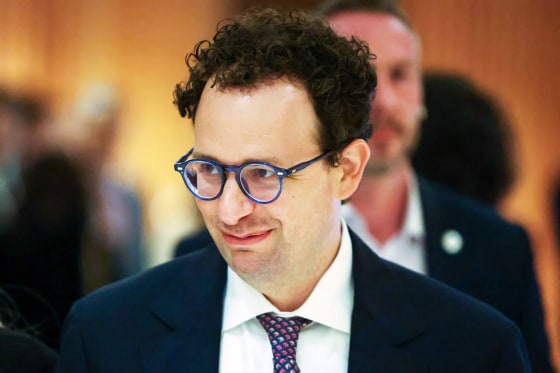
In a speech at the Association des économistes québécois (ASDEQ) and CFA Québec on November 19, Bank of Canada (BoC) deputy governor Nicolas Vincent declared that Canada is facing a “systemic problem” when it comes to productivity.

“To put it bluntly, we’re stuck in a vicious circle,” Vincent said. “There is no quick or easy way to improve productivity, and no single sector can do it alone.

“If we want to fix this, we’ll need to be thoughtful, systematic and resolute,” he added, suggesting that policymakers should focus on improving the country’s investment climate, increasing competition and developing talent.

Vincent’s comments echoed an earlier opinion shared by BoC Governor Tiff Macklem, who, following the bank’s most recent cut to its benchmark lending rate last month, warned that Canadians could face a lower standard of living unless governments and businesses can find ways to improve productivity.

Macklem added that the recent federal budget could enhance the country’s productivity, “but it’s going to come down to execution.”

Building on these concerns, Polson explained that for Canada to move beyond incremental progress and truly improve productivity and competitiveness, the country must tackle long-standing hurdles. “We’re looking for a reduction in interprovincial trade barriers… It’s becoming increasingly necessary…that we have to act cohesively there.”

Historically low and rapidly declining R&D investment was another factor negatively impacting Canadian productivity, identified in a report from the Council of Canadian Academies. The authors suggest that addressing this requires more than just a single policy or tax incentive.

Polson also highlighted the need to move beyond incremental measures and focus on disciplined, systematic changes that foster efficient capital allocation and strengthen the foundations of business decision-making.

From his vantage point, the modernization and expansion of the SR&ED tax credit program can be a nudge in the right direction. “(This country has) blessings in terms of resources, in terms of outstanding universities…there is all kinds of great knowledge and innovation happening here, but no commercialization. People go elsewhere for it.

“The SR&ED credit is going to do exactly the right thing. It’s going to keep (innovation) here. It’s going to hit one of those other really big issues for our economy, which is we need better-paying blue-collar jobs. It’s (also) going to spur entrepreneurship and help us capture a bigger portion of the innovation that happens here.”

To build on that, Polson described the transformation of Canadian jobs driven by technology. “I would almost call it sky blue collar, a beautiful mix of part white, part blue (collar jobs),” he said to categorize emerging roles that combine the technical skills of traditional blue-collar work with the knowledge and productivity advances typically associated with white-collar jobs.

The budget’s approach to productivity and growth

Hanson, a CPA and 20-year SR&ED expert, explained the changes to the SR&ED tax credit program, which include increasing the enhanced 35 percent credit’s expenditure limit to C$6 million. The budget also raises the phase-out thresholds more broadly, allowing more businesses, especially SMEs, to benefit from the credit.

“They’ve also opened it up to public companies,” he added.“Now this is a really big one. You’re going to see public companies that are not profitable now applying, as well as more companies actually looking to the public market in order to raise funds, because they weren’t previously able to do so without losing the benefits of the program,” he explained.

By expanding the eligibility and scale of the credit, Hanson sees the government intending to incentivize greater R&D spending. “I think that being able to raise these limits is very significant, and I think that the government kind of knows this.”

In addition to SR&ED reforms, the budget introduces accelerated Capital Cost Allowances (CCA) for technology asset investment. This enhanced CCA allows faster deduction of eligible capital costs, targeting sectors like clean energy, advanced manufacturing and digital infrastructure to boost productivity.

“A big part of manufacturing was the capital assets being able to claim those … now that that’s actually back in the program, we’re actually going to see a huge bump in manufacturing companies,” he said.

Fiscal challenges and transparency concerns

Despite comprehensive measures, the budget has gaps. The Parliamentary Budget Officer (PBO) flagged concerns about fiscal transparency and the government’s optimistic capital investment classifications.

The PBO estimates that actual productive capital investments from 2024-25 to 2029-30 total approximately C$217 billion, about C$94 billion less than the budget’s reported figures.

This discrepancy arises because the government’s broadened definition of capital investments includes expenditures that, under international standards such as the System of National Accounts, would typically be classified as operating spending rather than capital formation.

The report advised the government to establish an independent expert body to define federal capital investments, in order to improve transparency and fiscal discipline.

Researchers for the PBO forecast the government will likely miss its Budget 2025 fiscal anchors: balancing operating spending by 2028-29 and maintaining a declining deficit-to-GDP ratio. Stress testing showed only a 7.5 percent chance that the deficit-to-GDP ratio will fall annually between 2026-27 and 2029-30.

New spending and higher program costs mean the operating balance is projected to remain in deficit through 2029-30. The PBO warned the government now has limited fiscal room for tax cuts or increased spending if it aims to stabilize the long-term debt-to-GDP ratio.

The office added that a lack of clarity on how incentives will spur business activity, as well as heavy reliance on complex tax credit compliance, may hinder smaller innovators.

Ensuring delivery

The budget’s success ultimately rests on ensuring its incentives are not undermined by complex compliance or slow processing.

“Because of the changes, we are going to see a lot more filers as a result. The time to process these claims (is) simply going to take longer,” said Hanson, adding that companies will need to factor wait times into their budgeting.

Additionally, Hanson described a current government consultation aimed at introducing “upfront technical approval” for certain classes of companies seeking SR&ED claims. “I would like to see them move forward with that. I think that is a great idea, and I think that will provide a lot more certainty for larger (and) smaller companies.”

For Canadian businesses, the 2025 Budget is a promise; its value now depends entirely on delivery.

Securities Disclosure: I, Meagen Seatter, hold no direct investment interest in any company mentioned in this article.

This post appeared first on investingnews.com

Fulton County Superior Court Judge Scott McAfee issued an order dismissing the 2020 election interference case against President Donald Trump and his co-defendants after the state of Georgia had moved to drop the matter.

‘The State having moved for an entry of nolle prosequi for all remaining defendants, the Court grants the motion,’ the order declares. ‘This case is hereby dismissed in its entirety.’

Trump’s lead Georgia defense counsel Steve Sadow described the case as ‘lawfare.’

‘The political persecution of President Trump by disqualified DA Fani Willis is finally over. This case should never have been brought. A fair and impartial prosecutor has put an end to this lawfare,’ Sadow said in the statement.

Peter J. Skandalakis, who took over prosecution after Fulton County District Attorney Fani Willis was disqualified from handling it, filed a motion to dismiss the case earlier Wednesday in order to ‘serve the interests of justice and promote judicial finality.’

‘This entire case, from the initiation of the District Attorney’s investigation in 2021 to the present, is without precedent,’ noted Skandalakis. ‘In my professional judgment, the citizens of Georgia are not served by pursuing this case in full for another five to ten years.’

The Georgia case yielded the iconic 2023 mugshot of then-candidate Trump.

‘Never before, and hopefully never again, will our country face circumstances such as these. The case is now nearly five years removed from President Trump’s phone call with the Secretary of State, and two years have passed since the Grand Jury returned charges against President Trump and the eighteen other defendants,’ Skandalakis noted. ‘There is no realistic prospect that a sitting President will be compelled to appear in Georgia to stand trial on the allegations in this indictment. Donald J. Trump’s current term as President of the United States of America does not expire until January 20, 2029; by that point, eight years will have elapsed since the phone call at issue.’

The prosecutor explained why the other defendants in the criminal case would not be tried separately. 

‘Severing President Trump from the remaining defendants and conducting separate trials, while simultaneously waiting for the conclusion of his term and addressing all of the aforementioned legal issues, would be both illogical and unduly burdensome and costly for the State and for Fulton County,’ Skandalakis wrote. ‘The Prosecuting Attorneys’ Council of Georgia lacks the resources to conduct multiple trials in this matter.’

Fox News’ Samantha Daigle and David Lewkowict contributed to this report

This post appeared first on FOX NEWS

A federal court ruled Wednesday that President Donald Trump and his former lawyer, Alina Habba, are still on the hook for a $1 million penalty for filing a ‘frivolous’ lawsuit against Hillary Clinton, former FBI director James Comey and others.

The ruling from the 11th Circuit Court of Appeals relates to a now-dismissed lawsuit filed by Trump relating to Russian collusion claims. Trump was first ordered to pay the $1 million in the case in 2023, but he and Habba appealed the ruling.

In addition to Clinton and Comey, their lawsuit also named Sen. Adam Schiff, D-Calif., former FBI officials Peter Strzok and Lisa Page, and many more.

Trump and Habba, who now serves as U.S. attorney for New Jersey, will be forced to pay approximately $938,000 — split between the dozens of individuals named in the lawsuit.

In the original lawsuit, Trump accused the high-profile figures of conspiring to tank his successful 2016 presidential campaign.

‘Here we are confronted with a lawsuit that should never have been filed, which was completely frivolous, both factually and legally, and which was brought in bad faith for an improper purpose,’ wrote Judge Donald Middlebrooks in his 2023 ruling, which was upheld Wednesday.

‘Mr. Trump is a prolific and sophisticated litigant who is repeatedly using the courts to seek revenge on political adversaries. He is the mastermind of strategic abuse of the judicial process and he cannot be seen as a litigant blindly following the advice of a lawyer,’ he added.

Two defendants in the case also claimed that Trump’s appeal itself was frivolous and sought additional sanctions for it, but the court disagreed.

Fox News Digital reached out to the White House for comment, but they did not immediately respond.

Wednesday’s ruling comes just days after a separate federal court dismissed false statements charges leveled against Comey. Judge Cameron Currie ruled that the charges were brought by an unqualified U.S. attorney. That U.S. attorney is Lindsay Halligan, who Trump appointed to the position just weeks prior.

Currie, a Clinton appointee based in South Carolina, was brought in from out of state to preside over proceedings about the question of Halligan’s authority because it presented a conflict for the Virginia judges. Comey’s and James’ challenges to Halligan’s appointment were consolidated because of their similarity.

Read the full document below (App users click here)

This post appeared first on FOX NEWS

A local Namibian politician named Adolf Hitler Uunona is widely expected to retain his council seat in the country’s latest round of regional elections, drawing international attention for a name he says carries no ideological meaning.

A longtime member of Namibia’s ruling SWAPO party, he is running again in the Ompundja constituency in the northern Oshana region. 

While final tallies have not yet been released, several international outlets report he is projected to win by a wide margin, consistent with previous elections. SWAPO, which has governed Namibia since independence in 1990, has shifted from its socialist liberation roots toward a more centrist, market-oriented governing approach.

His German dictator-linked name — ‘Adolf Hitler’ — was given to him by his father, he told the German outlet Bild, who he claimed did not understand the historical weight the name carried.

‘It was a perfectly normal name for me when I was a kid,’ Uunona told Bild. ‘It wasn’t until I grew older that I realized this man wanted to subjugate the whole world and killed millions of Jews.’

He said his childhood name reflected no political intent and stressed that he has never held extremist beliefs. 

‘The fact I have this name does not mean I want to conquer Oshana,’ he said, adding in earlier interviews he generally goes by Adolf Uunona in daily life.

Namibia was a German colony from 1884 to 1915, and Germanic names and place names remain common in some communities. Historians note that this legacy sometimes results in unusual or jarring combinations by modern standards, though they carry no inherent ideological meaning.

According to official information from the Oshana regional government, the Ompundja constituency has 4,659 inhabitants, 19 administrative centers and covers 466 square kilometers.

This post appeared first on FOX NEWS

President Donald Trump said Wednesday that he would not invite South Africa to the 2026 G-20 summit in Florida, citing alleged ‘horrific human rights abuses.’

‘To put it more bluntly, they are killing white people and randomly allowing their farms to be taken from them,’ Trump alleged in a Truth Social post. ‘At my direction, South Africa will NOT be receiving an invitation to the 2026 G-20, which will be hosted in the Great City of Miami, Florida next year,’ he added.

The Embassy of South Africa did not immediately respond to Fox News Digital’s request for comment.

Clayson Monyela, head of diplomacy for the Department of International Relations and Cooperation, dismissed the notion that South Africa could be shut out.

‘South Africa is a founding member of the G-20. We don’t get invited to G-20 meetings and leaders summit. Those are gatherings of members. If other members allow this then the G-20 will die,’ Monyela told Fox News Digital.

‘Other countries have already told us that they too will boycott the U.S. G-20 if South Africa is excluded,’ Monyela added.

If carried out, the move would break with more than two decades of precedent and mark the first time a member has been formally excluded from the gathering of the world’s major economies.

The G-20, which brings together major advanced and emerging economies and accounts for roughly 80% of global GDP and two-thirds of the world’s population, has historically operated on the principle of inclusion.

That tradition already was strained after the U.S. boycott of the 2025 meeting held in Johannesburg earlier in November.

The Trump administration argued that the country’s government had failed to address violence and discrimination it claimed was occurring in rural farming communities. Additionally, the U.S. objected to the meeting’s focus on climate and development issues rather than core economic priorities.

The boycott marked a notable break from past U.S. engagement, leaving the world’s largest economy missing from a key forum for global economic policymaking.

Trump also said in the same Truth Social post that he would halt U.S. payments to South Africa.

‘South Africa has demonstrated to the world they are not a country worthy of membership anywhere and we are going to stop all payments and subsidies to them, effective immediately,’ Trump wrote.

The White House and State Department did not immediately respond to Fox News Digital’s request for further details.

It remains unclear how the move will affect the country’s standing within the G-20 or broader U.S.–South Africa relations ahead of the 2026 summit in Florida.

Relations between Trump and South African President Cyril Ramaphosa have steadily deteriorated in recent months.

In February, Trump suspended U.S. aid to South Africa, alleging discrimination against White farmers. Tensions escalated again in March when the State Department expelled the South African ambassador, labeling him ‘persona non grata.’

In May, the two leaders clashed in the Oval Office when Trump pressed Ramaphosa over allegations that White Afrikaners were being targeted and killed in South Africa. 

Ramaphosa pushed back, telling Trump he had seen no evidence to support those claims.

Paul Tilsley contributed to this report from Johannesburg, South Africa.

This post appeared first on FOX NEWS

President Donald Trump pardoned two turkeys Tuesday — Gobble and Waddle — as part of an annual tradition that has occurred at the White House for more than 35 years. 

The Thanksgiving Turkey Pardoning is a ceremony originating from the National Thanksgiving Turkey Presentation dating back to the 1940s, when the National Turkey Federation would present the president with a live turkey for Thanksgiving. 

President John F. Kennedy is often credited with pardoning the first turkey in 1963, when he said that he would ‘let this one grow.’ Although Kennedy didn’t use the word ‘pardon,’ the L.A. Times reported on the matter with the headline, ‘Turkey gets presidential pardon,’ according to an NBC News archive. 

President Ronald Reagan also made a joke about pardoning that year’s turkey, Charlie, in response to a question from a reporter, according to the Ronald Reagan Presidential Library & Museum.

‘If they’d given me a different answer on Charlie and his future, I would have pardoned him,’ Reagan said in 1987. 

However, the tradition was codified during George H.W. Bush’s administration, according to the White House Historical Association. Bush used the word pardon, and the tradition continued each year afterward. 

‘But let me assure you, and this fine tom turkey, that he will not end up on anyone’s dinner table, not this guy — he’s presented a presidential pardon as of right now — and allow him to live out his days on a children’s farm not far from here,’ Bush said in 1989. 

Gobble and Waddle clocked in at 50 pounds and 52 pounds each, and traveled from North Carolina to the Washington’s Willard InterContinental Hotel for the annual tradition. Following the pardoning, they will head to North Carolina State University’s Prestage Department of Poultry Science.

During the ceremony in the Rose Garden, Trump also took aim at former President Joe Biden, and said Biden used the autopen to pardon the 2024 turkeys, and as a result those pardons were ‘totally invalid.’ 

As a result, Trump quipped that he had pardoned those turkeys too, and said he ‘saved them in the nick of time.’

This post appeared first on FOX NEWS

Standard Uranium Ltd. (TSXV: STND,OTC:STTDF) (OTCQB: STTDF) (FSE: 9SU0) (‘Standard Uranium’ or the ‘Company’) is pleased to announce exploration permits have been received for the Corvo Uranium Project (‘Corvo’, or the ‘Project’), currently under a three-year earn-in option agreement with Aventis Energy Inc. (CSE: AVE) (‘Aventis’). Work programs under the 18-month permit will include high-resolution geophysical surveys and the Company’s first drill program on the Project beginning in January 2026.

The Company contracted MWH Geo-Surveys (Canada) Ltd. (‘MWH‘) to complete an extensive 50 m x 200 m ground gravity survey covering more than 29 km of conductive strike length, which will aid in identifying density anomalies that may represent hydrothermal alteration systems coinciding with uranium fertile electromagnetic (‘EM‘) conductor trends. MWH mobilized to the Project on November 24, 2025, and the survey will comprise more than 5,000 individual gravity measurement stations.

Following completion of the gravity survey, a skid-assisted diamond drill program totalling approximately 3,000 metres is planned for winter 2026, which will mark the first drill program on the Project in more than 40 years. Drilling will target high-priority areas including the never-before-drilled Manhattan Showing and other newly-identified radioactive occurrences across the property. Outcrop grab samples collected earlier this year returned uranium assays reaching a maximum of 8.10% U3O8 at the Manhattan Showing1.

‘The gravity survey now underway will further refine our target areas for drilling in Q1 2026,’ said Sean Hillacre, President & VP Exploration of Standard Uranium. ‘Layering the new density results with the EM data from the Xcite TDEM survey we completed earlier this year, in addition to the surficial geological information gathered during our prospecting program will provide multiple high-priority drill targets for our maiden drill campaign this winter.’

Figure 1. Regional map of the Corvo Project. The Project is located 60 km due east of Cameco’s McArthur River mine and 45 km northeast of Atha Energy’s Gemini Mineralized Zone (‘GMZ’).

To view an enhanced version of this graphic, please visit:
https://images.newsfilecorp.com/files/10633/276125_a04b05a71436f953_001full.jpg

2025 Exploration Programs

Earlier this year, the Company contracted Axiom Exploration Group Ltd. in partnership with New Resolution Geophysics to carry out a helicopter-borne Xcite time domain electromagnetic and total field magnetic survey over the Corvo Project. The survey totalled approximately 1,380 line-kms with a traverse line spacing of 100 m and tie-line spacing of 1,000 m. The airborne TDEM survey outlines several kilometers of conductive anomalies and magnetic features in bedrock, effectively enhancing the resolution of more than 29 kilometres of conductive trends on the project.

Ongoing geophysical interpretation and modeling is being completed to integrate historical surveys with newly collected datasets, which will provide high-priority drill targets and significantly derisk the Project prior to modern drilling in 2026.

In July of 2025, Standard Uranium completed the Company’s first prospecting and mapping program on the project with the objective of ground-truth sampling historical uranium showings including the Manhattan Showing, which returned results up to 59,800 ppm uranium (total digestion)2. The Company identified zones of off-scale** radioactivity (>65,535 cps on a handheld RS-125 Super-Spec) and collected hand samples which returned results ranging from 0.72% to 8.10% U₃O₈1, the highest grades ever reported on the project. New drill targets were developed based on previously undocumented radioactive showings, and an NI 43-101 technical report was filed on the project, highlighting high-grade surface mineralization at the Manhattan Showing3.

The Company believes the Project is highly prospective for the discovery of shallow, high-grade* basement-hosted uranium mineralization akin to the Rabbit Lake deposit and the recently discovered Gemini Mineralized Zone. Located just outside the current margin of the Athabasca Basin, Corvo boasts shallow drill targets with bedrock under minimal cover of glacial till.

Qualified Person Statement

The scientific and technical information contained in this news release has been reviewed, verified, and approved by Sean Hillacre, P.Geo., President and VP Exploration of the Company and a ‘qualified person’ as defined in NI 43-101 – Standards of Disclosure for Mineral Projects.

Samples collected for analysis were sent to SRC Geoanalytical Laboratories in Saskatoon, Saskatchewan for preparation, processing, and ICP-MS or ICP-OES multi-element analysis using total and partial digestion and boron by fusion. Radioactive samples were tested using the ICP1 uranium multi-element exploration package plus boron. All samples marked as radioactive upon arrival to the lab were also analyzed using the U3O8 assay (reported in wt.%). SRC is an ISO/IEC 17025:2005 and Standards Council of Canada certified analytical laboratory. Blanks, standard reference materials, and repeats were inserted into the sample stream at regular intervals in accordance with Standard Uranium’s quality assurance/quality control (QA/QC) protocols. All samples passed internal QA/QC protocols and the results presented in this release are deemed complete, reliable, and repeatable.

Historical data disclosed in this news release relating to sampling results from previous operators are historical in nature. Neither the Company nor a qualified person has yet verified this data and therefore investors should not place undue reliance on such data. The Company’s future exploration work may include verification of the data. The Company considers historical results to be relevant as an exploration guide and to assess the mineralization as well as economic potential of exploration projects. Any historical grab samples disclosed are selected samples and may not represent true underlying mineralization.

Natural gamma radiation from rocks reported in this news release was measured in counts per second (‘cps’) using a handheld RS-125 super-spectrometer and RS-120 super-scintillometer. Readers are cautioned that scintillometer readings are not uniformly or directly related to uranium grades of the rock sample measured and should be treated only as a preliminary indication of the presence of radioactive minerals. The RS-125 and RS-120 units supplied by Radiation Solutions Inc. (‘RSI’) have been calibrated on specially designed Test Pads by RSI. Standard Uranium maintains an internal QA/QC procedure for calibration and calculation of drift in radioactivity readings through three test pads containing known concentrations of radioactive minerals. Internal test pad radioactivity readings are known and regularly compared to readings measured by the handheld scintillometers for QA/QC purposes.

References

1 News Release: Standard Uranium Confirms High-Grade Uranium Mineralization up to 8.10% U3O8 at Surface on the Corvo Project, https://standarduranium.ca/news-releases/standard-uranium-confirms-high-grade-uranium-mineralization-at-surface-on-the-corvo-project/

2 SMDI# 2052: https://mineraldeposits.saskatchewan.ca/Home/Viewdetails/2052 & Mineral Assessment Report MAW00047: Eagle Plains Resources Inc., 2011-2012

3 News Release: Standard Uranium Announces Filing of NI 43-101 Technical Report on the Corvo Uranium Project, Northern Saskatchewan, https://standarduranium.ca/news-releases/standard-uranium-announces-filing-of-ni-43-101-technical-report-on-the-corvo-uranium-project-northern-saskatchewan/

*The Company considers uranium mineralization with concentrations greater than 1.0 wt% U3O8 to be ‘high-grade’.

**The Company considers radioactivity readings greater than 65,535 counts per second (cps) on a handheld RS-125 Super-Spectrometer to be ‘off-scale’.

***The Company considers radioactivity readings greater than 300 counts per second (cps) on a handheld RS-125 Super-Spectrometer to be ‘anomalous’.

About Standard Uranium (TSXV: STND,OTC:STTDF)

We find the fuel to power a clean energy future

Standard Uranium is a uranium exploration company and emerging project generator poised for discovery in the world’s richest uranium district. The Company holds interest in over 235,435 acres (95,277 hectares) in the world-class Athabasca Basin in Saskatchewan, Canada. Since its establishment, Standard Uranium has focused on the identification, acquisition, and exploration of Athabasca-style uranium targets with a view to discovery and future development.

Standard Uranium’s Davidson River Project, in the southwest part of the Athabasca Basin, Saskatchewan, comprises ten mineral claims over 30,737 hectares. Davidson River is highly prospective for basement-hosted uranium deposits due to its location along trend from recent high-grade uranium discoveries. However, owing to the large project size with multiple targets, it remains broadly under-tested by drilling. Recent intersections of wide, structurally deformed and strongly altered shear zones provide significant confidence in the exploration model and future success is expected.

Standard Uranium’s eastern Athabasca projects comprise over 43,185 hectares of prospective land holdings. The eastern basin projects are highly prospective for unconformity related and/or basement hosted uranium deposits based on historical uranium occurrences, recently identified geophysical anomalies, and location along trend from several high-grade uranium discoveries.

Standard Uranium’s Sun Dog project, in the northwest part of the Athabasca Basin, Saskatchewan, is comprised of nine mineral claims over 19,603 hectares. The Sun Dog project is highly prospective for basement and unconformity hosted uranium deposits yet remains largely untested by sufficient drilling despite its location proximal to uranium discoveries in the area.

For further information contact:

Jon Bey, Chief Executive Officer, and Chairman
Suite 3123, 595 Burrard Street
Vancouver, British Columbia, V7X 1J1

Tel: 1 (306) 850-6699
E-mail: info@standarduranium.ca

Cautionary Statement Regarding Forward-Looking Statements

This news release contains ‘forward-looking statements’ or ‘forward-looking information’ (collectively, ‘forward-looking statements’) within the meaning of applicable securities legislation. All statements, other than statements of historical fact, are forward-looking statements and are based on expectations, estimates and projections as of the date of this news release. Forward-looking statements include, but are not limited to, statements regarding: the timing and content of upcoming work programs; geological interpretations; timing of the Company’s exploration programs; and estimates of market conditions.

Forward-looking statements are subject to a variety of known and unknown risks, uncertainties and other factors that could cause actual events or results to differ from those expressed or implied by forward-looking statements contained herein. There can be no assurance that such statements will prove to be accurate, as actual results and future events could differ materially from those anticipated in such statements. Certain important factors that could cause actual results, performance or achievements to differ materially from those in the forward-looking statements are highlighted in the ‘Risks and Uncertainties’ in the Company’s management discussion and analysis for the fiscal year ended April 30, 2025.

Forward-looking statements are based upon a number of estimates and assumptions that, while considered reasonable by the Company at this time, are inherently subject to significant business, economic and competitive uncertainties and contingencies that may cause the Company’s actual financial results, performance, or achievements to be materially different from those expressed or implied herein. Some of the material factors or assumptions used to develop forward-looking statements include, without limitation: that the transaction with the Optionee will proceed as planned; the future price of uranium; anticipated costs and the Company’s ability to raise additional capital if and when necessary; volatility in the market price of the Company’s securities; future sales of the Company’s securities; the Company’s ability to carry on exploration and development activities; the success of exploration, development and operations activities; the timing and results of drilling programs; the discovery of mineral resources on the Company’s mineral properties; the costs of operating and exploration expenditures; the presence of laws and regulations that may impose restrictions on mining; employee relations; relationships with and claims by local communities and indigenous populations; availability of increasing costs associated with mining inputs and labour; the speculative nature of mineral exploration and development (including the risks of obtaining necessary licenses, permits and approvals from government authorities); uncertainties related to title to mineral properties; assessments by taxation authorities; fluctuations in general macroeconomic conditions.

The forward-looking statements contained in this news release are expressly qualified by this cautionary statement. Any forward-looking statements and the assumptions made with respect thereto are made as of the date of this news release and, accordingly, are subject to change after such date. The Company disclaims any obligation to update any forward-looking statements, whether as a result of new information, future events or otherwise, except as may be required by applicable securities laws. There can be no assurance that forward-looking statements will prove to be accurate, as actual results and future events could differ materially from those anticipated in such statements. Accordingly, readers should not place undue reliance on forward-looking statements.

Neither the TSX-V nor its Regulation Services Provider (as that term is defined in the policies of the TSX-V) accepts responsibility for the adequacy or accuracy of this release.

To view the source version of this press release, please visit https://www.newsfilecorp.com/release/276125

News Provided by Newsfile via QuoteMedia

This post appeared first on investingnews.com

Investor Insight

LAURION Mineral Exploration offers a rare combination of district-scale, dual-mineralization advantage (gold and base metals), strong insider alignment, potential for near-term cash-flow optionality and a rapidly advancing, de-risked brownfield project in a top-tier jurisdiction. With expanding high-grade results, robust technical momentum and clear strategic appeal, the company is positioned for meaningful value growth as Ishkōday progresses toward resource definition and development milestones.

Overview

LAURION Mineral Exploration (TSXV:LME,OTCPINK:LMEFF, FSE:5YD) is a Canadian mid-stage exploration and development company focused on unlocking the value of its 100-percent-owned Ishkōday project in Ontario’s Greenstone Belt. Ishkōday spans 57 sq km and hosts both gold and base metal (zinc-copper-silver) mineralization, a rare combination offering multiple value streams and strong leverage to both precious and base metals markets. The project hosts two past-producing mines, and historical stockpiles of approximately 280,000 tonnes grading 1.14 grams per ton gold.

Through ongoing drilling, surface mapping and 3D geological modeling, and partnerships with leading technical, engineering and permitting specialists, LAURION is steadily defining a large mineralized system across a 6 km by 2.5 km corridor, a clear indication of the project’s district-scale potential. LAURION is also progressing its advanced exploration permit (AEP), which will enable underground access and potential processing of surface stockpiles, with an historic estimate containing approximately 10,000 ounces of near-term gold production. This could present near-term cash-flow opportunities that can potentially fund future exploration.

LAURION’s strong insider ownership, approximately 73.6 percent, underscores long-term alignment and confidence in the company’s strategic direction.

TITAN MT and DCIP geophysical surveys completed over the Brenbar and Sturgeon River areas identified deep-rooted structural features, confirmed strong correlations with known mineralized zones and validated Laurion’s 3D geological model. The surveys also outlined several new priority drill targets within the 6-kilometre corridor.

With a robust treasury, favourable technical fundamentals and excellent infrastructure, including highway access, power, water and a skilled local workforce, LAURION is well-positioned to advance Ishkōday toward future resource definition and development milestones. The company’s focus on consistent exploration results, derisking through permitting, and cultivating strategic partnerships contributes to a clear pathway for value creation.

Company Highlights

  • Dual-mineralization, district-scale opportunity: The Ishkōday project features an uncommon pairing of two mineral systems in a single district: 1) a gold dominant orogenic system and gold with silver-zinc-copper epithermal system.
  • Brownfield advantage: Anchored by two historic past-producing mines within a 57 sq km land package in Ontario’s prolific Greenstone Belt.
  • Exceptional insider alignment: Approximately 73.6 percent insider, friends-and-family ownership demonstrates long-term confidence in the project.
  • Robust technical foundation: Nearly 100,000 metres of drilling, advanced 3D geological modeling, and partnerships with leading engineering, geoscience and ESG firms.
  • Near-term cash-flow potential: Surface stockpile and tailings with an historic estimation, containing roughly 10,000 ounces (280kt @ 1.14 g/t Au) of gold pending advanced exploration permit approval.
  • Strategic rerating and M&A appeal: Ongoing derisking, resource growth and permitting progress position Ishkōday as a future development or acquisition candidate in a Tier-1 jurisdiction.

Key Project

Ishkōday Gold and Base Metal Project

LAURION’s 100-percent-owned Ishkōday project is a 57 sq km brownfield exploration asset located 220 km northeast of Thunder Bay in Ontario’s prolific Greenstone Belt. The project hosts an extensive 6 km by 2.5 km mineralized corridor with both gold-dominant orogenic systems and gold with silver-zinc-copper epithermal-style mineralization. The project presents an uncommon dual-mineralization environment that materially expands discovery and development potential. Anchored by the historic Sturgeon River and Brenbar mines, Ishkōday offers a proven high-grade foundation alongside significant upside across multiple zones.

Ishkōday geology overview

Project Highlights

  • Large, continuously mineralized system with 22 defined mineralized structures modeled in 3D through modern drilling, geophysics, mapping and historical data integration.
  • Nearly 100,000 metres drilled to date, confirming strike continuity and depth potential across both gold and base metal zones.
  • High-grade gold legacy with historic production of 78,600 oz at grades exceeding 1 oz/ton from the Sturgeon River and Brenbar mines.
  • Recent high-grade drill results, including 12.89 grams per ton (g/t) gold over 2.00 m and 17.73 g/t gold over 1.40 m – LME23-034 near the Brenbar Shaft, expanding known mineralized envelopes.
  • Multiple target areas, including Sturgeon River Mine corridor, Brenbar corridor, A-Zone and McLeod Zone, each yielding strong gold and/or gold-base metal intercepts.
  • 63.93 m @ 0.58 g/t gold, 6.10 g/t silver, 1.92 percent zinc, 0.11percent copper (LBX20-003) Including 16.16 m @ 1.12 g/t gold, 16.61 g/t silver, 5.00 percent zinc.
  • Strong infrastructure advantages, with highway access, proximal power and water, and year-round accessibility, reducing exploration and future development costs.
  • Near-term monetization potential via ~280,000 tonnes of surface stockpiles/tailings historically grading ~1.14 g/t gold, representing ~10,000 ounces pending AEP approval and further technical studies.

For investors, Ishkōday offers a strategic combination of scale, grade potential, infrastructure and near-term optionality. The district-scale mineralized corridor provides multiple avenues for resource growth, while the brownfield nature materially reduces geological and permitting risk.

A total of 22 mineralized structures are currently defined in 3D (model)

Dual mineralization provides exposure to both gold and key base metals. Combined with potential early cash flow from surface stockpiles and strong momentum toward the AEP, Ishkōday positions LAURION for significant value creation as it advances toward resource definition and future development milestones.

ESG and Partnerships

LAURION integrates ESG principles into its project development strategy through long-standing partnerships and transparent engagement practices. The company has established strong working relationships with the AZA, BNA and BZA First Nations. The company recognizes that First Nations engagement is essential not only for permitting, but also for building the community capacity required to support future mining operations, ensuring local employment, skills development and long-term project sustainability.

LAURION also maintains a network of specialized technical and ESG partners, including Blue Heron Environmental for permitting and baseline studies, Onyen for ESG reporting, Ronacher McKenzie Geoscience for project management, and Nordmin for engineering support. The company’s relationship with Metals House provides future optionality for dore sourcing and bullion sales. These partnerships allow LAURION to operate efficiently while leveraging best-in-class expertise across exploration, engineering and environmental management.

Management Team

Cynthia Le Sueur-Aquin – President & CEO

Cynthia Le Sueur-Aquin brings more than 45 years of mine management and international experience in the precious metals sector, with a background spanning global exploration and production operations.

Tyler Dilney – Chief Financial Officer

Tyler Dilney is a chartered professional accountant with over a decade of experience across the mining, technology, and oil and gas industries.

Michael Burmi – Director

Michael Burmi is an entrepreneur with 25 years of experience leading high-end technology manufacturing organizations. He has extensive expertise in scaling high-revenue, high-growth engineering and manufacturing operations, contributing strategic and operational insight to LAURION’s board.

Jonathan Covello – Director

Jonathan Covello is CEO and president of Covello Financial Group and has deep experience in raising strategic capital across global markets, including within the mining industry.

Vikram Jayaraman – Director

Vikram Jayaraman holds a Masters in Metallurgy from McGill University and an MBA from the University of Toronto. Formerly the vice-president of Solutions Sales at Outotec, he brings global experience in process solutions and mining-sector commercialization to LAURION s board.

This post appeared first on investingnews.com