
Author

admin

Browsing

Democratic Michigan Senate candidate Abdul El-Sayed is facing pushback from conservatives on social media and the Republican he’s running against over an appearance where he was accused of equating the “radicalism” of Iran with the “MAGA movement.”

“There are many people who see the downfall of the regime as a good thing, but the question of whether or not it was pursued legally, that’s a different question,” the progressive candidate told “America’s Newsroom” on Wednesday. El-Sayed was responding to controversy over a Washington Free Beacon report on leaked audio of him explaining why he shouldn’t take a public position on the death of former Iran Supreme Leader Khamenei because of people in Dearborn, Michigan, who are “sad.”

“Whether or not its worth $31 billion of our taxes and counting a billion dollars a day, that’s another thing. Whether or not we should be paying higher rates at the pump every single time we try to just get where we’re going and pump gas… that [is] a big question, and I’ll tell you what, there are a lot of people who are really sad about the fact that they thought that the era of foreign wars, of never-ending regime change wars were over, and here we are.”

During another point in the interview, El-Sayed was asked, “Would we all not be better off if the radicals in Iran did not make decisions for the people?”

DEMOCRATS TEAM UP WITH FAR-LEFT STREAMER WHO ONCE SAID ‘AMERICA DESERVED 9/11’

El-Sayed responded, “Radicalism of any sort is bad, which is why this MAGA movement taking us into yet another war in my lifetime, and I’m only 41, is so ridiculous.”

El-Sayed quickly faced pushback from Republicans who accused him of not sufficiently explaining his comments in the leaked audio and equating the ayatollah’s regime with the Trump administration. 

“Democrats in 2026,” GOP communicator Matt Whitlock posted on X. “Abdul Al Sayed is asked point blank if the world is better off without the world’s largest state sponsor of terror. And gives a word salad about how the Ayatollah’s radicalism and Trump’s MAGA support are the same.”

“Democrat Abdul El-Sayed compares the Trump administration to the Ayatollah,” the Republican National Committee account posted on X. 

“What?!” Mark Levin Show producer Rich Sementa posted on X

MICHIGAN SENATE CANDIDATE RESPONDS TO BACKLASH OVER KHAMENEI COMMENTS, CALLS IRAN CONFLICT ‘WAR WE DON’T NEED

The campaign of Republican Senate candidate former Rep. Mike Rogers also took aim at El-Sayed.

“You would think sympathizing with a terrorist regime would be disqualifying, but apparently, for Democrats, it’s a fast pass to the front of the primary,” Alyssa Brouillet, Rogers’ campaign communications director, told Fox News Digital. “No amount of Abdul’s attempts to distract or deflect will be enough to hide how dangerous he and the Democrat party really are for Michigan.”

El-Sayed also faced some push back online over his answer to a question about his upcoming event with progressive commentator Hasan Piker, who has been accused of making antisemitic remarks and downplaying the October 7 massacre by Hamas.

“To me, it’s about speaking to a broader audience,” El-Sayed explained. “I’m wanting to speak with Hasan’s audience too.”

Fox News Digital reached out to El-Sayed’s campaign for comment. 

The Senate race in battleground Michigan is one of a handful in this year’s midterm elections that will determine if the Republicans hold their 53-47 majority in the chamber. Michigan, where Democratic Sen. Gary Peters is retiring, is one of the National Republican Senatorial Committee’s (NRSC) top targets as they try to not only hold onto their seats, but also possibly expand their majority.

Rogers, a former FBI special agent who later served as chair of the House Intelligence Committee during his tenure in Congress, launched his campaign last April. Rogers is making his second straight run for the Senate, after narrowly losing the 2024 election to now-Sen. Elissa Slotkin in the race to succeed Democratic Sen. Debbie Stabenow, who retired. Slotkin, who vastly outspent Rogers, only edged him by roughly 19,000 votes, or a third of a percentage point.

Michigan’s Democratic Senate primary will be held on Aug 4 as El-Sayed squares off against Michigan state Sen. Mallory McMorrow and Democratic Rep. Haley Stevens to earn the chance to replace Peters in November.
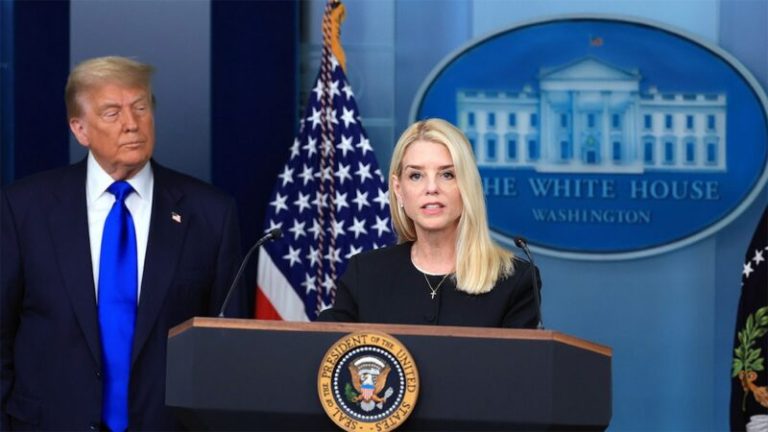
FIRST ON FOX — President Donald Trump fired Attorney General Pam Bondi Wednesday, according to two sources familiar with the matter who spoke with Fox News Digital. 

Trump confirmed the ouster in a Truth Social post Thursday, underscoring that he views her as “a Great American Patriot and a loyal friend” as she moves into an undisclosed role in the private sector. 

“Pam did a tremendous job overseeing a massive crackdown in Crime across our Country, with Murders plummeting to their lowest level since 1900,” he continued. “We love Pam, and she will be transitioning to a much needed and important new job in the private sector, to be announced at a date in the near future.” 

Deputy Attorney General Todd Blanche will serve as interim attorney general, Fox News reported Thursday. 

HOUSE OVERSIGHT SUBPOENAS AG BONDI IN PROBE OF EPSTEIN CASE ‘MISMANAGEMENT’

“Our Deputy Attorney General, and a very talented and respected Legal Mind, Todd Blanche, will step in to serve as Acting Attorney General,” Trump added in his post. “Thank you for your attention to this matter!” 

Bondi met with Trump in the Oval Office Wednesday night ahead of his speech to the nation on the war in Iran, according to two sources familiar with the meeting who spoke to Fox News Digital ahead of Trump’s announcement. 

Bondi departed for Florida Thursday morning, Fox News reported, where she is filming an NFL-affiliated child safety initiative. 

The president is reportedly considering replacing Bondi with Environmental Protection Agency Director Lee Zeldin, according to the sources familiar with the matter. Trump held a meeting with Zeldin at the White House Tuesday to discuss wildfire and prevention, where talks of the transition also unfolded, according to an individual familiar with the meeting. 

That source relayed to Fox News Digital that Zeldin would be a plausible replacement, adding that Trump could change his mind at any point. 

The ouster follows a recent New York Times report detailing that Trump was preparing to replace Bondi with Zeldin as the president had become increasingly dissatisfied with her performance in the role. 

WHY KRISTI NOEM’S FIRING TOOK SO LONG AS SHE WRECKED DHS AND DAMAGED DONALD TRUMP

When initially asked about the meetings and Bondi’s ouster Wednesday evening, the White House directed Fox News Digital to the same comment defending Bondi that the office provided to the Times.  

“Attorney General Pam Bondi is a wonderful person and she is doing a good job,” Trump’s comment states. 

The ouster came the same day Bondi accompanied Trump to the U.S. Supreme Court Wednesday morning for oral arguments on the high-stakes birthright citizenship case. 

Sources confirming to multiple outlets Zeldin’s potential ascension to her former role comes as he prepares for an event with Health and Human Services Secretary Robert F. Kennedy Jr. Thursday afternoon to make an announcement on addressing rising instances of microplastics in drinking water.

Bondi’s entire tenure at the DOJ has been riddled with public scrutiny, especially as it relates to her promise to release the entirety of the Jeffrey Epstein files. 

She told Fox News at the onset of taking her role at the helm of the Justice Department in February that the files were “sitting on my desk right now to review.” 

The trickle of information from her agency over the ensuing year and the lack of new information left Americans frustrated that she was reneging on the promise of releasing the the files.  

Fox News’ Aishah Hasnie and Peter Doocy contributed to this report. 

Editor’s note: This article was updated to clarify that Bondi was out as AG before Trump’s address Wednesday night, and left Washington, D.C., the following morning. 

Global oil prices continued their recent climb and the S&P 500 closed lower Monday after a weekend when Iran-backed Houthi militants launched ballistic missiles at Israel and 3,500 additional U.S. troops arrived in the Middle East.

The conflict between Iran, the U.S. and Israel has entered its second month, with disruptions to oil and other energy and commodities supplies starting to reverberate around the world.

Brent crude oil, the global benchmark, gained 1.5%, to more than $114 a barrel, while U.S. West Texas Intermediate crude climbed almost 5%, to about $104 a barrel, settling above $100 for the first time since 2022.

Rising oil prices are one of the more immediate consequences of the war. Average U.S. gasoline prices hit $3.99 a gallon Monday, according to AAA, the highest since the summer of 2022. Patrick De Haan, chief analyst at Gas Buddy, projected Monday afternoon they would rise to $4 within 24 hours as the average price of gasoline in Florida surged to $4.29.

De Haan estimates that U.S. drivers will soon have spent an additional $10 billion on gasoline since the conflict began just one month ago.

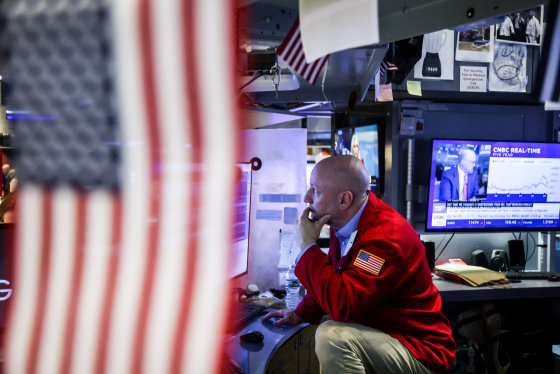
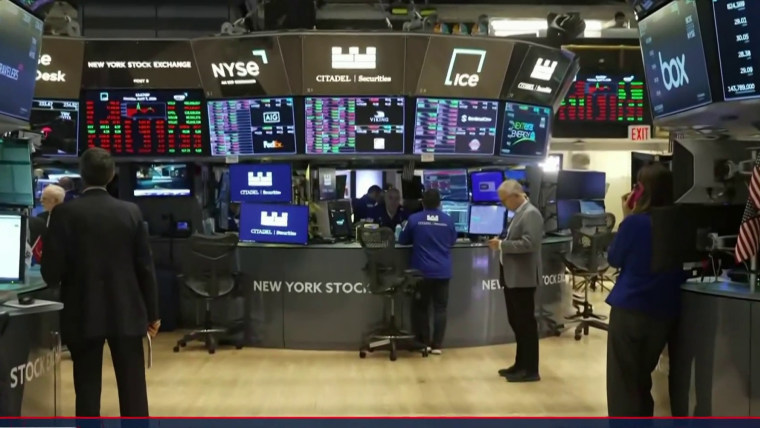
The S&P 500, one of the broadest measures of stocks, fell 0.4% Monday and is now within less than a full percentage point of having declined 10% since its most recent high in January. The tech-focused Nasdaq Composite Index is already in correction territory, down more than 13% from its October high.

Some investors have begun to question President Donald Trump’s ability to reassure financial markets without material progress on the ground.

Investors also increased their purchases of U.S. government bonds Monday over fears of an economic slowdown, sending bond yields lower and dragging down stocks.

Traders now believe higher oil prices may put a damper on overall demand for goods and services.

Bloomberg News reported that U.S. officials and Wall Street analysts have begun considering the prospect that oil prices could surge to as much as $200 a barrel as the largest oil shock in decades continues to reverberate.

That prospect has led analysts to project a global economic slowdown that would hit a U.S. economy already facing suddenly higher gasoline prices.

Earlier Monday, Trump said “great progress has been made” in talks with Iran. At the same time, he threatened to destroy Iran’s civilian energy and water infrastructure if a deal to end the war and reopen the crucial Strait of Hormuz is not reached soon.

Tehran has said U.S. proposals were “unrealistic” and “unreasonable.”

“I think we’ll make a deal with them, pretty sure, but it’s possible we won’t,” Trump told reporters late Sunday. He later said a deal could come “soon.”

Trump also said that Iran “gave us most” of a 15-point plan the U.S. sent Tehran to end the war, which Iran has yet to publicly confirm, and that 20 boatloads of oil — on top of 10 the previous week — will be passing through the Strait of Hormuz beginning Monday “out of a sign of respect.”

Trump separately told the Financial Times on Sunday that an Iran deal could be made “fairly quickly” and that he wants to “take the oil in Iran.”

Surging oil prices continue to ripple through the global economy because of the war with Iran. Now, some analysts say the worst could still be ahead as the conflict drags on.

The concern is that beyond immediate knock-on effects from rising gasoline prices, the war’s disruption could come in waves — ones that will play out over weeks and months and leave few parts of the global economy untouched.

“We haven’t seen the brunt of it yet,” said Samantha Gross, director of energy security and climate at the Brookings Institute. “I feel like markets are so far underestimating the effect of the war. It seems that they expect this war to go quickly, and they expect that we can go back to the world before when it’s over. And I don’t think either of those ideas is true.”

The warning signs are already here. The global oil price benchmark, Brent crude — which heavily influences U.S. gasoline prices — briefly topped $119 a barrel last week, the highest since the war began and a level last seen in July 2022 amid the pandemic-era inflation wave. As of Monday, Brent prices had settled at about $113 a barrel.

Stocks surged Tuesday, with the S&P 500 closing up 2.9% while the Nasdaq rose 3.8% and the Dow gained 1,125 points.

But this very good day capped off what was a very bad month for U.S. equities. The S&P 500 fell 5.09% in March, and the Nasdaq Composite declined 4.75%.

The U.S.-Israeli war on Iran and the near-total blockade of the Strait of Hormuz, a narrow, Iranian controlled waterway through which a fifth of the world’s crude oil typically transits every day, weighed heavily on markets throughout the month.

Tuesday was also the end of the first quarter of the year, one when the S&P 500 and Nasdaq posted their worst annual starts since 2022, when the Russian invasion of Ukraine rocked markets.

For the first quarter, the S&P 500 dropped 4.6% and the Nasdaq declined 7.1%.

Oil prices, meanwhile, soared over the past month, driving up the cost of fuel and triggering a domino effect of higher prices around the globe.

Brent, the international oil benchmark, posted its largest monthly percentage increase ever, after having risen more than 60%. The price of U.S. West Texas Intermediate crude oil also soared in March, climbing more than 50% in its biggest one-month gain since 2020.

For millions of drivers in the U.S., the increases manifest as higher prices for gas. And here, too, the past month was remarkable. The average price of unleaded gasoline hit $4 per gallon Tuesday, up more than 34% in just four weeks.

But it’s not just gas prices that hit U.S. households this month.

More than half of all adults in the U.S. own stocks, often via their retirement accounts and the broader funds those managed accounts invest in. Most of the time, market moves up and down don’t swing the value of those kinds of diversified retirement accounts.

But March was a different story.

“Stocks have been following the lead of oil prices at an unprecedented rate over the last several weeks, and if the U.S. just walked away from the Middle East with the Strait still blockaded, energy markets would likely remain incredibly supply-constrained, keeping prices high,” analysts at Bespoke Investment Group wrote Tuesday.

“The longer prices are high and supplies are limited, the worse it’s going to be for the global economy and ultimately stock prices,” they added.

The wild market swings of the second Trump administration are in sharp contrast to how Donald Trump said the markets would react if he were elected to a second term in 2024.

“There are many people that are saying that the only reason the Stock Market is high is because I am leading in all of the Polls, and if I don’t win, we will have a CRASH of similar proportions to 1929,” Trump wrote on Truth Social in May 2024 as he campaigned for the presidency.

Shortly after he was re-elected in 2024, Trump was asked whether he believed market indexes were good barometers of his performance in office. “To me … all of it together, it’s very important,” he told CNBC.

But during the first 14 months of his second term, U.S. markets have faced some of the sharpest drawdowns in history.

In February and March of last year, Trump’s sweeping tariff policies roiled the market, pushing the S&P 500 into its seventh-fastest correction of all time. A correction is when a stock or an index declines 10% from its most recent record high.

Just over a year later, the S&P 500 isn’t far from doing it again. As of Tuesday’s closing bell, the index had tumbled 6.7% from its most recent high in January.

As oil prices rise, stocks typically fall given that higher oil prices typically lead to higher prices across a number of industry sectors over the long run.

Already, inflation is on the rise around the world. On Tuesday morning, eurozone inflation came in at 2.5%, from 1.9% the month before, according to the European Central Bank.

On Tuesday, the Nikkei 225 in Japan recorded its worst month since 2008. In Europe, the Stoxx 600 index posted its worst month since 2022.

Two near-corrections in just over a year illustrates just how volatile the administration’s policies have been for markets.

Still, since Trump took office for a second time, the S&P 500 is up 8%, although last year global stocks far outpaced the broad U.S. index.

In 2025, global stocks as measured by the MSCI ACWI ex USA index rose nearly 30%, while U.S. stocks rose just 16%. Global stocks haven’t beaten American equities by that much during the first year of a presidential term since 1993, according to data from Bloomberg.

In recent weeks, Trump has repeatedly touted the Dow’s recent 50,000 milestone as a sign that the markets are doing well in his presidency.

“You know, it’s sort of crazy, I hit 50,000 on the Dow,” Trump said at an investment conference in Florida on Friday. “People said that wouldn’t be possible within four years.”

“And then we hit 7,000 on the S&P,” Trump added. “People said that’s even harder than hitting 50,000 on the Dow.”

As of Tuesday, the Dow had plunged more than 3,600 points since it hit 50,000, a drop of nearly 7.5%.

The average price of a gallon of gasoline hit $4 Tuesday for the first time since mid-2022, as the cost of oil surges due to the Iran war.

In the month since the United States and Israel attacked Iran, the average price of unleaded gas has spiked more than a dollar a gallon. On Tuesday morning, the average price nationwide was $4.02 per gallon, motor club AAA said.

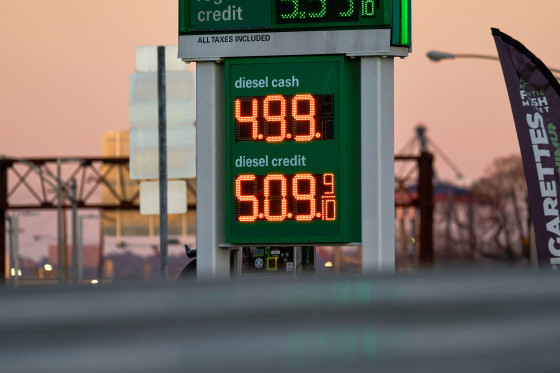
It’s not just retail gasoline. The diesel fuel used to power trucks delivering goods to stores, farm equipment and public transit has risen to $5.45 per gallon, more than $1.80 higher than it was a year ago.

Driving that is the soaring cost of crude oil worldwide. U.S West Texas Intermediate (WTI) crude has risen more than 50% since the war began Feb. 28, while Brent, the international benchmark, has seen a jump of nearly 60%.

On Monday, U.S. crude oil settled above $100 per barrel for the first time since Russia’s full-scale invasion of Ukraine in 2022. Brent crude oil is poised to see its largest one-month increase on record.

Oil prices had already started rising before the Iran war began, fueled by fears that a conflict was imminent. Since the start of the year, the cost of U.S. crude oil is up more than 80% and Brent has skyrocketed almost 90%.

In response to strikes by the U.S. and Israel, Iran has effectively blocked shipping through the Strait of Hormuz, a critical channel off its southern coast. Tehran has also attacked its Gulf Arab neighbors, who are major oil producers.

Typically, more than 20% of the world’s oil supply moves through the waterway. But Iran has repeatedly threatened to attack ships if they move through the strait without permission or if they’re associated with the U.S. or Israel. Several tankers have been hit.

As a result, many tankers are stranded in the Persian Gulf, unable to deliver their products to markets.

Some tankers have been allowed to pass through the strait, including one associated with India and three associated with China. But overall traffic through the waterway is down more than 90% in March.

During the first 28 days of the war, a total of only 55 to 60 tankers have cleared the Strait of Hormuz, according to the ship tracking website TankerTrackers.

Before the war, more than 100 ships per day made the passage, it said.

“This rise in gasoline spending could potentially dampen consumers’ ability to spend on ‘nice-to-have’ or discretionary categories,” Bank of America economists recently wrote.

This year, the average U.S. household will spend an additional $740 on gas because of the jump in oil prices, according to economists from the Stanford Institute for Economic Policy Research.

“The consumer has already seen the sticker shock from rising gasoline prices and increased airline ticket prices from the rising cost of jet fuel,” longtime industry analyst Andy Lipow said. “However, the full effects of the higher diesel prices has yet to be felt and that will flow through the economy over the next few months.”

As American consumers adjust to higher gas prices, oil dependent nations in Europe and Asia are already facing much more severe energy shocks. Inflation, oil and gas rationing and sharp pullbacks in economic growth estimates are impacting billions of people worldwide.

American flyers still smarting from interminable airport security lines are about to get another shock.

A looming global jet fuel shortage is expected to hike the cost of air travel and reduce flight schedules, as airlines look to offset rising prices.

On Monday, JetBlue announced it was raising baggage fees, citing “rising operating costs.”

“While we recognize that fee increases are never ideal, we take careful consideration to ensure these changes are implemented only when necessary,” the carrier said.

United Airlines CEO Scott Kirby said costs to passengers have already been increasing. Data from flight information group OAG shows average airfares in the past week reached $465, the highest price point for the same period since at least 2019.

“We have to raise prices to deal with higher fuel prices,” Kirby acknowledged at a company event last week in Los Angeles. In a subsequent memo, he added: “It may be a challenge to continue passing through much of the increased fuel price if oil stays higher for longer.”

The rising prices are the latest example of the economic fallout from the war with Iran. Analysts have started warning that the full toll has only begun to be accounted for as the global economy absorbs the loss of critical energy exports out of the region due to the closure of the Strait of Hormuz and damage to other key energy infrastructure sites in the region. On Tuesday, U.S. gasoline prices hit $4 a gallon for the first time since 2022 amid surging oil prices. Major stock indexes, meanwhile, have fallen by nearly 10% since the start of the war.

In the case of air travel, the industry is facing jet fuel prices that have surged 85% in the U.S. since the day before the war began in February, according to data from Argus published by the industry group Airlines for America. On Monday, they hit a record $4.62 a gallon.

Most U.S. carriers no longer hedge fuel costs, said Henry Harteveldt, president of Atmosphere Research Group. So they are forced to pass on some costs to passengers.

While U.S. carriers largely source jet fuel domestically, countries in Asia and Europe that are more reliant on Middle East stocks have begun signaling they are taking unprecedented measures to conserve jet fuel. In South Korea, carriers have requested that the government help redirect fuel stocks bound for export back to local markets.

The Financial Times reported Monday that the U.K. was also facing an acute shortage, with no Britain-bound cargoes visible on the water as transit through the Strait of Hormuz remains blocked. Some foreign carriers have begun charging fuel surcharges of as much as $150.

As overseas carriers begin looking to alternative supply bases, the cost for a global commodity like jet fuel rises across the board.

“It shocks the entire mechanism,” said Jaime Brito, an executive director at Oil Price Information Service consultancy.

President Donald Trump commented on the jet fuel shortages Tuesday morning, though he did not mention their impact on U.S. travelers.

“All of those countries that can’t get jet fuel because of the Strait of Hormuz, like the United Kingdom, which refused to get involved in the decapitation of Iran, I have a suggestion for you: Number 1, buy from the U.S., we have plenty, and Number 2, build up some delayed courage, go to the Strait, and just TAKE IT,” he wrote on Truth Social.

Airlines are also signaling capacity cuts to cope with rising costs. United will drop about 5% of planned flights in mostly “off-peak periods” — like red-eye and midweek routes — during the second and third quarters of 2026 to further mitigate the cost increases.

“We’re certainly going to be nimble in terms of capacity to make sure that supply and demand stay in balance,” American Airlines CEO Robert Isom said at a JPMorgan conference earlier this month.

Kyle Potter, executive editor of the Thrifty Traveler, said most carriers have quietly been raising airfares since the Iran war began. He said airlines typically move in droves when making pricing decisions, so it is likely that other carriers may also soon begin raising baggage fees or seek other forms of ancillary revenue. Potter noted that unlike airfares, revenues from these fees are not subject to federal excise taxes.

As a result, the fees — unlike airfares — are unlikely to come back down assuming jet fuel prices recover.

Representatives for five other major U.S. carriers did not respond to a request for comment.

The acute fuel price increase comes as air travel demand has remained steady, with January and February ticket sales at or near records. While investors have taken airline stocks down some 25% since the start of the Iran war, Kirby said that customers appear willing to keep booking thanks to healthy demand even if airfare rises.

“The number of wealthy Americans who are traveling is bigger and wealthier than ever, and that is what much of the airline industry is relying on right now,” Potter said. “And that means they’re more immune to higher fees, higher fares and just getting turned off by negative news about travel.”

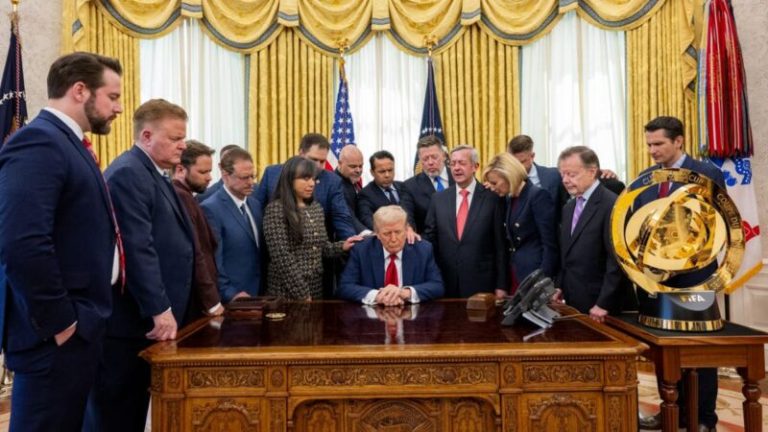
FIRST ON FOX: The White House is marking Holy Week with days of prayer and worship, including President Donald Trump participating in a number of events to honor Easter and celebrate the “right to religious liberty.” 

“President Trump will never waver in safeguarding the right to religious liberty, upholding the dignity of life and protecting faith in our public square,” White House spokeswoman Taylor Rogers told Fox News Digital of the White House’s Holy Week events. 

“Millions of Christians across the country will celebrate Jesus Christ conquering death, freeing us from sin, and unlocking the gates of Heaven for all of humanity, and the President is proud to join Americans during this blessed holiday.”

A White House official told Fox News Digital that the president on Wednesday will attend the White House Easter Lunch in the East Room.

TRUMP GATHERS CEOS FOR UNPRECEDENTED FAITH, ECONOMY MEETING TO RENEW US ‘SPIRITUALLY AND FINANCIALLY’

The event will feature worship and prayer, and choral performances from the Free Chapel Choir, led by Pastor Jentezen Franklin on the saxophone.

The event will also include prayers from Reverend Franklin Graham, Bishop Robert Barron, Pastor Paula White and others.

Secretary of State Marco Rubio, Secretary of War Pete Hegseth, Secretary of Homeland Security Markwayne Mullin, Attorney General Pam Bondi, Agriculture Secretary Brooke Rollins, Housing and Urban Development Secretary Scott Turner, Small Business Administrator Kelly Loeffler, Office of Management and Budget Director Russ Vought, and White House press secretary Karoline Leavitt will attend the White House Easter lunch.

Erika Kirk is also expected to attend the White House Easter lunch, a White House official told Fox News Digital. 

Next, on Wednesday evening, at 5:00 p.m., White House staff are invited to attend a Catholic Mass in the Indian Treaty Room. The mass will be celebrated by Father Frank Mann.

FLASHBACK: WHITE HOUSE PLANS ‘EXTRAORDINARY’ HOLY WEEK AS TRUMP HONORS EASTER WITH ‘THE OBSERVANCE IT DESERVES’

On Thursday, Holy Thursday, a White House official told Fox News Digital that all White House staff are invited to attend a worship service in the same room. That service will feature Rev. Franklin Graham, Pastor Jentzen Franklin, Pastor Paula White and White House Faith Office Director Jenny Korn.

A White House official also told Fox News Digital that President Trump is expected to issue a presidential proclamation honoring Holy Week.

“President Trump wishes Christians across America and around the world a very happy Easter. He is risen, indeed!” Rogers added in a comment to Fox News Digital. 

The president is also expected to post video messages on his Truth Social account to celebrate Easter and Passover.

A White House official told Fox News Digital that Passover events will take place next week. Passover begins at sundown on Wednesday, April 1 and ends at sundown on Thursday, April 9.

The White House Passover event will take place April 6 in the Indian Treaty Room. Edan Alexander, who was held hostage by Hamas in Gaza for more than 500 days following the Oct. 7, 2023 attacks, and his family will be in attendance. Alexander was the last living American hostage released last year.

Faith has been a focal point of Trump’s second term, including signing an executive order in February 2025 establishing a White House Faith Office.

The office empowers faith-based entities, community organizations and houses of worship “to better serve families and communities,” according to the White House. The office is housed under the Domestic Policy Council and consults with experts in the faith community on policy changes to “better align with American values.” 

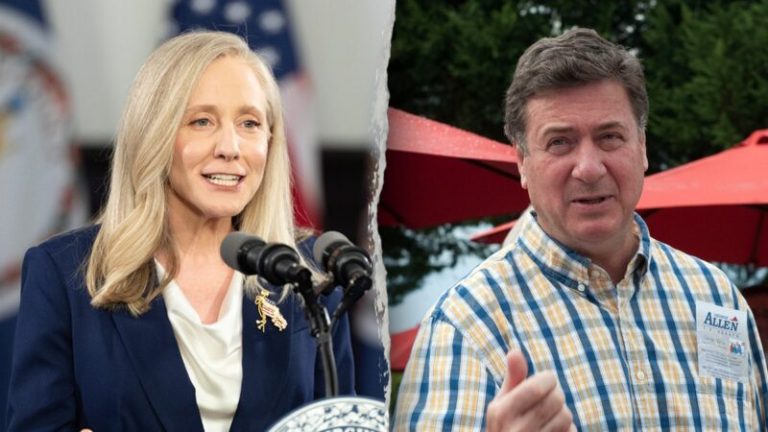
A top Republican predecessor of Gov. Abigail Spanberger challenged her to publicly debate the merits of the redistricting referendum she and Virginia Democrats so fervently support, as an anti-gerrymandering group he works with also fired off a letter to her in his stead.

Spanberger, along with Senate and House leadership in Richmond, is squarely in the “Vote YES” camp when it comes to the April 21 public referendum to redraw the Old Dominion’s congressional districts in a way that would likely remove all but one GOP congressman from office.

Gov. George Allen, a Republican who served as governor from 1994 to 1998 between tenures in the U.S. House and U.S. Senate, said in a statement that if the incumbent’s ideas are right, she should publicly defend them.

“Virginia voters expect a robust and transparent discussion of the issues. So, I am inviting Governor Spanberger to join me in a series of public debates to look Virginians in the eye and explain each side of this referendum vote,” Allen said.

BATTLE FOR THE HOUSE RUNS THROUGH VIRGINIA AS COURT OKS HIGH-STAKES REDISTRICTING VOTE

“I am prepared to discuss why I oppose gerrymandering in Virginia and anywhere else in our nation.”

Allen, whose father was one of the then-Washington Redskins’ most successful coaches, said that people in Virginia are being “barraged” by political ads and that $28 million has been spent on commercials that “are at best misleading and designed to confused voters.”

“Let’s give Virginians the honest and transparent discussion of gerrymandering that they deserve,” he said.

In that regard, the group No Gerrymandering Virginia, which is being spearheaded by a bipartisan group of former Virginia lawmakers and officials including Allen, sent a letter requesting such to Spanberger’s office at the Capitol.

“If you’re confident that your ideas and your candidates are so great, then you ought not fear the people,” Allen told Richmond’s NBC affiliate.

He added that gerrymandering is a personal subject, as part of his impetus to run for governor came when Albemarle County — where he owned a “log house on a gravel road” — was split into several pieces during one such redrawing.

No Gerrymandering Virginia’s letter called the April 21 vote a “consequential moment for Virginia.”

GOP-LED COUNTIES PUSH BACK AGAINST DEMOCRAT’S REDISTRICTING CHARGE, TESTING VIRGINIA’S CONSTITUTIONAL LIMITS

“At its core, the referendum asks whether the commonwealth will maintain its commitment to fair representation or move toward a mid-decade gerrymandering approach that has already taken hold in other states,” the letter said.

“Virginians deserve the opportunity to hear a clear and direct debate on this question before they vote.”

“To that end, I would like to invite you to participate in a televised, live-streamed debate on the referendum. Former Governor George Allen has agreed to participate and would present the case against adopting the proposed maps. As you know, Governor Allen has long opposed gerrymandering, shaped in part by his experience being drawn out of his congressional district in the early 1990s, and he supported the 2020 constitutional amendment establishing Virginia’s current fair redistricting process.”

In a prior statement in February, Allen said mid-decade “gerrymandering” is wrong, no matter who does it.

“Texas was wrong. California was wrong. North Carolina was wrong. Virginians should stand up for principle like those in Indiana and South Carolina who said ‘No’ to this egregious gerrymandering their states,” he said, adding that the 2020 referendum that took power away from the assembly shows Virginia has “much better standards of fairness than this.”

Allen is joined on No Gerrymandering Virginia’s advisory council by former Virginia House Speaker William Howell, R-Stafford, former State Sen. Chap Peterson, D-Fairfax, and ex-Del. William Fralin, R-Roanoke.

Other recent Virginia officials have also lambasted the redistricting push, including ex-Gov. Glenn Youngkin and ex-Attorney General Jason Miyares.

Fox News Digital reached out to Spanberger for comment.

In recent public statements defending the referendum, she said it is “temporary” and suggested she still supports the 2020 amendment otherwise.

President Donald Trump said he is strongly considering pulling the United States out of NATO over the alliance’s refusal to join his administration’s efforts in the Iran conflict, according to a report.

“I was never swayed by NATO,” Trump told The Daily Telegraph in an interview published Wednesday.

The president, long a critic of the military alliance, which has been pivotal in maintaining global order since World War II, said reconsidering the matter was “beyond consideration.”

“I always knew they were a paper tiger, and Putin knows that too, by the way,” Trump told the British outlet.

MORE KEY US ALLIES BLOCK MILITARY FLIGHTS AS IRAN WAR RIFT WIDENS WITH TRUMP

The comments come after European nations reportedly rejected Trump’s request that allies send warships to reopen the Strait of Hormuz, through which roughly 20% of the world’s oil supply travels. Iran has threatened or moved to restrict access to the strait in reaction to the U.S. offensive against Iranian targets, raising concerns about global energy markets and economic stability.

“Beyond not being there, it was actually hard to believe. And I didn’t do a big sale. I just said, ‘Hey,’ you know, I didn’t insist too much. I just think it should be automatic,” Trump said.

“We’ve been there automatically, including Ukraine. Ukraine wasn’t our problem. It was a test, and we were there for them, and we would always have been there for them. They weren’t there for us.”

TRUMP WARNS NATO OF ‘VERY BAD’ FUTURE IF ALLIES DON’T HELP SECURE STRAIT OF HORMUZ

The president also criticized the United Kingdom and Prime Minister Keir Starmer for not participating in the conflict.

“You don’t even have a navy. You’re too old and had aircraft carriers that didn’t work,” Trump said.

Responding to the president’s comments, Starmer said Britain is “fully committed to NATO,” calling it “the single most effective military alliance the world has ever seen.”

Starmer told reporters that “whatever the pressure on me and others, whatever the noise, I am going to act in the British national interest in all the decisions I make.”

The Associated Press contributed to this report.