Author

admin

Browsing

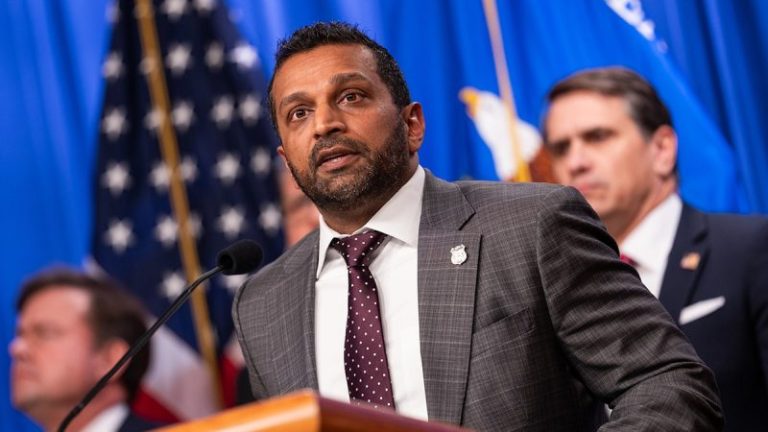
FBI Director Kash Patel said Saturday the agency is ramping up its use of artificial intelligence (AI) tools to counter domestic and international threats.

In a post on X, Patel said the FBI has been advancing its technology, calling AI a ‘key component’ of its strategy to respond to threats and stay ‘ahead of the game.’

‘FBI has been working on key technology advances to keep us ahead of the game and respond to an always changing threat environment both domestically and on the world stage,’ Patel wrote. ‘Artificial intelligence is a key component of this.

‘We’ve been working on an AI project to assist our investigators and analysts in the national security space — staying ahead of bad actors and adversaries who seek to do us harm.’

Patel added that FBI leadership has established a ‘technology working group’ led by outgoing Deputy Director Dan Bongino to ensure the agency’s tools ‘evolve with the mission.’

‘These are investments that will pay dividends for America’s national security for decades to come,’ Patel said.

A spokesperson for the FBI told Fox News Digital it had nothing further to add beyond Patel’s X post.

The FBI uses AI for tools such as vehicle recognition, voice-language identification, speech-to-text analysis and video analytics, according to the agency’s website.

Earlier this week, Bongino announced he would leave the bureau in January after speculation rose about his departure.

‘I will be leaving my position with the FBI in January,’ Bongino wrote in an X post Wednesday. ‘I want to thank President [Donald] Trump, AG [Pam] Bondi, and Director Patel for the opportunity to serve with purpose. Most importantly, I want to thank you, my fellow Americans, for the privilege to serve you. God bless America, and all those who defend Her.’

This post appeared first on FOX NEWS

While it is true that Erika Kirk is head of one of the nation’s leading conservative groups, at one point this weekend at Turning Point USA’s AmericaFest, she made it clear that she holds an even more important title: mother.

After two days of infighting at the conference between some of its top stars, Kirk smiled on stage Friday night and said, ‘Well, say what you want about AmFest, but it’s definitely not boring. Feels like a Thanksgiving dinner where your family’s hashing out the family business.’

This is the best and most positive way to look at the squabbling in Phoenix between Ben Shapiro, Tucker Carlson, Megyn Kelly and other right-wing celebrities. It has been mostly over Israel, and it was a sideshow few attendees expected or particularly wanted.

Brent, in his 50s and from Oklahoma City, came to AmFest with his two sons.

‘I was in there the night Ben and Tucker went at each other, at one point, I told my wife, I’m going out for some air, I just felt like I needed to escape to the real world, you know?’ he told me over a smoke.

I did know. 

Along with sniping over Israel and antisemitism, the question of what a ‘heritage American’ is, or if it is a thing at all, also spurred division. Ohio gubernatorial candidate Vivek Ramaswamy told the crowd, ‘I think the idea of a heritage American is about as loony as anything the woke left has actually put up,’ adding ‘There is no American who is more American than somebody else.… It is binary. Either you’re an American or you’re not.’

This would have been Civics 101, even for conservatives, not long ago, but Ramaswamy is right to mention wokeness, because proponents of the concept that a genealogy that leads back to nation’s founding is something special is mainly driven by such people being told for decades now that it is actually the only lineage that is not special, or something to be proud of.

I asked Dennis, who is the fourth-generation owner of a farm in South Dakota, which sounds pretty heritage-y to me, what he made of it all.

‘I don’t think much about that,’ he said. ‘If you love the country and follow the laws, you can be an American.’

Dennis was much more interested in, and comfortable talking about soybeans and sugar beets. I asked how the tariffs were affecting him, and he told me, ‘It’s hurt, but I look at the big picture and I think it will be good in the long run.’

It was tempting after speaking, not just with Dennis, but with many attendees, old and young, who are most focused on prices, to think, ‘It’s the economy, stupid, knock it off with the identity politics stuff.’ But Erika Kirk made a good point: These might be fights the right needs to have before settling into next year’s midterm elections.

TPUSA spokesman Andrew Kolvet posted on X with this very message.

‘If we force conformity without uncomfortable debates, there can be no winning consensus,’ he wrote. ‘There’s no civil war. This is the necessary work of a conservative coalition defining its dominant center ahead of the coming battles. We’re not hive-minded commies. Let it play out.’

It should also be noted how much better hashing all of this out at an actual live event is than endless sniping on social media where nobody is ever really forced to contend with ideas they oppose. The mere act of shaking hands with someone you disagree with can be a powerful calming influence.

On Sunday, the big finale of AmFest will be Vice President JD Vance’s speech to the assembled. As of 4 a.m., there was already a line for it.

Sarah, a college freshman told me, ‘I wasn’t old enough to vote for Trump, but I will get to vote for Vance, and I’m excited about that.’ This is good news for Vance, but it’s also a lot of pressure. Can he be the force that mends the wounds opening this weekend at AmFest? 

Erika Kirk is right, families sometimes fight. In fact, sometimes they have to. But the question is always what happens after the blowup, after the tears and recriminations?

Rep. Anna Paulina Luna, R-Fla., told the crowd this weekend, ‘You may not like Tucker Carlson, Ben Shapiro, Steve Bannon or me. Guess what: If the radical left wins, we all hang together.’

This seems correct, and even after AmFest’s nasty internecine fighting, it is still a goal well within reach of TPUSA and the conservative movement. It is also almost certainly what Charlie Kirk would have wanted.

This post appeared first on FOX NEWS

We also break down next week’s catalysts to watch to help you prepare for the week ahead.

In this article:

    This week’s tech sector performance

    US stocks advanced this week amid key economic data releases, with tech leading gains after Micron Technology’s (NASDAQ:MU) results release and easing artificial intelligence (AI) sector pressures.

    The S&P 500 (INDEXSP:.INX) rose 0.02 percent on the week, closing Friday (December 19) at 6,834.5.

    However, tech stock losses earlier in the week kept gains in check. The Nasdaq Composite (INDEXNASDAQ:.IXIC) lost 0.1 percent for the week to close at 23,307.62 on Friday.

    3 tech stocks moving markets this week

    1. Micron Technology (NASDAQ:MU)

    Micron Technology reported earnings for its first fiscal quarter of 2026 on Thursday (December 18), showing strong results driven by surging high-bandwidth memory sales for AI data centers

    Revenue reached US$13.64 billion, up 93 percent from last year and higher than the company’s September revenue projection of US$12.8 billion. Adjusted earnings per share were US$4.78, beating estimates of US$3.95. The company generated strong free cashflow and declared a US$0.115 per share dividend payable on January 14, 2026.

    Looking ahead, Micron adjusted its profit guidance for the upcoming quarter to US$8.42 per share, higher than Wall Street’s US$4.78 consensus, due to continued AI boom momentum.

    Investors responded to the results by sending Micron shares up 10 percent post-earnings. Momentum carried into Friday’s trading session, spilling over into other tech stocks, which have come under pressure in recent weeks over lofty valuations and funding concerns. The company ended the week 0.58 percent higher.

    2. Trump Media & Technology Group (NASDAQ:DJT)

    Trump Media & Technology Group rose nearly 30 percent before Thursday’s opening bell after the company announced plans to merge with fusion power company TAE Technologies.

    The all-stock deal is reportedly valued at more than US$6 billion. Devin Nunes, chair and chief executive of Trump Media, and Dr. Michl Binderbauer, CEO and director at TAE, are set to serve as co-CEOs.

    TAE is a private company with backing from Alphabet (NASDAQ:GOOGL) and other companies. The merger is slated to create one of the first publicly traded nuclear fusion companies. “We’re taking a big step forward toward a revolutionary technology that will cement America’s global energy dominance for generations,“ Nunes said.

    Shares of Trump Media closed the week with a gain of 39.53 percent.

    3. Oracle (NYSE:ORCL)

    Oracle shares dropped 5.4 percent on Wednesday (December 17) after a Financial Times report claimed data center investor Blue Owl Capital pulled out of a US$10 billion financing round for one of the AI data centers Oracle is constructing for OpenAI in Michigan. Talks reportedly stalled due to concerns over project delays, tougher debt terms, Oracle’s rising debt load and lease arrangements, per sources cited by the news outlet.

    Oracle disputed the report’s implications, stating that Michigan negotiations are “on schedule” without Blue Owl.

    The company said its project development partner, Related Digital, has chosen “the best equity partner from a competitive group of options, which in this instance was not Blue Owl.” Still, the company finished the week with its share price ahead by 2.18 percent as tech stocks staged an end-of-year comeback.

    Oracle, Micron Technology and Trump Media performance, December 15 to 19, 2025.

    Chart via Google Finance.

    Top tech news of the week

                Tech ETF performance

                Tech exchange-traded funds (ETFs) track baskets of major tech stocks, meaning their performance helps investors gauge the overall performance of the niches they cover.

                This week, the iShares Semiconductor ETF (NASDAQ:SOXX) declined by 0.94 percent, while the Invesco PHLX Semiconductor ETF (NASDAQ:SOXQ) saw a loss of 0.66 percent.

                The VanEck Semiconductor ETF (NASDAQ:SMH) also decreased by 0.61 percent.

                Tech news to watch next week

                Markets will be closed mid-week next week, with low trading volumes likely keeping movement calm.

                Watch for year-end selling in tech stocks, a potential rotation into safer sectors and light data like factory orders and home sales reports. Any comments on future interest rates could move markets somehwat, but expect mostly flat trading unless big news like policy changes breaks through.

                Securities Disclosure: I, Meagen Seatter, hold no direct investment interest in any company mentioned in this article.

                This post appeared first on investingnews.com

                The silver price was on the rise once again this week — it surged past the US$67 per ounce level on Friday (December 19), hitting a new record before pulling back.

                As for gold, it spent much of the period around the US$4,330 per ounce level, although it rose as high as US$4,360 on Thursday (December 18), approaching its own all-time high.

                Investors were eyeing November US consumer price index (CPI) data, which came out on Thursday. It was up 2.7 percent year-on-year, while core CPI was measured at 2.6 percent.

                Those figures were quite a bit lower than analysts’ estimates, and data collection issues caused by the US government shutdown have left market participants questioning the results.

                Notably, Bureau of Labor Statistics officials had to make ‘certain methodological assumptions’ because the October CPI report was canceled entirely. The bureau also started November data collection later than usual, driving concerns about a rebound in numbers for December.

                US jobs data for both October and November came out this week as well, showing that the unemployment rate for last month rose to 4.6 percent, the highest since 2021.

                While 64,000 jobs were added in November, 105,000 were lost in October, and revisions took 33,000 jobs away from the months of August and September.

                Outside US economic data, it’s worth noting that for silver there’s still a lot of focus on behind-the-scenes actions that could be impacting the price.

                Here’s what Substack newsletter writer John Rubino had to say about that:

                ‘A lot of the discontinuities that we’re seeing in the silver market right now are due to the fact that the big exchanges like Comex may not have enough silver to satisfy the demands of futures contract holders.

                ‘In other words, there are a lot more people out there with long futures contracts that could come in and demand silver than there is silver to satisfy that demand. And the number of people who are standing for delivery on futures contracts is rising, and the amount of silver in these exchanges is shrinking.’

                Bullet briefing — Platinum beats gold, copper hits new record

                Platinum price on the move

                I’d be remiss if I didn’t also take a moment to mention platinum.

                While gold and silver have been making headlines, platinum’s 2025 rise has been quiet, but significant — it’s up over 100 percent year-to-date and nearly hit US$1,980 per ounce this week.

                Platinum is somewhat similar to silver in that they both have precious and industrial sides, and they’ve both seen persistent deficits in recent years.

                Platinum’s deficit has definitely helped it rise this year, but looking forward to next year the World Platinum Investment Council is expecting a balanced market. When I saw that, I wondered if that would mean lower prices in 2026. But that may not necessarily be the case.

                Edward Sterck said there are a couple of nuances in the council’s outlook — for example, it’s anticipating profit taking from exchange-traded funds, but if that doesn’t happen, then the platinum deficit may persist. He also noted that balance in 2026 wouldn’t erase years of deficits:

                ‘A balanced market doesn’t solve for the fact we’ve had three years of deficits. It doesn’t in any way, I suppose, rebuild aboveground stocks. And it’s the shortage of aboveground stocks that seems to be one of the major catalysts behind this price action and behind the market tightness.’

                Copper price hits new high

                It’s not only precious metals that have been hitting new highs this year.

                The price of copper has been climbing as well, hitting a new all-time high of close to US$12,000 per metric ton last week on the London Metal Exchange.

                It’s pulled back slightly since then, but market watchers agree the copper outlook remains strong as rising demand meets constrained supply. In fact, I’ve been asking experts what they think the top-performing asset of next year will be, and copper has been a popular pick.

                Lobo Tiggre of IndependentSpeculator.com chose the base metal as his highest-confidence trade of 2025, and he said he’s sticking with it next year.

                Here’s what he had to say about copper:

                ‘Top pick for 2026 is copper. Similar reasons to 2025 —the copper price has been kicked around, up and down by what I think of as sort of extraneous issues. But the fundamentals mean the demand scenario just looks phenomenal, and the supply has been really constrained.’

                Securities Disclosure: I, Charlotte McLeod, hold no direct investment interest in any company mentioned in this article.

                This post appeared first on investingnews.com

                Russian President Vladimir Putin said Friday that Moscow would refrain from launching new attacks on other nations provided his country is treated ‘with respect.’

                The Kremlin made the remarks during his annual televised press conference in Moscow as concerns persist among European nations that Russia poses a security threat, Agence France-Presse (AFP) reported.

                ‘Will there be new special military operations? There will be no operations if you treat us with respect, if you observe our interests, just as we have constantly tried to observe yours,’ Putin said.

                Putin uses the phrase ‘special military operation’ to describe Russia’s offensive in Ukraine, according to AFP.

                He added there would be no further Russian invasions ‘if you don’t cheat us like you cheated us with NATO’s eastward expansion,’ according to the BBC.

                The Russian leader also claimed he was ‘ready and willing’ to end the war in Ukraine ‘peacefully,’ though he offered few details suggesting a willingness to compromise, the BBC reported.

                The yearly news conference, which typically runs at least four hours, features questions from reporters and members of the public across Russia. 

                More than 2.5 million questions were submitted for this year’s event, which focused heavily on the war in Ukraine, Reuters reported.

                Putin also noted during the event that the nation’s ‘troops are advancing’ and expressed confidence that Russia will accomplish its objectives through military means if Ukraine does not assent to Russia’s terms during peace talks, according to The Associated Press.

                ‘Our troops are advancing all across the line of contact, faster in some areas or slower in some others, but the enemy is retreating in all sectors,’ Putin declared.

                As the war drags on, the European Union has just agreed to provide Ukraine with a loan of over $105 billion.

                Fox News Digital’s Alex Nitzberg contributed to this report.

                This post appeared first on FOX NEWS

                It’s not just Minnesota.

                The past few weeks have made clear that fraudsters stole billions of dollars from states’ welfare programs, much of it from Medicaid. It also appears that Democratic politicians tolerated the heist for their own political benefit. 

                Yet politicians in virtually every state have let waste, fraud and abuse spread like wildfire in Medicaid, putting taxpayers on the hook for an estimated $2 trillion in improper spending over the next decade alone. 

                Thankfully, President Donald Trump and congressional Republicans have given states a reason to clean up this mess and spare taxpayers that pain.

                In a new paper, I show how Democrats have turned Medicaid into one of the most fraud-ridden programs in America — and how Republicans are fixing it. While Medicaid has long been plagued with improper spending, Democrats supercharged this crisis in the Obama years.

                ObamaCare added tens of millions of able-bodied adults to the program, yet that population is much more likely to be ineligible.

                The Obama administration refused to rigorously check eligibility, and the Biden administration adopted the same policy, deliberately hiding an explosion in waste, fraud and abuse. Meanwhile, states refused to police their Medicaid programs, confident that the federal government would look the other way and cover the tab.

                The first Trump administration found that 27.4% of federal Medicaid spending was improper in 2020, or about $120 billion at the time. The administration also found that four out of every five improper payments were the result of eligibility errors. This money flowed to people who shouldn’t have been on Medicaid and therefore diverted money and care away from its intended recipients. Five years later, it’s highly likely that at least one in five Medicaid dollars is still wrongly spent.

                Call this what it is — an assault on taxpayers. It’s also a clear violation of federal law. States are legally required to reimburse the federal government for Washington’s share of Medicaid payments if their improper payment rates are above 3%, a far cry from the 27.4% rate in 2020.

                The Trump administration is once again conducting eligibility checks, but even without that info, it’s all but certain that every state already exceeds the 3% threshold. The only reason they’ve avoided a budget blowout is by receiving so-called ‘good faith waivers’ from Washington. Essentially, states have promised that they’ll tackle fraud and abuse, even when they have no intention of doing so.

                Republicans called time on this rigged game in the law President Trump signed July 4. They effectively eliminated good-faith waivers and told states that, starting in 2030, they will be forced to cover the federal share of any improper payments above 3%. While five years may seem like an eternity, it’s an acknowledgment that states have a mountain to climb to bring their error rates into the low single digits. 

                Consider Ohio. In 2019, it had an improper payment rate of nearly 45%, giving the Buckeye State the worst record in the nation for waste, fraud and abuse. Based on its most recent spending levels, Ohio would be on the hook for $9.7 billion, equal to roughly 15% of its current state budget. Illinois, with a 35.4% rate, would pay $6.4 billion, a tough ask given the state’s famous fiscal woes. Even states with lower improper payment rates, like Pennsylvania, Michigan and Missouri, would still be looking at annual costs of more than $1 or $2 billion.

                Without reform, I estimate that states will pay a combined $100 billion in penalties beginning in 2030. Their only hope to avoid this fiscal pain is to immediately start rooting out waste, fraud and abuse. In the state legislative sessions that start in January, lawmakers should focus on several key reforms.

                First, stop allowing Medicaid recipients to self-attest their income, address and other personal information. Using the honor system invites abuse.

                Second, review recipients’ eligibility at least twice a year for able-bodied adults and once a year for everyone else, thereby removing ineligible individuals early and often.

                Third, cross-check Medicaid data with easily accessible information such as wage, hiring and tax records; returned mail and changes of address; out-of-state food stamp transactions; and prison and death records. These basic good government measures can quickly identify people wrongly receiving taxpayer money.

                Waiting to tackle Medicaid fraud is the most foolish thing states can do. So is hoping that Democrats get their wish and successfully repeal Republicans’ Medicaid reforms. That won’t happen while Trump is president. And if states wait to see the outcome of the 2028 election, they may be disappointed. At that point, they’d face an even steeper hill with barely a year to get their act together.

                There’s no avoiding the reality that Democrats broke Medicaid — in Minnesota and everywhere else — or that Republicans have given states an urgent mandate to finally root out the waste, fraud and abuse.

                 Michael Greibrok is a Senior Research Fellow at the Foundation for Government Accountability.

                This post appeared first on FOX NEWS

                From a distance, Margarita Island looks like a Caribbean escape. Palm-lined beaches, duty-free shops, and resort towns sell the image of a tropical playground just off Venezuela’s northeastern coast. But U.S. officials say the Venezuelan outpost has become something else entirely: Hezbollah’s most important base of operations in the Western Hemisphere, strengthened by Iran’s growing footprint and the Maduro regime’s protection.

                That threat, U.S. officials warn, reflects a broader security challenge emerging from the region. ‘The single most serious threat to the United States from the Western Hemisphere is from transnational terrorist criminal groups primarily focused on narcotrafficking,’ Secretary of State Marco Rubio said at an end-of-year press conference at the State Department on Friday.

                ‘Margarita Island might be of significance to the U.S. because of its location and the security dynamics around it,’ Melissa Ford Maldonado, director of the Western Hemisphere Initiative at the America First Policy Institute, told Fox News Digital. ‘It is close to Trinidad and Tobago and Grenada, in an oil-rich part of the Caribbean along key maritime routes, and it has long had a reputation for being a major drug-trafficking hub, possibly because it’s off the mainland and there’s not a lot of law enforcement there.’

                The island’s isolation, she said, has made it attractive to ‘irregular armed groups, foreign intelligence actors and criminal networks that use it as a departure point for boats carrying illicit shipments out of Venezuela.’

                Marshall Billingslea, the former assistant secretary for Terrorist Financing and Financial Crimes in the U.S. Treasury Department, said Margarita Island now serves as Hezbollah’s key foothold in the Western Hemisphere.

                ‘From what I have seen and what I have been told, there is a wide range of activities that Hezbollah and to some extent Hamas are engaged in,’ Billingslea told Fox News Digital. ‘Margarita Island is really the center of gravity for their activities.’

                In written testimony submitted to the Senate Caucus on International Narcotics Control for an Oct. 21 hearing, Billingslea traced the island’s transformation back more than two decades. Under Hugo Chávez, he wrote, Venezuela ‘opened its doors to Hezbollah, allowing the group to establish a major footprint, including a paramilitary training site, on Margarita Island.’

                ‘When Nicolás Maduro seized power,’ Billingslea added, ‘the breadth and depth of Hezbollah’s presence in Venezuela dramatically expanded, as did their ties to the narco-terrorist regime and the Cartel de los Soles.’

                ‘The relationship is very close with the Cartel de los Soles, and it has been so for many, many years,’ Billingslea said, referring to the network of senior Venezuelan officials accused by the United States of drug trafficking.

                Billingslea said Hezbollah has embedded itself into Margarita Island’s economy, exploiting the island’s duty-free status and cross-border access to Colombia to generate revenue through smuggling and drug importation. He said the group operates a wide range of companies on the island and also maintains several training camps there.

                His testimony also detailed how Venezuela’s state apparatus helped embed Hezbollah inside the country. He wrote that former senior official Tareck El Aissami, while overseeing Venezuela’s passport and naturalization agency, ‘was instrumental in furnishing passports and citizenship documents to Hezbollah operatives as well as a large number of people from Lebanon, Syria, and Iran.’ Between 2010 and 2019, Venezuelan authorities issued more than 10,400 passports to individuals from those countries, according to the testimony.

                A May 27, 2020, Justice Department announcement alleged that Diosdado Cabello directed Venezuelan lawmaker Adel El Zabayar to travel to the Middle East to obtain weapons and recruit members of Hezbollah and Hamas for training at clandestine camps inside Venezuela. The filing also describes a subsequent weapons delivery at a hangar controlled by Maduro at the country’s main international airport.

                Recent developments in the Middle East have only increased Margarita Island’s importance, Billingslea said. Israel’s campaign against Hezbollah in Lebanon has damaged the group’s military leadership and financial infrastructure, forcing it to rely more heavily on overseas networks.

                ‘Israeli successes against Hezbollah in Lebanon in particular, including their strikes on the financial infrastructure Al-Qard al-Hassan that operates in Lebanon, are going to have two effects,’ he said. ‘The first is that it is making the fundraising and the revenue generation that comes out of Latin America even more important to the terrorist group. Secondly, we have seen indications that Hezbollah actually has been relocating fighters from Lebanon, several hundred from Lebanon to Venezuela in particular.’

                Asked whether that shift moves the threat closer to the United States, Billingslea said Hezbollah is now operating ‘close to the U.S. and further away from the Israelis.’

                He said Iran’s role in Venezuela has deepened alongside Hezbollah’s. ‘There is a substantial Iranian footprint in Venezuela related to the trade of weapons and drones, in particular, for gold,’ he said. After suffering losses in the Middle East, he added, ‘the Iranians find themselves even more dependent on that supply of gold in exchange for drones and weapons.’

                He said Washington faces a strategic choice. ‘I think the United States has positioned sufficient forces in the Caribbean at this time to take care of the Hezbollah threat,’ he said. ‘But obviously, when you have a terrorist group that has merged into the local population, highly precise intelligence is needed. I believe the Venezuelan opposition possesses a great deal of that intelligence, though it is not clear to me that the United States government is making the best use of that access.’

                For Billingslea, the conclusion is cleaner — eliminating Venezuela’s narco-terrorist regime would significantly strengthen U.S. national security.

                This post appeared first on FOX NEWS

                A bipartisan Obamacare fix remains out of reach in the Senate, for now, and lawmakers can’t agree on who is at fault. 

                While many agree that the forthcoming healthcare cliff will cause financial pain, the partisan divide quickly devolved into pointing the finger across the aisle at who owns the looming healthcare premium spikes that Americans who use the healthcare exchange will face. 

                Part of the finger-pointing has yielded another surprising agreement: Lawmakers don’t see the fast-approaching expiration of the Biden-era enhanced Obamacare subsidies as Congress failing to act in time.

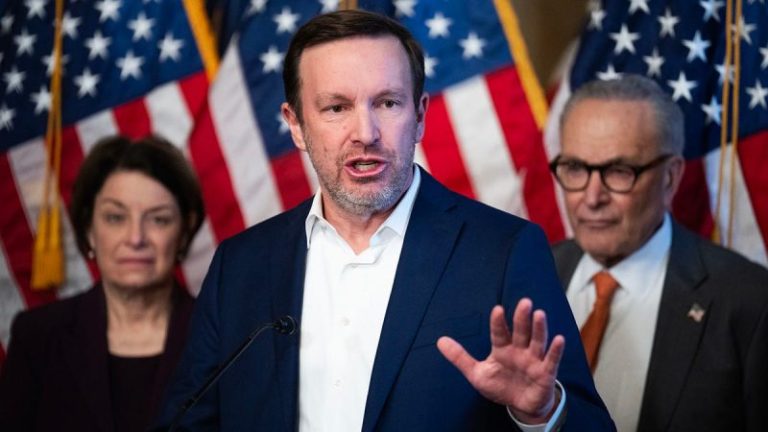
                ‘Obviously, it’s not a failure of Congress to act,’ Sen. Chris Murphy, D-Conn., told Fox News Digital. ‘It’s a failure of Republicans to act. Democrats are united and wanting to expand subsidies. Republicans want premium increases to go up.’

                Senate Republicans and Democrats both tried, and failed, to advance their own partisan plans to replace or extend the subsidies earlier this month. And since then, no action has been taken to deal with the fast-approaching issue, guaranteeing that the subsidies will lapse at the end of the year.

                A report published last month by Kaiser Family Foundation, a nonprofit healthcare think tank, found that Americans who use the credits will see an average increase of 114% in their premium costs.

                The increase can vary depending on how high above the poverty level a person is. The original premium subsidies set a cap at 400% above the poverty level, while the enhanced subsidies, which were passed during the COVID-19 pandemic, torched the cap.

                For example, a person 60 years or older making 401% of the poverty level, or about $62,000 per year, would on average see their premium prices double. That number can skyrocket depending on the state. Wyoming clocks in at the highest spike at 421%.

                In Murphy’s home state of Connecticut, premiums under the same parameters would hike in price by 316%.

                ‘When these do lapse, people are going to die,’ Murphy said. ‘I mean, I was talking to a couple a few months ago who have two parents, both with chronic, potentially life-threatening illnesses, and they will only be able to afford insurance for one of them. So they’re talking about which parent is going to survive to raise their three kids. The stakes are life and death.’

                Both sides hold opposing views on the solution. Senate Republicans argue that the credits effectively subsidize insurance companies, not patients, by funneling money directly to them, and that the program is rife with fraud.

                Senate Democrats want to extend the subsidies as they are, and are willing to negotiate fixes down the line. But for the GOP, they want to see some immediate reforms, like income caps, anti-fraud measures and more stringent anti-abortion language tied to the subsidies.

                Sen. Rick Scott, R-Fla., who produced his own healthcare plan that would convert subsidies into health savings accounts (HSAs), argued that congressional Democrats ‘set this up to expire.’

                But he doesn’t share the view that the subsidies’ expected expiration is a life-or-death situation.

                ‘I’m not taxing somebody who makes 20 bucks an hour to pay for healthcare for somebody who makes half a million dollars a year, that’s what they did,’ he told Fox News Digital. ‘All they did was mask the increase in healthcare costs. That’s all they did with it.’

                Sen. Jim Banks, R-Ind., similarly scoffed at the notion, and told Fox News Digital, ‘The Democrat plan to extend COVID-era Obamacare subsidies might help less than half a percent of the American population.’

                ‘The Republican plan brings down healthcare costs for 100% of Americans,’ he said. ‘More competition, expands health savings accounts. That needs to be the focus.’

                Democrats are also not hiding their disdain for the partisan divide between their approaches to healthcare.

                Sen. Brian Schatz, D-Hawaii, told Fox News Digital that the idea that this ‘is a congressional failure and not a Republican policy is preposterous.’

                ‘They’ve hated the Affordable Care Act since its inception and tried to repeal it at every possible opportunity,’ he said, referring to Obamacare. ‘The president hates ACA, speaker hates ACA, majority leader hates ACA, rank-and-file hate ACA. And so this is not some failure of bipartisanship.’

                While the partisan rancor runs deep on the matter of Obamacare, there are Republicans and Democrats working together to build a new plan. Still, it wouldn’t deal with the rapidly approaching Dec. 31 deadline to extend the subsidies.

                Senate Majority Leader John Thune, R-S.D., predicted that the Senate would have a long road to travel before a bipartisan plan came together in the new year, but he didn’t rule it out.

                ‘It’s the Christmas season. It would take a Christmas miracle to execute on actually getting something done there,’ he said. ‘But, you know, I think there’s a potential path, but it’ll be heavy lift.’

                This post appeared first on FOX NEWS

                A photo of former President Bill Clinton topless in a dimly lit hot tub with his arms folded behind his head was included in a massive trove of Jeffrey Epstein files released Friday by the Department of Justice (DOJ).

                In another photo, Clinton is seen wading in a pool next to Ghislaine Maxwell and a woman whose face was redacted by authorities.

                Subsequent photos showed Clinton posing with American pop stars Michael Jackson and Diana Ross and seated on a plane next to a female wearing an American flag pin whose face was redacted.

                He was also seen smiling arm-in-arm with the late disgraced financier and convicted sex offender Epstein at what appeared to be a dinner party, wearing a festive shirt.

                The locations where the photos were taken were not included, and no context was provided.

                White House deputy press secretary Abigail Jackson took to social media Friday afternoon to comment on the never-before-seen photos of the former POTUS.

                ‘Here is Bill Clinton in a hot tub next to someone whose identity has been redacted. Per the Epstein Files Transparency Act, DOJ was specifically instructed only to redact the faces of victims and/or minors,’ Jackson wrote. ‘Time for the media to start asking real questions.’

                Clinton’s deputy chief of staff, Angel Ureña, accused the White House of trying to ‘hide [things] forever,’ in a statement on X, implying President Donald Trump continued a relationship with Epstein after his crimes were revealed.

                ‘The White House hasn’t been hiding these files for months only to dump them late on a Friday to protect Bill Clinton. This is about shielding themselves from what comes next, or from what they’ll try and hide forever,’ Ureña wrote in the post. ‘So they can release as many grainy 20-plus-year-old photos as they want, but this isn’t about Bill Clinton. Never has, never will be. Even Susie Wiles said Donald Trump was wrong about Bill Clinton.

                ‘There are two types of people here,’ he continued. ‘The first group knew nothing and cut Epstein off before his crimes came to light. The second group continued relationships with him after. We’re in the first. No amount of stalling by people in the second group will change that. Everyone, especially MAGA, expects answers, not scapegoats.’

                The DOJ dumped thousands of documents and hundreds of photos on its website Friday, all supposedly obtained by authorities during investigations into Epstein and Maxwell’s sex trafficking cases. 

                Other photos showed interior and exterior views of Epstein’s properties, personal photos of Epstein with various people and heavily redacted potential victim exhibits.

                While more than a dozen politically known individuals appeared in the files, Clinton and other notable figures’ inclusion in the files does not necessarily imply wrongdoing.

                The document drop was triggered by the Epstein Files Transparency Act, which required the DOJ to make the files public 30 days from its Nov. 19 signing by President Donald Trump.

                Some files may be withheld by the DOJ if disclosure would jeopardize an ongoing investigation or prosecution, to safeguard victims’ privacy or to avoid publishing sensitive child sexual abuse material.

                Ross’ communications teams did not immediately respond to Fox News Digital’s requests for comment.

                This post appeared first on FOX NEWS
                The palladium price surged upward in 2025 after three years of trending down and sideways.

                More than 80 percent of palladium demand comes from the auto sector, where it is used in the production of catalytic converters. Platinum and palladium are mostly interchangeable for this end use, and typically swapped for each other as their prices fluctuate.

                Strong growth in demand for electric and hybrid vehicles in recent years has placed downward pressure on palladium prices. On the supply side, Russia is one of the world’s top suppliers of palladium and other platinum-group metals.

                In 2025, palladium prices soared by more than 83 percent as of mid-December on supportive demand signals from slowing electric vehicle (EV) adoption trends and concerns about Russian supply reliability.

                The price of the metal reached a year-to-date high of US$1,675.50 per ounce on December 17.

                What’s the outlook for palladium in 2026? Let’s see what the experts have to say.

                Platinum demand depends on auto sector

                As for China, data from the China Passenger Car Association shows retail auto sales fell by 8.1 percent in November and dropped by 1.1 percent month over month; however, exports rose 52 percent to a record high of 601,000 units.

                “New-energy vehicle sales grew only 4.2 percent year over year, undershooting expectations and reinforcing the theme that the domestic EV momentum is cooling faster than previously assumed,” said Hasan.’The export boom, however, keeps Chinese production elevated and sustains global palladium demand through foreign-market supply chains.”

                The global slowdown in EV sales is also beneficial to palladium’s demand prospects. Reuters reported that global EV sales rose by just 6 percent in November on flat sales out of China and a 42 percent drop in North America after the Trump Administration ended the EV tax credit scheme. That’s the slowest growth rate since February of 2024.

                “Slower electrification limits the speed of substitution away from palladium-heavy combustionengines, extending the life cycle of auto catalyst demand at a time when supply growth remainsan open question,” Hasn stated.

                Looking into 2026, S&P Global sees the outlook for light-vehicle production being dependent on changing US trade policies and emissions standards. Consumer demand could be weighed down by the extra costs brought about by tariffs.

                “The broader pattern suggests flattish global production trends for 2026, a scenario that keeps palladium demand growth steady but not spectacular,” Hasn explained.

                Another factor that may impact palladium demand in the coming year is the premium reversal and the potential for auto makers to swap platinum for palladium in autocatalysts. Historically, for the most part palladium has traded at a premium to platinum; however, this trend reversed in late 2025 as the platinum market is facing a large supply deficit for the year.

                In its September 2025 market update, the World Platinum Investment Council (WPIC) reported at that time that platinum prices over the preceding twelve months were trading at an average premium of US$59 per ounce to palladium prices. The WPIC said it “expects reverse substitution (i.e. palladium for platinum) to reach 250 koz by 2029f. With palladium now benefitting from reverse substitution, palladium will also relatively benefit (versus platinum) from China 7 emission legislation which we have added into our forecasts from 2028f.”

                As of December 17, platinum is trading at a premium of more than US$250 compared to palladium.

                Palladium supply facing challenges

                Palladium’s price peaks in 2025 are not all related to demand. Production and logistics challenges are also driving prices for the metal. The two geographic regions to watch for supply side trends are Russia and South Africa, by far the two biggest palladium producing countries. Together, they account for more than three-quarters of global palladium production. In Russia, palladium is mainly a by-product of nickel and copper mining, whereas in South Africa the metal is mined as a by-product or co-product of platinum.

                In South Africa, platinum and palladium mining operations have been plagued by heavy rain and flooding in 2025. The nation’s mining industry has already been suffering under an energy crisis marked by frequent power outages. To further compound the supply problem, maturing deposits are becoming more expensive to mine and a lack of significant capital investment has led to a dearth of new projects.

                In Russia, palladium output is traditionally dependent upon the economic and operational viability of its nickel mines. Since the country’s invasion of Ukraine, logistical challenges have erupted all along the palladium supply chain from mining to export as sanctions and trade restrictions have tightened. This includes the removal of Russian refiners from the London Platinum and Palladium Market ‘Good Delivery Lists’.

                Another supply side challenge came in mid-2025 when American palladium producer Sibanye-Stillwater (NYSE:SBSW) headed up a petition requesting that the US International Trade Commission (ITC) investigate anti-dumping and countervailing duties on Russian unwrought palladium. Russian palladium represents about 40 percent of US imports of the metal.

                The ITC found that dumped and subsidized Russian palladium imports do pose a threat to the US palladium industry. The Department of Commerce is now conducting a full investigation into the dumping margins and subsidies of Russian unwrought palladium. A determination is expected in January 2026, followed by the final phase of the ITC investigation to be completed in May 2026.

                Sterck said the outcome could have an impact on the substitution of platinum for palladium in catalytic converters. “I think going into next year, we should get greater clarity on these investigations, and it’s certainly something that we’ll be watching in terms of trying to inform our estimates for 2026 as a whole,” he added.

                In its September 20205 market update, the WPIC projected that the palladium market will likely post supply deficits for 2025 and 2026 before moving into a surplus. That’s with palladium mine supply forecast to decline by 1.1 percent CAGR between 2024 and 2029.

                “Notably, the forecast of palladium going into surplus is entirely contingent on recycling supply growth. If this does not materialise then palladium could remain in a deficit for the foreseeable future, which could materially alter palladium value expectations,” stated the report.

                Palladium price forecast for 2026

                The palladium market is notoriously volatile and highly sensitive to economic swings and supply disruptions. All of this makes forecasting palladium prices challenging.

                Precious metals industry service provider Heraeus Precious Metals’ 2026 palladium price forecast is representative of the uncertainty prevalent in this segment of the market. The firm is projecting that prices for the metal will trade in a range of US$950 to US$1,500 next year.

                Palladium may face a widening surplus as battery electric vehicles gain market share,” said Henrik Marx, Head of Trading at Heraeus Precious Metals. This would likely place downward pressure on palladium price. However, the firm’s report points out that the metal’s price may receive a boost from a rally in platinum prices.

                New York-based precious metals dealer Bullion Exchanges has a base case of US$1,300 to US$1,600 per ounce for palladium in 2026. If EV adoption grows faster than expected, its bearish case for the metal comes in at US$1,100 per ounce. If the supply deficit deepens and Russian palladium faces further sanctions, the firm sees a more bullish case for palladium to soar above US$1,800 per ounce.

                Securities Disclosure: I, Melissa Pistilli, hold no direct investment interest in any company mentioned in this article.

                This post appeared first on investingnews.com